

The 5 Best Ways to Stay Fit with Adrenal Fatigue
Having adrenal fatigue can be absolutely draining, and many people think that they simply cannot exercise. While exercise may seem next to impossible when fatigue is impacting day to day life the great news is that there are some ways to stay fit with adrenal fatigue.
With some modifications and the right exercises, exercise may actually help alleviate certain symptoms, while making it possible to stay fit with adrenal fatigue.
Let’s start by first talking about what you need to watch out for when exercising with adrenal fatigue so that you can exercise the right way for your body.
Exercise & Adrenal Fatigue
When you have adrenal fatigue, exercise may be the furthest thing from your mind. There’s a good chance that you simply do not have the energy and whatever energy you do have you likely want to preserve to get other things done throughout the day. With that being said, you have likely been told to limit your exercise with adrenal fatigue, and here’s why.
When you are chronically fatigued, exercise is challenging. Exercise is also a physical stressor, and therefore it can worsen HPA dysfunction if you overdo it. (1) Any exposure to chronic stress or inflammation can worsen HPA dysfunction, AKA adrenal fatigue or adrenal exhaustion. This is why you may have been warned against exercise, and for good reason. However, what if you want to stay fit with adrenal fatigue? Are there safe ways to do so without causing further stress on your body?
The great news is yes. There are gentle exercises you can incorporate into your weekly routine to help stay fit with adrenal fatigue, and these exercises may even help you feel better emotionally and physically.
Let’s take a look at the five best ways to stay fit with adrenal fatigue.
5 Ways to Stay Fit with Adrenal Fatigue
#1 Walking
Walking is often overlooked because it is not something we generally look at as “working out.” However, walking is one of the most underestimated forms of exercise, and it is an excellent way to get the body moving and to keep your cardiovascular system in good shape. Walking is also low impact, and you can choose where you walk. Try getting outside on a nice day to soak in some sun while getting some light exercise in for an added boost and bring a friend along. You may be surprised at what a good walk can do for both your physical and emotional health.
#2 Yoga
Yoga is one of my favorite exercise recommendations for anyone suffering from adrenal fatigue. You can adapt each yoga routine to your personal fitness level, and there are so many great poses to help restore energy levels and to maintain strength and stability. Yoga is also great for stress reduction which is a huge part of combatting adrenal fatigue, so it is a great form of exercise for both the mind and the body. Restorative yoga is especially helpful, but you can work your way up to other forms of yoga as you see fit so long as you are not overextending your body. Yoga is also great for including some deep breathing exercises into your practice which can help shut off that fight-or-flight response in the body and reduce stress. Proper breathing can also help reduce fatigue and improve physical and mental wellness. (2)
#3 Gentle Cycling
Cycling can be a low impact form of exercise, and you don’t have to necessarily have a bike. Many gyms offer indoor cycling bikes that you can use, and the great thing about this is that you can set your own pace and ride as you see fit. It’s a great way to keep your cardiovascular system in shape without putting too much strain on the body. Just remember not to overdo it and to keep it light. The goal isn’t to pedal as if you were in a spin class but to pedal at a slow to moderate pace that feels good for your body.
#4 Swimming
Swimming is a great low-impact form of exercise that can help keep you in shape without you overextending your body. If you like to swim or your local gym has a pool then try doing some laps in the pool to keep your body in shape and to keep the body moving and blood flowing.
#5 Stretching
While not usually considered exercise, stretching is an important part of any exercise routine whether you suffer from adrenal fatigue or not. Be sure to choose some stretching days on the days that you are not actively exercising. This will help keep your joints and muscles from becoming tight and sore and it will also help relax your body. Try to get a couple of stretch days in per week. You can even use things like a foam roller or yoga blocks.

No matter what type of exercise you choose to do it is essential that you rest. You certainly do not have to exercise every single day especially on days where you just don’t feel up to it, and that’s ok. It’s important to start slow and then slowly work your way up to a level that you can tolerate.
With that being said, always take periods of rest both during exercise and then on your rest days. You will want to focus on getting high-quality nightly sleep and then tune into your body during the days that you feel like you just need a break. If you are feeling extra fatigued, take that day to just do some gentle stretching and maybe some very gentle yoga.
The goal here is not to overdo it but to keep your body moving as much as you can without stressing your body while also helping to boost your energy levels and to help you feel better emotionally.
When talking about staying fit with adrenal fatigue, it is also important to understand that you will want to focus on rebuilding your metabolic reserve. (1) In order to do this, you want to be sure not to overdo your exercise routine as we have been talking about.
Focus on these top 5 gentle yet effective exercises. These exercises are light, but they can help tone the body while also helping to rebuild your metabolic reserve. Rebuilding this reserve involves reducing your emotional stress and exercise is an excellent way to do that. It also means turning off your fight-or-flight response, gently moving the body, reducing inflammation, and balancing blood sugar levels.
All of this can be accomplished with exercise, but again, it is important to only do exercises that are going to work with your body and are not going to cause further stress.
Other Ways to Stay “Fit” With Adrenal Fatigue
While not necessarily physical exercises, staying emotionally “fit” is another way to combat adrenal fatigue and the symptoms that come with it. You will do your body a huge favor when you reduce your overall stress levels and help shut off that fight-or-flight response. Here are some additional strategies to give your body the extra boost it needs when dealing with adrenal fatigue.
Practice Mindfulness
Mindfulness is huge and a key player in combating adrenal fatigue. Being mindful is a great way to just be present and to collect yourself during a stressful time, and anyone can do it. To practice mindfulness, take a seat in a quiet and comfortable room and just notice your body and feel your breath. Take notice of when your mind wanders but don’t put any judgment on it and just return to your breath instead. Just keep coming back to your breath each time your mind wanders and be present in the moment. Start with a couple of minutes each day and then slowly increase to 10-15 minutes. That’s all there is to it and practice makes perfect! You could even add some essential oils to your mindfulness practice to bring an extra sense of calm to your practice. Try using Young Living Essential Oils and diffusing it in an oil diffuser throughout your mindfulness practice.
Set Aside You Time
Setting aside time for you on a daily basis is so important. Life is so busy, it is easy to get caught up in the rat race of life and not take any time for ourselves, but when dealing with adrenal fatigue, it is even more important to practice self-care. Try finding just 10-15 minutes per day for you where you can just be present with what is going on. Think about what this would look like for you. Maybe sipping on a cup of herbal tea outside for 10 minutes per day works for you or reading a good book a few minutes before bed. Choose what works for you and make it a habit.
Try finding just 10-15 minutes per day for you where you can just be present with what is going on. Think about what this would look like for you. Maybe sipping on a cup of herbal tea outside for 10 minutes per day works for you or reading a good book a few minutes before bed. Choose what works for you and make it a habit.
For added self-care pick one day a month to do something extra special for yourself. Maybe it’s a spa day or a massage. Book something every month that will make you feel good and will promote better self-care.
Get Enough Sleep
Getting enough sleep is key when dealing with adrenal fatigue. This is even more important when you start adding exercise into your routine. Strive to get at least 8 hours of uninterrupted sleep per night, however, keep in mind that this may not be enough sleep for everyone dealing with adrenal fatigue. Try to get to bed before 10 PM each night and cut out caffeine if possible to help with sleep regulation and to prevent any unnecessary cortisol spikes. If sleep is an issue for you, try lowering the temperature in your room, investing in some blackout curtains to keep the light out of your room, and diffusing some lavender essential oil to help promote a restful night sleep.
Find Time to Have Fun
Getting out and having fun is essential for anyone but it is also very important when dealing with adrenal fatigue. You want to reduce as much stress as possible and replace the stress with things that you enjoy doing. Get out and be social, join groups, or just do what makes you happy.
Improve Your Diet
Diet is such a key player in overall health, and adrenal health is no exception here. Try to improve your diet by cutting out processed foods, gluten, dairy, and sugar as much as possible. This will help balance blood sugar levels which is key to combatting adrenal fatigue. Focus on a Paleo style diet focusing on healthy fats and protein with lots of fresh fruits and vegetables. Try to opt for grass-fed and organic animal products when possible to avoid antibiotic and steroid exposure, and same goes for your produce to reduce your exposure to pesticides. You can also help reduce inflammation through diet and boost gut health by including some probiotic rich foods like sauerkraut, unsweetened coconut milk yogurt, kimchi, and kombucha into your diet. Boosting gut health is also an essential part of beating adrenal fatigue.

It’s important to remember that staying fit with adrenal fatigue is more than just staying physically fit. It is also about the emotional aspect of things so be sure to take care of you, get a good night sleep, and incorporate the five best ways to stay fit with adrenal fatigue. You may be surprised at how much better these steps make you feel and the longer you stick to it the better your long-term health outcome may be.
If you are suffering from weight gain, fatigue, hair loss and more, click here to schedule a phone call with me, so I can find out where you’ve been, where you want to get to, and how I can help you get there.
I know exactly where you are because I’ve been there myself…I remember being so tired that I could barely function. I gained 30 pounds out of nowhere and had a severe case of brain fog. I also started to get severe anxiety and panic attacks. I was driven and motivated…until I wasn’t. I didn’t know what was happening to me. All I wanted was to get my life back…
Finally, I learned about functional medicine and found a practitioner that I hoped could help me. They ran specialized tests that were far different than I had ever had before. When I got the results back, it turned out I had candida, parasites, high cortisol, the Epstein Bar Virus and many food intolerances. I also had an issue with my thyroid that no one found before because they were using the conventional medicine lab ranges which are way too broad….which I now know is one of the leading causes of hypothyroid misdiagnosis.
I went through treatment of all of these things and it completely changed my life. I immediately lost the 30 pounds I had gained plus more, I had a lot more energy, and my brain fog was gone. I felt amazing and knew that I wanted to help people find the underlying causes of their symptoms and disease.
Resources
(1) Mercola. (2017) Should You Exercise if You Have Adrenal Fatigue?
(2) Michael Lam. Yoga for Adrenal Fatigue Recovery
[sc name="Below all post"]

The Hidden Endocrine Disruptors in Everyday Cosmetics
Endocrine disruptors are lurking everywhere we turn today. It is hard to pick up a bottle of shampoo or a mascara at the pharmacy without having to worry about hidden toxins. In this post, I am going to shed some light on some of the hidden endocrine disruptors in everyday cosmetics. These are important to know about because living a healthy lifestyle isn’t just about what we put into our body it is also about the products that we choose to use on our body.
Avoiding these toxins can help protect your hormone balance and are especially important for anyone suffering from thyroid disease or any other autoimmune condition.
Let’s start by talking about what endocrine disruptors are and why we need to avoid them.

What are Endocrine Disruptors?
Endocrine disruptors can be defined as chemicals that interfere with the endocrine system. These chemicals can be found in many different products, not just cosmetics. The issue with these disruptors is that they can cause major issues in the body and some of these endocrine disruptors are carcinogenic. They can also cause immune disruption and even neurological problems.
Let’s take a look at some of these toxins so that you can be on the lookout and keep them out of your life as best as you can! I will also share some of my favorite non-toxic options that I commonly recommend to my patients.
The Endocrine Disruptors in Everyday Cosmetics
#1 Parabens
Parabens are one of the most talked about endocrine disruptors commonly found in cosmetics. These are found in things like shampoos, conditioners, lotion, and even face cleaners. Since parabens are not water soluble they are able to penetrate the skin which is a major issue due to the dangers parabens have on the endocrine system. Parabens can cause endocrine disruption and even reproductive issues which is why many pregnant women are cautioned against using products with parabens in them.
Another issue with parabens is that they are found under many different names so it can be challenging to determine if a product contains parabens or not. Some of the common names to look out for include butylparaben, propylparaben, isobutylparaben, and methylparaben. Just avoid anything that has a paraben at the end of it.
#2 Phthalates
Phthalates are another commonly added toxin in modern day cosmetic products. These are chemical compounds that are added to things like plastic as well as cosmetics and even find their way into some food products. (1) They can get into our food if we consume things like butter or milk from plastic containers that contain this harmful chemical.
A major problem with these toxins is that they can be absorbed in the body through both the air and the skin so cosmetic products are not the only things we have to worry about here. When talking about cosmetics, you will want to avoid things like perfumes, as well as moisturizers, eye shadows, nail polishes, shampoos, and conditioners that contain phthalates.
Phthalates are dangerous as they have been linked to reproductive disruption in both men and women. To steer clear of this chemical, avoid plastic containers and water bottles, and use as many homemade hair and skin care products as possible. I will be sharing some of my favorites so keep reading.
#3 Synthetic Colors
Believe it or not many synthetic colors are found in beauty products and they are added to make a product look more appealing. Think about things like hair dye, eye shadow, eye liner, and lipstick just to name a few. Many of these products contain harmful coloring that contain carcinogenic properties.
#4 Synthetic Fragrances
Fragrances are found in just about every cosmetic and beauty product you will find and they can cause some significant health issues. One of the many issues with synthetic fragrance is that they cause allergic responses to those that are sensitive. Not only that, but the chemicals that are used in synthetic fragrance are scary. It is estimated that approximately 95% of the chemicals used in these fragrances come from crude oil. They also include carcinogenic chemicals and chemicals that are linked to causing disruptions in many different body systems. (2)
One of the tricky things about avoiding these synthetic fragrances is that they are often just labeled as “fragrance” on a product label. This doesn’t give you the whole story about how many of these added fragrances can cause endocrine disruption that could lead to hormonal imbalance and even lead to weight gain. The rule of thumb is to be very cautious with any product that says it contains “fragrance.” This could be the same name used for thousands of different chemical ingredients and you don’t even know which one is in the product that you are purchasing and using on your body. Keep in mind that when you purchase these products and use them on your body, the chemicals in the synthetic fragrances have the ability to get into your bloodstream and not only cause endocrine disruption but many of the chemicals are carcinogenic and can cause nervous system disorders.
So, how do you avoid these fragrances? For one, avoid anything that has a label containing the words “fragrance” or “parfum.” You will also want to avoid using any air fresheners including plug in air fresheners, dryer sheets, candles, and many cosmetic and self-care products like deodorant. Now, I know that is a long list of things to avoid but it doesn’t mean you can’t still safely wear makeup, or deodorant it just means that you need to be selective with the options that you choose. I will share some of my favorites with you so you can see just how easy it is to avoid these toxic chemicals.
#5 Sodium Lauryl Sulfate
Commonly referred to as SLS, sodium lauryl sulfate is found in most shampoos, however, the scary thing is that is it also the same chemical found in many floor cleaners and even engine degreasers. It is crazy to think that an industrial product like SLS would be allowed to wind up in our bottle of shampoo or hand soap. SLS has been linked to endocrine disruption, neurotoxicity, organ toxicity, skin irritation, and even cancer. (3) The best way to avoid this chemical is to opt for shampoos, body washes, hand soaps, and toothpaste brands that are labeled as “SLS free.”

What to Use Instead
Now that you know what you need to be eliminating from your beauty routine and what chemicals to be on the lookout for when picking up products at the store, what can you use instead?
The great news is that there are some safe and natural alternatives that will work just as well as what you may be used to without the harmful effects endocrine disruptors have on the body. Let’s take a look at some of these options.
Essential Oils
One of my favorite non-toxic options for beauty and self-care products is the use of essential oils. These oils are great alternatives to fragrance. I love to use Young Living Essential Oils and then mix a couple of drops of their Endoflex oil with coconut oil and use it as my moisturizer. I completely avoid any store-bought product this way and it smells so much better than anything that would come out of a synthetic lotion bottle!
I also love to diffuse essential oils which is a great option for anyone who enjoys lighting candles but wants to avoid the artificial fragrances. The trick with essential oils is to get high-grade pure oils. You won’t want to buy the ones you see at your local grocery store as these are not going to be pure grade. Like I said, my favorite options are the essential oils from Young Living.
Beauty Counter
Beauty counter is a great resource for getting some non-toxic beauty products. You can find cosmetics and then things like shampoos and conditions where you can read the labels and find something that is free from SLS, phthalates, parabens, synthetic colors, and fragrances.
Young Living Cleaning Products
Young Living has a great line of home cleaning products and laundry detergent that are scented with essential oils instead of synthetic fragrances.
Homemade House Cleaning Products
If you are feeling adventurous and want to stay away from all store-bought options, you can always make your own house cleaning products and you can even make your own deodorant. A great way to make a homemade hand soap or all-purpose cleaning spray is to use some castile soap and a few drops of essential oil. You can also make your own homemade deodorant using coconut oil, baking soda, shea butter, and essential oil.

Toxins are found everywhere and the more educated we are about the products that we put on and in our body, the better we can protect our body. As you can see many of the beauty products found today are filled with endocrine disruptors and even carcinogenic chemicals so we want to avoid them at all costs.
Make the switch to more natural and organic options to help safeguard your health for the future. Remember that what we put on our body can be just as harmful as what we put into our body.
If you are suffering from weight gain, fatigue, hair loss and more, click here to schedule a phone call with me, so I can find out where you’ve been, where you want to get to, and how I can help you get there.
I know exactly where you are because I’ve been there myself…I remember being so tired that I could barely function. I gained 30 pounds out of nowhere and had a severe case of brain fog. I also started to get severe anxiety and panic attacks. I was driven and motivated…until I wasn’t. I didn’t know what was happening to me. All I wanted was to get my life back…
Finally, I learned about functional medicine and found a practitioner that I hoped could help me. They ran specialized tests that were far different than I had ever had before. When I got the results back, it turned out I had candida, parasites, high cortisol, the Epstein Bar Virus and many food intolerances. I also had an issue with my thyroid that no one found before because they were using the conventional medicine lab ranges which are way too broad….which I now know is one of the leading causes of hypothyroid misdiagnosis.
I went through treatment of all of these things and it completely changed my life. I immediately lost the 30 pounds I had gained plus more, I had a lot more energy, and my brain fog was gone. I felt amazing and knew that I wanted to help people find the underlying causes of their symptoms and disease.
Resources
(1) Dr. Axe. Phthalates: Dangerous Chemical Toxins That Must be Avoided
(2) Dr. Axe. Dangers of Synthetic Scents Include Cancer, Asthma, Kidney Damage and More.
(3) LiveStrong (2015) Dangers of Sodium Lauryl Sulfate.
National Institute of Environmental Health Sciences. Endocrine Disruptors
Safe Cosmetics.org. Parabens
[sc name="Below all post"]

Autoimmune Disease Diet: An Anti-inflammatory Approach
Anti-inflammatory diets have been around for a long time and have recently gained some popularity. Many people start an anti-inflammatory diet approach to cool inflammation related to joint pain or conditions such as arthritis. However, there is a huge benefit to an anti-inflammatory diet approach for autoimmune disease which is why I want to share this autoimmune disease diet approach with you today.
Before I talk specifically about this approach to combatting autoimmunity, I want to talk more about what an autoimmune disease is.
What is an Autoimmune Disease?
When you suffer from an autoimmune disease, the immune system attacks healthy cells instead of protecting them. This is not the norm. In someone without an autoimmune condition, the immune system works to protect the body from disease and infection. When autoimmunity is present, the immune system is hyperactive and may begin attacking your own healthy body tissue such as the thyroid gland in cases of Hashimoto’s thyroiditis.
Autoimmune diseases are also extremely complex and can take years to diagnose. In fact, many people see a handful of doctors before they get the proper diagnosis and that usually occurs over the span of four years. Yes, it can take four whole years of dealing with symptoms before a diagnosis is made! I see this quite often in my practice. A patient may come to me with classic autoimmune symptoms but they have not yet been diagnosed. This can be incredibly frustrating for patients and can even lead to the condition worsening over time if a proper diagnosis is not made early enough.
So, why is it so difficult to diagnose an autoimmune disease? For one, some of these diseases don’t cause immediate symptoms while others cause non-specific symptoms meaning that you experience discomfort in more than one area. This can make pinpointing what is actually going on in the body difficult. There are also so many different autoimmune diseases. There are more than 100 known autoimmune diseases seen today so you can imagine how challenging a diagnosis can be.
Want to learn even more about autoimmune diseases and learn about some of the common signs and symptoms? Check out another one of my blog posts here.
The Functional Medicine Approach to Dealing with Autoimmunity
In functional medicine, we work with patients to get to the root cause of the problem and uncover symptoms piece by piece to shed some light on what is really going on. Offering thorough testing can also be very useful in helping us determine if an autoimmune condition is present. Functional medicine helps to give us more insight as to what is going on in the body and potentially make a diagnosis sooner than if you were to go to your traditional medical practitioner. Unfortunately, many patients come to me after they have gone to a handful of doctors trying to get answers. However, even if you have not explored your symptoms further and you suspect autoimmunity may be affecting you, working with a functional medicine practitioner can help you get to your root cause and get you on a path to health.

What is an Anti-inflammatory Diet?
Now that you have some background information on autoimmune diseases, let’s get back to the anti-inflammatory approach for dealing with these conditions. Before we do that, let’s talk about what an anti-inflammatory diet is.
An anti-inflammatory diet is one that helps to combat chronic inflammation which is something that is on the rise today. When talking about this diet it is important to know that it is not so much a diet as it is a lifestyle change. Meaning, it is not about counting calories, macros, or losing weight, although you may notice a natural reduction in weight with this way of eating. The anti-inflammatory diet is about eating foods to support your health and combat inflammation and removing the foods that trigger inflammation, and disease. An anti-inflammatory diet can also help boost energy levels, improve vitamin and mineral reserves in the body, boost fiber intake for a healthier digestive system, and provide the body with a healthy dose of antioxidants and phytonutrients to fight off disease.
An anti-inflammatory diet helps add variety to your diet as well as it is encouraged to eat fruits and veggies of all colors. It’s also about adding more fresh food into your diet instead of packaged food options.
When you follow this way of eating it is also about taking a look at your lifestyle as well. While eating healthy is a huge step in the right direction, lifestyle choices need to be addressed as well. Things like chronic stress, lack of sleep, and not getting enough physical activity can lead to chronic inflammation as well. This is why it is so important to address these lifestyle factors along with your diet to be sure that you are reducing inflammation on all levels and not just by what foods you put in your body.
The same goes for environmental toxins as these can cause inflammation as well. It is best to stay away from toxic household cleaners and use more eco-friendly, natural, and organic options (I love Young Living essential oils and their household cleaning products.) You will also want to stay away from second-hand smoke, and toxic beauty and skincare products. All of these things can trigger inflammation and even endocrine disruption.
An Autoimmune Disease Diet Approach
So, how does this autoimmune disease diet approach to eating and living help those with autoimmune diseases? How exactly will following an anti-inflammatory diet and reducing your exposure to toxins help you if you suffer from autoimmunity?
For starters, autoimmune diseases are one of the most common inflammatory diseases and they are affecting nearly 24 million people today. (1) This includes conditions such as inflammatory bowel disease, thyroid disease, rheumatoid arthritis, and lupus to name a few. These are all inflammatory conditions. The problem we see in modern day medicine is that many patients suffering from these conditions are given medications to try to mask the symptoms while the root cause is not being addressed. Someone with a lot of pain may take anti-inflammatory medications and while it may temporarily alleviate some of the pain the actual cause of the inflammation is not being fixed.
In order to cool inflammation in the body such as in the case of autoimmune conditions, it is essential to find the actual cause of the inflammation in the first place which is where functional medicine comes in. This is also where an anti-inflammatory diet comes in for those suffering from autoimmune or any type of inflammatory condition.
For many patients with inflammatory conditions, finding what in their diet is causing the inflammation is an excellent starting point. An anti-inflammatory diet is a great place to start simply because the focus is on removing the most inflammatory foods seen in the Standard American Diet and then replacing those foods with things that will actually help to reduce inflammation. Keep in mind that each person will be different, and not all foods work for everyone. Even if a food is anti-inflammatory, it doesn’t necessarily mean everyone will tolerate that food well. For example, if someone has a sensitivity to berries, we would obviously not include those in a diet plan despite the fact that they help combat inflammation.
As we talked about before, following an anti-inflammatory diet is a great place to start but there are some lifestyle changes that can be made as well. Swapping out as many household cleaning products for natural options and using “clean” and “natural” beauty and skin care products can also help reduce the inflammatory load on your body. I personally love to use Young Living Essential oils mixed with some coconut oil for a moisturizer instead of toxic store-bought options. Not only does it smell amazing, but essential oils can also help balance many areas of the body as well.
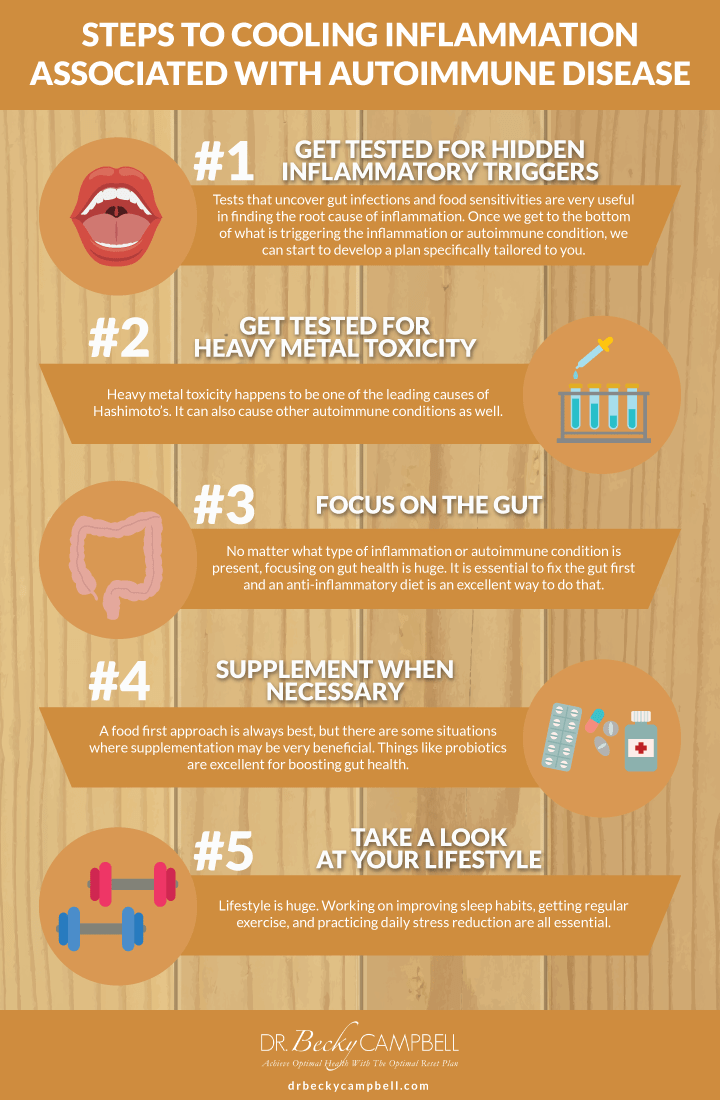
Other Steps to Cooling Inflammation Associated with Autoimmune Disease
There are other steps you can take to help gain control over the inflammation going on in your body. Remember, it is all about finding the root cause of that inflammation and that can be done using a handful of steps.
#1 Get Tested for Hidden Inflammatory Triggers
As a Functional Medicine Practitioner, I often test patients for gut infections and food sensitivities which are great ways to detect any possible hidden source of inflammation. Once we get to the bottom of what is triggering the inflammation or autoimmune condition, we can start to develop a plan specifically tailored to you.
#2 Get Tested for Heavy Metal Toxicity
In my practice, heavy metal toxicity happens to be one of the leading causes of Hashimoto’s. Heavy metal toxicity can also cause other kinds of autoimmune diseases so it is so important to get checked for this when looking for the root cause of your inflammation.
#3 Focus on the Gut
Disease begins in the gut and I commonly seen many of my autoimmune patients suffering from things like leaky gut, candida, and SIBO. No matter what type of inflammation or autoimmune condition is present, focusing on gut health is huge. It is essential to fix the gut first and an anti-inflammatory diet is an excellent way to do that.
#4 Supplement when Necessary
A food first approach is always best, but there are some situations where supplementation may be very beneficial. This is especially true for someone who may have compromised gut function and may be deficient in a specific vitamin or mineral. Probiotics are also excellent for gut health.
#5 Take a Look at Your Lifestyle
As we have talked about, lifestyle is huge. Diet and lifestyle go hand in hand and the truth is that you can’t just change one and expect to see huge improvements in your health. Working on improving sleep habits, getting regular exercise, and practicing daily stress reduction are all essential. Now, this doesn’t mean that you have to do all of these things at once. You can start with one change and work on that until you feel consistent enough to add in something else. Go at a pace that will work for you and that you know you can realistically commit to lifelong.
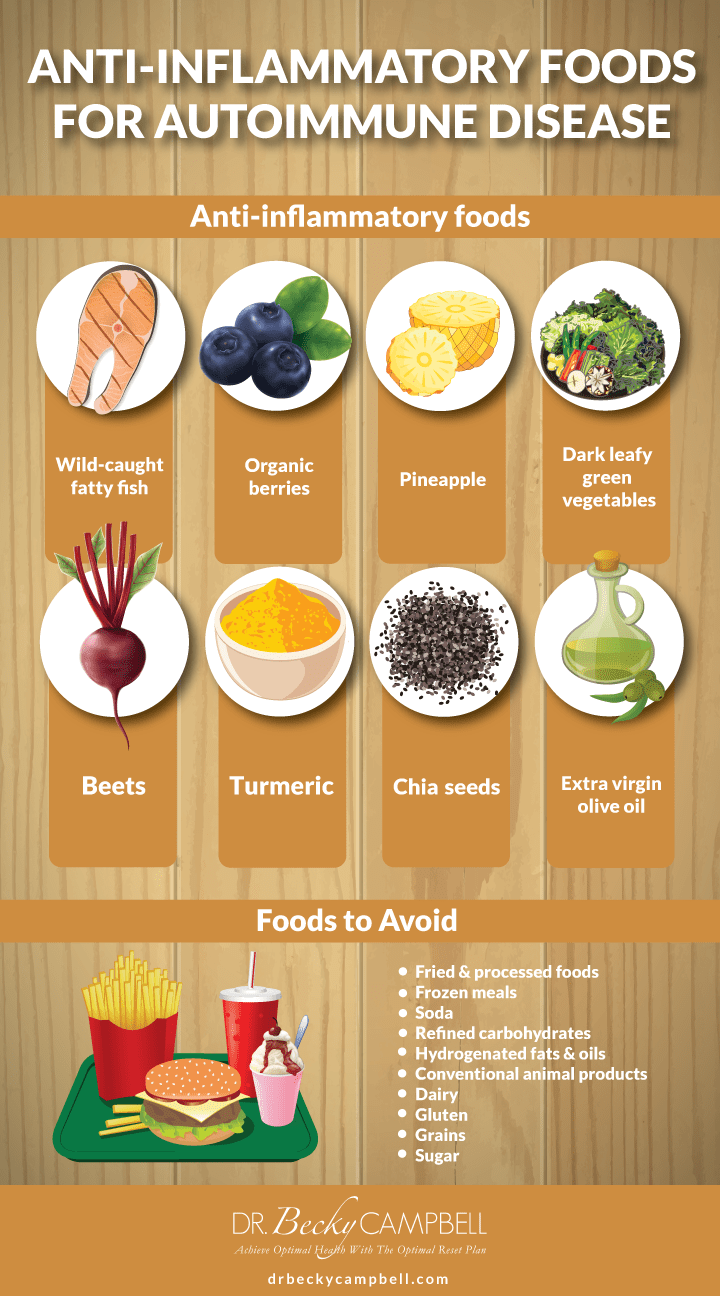
Anti-Inflammatory Foods to Add to Your Diet Today
Ready to start adding more anti-inflammatory foods to your diet? Here is a list of some great foods to consume regularly.
Enjoy Regularly
- Wild-caught fatty fish
- Organic berries
- Pineapple
- Dark leafy green vegetables
- Beets
- Chia seeds
- Turmeric
- Extra virgin olive oil
Foods to Avoid
While you add all these wonderful anti-inflammatory foods to your diet, here are some that should be kept out and especially for those with autoimmune disease.
- Fried & processed foods
- Frozen meals
- Soda
- Refined carbohydrates
- Hydrogenated fats & oils
- Conventional animal products
- Dairy
- Gluten
- Grains
How to Improve Your Health
As you can see there is a tremendous benefit in following an anti-inflammatory diet and lifestyle when dealing with an autoimmune disease. If you can find the source of the inflammation and then work to correct that with diet and lifestyle then you will set yourself up on a path to wellness. Many of my patients come to me, find their root cause, change their diet, and lifestyle and then are able to stop their medications. It is all about a holistic approach to cooling that inflammation and treating each autoimmune disease like an inflammatory condition with the proper diet and lifestyle changes.
If you are tired of feeling sick, not like yourself, and unable to get to the bottom of what may be causing your symptoms, I encourage you to start your own elimination diet. Not sure where to get started?
Read My Book
If you have Hashimoto’s or another thyroid disease, I recommend reading and following the recommendations in my book, The 30-Day Thyroid Reset Plan: Disarming the 7 Hidden Triggers That are Keeping You Sick. You will learn everything you need to know about thyroid disease. I offer a 30-day plan to improve your health and my favorite thyroid-friendly recipes to nourish your body with delicious meals.
Try My Optimal Reseat Program
If you are looking to improve your health from Hashimoto's or any other autoimmune conditions, I recommend my Optimal Reset Program. In this program, I walk you through this step by step to give you tons of tools to help you through this important process. I also teach you how to detoxify your body and start to heal your gut so that you are able to tolerate more foods long term.
Here are just a handful of benefits of my Optimal Reset Plan:
- Weight loss
- Healthy looking skin
- Increased energy
- Deeper sleep
- Decreased joint pain
- Reduces headaches
- Improved gut health
- Helps those with leaky gut
- Can improve autoimmune conditions
- Less bloating/digestive discomfort
If you are ready to get started, Join me in my Optimal Reset Do it Yourself Program.
Final Thoughts
Autoimmune disorders are common. The good news is that with the right nutrition you can recover your body and regain your health. Follow my tips to support your body and reclaim your health and well-being.
If you are dealing with symptoms of an autoimmune disorder or thyroid issues, I invite you to schedule a consultation with me. I can help to identify the root cause of your condition and recommend a personalized treatment plan to repair your body and regain your health and well-being. Schedule your consultation here.
Resources
(1) Mark Hyman. How to Stop Attacking Yourself: 9 Steps to Heal Autoimmune Disease
Amy Sarah Marshall (2014). The Detective Work of Autoimmune Disease
American Autoimmune Related Diseases Association, Inc. Autoimmune Disease List
Dr. Weil. Dr. Weil’s Anti-Inflammatory Diet
[sc name="Below all post"]

Can Candida Affect the Thyroid?
Candida overgrowth is a frequent underlying cause behind fatigue, hormonal imbalances, frequent vaginal or urinary infections, skin issues, mood fluctuations, and other symptoms. Candida overgrowth may also lead to thyroid dysfunction or increase symptoms related to thyroid imbalance. The good news is that you can get out of this vicious cycle of candida overgrowth and thyroid issues.
In this article, you will learn what candida and candida overgrowth are. You will learn how candida overgrowth spreads in your body. You will understand the causes and symptoms of candida overgrowth. I will explain the possible links between candida overgrowth and thyroid dysfunctions. I will explain how testing works and offer my top natural solutions for candida overgrowth and thyroid dysfunction.
What Is Candida?
Candida is a form of yeast. It is a fungus that lives in your intestines and mouth. It plays a vital role in your body by helping your digestion and nutrient absorption. However, under normal circumstances, you only have small amounts of candida in your body. That’s all you need.
What Is Candida Overgrowth?
Candida overgrowth is very common. Candida albicans are the most common cause of yeast infections in the mouth, vagina, and GI tract. When candida overproduces, it leads to candida overgrowth, which means it can penetrate your bloodstream by breaking down and slipping through your intestinal wall. This process can lead to leaky gut, toxic byproducts, and an array of symptoms and health problems from fatigue to thyroid dysfunction. Later in this article, you will learn about the symptoms of candida overgrowth and you will understand the potential link between candida overgrowth and thyroid dysfunction (1, 2).
Causes of Candida Overgrowth?
Having a healthy good flora is key to your health. A healthy gut bacteria balance with plenty of ‘good’ bacteria helps to keep your candida levels in check. However, the candida population in your body can get out of control for a variety of reasons (3, 4, 5):
- Out of balance pH: When your pH balance is thrown off, candida has the chance to grow and populate into larger amounts than what’s beneficial. When the body does not have good strong healthy gut bacteria or the pH balance is out of whack, it can make it very difficult to fight off a candida infection.
- Certain Medications: Certain medications, antibiotics, and oral corticosteroids can increase your risk of candida overgrowth. The problem with antibiotics is that they take the good with the bad. While they kill off the harmful bacteria, they also rid the body of the healthy bacteria it needs to help with digestion as well as keeping things like candida in a healthy range. If you are frequently prescribed antibiotics then there is a chance that your intestinal bacteria are out of balance. This can lead to candida overgrowth. With oral corticosteroids, there is a chance that someone can develop a candida infection in the mouth. These medications are used to treat conditions like asthma, and when these corticosteroids are inhaled it is so important to follow the directions and swish your mouth out after each use. Additionally to antibiotics and corticosteroids, taking oral contraceptives can also increase your risk of candida infections.
- A Weak Immune System: Anyone who is immune-compromised is more likely to suffer from an infection like candida. This includes anyone who has an autoimmune condition such as Hashimoto’s Thyroiditis. Eating an inflammatory diet high in sugar and processed foods and low in greens, vegetables, fruits, healthy fats, and clean protein, poor sleep, high stress levels, smoking, drinking alcohol, leading a sedentary lifestyle, and environmental toxins can all weaken your immune system and increase your risk of candida infection and overgrowth.
How Does Candida Overgrowth Spread?
Candida is a sneaky yeast. It has a unique ability to change shape in order to protect itself from shifts in acidity level o temperature or other environmental changes. It can turn from a rounded yeast cell into elongated hyphal cells that can get through your gut lining and potentially cause leaky gut syndrome. Once candida gets into your bloodstream, it can turn from a gut health issue into a full-body health issue and can colonize in your mouth, skin, thyroid, ears, reproductive organs, and other parts of your body. It’s not surprising that candida overgrowth can produce symptoms in all parts of your body affecting your entire health.
Symptoms of Candida Overgrowth
Candida overgrowth can affect your entire body and can lead to a long list of chronic symptoms. These are the most common symptoms of candida overgrowth you may experience:
- Skin and fungal infections, such as athlete’s foot, toenail fungus, and ringworm
- Chronic skin issues, such as eczema, hives, rashes, or psoriasis
- Frequent vaginal infections, vaginal yeast infections, urinary tract infections (UTIs), vaginal itching, or rectal itching
- Exhaustion, feeling tired or worn down, or chronic fatigue
- Brain fog, difficulty concentrating, lack of focus, or poor memory
- Anxiety, depression, irritability, or mood swings
- Digestive issues, such as bloating, gas, constipation, or diarrhea
- Oral thrush (white tongue)
- Hormonal imbalances
- Fibromyalgia or fibromyalgia-like symptoms
- Autoimmune diseases, such as Hashimoto’s thyroiditis, psoriasis, lupus, ulcerative colitis, Crohn’s disease, or rheumatoid arthritis
- Severe seasonal allergies or itchy ears
- Strong cravings for sugar, refined carbohydrates, and sugary or carby processed or junk food

Candida Overgrowth & Your Thyroid
I frequently see patients who suffer from Hashimoto’s who also have an underlying candida overgrowth. We commonly have to address underlying candida overgrowth to support their thyroid health as well. Candida overgrowth can affect your thyroid for a number of reasons. Let’s take a look at some of the possible links between candida overgrowth and thyroid dysfunction.
Candida Overgrowth May Lead to Leaky Gut
Candida overgrowth can lead to leaky gut by breaking down the walls of the intestines and then getting into the bloodstream if this fungus is found in large amounts in the GI tract. When not addressed, leaky gut can lead to autoimmune conditions such as Hashimoto’s Thyroiditis as it taxes the body’s immune system and the immune system may begin attacking its own tissue and in certain circumstances, this is the thyroid gland.
Candida Overgrowth May Lead to Food Sensitivities & Intolerances
Your gut and the health of your gut bacteria are directly connected to thyroid health. Candida overgrowth is a very serious condition and can lead to food sensitivities as well as allergies. When you are consuming a food that you are sensitive to for a period of time there is a good chance that leaky gut can develop which can then lead to autoimmunity. Consuming reactive foods time and time again causes your immune system to go haywire and triggers inflammation. Any time your body is in a chronic state of inflammation, you are at a higher risk of developing disease, and when your immune system is in overdrive it can begin attacking your own body tissue. In this state, your body may go after your thyroid leading to autoimmune thyroid conditions, such as Hashimoto’s disease or Graves’ disease.
Unhealthy Gut Microbes Affect the Thyroid
The balance of bacteria in your gut is so important to your health as any type of imbalance can cause pathogenic bacteria from overgrowing and can prevent the healthy bacteria from doing what they need to do to keep you healthy. Unhealthy gut bacteria can affect the thyroid gland.
When there is an imbalance in the bacteria in the gut, T4 to T3 conversion can be disrupted. Amazingly enough, roughly 20 percent of T4 to active T3 conversion takes place in the GI tract. Gut microbes are able to do a large part of the work here by converting inactive T4 into T3 sulfate. When the bacteria in your gut are imbalanced or there is an overgrowth of harmful bacteria, this process can become disrupted. Your gut is also essential for nutrient absorption so when there is an imbalance in the gut, nutrient absorption may decrease which could ultimately lead to a vitamin or mineral deficiency. A deficiency can then cause a thyroid imbalance (6, 7, 8).
Candida Overgrowth May Impact Your Adrenals
Candida overgrowth in the gut can put stress on your adrenals as well as the HPA axis. Your adrenal glands work with your body’s stress response and also help with regulating the immune system. When dealing with candida overgrowth and even potentially nutrient malabsorption due to the overgrowth, hormonal imbalances can occur along with adrenal health issues and imbalances in stress hormones. Any type of hormone imbalance can ultimately lead to thyroid health problems and dealing with a thyroid condition on top of adrenal health issues can cause your symptoms to be much worse than they already are.
Your Immune System May Be the Link
Molecular mimicry means that there is a structural similarity between a foreign substance, called a foreign antigen that activates your immune system and your body’s self-antigen. There may be molecular mimicry between Candida and the thyroid gland leading your immune system to mistake your thyroid for a candida yeast infection leading to thyroid dysfunction. Candida may also release superantigens triggering your immune system to attack your thyroid gland causing autoimmunity. Moreover, a distracted immune system that is focused on attacking your thyroid gland by mistake but neglects to keep your candida levels balanced can lead to uncontrollable candida growth, serious candida overgrowth, and increased vulnerability to autoimmune thyroid disease (9).

Testing for Candida Overgrowth
If you are experiencing symptoms of candida overgrowth, getting tested is an important first step. Testing for candida overgrowth is something that you will want to do with a functional medicine practitioner, like myself. They all well-versed in candida and can help you uncover underlying and co-occurring problems as well.
Your functional medicine practitioner can help you to order different gut infection panels that can be very helpful to determine if you have a candida infection. These panels are able to spot another fungal, bacterial, or viral overgrowth, gut dysbiosis, and other gut health issues that may be present. These are simple stool and urine tests that can uncover some critical health issues. If you suspect that you are dealing with candida overgrowth or another gut infection, you can schedule a consultation with me here. After reviewing your symptoms, concerns, and health history, I can recommend appropriate testing for your specific case and create an individualized plan tailored to your needs to recover your health from candida overgrowth, thyroid issues, and other potential health problems.
Natural Solutions
If you have candida overgrowth that’s affecting your thyroid and overall health, it is time to make some changes to balance your body and regain your health. Here are my natural solutions for candida overgrowth and thyroid dysfunction:
Visit a Functional Medicine Practitioner
If you suspect that candida overgrowth may be an issue that you are dealing with, working with a functional medicine practitioner, like myself, may be a great first step. They can help you to uncover why the infection may be occurring, get proper testing, and set you up with a specific candida diet.
It is important to note that candida overgrowth can be easily misdiagnosed, especially when your symptoms may appear to be affecting different areas of your body. It is very common for doctors to mistake your symptoms for depression, sinus infections, or other infections, and simply prescribe antibiotics. As you know, antibiotics are one of the worst offenders for candida overgrowth and can feed into your symptoms instead of resolving them. Diagnosing candida overgrowth takes a holistic approach to get you on the proper healing path. It is important that you work with a functional medicine doctor who is well-versed in candida overgrowth and practices a holistic approach.
Eat an Anti-Inflammatory, Anti-Fungal Diet
The natural approach to improving candida overgrowth always starts with an anti-inflammatory diet. Remove inflammatory foods, such as gluten, sugar, refined carbs, alcohol caffeine, refined oil, grains, pasteurized dairy, artificial sweeteners, conventional animal products, junk food, and processed foods. Eat plenty of greens, vegetables, herbs, spices, and fruits. Eat healthy fats and high-quality organic animal protein. Add anti-inflammatory and anti-fungal foods to your diet, such as garlic, coconut oil, turmeric, aloe vera, pomegranate, and garlic.
Anti-Fungal Support
Using some anti-fungal herbs and supplements is often a critical step in recovering from candida overgrowth and rebuilding your gut flora balance. Oil of oregano is a fantastic herbal supplement with powerful anti-yeast, antiviral, antibiotic, and anti-parasitic properties. It is often used for candida overgrowth, other yeast overgrowths, parasitic and bacterial infections, and food poisoning. Pau D-Arco, grape seed extract, garlic, olive leaf extract, and berberine are other great herbal supplements that are often used for candida overgrowth. Be aware that these supplements may cause some die-off reactions, which means that you may get some uncomfortable symptoms, such as headaches, digestive issues, or flu-like symptoms for a couple days or weeks before you feel better. Working with a functional medicine doctor is a great way to select the supplements that are right for your body and situation (10, 11, 12, 13, 14).
Support Your Gut
Supporting your gut flora balance is absolutely critical to your recovery from candida overgrowth. Eat plenty of prebiotic-rich foods, including garlic, onions, Jerusalem artichokes, asparagus, leeks, dandelion greens, and chicory roots. Eat plenty of fermented foods, such as sauerkraut, yogurt, kefir, and kimchi for gut health. Take high-quality probiotics, such as Optimal Reset Microbe Synergy Complete. Support your gut lining with Optimal Reset Ultimate Gut Support. Support your liver with Optimal Reset Liver Love. For maximum gut health support, try my Low Carb Ultimate Gut Support Kit (15).
Support Your Thyroid
As you’ve learned candida overgrowth can lead to thyroid dysfunction, so it is important that you take care of your thyroid while focusing on repairing your body from candida overgrowth. If you are dealing with Hashimoto’s disease or any other thyroid dysfunction or thyroid disease, I recommend reading and following the recommendations in my book, The 30-Day Thyroid Reset Plan: Disarming the 7 Hidden Triggers That are Keeping You Sick. You will learn everything you need to know about thyroid disease. I offer a 30-day plan to improve your health and my favorite thyroid-friendly recipes to nourish your body with delicious meals.
Final Thoughts
Candida overgrowth is a common problem that may also lead to thyroid dysfunction or increase symptoms related to thyroid imbalance. The good news is that you don’t have to suffer from symptoms of candida overgrowth and thyroid dysfunction anymore. Follow my natural solutions for candida overgrowth to repair your body, regain your health, and reclaim your life.
If you are dealing with symptoms of candida overgrowth, Hashimoto’s disease, or other thyroid issues, I invite you to schedule a consultation with me. I can help to identify the root cause of your condition and recommend a personalized treatment plan to repair your body and regain your health and well-being. Schedule your consultation here.
Sources:
1.Raz-Pasteur A, Ullmann Y, Berdicevsky I. The pathogenesis of Candida infections in a human skin model: scanning electron microscope observations. ISRN Dermatol. 2011;2011:150642. doi: 10.5402/2011/150642. Epub 2011 Sep 5. PMID: 22363844
2. Candidiasis. Harvard Health. Link Here
3. Núñez MJ, Balboa J, Riveiro P, Liñares D, Mañá P, Rey-Méndez M, Rodríguez-Cobos A, Suárez-Quintanilla JA, García-Vallejo LA, Freire-Garabal M. Effects of psychological stress and alprazolam on development of oral candidiasis in rats. Clin Diagn Lab Immunol. 2002 Jul;9(4):852-7. doi: 10.1128/cdli.9.4.852-857.2002. PMID: 12093685
4. Spinillo A, Capuzzo E, Nicola S, Baltaro F, Ferrari A, Monaco A. The impact of oral contraception on vulvovaginal candidiasis. Contraception. 1995;51(5):293-297. Link Here
5. Vargas SL, Patrick CC, Ayers GD, Hughes WT. Modulating effect of dietary carbohydrate supplementation on Candida albicans colonization and invasion in a neutropenic mouse model. Infect Immun. 1993 Feb;61(2):619-26. doi: 10.1128/IAI.61.2.619-626.1993. PMID: 8423091
6. Yu J. Regulation of Hepatocyte Thyroxine 5′-Deiodinase by T3 and Nuclear Receptor Coactivators as a Model of the Sick Euthyroid Syndrome. Link Here
7. Watanabe, M., Houten, S., Mataki, C. et al. Bile acids induce energy expenditure by promoting intracellular thyroid hormone activation. Nature 439, 484–489 (2006). Link Here
8. Vought RL. Effect of Changing Intestinal Bacterial Flora on Thyroid Function in the Rat. Link Here
9. Kharrazian D, Herbert M, Vojdani A. Immunological reactivity using monoclonal and polyclonal antibodies of autoimmune thyroid target sites with dietary proteins. Link Here
10. Sujatha G, Kumar GS, Muruganandan J, Prasad TS. Aloe vera in dentistry. J Clin Diagn Res. 2014 Oct;8(10):ZI01-2. doi: 10.7860/JCDR/2014/8382.4983. Epub 2014 Oct 20. PMID: 25478478
11. Pai MB, Prashant GM, Murlikrishna KS, Shivakumar KM, Chandu GN. Antifungal efficacy of Punica granatum, Acacia nilotica, Cuminum cyminum and Foeniculum vulgare on Candida albicans: an in vitro study. Indian J Dent Res. 2010;21(3):334-336. Link Here
12. Khodavandi A, Alizadeh F, Harmal NS, et al. Comparison between efficacy of allicin and fluconazole against Candida albicans in vitro and in a systemic candidiasis mouse model. FEMS Microbiol Lett. 2011;315(2):87-93. Link Here
13. Kumar A, Dhamgaye S, Maurya IK, Singh A, Sharma M, Prasad R. Curcumin targets cell wall integrity via calcineurin-mediated signaling in Candida albicans. Antimicrob Agents Chemother. 2014;58(1):167-175. Link Here
14. Ogbolu DO, Oni AA, Daini OA, Oloko AP. In vitro antimicrobial properties of coconut oil on Candida species in Ibadan, Nigeria. J Med Food. 2007;10(2):384-387. Link Here
15. Mailänder-Sánchez D, Wagener J, Schaller M. Potential role of probiotic bacteria in the treatment and prevention of localised candidosis. Mycoses. 2012;55(1):17-26. Link Here
[sc name="Below all post"]