

What Are Histamines
You’ve seen the word histamine before on anti-histamine medications and creams for allergies and allergic reactions. Have you ever wondered what are histamines and what is their role in allergies?
In this article, I will explain what histamines are and how the allergy response works. You will learn about the role of histamine when it comes to food and insect bites. If you are curious about histamine intolerance, along with a quick explanation, I will direct you to some resources and my 4-Phase Histamine Reset Plan to help you regain your health, improve your well-being, and reclaim your happiness.
What Are Histamines?
Histamines are chemicals in your body that are responsible for a variety of functions. They are your personal security guard. When your body encounters an allergen, they get rid of them to protect you. This is one doctor commonly recommend anti-histamines for allergies and allergic reactions.
The thing about allergies is that some things you are allergic to, such as pollen, dust, or pet dander, may seem harmless and are completely harmless to many people. But your personal immune system views them as a threat, gets triggered, and quickly responds with an allergic reaction leading to an array of allergy symptoms.
Histamines trigger the process that gets allergens off your skin or out of your body. Sneezing, redness, tearing up, swelling, or itching is often part of this process. This is how your body’s defense system works. It’s all normal and created for your health and safety (1, 2, 3).
How the Histamine Allergy Response Works
When you encounter an allergen, such as pollen or dust, your immune system gets triggered. To protect you, it launches a serious of events to keep you safe and healthy.
The first step of this reaction is signaling the mast cells in your lungs, nose, skin, mouth, gut, and blood to release histamines immediately. The histamines immediately increase blood flow to the affected area causing acute inflammation to start repair. The inflammation triggers other chemicals from your immune system to help with healing and recovery. The histamines end up at certain receptors in your body and eventually get removed from your system.
These chain of event lead to allergic reactions and symptoms. For example, if you are allergic to pollen, histamines in your body will prompt membranes in your respiratory system to make more mucus leading to a stuffy or runny nose. All the mucus may also cause sneezing, scratchy nose, or coughing. Additionally, histamines may make your eyes and nose itch and your eyes water. If you encounter a skin allergy, the histamine reaction may lead to redness, swelling, or itching (1, 2).
Foods and Histamine
If you have food allergies, you are very familiar with these processes. When you eat or drink food that you are allergic to, histamines will trigger an immediate allergic reaction. Unlike food sensitivities that lead to chronic, gradual, and more subtle symptoms, food allergies trigger an immediate and often serious response, including wheezing, swelling of the face, lips, or tongue, hives, itching, tingling, dizziness, vomiting, or abdominal pain.
Some foods are also naturally high in histamine that causes problems in some people. Some people are simply sensitive to certain histamine-containing foods. Others have histamine intolerance and have to avoid high-histamine foods.
Histamine Intolerance
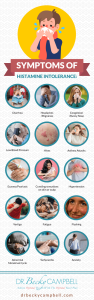
Histamine intolerance means that your body has too much histamine and it is unable to properly break down the excess histamine leading to a list of symptoms, including headaches, migraines, fatigue, anxiety, runny nose, eczema, hormonal issues, digestive issues, and more. High-histamine foods include aged cheese, citrus fruit, cured and canned meat, dried fruits, fermented foods, fermented alcohol, soured foods, legumes, cashews, walnuts, avocadoes, eggplants, spinach, tomatoes, smoked fish, anchovies, mackerel, mahi-mahi, sardines, tuna, fish sauces, and vinegar-containing foods. If you have histamine intolerance, you need to avoid high-histamine foods (3).
Histamine Poisoning
You may also experience histamine poisoning if you eat fish that was not kept at a safe temperature and got spoiled before you were served and ate them. There is a higher risk of histamine poisoning with fish that are high in histamines, such as mackerel, sardines, tuna, anchovies, and smoked fish. Histamine poisoning from fish is also called scombrotoxin fish poisoning, or SFP. However, with good food safety practices, you don’t have to worry about SFP (4).
Histamine and Insects
Not only humans but many animals and plants have histamines too. For example, histamine can be found in some insect venom. If you are stung or bitten by certain insects, such as bees, hornets, wasps, yellow-jackets, or fire aunts, your own histamines will get to work as well triggering a histamine response to protect you. As you know, this will lead to swelling, redness, itching, or pain (5).
Recommendations for Histamine Intolerance
If you have histamine intolerance, I recommend the following options to improve your health naturally:
Follow an Anti-Inflammatory and Low-Histamine Diet
Following an anti-inflammatory, antioxidant-rich, and nutrient-dense diet is important for your health. Reducing histamine may help to decrease histamine-related symptoms.
Remove inflammatory foods, including refined sugar, refined oils, canned and processed meat, artificial ingredients, junk food, and highly processed foods. Avoid high-histamine foods, such as fermented food (e.g., sauerkraut, kimchi, fermented vegetables, kombucha, etc.), aged food (e.g., aged cheese, processed meat, canned fish, etc.), over-ripe fruits and vegetables, leftovers, and foods that are naturally high in histamine (e.g., avocadoes, eggplant, spinach, dried fruits, etc.). Avoid foods that may trigger histamine releases, such as tomatoes, most citrus, bananas, most nuts, and dairy. Avoid foods that may block the DAO enzyme, including black tea, green tea, alcohol, and energy drinks.
Eat a nutrient-dense, anti-inflammatory, and low-histamine diet rich in greens, vegetables, herbs, spices, fruits, healthy fats, and organic meat. Low-histamine foods include most fresh leafy greens and vegetables, non-citrus fruits, such as apples, pear, papaya, and grapes, fresh grass-fed meat, pasture-raised poultry and eggs, and wild-caught fish, olives, extra-virgin olive oil, ghee, coconut oil, leafy herbs, and herbal tea. My book, The 4-Phase Histamine Reset Plan includes an extensive list of foods that you can eat and should avoid on a low-histamine diet.
If you are new to a low-histamine diet, remember to have fun experimenting with new foods and recipes. I promise low-histamine meals can be delicious. I recommend all the low-histamine recipes in The 4-Phase Histamine Reset Plan and my new recipe book, Fifty One Low Histamine Air Fryer Recipes. They are all simple, easy to make, low-histamine, gluten-free, Paleo-friendly, and super healthy. Not to mention how delicious they are — your family will love them too.
Reduce Your Histamine Bucket
If you are dealing with symptoms of histamine intolerance, reducing high-histamine foods is not enough. High stress, poor sleep, not moving your body, and high toxin exposure may add to your histamine load. Improving these areas of your lifestyle may help to reduce your histamine bucket and lower the risk of histamine-related issues.
I recommend that you reduce your stress levels, improve your sleep, and move your body:
- I recommend practicing breathwork, meditation, positive affirmation, journaling, yoga, grounding, and time in nature for stress and anxiety reduction.
- Taking an Epsom salt bath is another great way to relax your muscles, calm your mind, and detoxify your body.
- Your goal should be to sleep at least 7 to 9 hours a night.
- Lower your stress levels throughout the day but especially in the evening time to support sleep. Take a bath, read a good book, listen to some music, journal, try coloring, and spend time with your family. Avoid sugar, alcohol, and heavy food in the evening.
- Sleep on a supportive mattress with comfortable and supportive pillows and blankets, and quality, organic cotton sheets.
- Move your body throughout the day and stretch regularly.
- Exercise at least 20 to 30 minutes five days a week and move your body regularly. I recommend getting 10 to 15K steps in a day if you can. Add resistance and strength training to your routine.
Recommend that you reduce your exposure to environmental toxins:
- Choose purified water over tap water. Use a high-quality air filtration system for better indoor air.
- Choose natural, organic, and homemade cleaning, personal hygiene, and beauty products instead of conventional brands loaded with chemicals.
- Choose glass, bamboo, wood, organic cotton, silicon, and other natural alternatives instead of plastic.
- Avoid BPA plastic completely.
- Choose organic food whenever possible and avoid overly processed packaged foods. If you must buy non-organic produce, follow the Dirty Dozen, Clean 15 list, and always wash and peel non-organic vegetables and fruits.
Support Your Gut
Your gut health affects your entire body. Gut flora imbalance can trigger histamine intolerance and cause related symptoms. Supporting your gut health is critical for your recovery. Along with a gut-friendly, low-histamine, anti-inflammatory diet, I recommend that you take a high-quality probiotics supplement, to support your gut microbiome balance.
Try Some Supplements
I recommend HistoRelief. It is a synergistic blend of nutrients that provides natural support to balance your immune response. This blend features Tinofend®, a patented and clinically researched extract derived from the plant Tinospora cordifolia, which has a powerful ability to support immune regulation and immune response. As a result, it boosts your body’s ability to fight histamine-related symptoms. It includes quercetin, nettle leaf, vitamin C, and bicarbonate salt to help inhibit histamine release, support normal histamine metabolism, and improve immune health.
Final Thoughts
Histamines are chemicals that are part of your immune system. They are there for your protection and play a very important role in your health.
Problems only arise with histamine, if you have histamine intolerance. Histamine intolerance means that your body has too much histamine, it can’t keep up with it, which results in an array of symptoms. The good news is that through simple natural strategies, you can overcome your symptoms of histamine intolerance and live a healthy life. To learn more about histamine intolerance, read this article.
If you are dealing with symptoms of histamine intolerance, I invite you to schedule a consultation with us. We can help identify the root cause of your condition and recommend a personalized treatment plan to repair your body and regain your health and well-being. Schedule your consultation here. I also recommend that you check out my Histamine Online Program.

Sources:
1. Histamine defined. American Academy of Allergy, Asthma, and Immunology. Link Here
2. Histamine: The stuff allergies are made of. MedlinePlus. Link Here
3. Maintz L, Novak N, Histamine and histamine intolerance, The American Journal of Clinical Nutrition, Volume 85, Issue 5, May 2007, Pages 1185–1196. Link Here
4. Histamine poisoning. American Academy of Allergy, Asthma, Immunology. Link Here
5. Insect allergies. Asthma and Allergy Foundation of America. Link Here

Mold, Histamine Intolerance, and Mast Cell Activation Syndrome: Everything You Need to Know
Finding mold in your home is more than just a small annoyance. Mold exposure can have serious health consequences and it may be the reason behind your mysterious chronic symptoms. Mold can hide inside and outside your home and spread its spores and mycotoxins through the air. Mold can increase histamine intolerance and trigger mast cell activation syndrome (MCAS) leading to a variety of chronic symptoms, including allergies, headaches, fatigue, brain fog, congestion, skin problems, and anxiety. The good news is that there are natural solutions you can use to overcome mold toxicity, histamine intolerance, and MCAS.
In this article, you will learn what histamine intolerance and MCAS are. You will understand what mold is and what problems are linked to chronic mold exposure. I will explain how mold, histamine intolerance, and MCAS are connected. I will share my natural solutions for mold toxicity, histamine intolerance, and MCAS.
https://www.youtube.com/watch?v=zOubxiGBC1A
What Is Histamine Intolerance?
Histamine plays a critical role in your body. It is responsible for many important bodily functions, including communicating with your brain, fighting off allergens as part of your immune response, and promoting stomach acid release to aid digestion. While healthy levels of histamine are necessary and good for your health, too much histamine is not healthy.
Histamine intolerance means that you have too much histamine, usually because you can’t break it down properly, which can result in various symptoms and health issues, including allergies, chronic congestion, chronic runny nose, headaches and migraines, hives, eczema, psoriasis, fatigue, anxiety, diarrhea, tachycardia, low blood pressure, hypertension, flushing, crawling sensation on your skin, vertigo, abnormal menstrual cycle, hormonal problems, asthma attacks, and more. You can learn more about histamine intolerance in this article (1).
What Is Mast Cell Activation Syndrome?
Your mast cells play a critical role in your immune system. They are white blood cells that are found in tissues throughout your body. They can be found in your skin, digestive tract, respiratory tract, urinary tract, reproductive organs & surrounding nerves. They may also occur in your blood due to infections and diseases that mast cells help repair after the initial health threat is gone. Mast cells also store inflammatory mediators inside granules that also include histamine. During allergic reactions, mast cells are activated and trigger an allergic response.

Mast cell activation syndrome (MCAS) is a complex issue that involves many different systems in your body leading to a large variety of symptoms. You may develop MCAS due to a variety of triggers, including mold, heavy metals, chemicals, fragrances, allergens, medications, infections, food, and alcohol. If you have MCAS, some or all of these triggers can cause your mast cells to release inflammatory mediators and histamine. This can lead to a variety of symptoms, including rashes, hives, itching, headaches, heart palpitations, low blood pressure, weight changes, loss of appetite, fatigue, dizziness, weakness, digestive issues, chest pain, anxiety and vision changes. To learn more about MCAS, I recommend this article.

Symptoms of histamine intolerance and MCAS can be quite similar. However, there are some differences between the two. Histamine intolerance develops due to excess histamine and histamine build-up in your body, while in MCAS, your mast cells are being triggered spilling histamine and other chemicals into our body resulting in symptoms. I believe that MCAS is one of the primary causes of histamine intolerance. However, it may not be the cause for everyone. You may experience histamine intolerance without having MCAS (2, 3, 4, 5).
Mold, Histamine Intolerance, and Mast Cell Activation Syndrome
Mold is a fungus that is known for its ability to grow on almost anything and thrive under many conditions, especially in a warm and moist environment. They release mycotoxins in the air and lead to consequent health issues.
Mold is versatile and has many types and forms. This also means that mold can grow both indoors and outdoors. Your bathroom, kitchen, and basement are some of the most common areas molds may hide, however, they can appear anywhere else, especially in damp, wet, and warm environments.
The problem is that mold can spread far and wide. You may initially have mold in one tiny spot in your home, but its microscopic spores can travel far. You may breathe them in through the air. They also may take home in other areas of your house leading to more mold growth. There are about 1,000 species of mold in the United States. Some of the most common molds that may affect your health include aspergillus, Cladosporium, Alternaria, Memnoniella, Penicillium and Stachybotrys.

Chronic exposure to mold can be dangerous. It can lead to mold toxicity symptoms, including fatigue, brain fog, headache, skin issues, respiratory problems, and nausea. Mold exposure and mold toxicity may also increase histamine intolerance and trigger MCAS.
Mold releases mycotoxins that have toxic effects on your body. As a response, your mast cells release histamine and other chemicals to attack and destroy these harmful mold toxins. The problem is that if you are being continuously exposed to mold, your body will develop a chronic state of inflammation, your immune system will be on a constant alert, and your body will be in a constant state of defense.
Due to chronic mold exposure and on-going inflammation, you can develop histamine intolerance. Your mast cells end up over-producing histamine in order to protect your body from mold toxins. However, your body won’t be able to keep up with all the histamine, which can lead to histamine intolerance and consequent symptoms (6, 7, 8, 9).

Natural Solutions for Mold, Histamine Intolerance, and MCAS
If you’ve been exposed to toxic mold and experiencing symptoms of histamine intolerance or MCAS, I have good news for you. You can resolve your symptoms by using simple natural solutions. Here is what I recommend:
Remove Mold from Your Home and Reduce Mold Exposure
First things first, if you have mold in your home, you need to remove it (unless you can move to a mold-free home!). If the mold-affected area is over 10 square feet or 1 square meter, call a professional mold remediation specialist. The problem is bigger than you can handle on your own. However, if you are only dealing with a smaller area, you can probably take care of it yourself.
You may try these self-removal options to take care of your mold problem:
- Try a mix of one teaspoon of baking soda and 2 cups of water to use on affected surfaces
- Use undiluted white vinegar on hard surfaces in your bathroom and kitchen
- Use a 50/50 mix of ammonia-water solution as a spray. Leave it on the affected surface for 2 to 3 hours them rinse it well.
- NEVER mix all-purpose cleaners or bleach with ammonia. They can create toxic fumes that can be dangerous to your health.
Don’t forget about addressing any underlying problems that may drive mold:
- Remove any moldy and old rugs, carpeting, paint, or wallpaper
- Clean or dispose of any moldy shower curtains, clothing, and other items
- Fix moisture leaks and water damage issues
- Reduce indoor humidity and keep it between 30 and 50 percent
- If you hang your clothes to dry, ideally, do it outside
- Always wipe down wet tiles after you shower
- Keep the detergent compartment of your washing machine open
- Make sure your home is ventilated well
- Use a high-quality indoor air filtration system
- Check your indoor plants and keep the mold off of them
- Clean and repair the roof gutters of your home
- Direct any rain or melted snow or ice away from your house
- Keep your home clean
- Check for signs of mold growth regularly and address any mold immediately
A word on exposure at work:
Unfortunately, mold exposure may happen at your work. At least half of the buildings in North America are affected by mold. This can be difficult if you are unknowingly exposed. If you can use a high-quality air filtration system at your office or office area. Talk to HR and encourage them to do regular mold checks and use prevention strategies. If you notice any signs of mold, speak with HR immediately. If there is an ongoing mold issue at your job, you may want to consider looking for new employment if it’s possible.
Get Tested for Mold Toxicity
If you have symptoms of mold toxicity or have been exposed to mold, it is important to get tested. Working with a functional medicine doctor, like myself, can help you with this. Just schedule a consultation today.
Detoxify Your Body from Mold
If you have been affected by chronic mold exposure and mold toxicity, you need to detoxify your body from mold. Here is what I recommend:
- Check house & workplace for mold exposure (consider ERMI test)
- Get body tested for mold toxicity
- Detoxify Your Body from Mold
- Hydrate well
- Support detoxification through sweating ie. infrared sauna
- Consider working with a practitioner to help with mold protocol
- There are various other products I use to address mold depending on the person’s history and tolerance to supplements.
- Recover Your Body from Histamine Intolerance and MCAS
- Eat a low-histamine diet
- Support your liver
- Consider histamine supporting supplements like quercetin, nettle & others. My HistoRelief supplement has a blend of these ingredients & more.
Support Your Gut
Chronic mold exposure and mold illness can lead to gut infections and gut health issues. Gut microbiome imbalances and gastrointestinal problems can increase the risk of histamine intolerance and POTS. If you are dealing with gut imbalances, supporting your gut health is key.
Follow a healthy gut-friendly diet rich in greens, vegetables, sprouts, low-glycemic index fruits, herbs, spices, grass-fed meat, pasture-raised poultry, wild-caught fish, and wild game. If you are not dealing with histamine intolerance, you may add some probiotic-rich fermented foods, such as sauerkraut, kimchi, fermented herbs, yogurt, kefir, or kombucha. However, since fermented foods can drive histamine, if you have histamine intolerance or MCAS, avoid these foods.
If you are dealing with both histamine intolerance and gut health issues, I recommend working with a functional medicine practitioner (like me) to test your gut and see if opportunistic bacteria, yeast overgrowth, parasites, H. pylori and/or leaky gut can be what is driving your histamine issue.
Support Your Body with an Anti-Inflammatory Diet and Healthy Lifestyle Strategies
Following a healthy, anti-inflammatory diet and following healthy lifestyle strategies, such as moving your body, reducing stress, and sleeping enough, are critical for your recovery. I recommend that you follow an anti-inflammatory, nutrient-dense diet. Remove inflammatory foods, including refined sugar, refined oil, artificial ingredients, gluten, food sensitivities, deep-fried food, junk food, and overly processed foods. Eat lots of greens, vegetables, sprouts, herbs, spices, fruits, grass-fed meat, pasture-raised poultry, pasture-raised eggs, fresh wild-caught fish and seafood, and wild game. Drink plenty of water, at least ten glasses per day
Move your body throughout the day. You may try dancing to your favorite songs, taking a stroll in the park, stretching regularly, and playing with your kids or pets. Exercise at least 20 to 30 minutes five days a week and move your body regularly. I recommend getting 10 to 15K steps in a day if you can. Add resistance and strength training to your routine.
To reduce stress and improve sleep, I recommend practicing breathwork, meditation, positive affirmation, journaling, yoga, grounding, and time in nature for stress and anxiety reduction. Taking an Epsom salt bath is another great way to relax your muscles, calm your mind, and detoxify your body. Make sure to sleep at least 7 to 9 hours a night.
Recover Your Body from Histamine Intolerance and MCAS
As you’ve learned, histamine intolerance is a common consequence of mold exposure or mold-related gut health issues and a common underlying issue behind POTS. If you are dealing with histamine intolerance, addressing mold toxicity and eating an anti-inflammatory diet won’t be enough.
If you have histamine intolerance or MCAS, I recommend that you follow a nutrient-dense and low-histamine diet. Eliminate all histamine foods for one to three months. After this Elimination phase, slowly re-introduce them one by one following The 4-Phase Histamine Reset Plan. To understand each step of this simple yet refined system, I recommend that you read my book, The 4-Phase Histamine Reset Plan: Getting to the Root of Migraines, Eczema, Vertigo, Allergies and More where I explain everything about histamine intolerance and each phase of the plan in detail. You will also find my favorite low-histamine recipes to nourish your body.
To support your body and reduce histamine intolerance, I recommend HistoRelief. It is a synergistic blend of nutrients, including Tinofend®, quercetin, nettle leaf, vitamin C, and bicarbonate salts, that provides natural support to balance your immune response, inflammation reduction, and histamine release.
Final Thoughts
Mold can be found in our indoor and outdoor environment, especially in warm, damp, and moist areas. Mold toxicity can trigger MCAS, increase histamine production, and lead to histamine intolerance and related symptoms. Follow my natural solutions to overcome mold toxicity, histamine intolerance, and MCAS.
If you are dealing with symptoms of histamine intolerance and mold illness, I invite you to schedule a consultation with us. We can help identify the root cause of your condition and recommend a personalized treatment plan to repair your body and regain your health and well-being. Schedule your consultation here. I also recommend that you check out my Histamine Online Program.

Sources:
1. Maintz L, Novak N, Histamine and histamine intolerance, The American Journal of Clinical Nutrition, Volume 85, Issue 5, May 2007, Pages 1185–1196. Link Here
2. Afrin LB, Self S, Menk J, Lazarchick J. Characterization of Mast Cell Activation Syndrome. Am J Med Sci. 2017;353(3):207-215. Link Here
3. Frieri M, Patel R, Celestin J. Mast cell activation syndrome: a review. Curr Allergy Asthma Rep. 2013;13(1):27-32. Link Here
4. Akin C, Valent P, Metcalfe DD. Mast cell activation syndrome: Proposed diagnostic criteria. J Allergy Clin Immunol. 2010 Dec;126(6):1099-104.e4. doi: 10.1016/j.jaci.2010.08.035. Epub 2010 Oct 28. PMID: 21035176
5. Petra AI, Panagiotidou S, Stewart JM, Conti P, Theoharides TC. Spectrum of mast cell activation disorders. Expert Rev Clin Immunol. 2014;10(6):729-739. Link Here
6. CDC – Mold: Basic Facts. Link Here
7. Gray M. Molds and mycotoxins: beyond allergies and asthma. Altern Ther Health Med. 2007;13(2):S146-52. PMID: 17405693
8. Bush RK, Portnoy JM, Saxon A, Terr AI, Wood RA. The medical effects of mold exposure. J Allergy Clin Immunol. 2006;117(2):326-33. PMID: 16514772
9. Afrin LB. Presentation, diagnosis, and management of mast cell activation syndrome. University of Minnesota. Link Here
10. Marí M, Morales A, Colell A, García-Ruiz C, Fernández-Checa JC. Mitochondrial glutathione, a key survival antioxidant. Antioxid Redox Signal. 2009 Nov;11(11):2685-700. doi: 10.1089/ARS.2009.2695. PMID: 19558212
11. Hope J. A review of the mechanism of injury and treatment approaches for illness resulting from exposure to water-damaged buildings, mold, and mycotoxins. ScientificWorldJournal. 2013 Apr 18;2013:767482. doi: 10.1155/2013/767482. PMID: 23710148
12. Rodriguez RR. Headache and liver disease: is their relationship more apparent than real? Dig Dis Sci. 2004 Jun;49(6):1016-8. PMID: 15309894
13. Histamine intolerance. Vickerstaff Health Services. Link Here


How Histamine Intolerance Affects Your Brain
Histamine intolerance affects your entire body. It may be the root cause of your migraines, headaches, allergies, sinus issues, digestion troubles, eczema, acne, and so on. It’s not surprising that histamine plays a critical role in your brain function as well. Histamine intolerance can compromise your cognition, concentration, mood, and overall brain function.
In this article, I will explain what histamine intolerance is and how it affects your brain. I will also offer some simple natural solutions for histamine intolerance and brain health issues.
https://www.youtube.com/watch?v=FyCbp2ICMrA
What Is Histamine Intolerance
Histamine is responsible for a variety of important bodily functions, including communicating with your brain, fighting off allergens as part of your immune response, and promoting stomach acid release to aid digestion. While histamine is absolutely essential for your health, too much histamine is not healthy. Histamine intolerance means that you have too much histamine which can result in various symptoms and health issues, including brain health problems (1).
Histamine Intolerance and Your Brain
Your brain is a complex yet fascinating organ. When it receives signals from your environment, it doesn’t just process everything through the same channel. Your brain has four systems, called the aminergic system, which makes sure that everything gets processed through the correct channel.
One of the four aminergic systems is called the histaminergic system. You’ve guessed it right. The histaminergic system involves a histamine-mediated process to ensure healthy processing and function. Histamine helps your brain to achieve homeostasis or balance. It helps to regulate stimuli related to the following important brain-related activities (2):
- The sleep-wake cycle
- Stress response
- Pain perception
- Neurotransmitter regulation
- Satiety, taste perception, and feeding behaviors
- Addictive behaviors
- Memory formation
- Motivation and goal-setting behaviors
But how exactly histamine affects these things? Histamine in your brain can come from either mast cells or neurons. However, since there aren’t many mast cells in your brain, most of them come from histamine-releasing neurons in your hypothalamus. From there, histamine can travel to other areas and affect your entire brain. Histamine can attach to different receptors in a variety of other regions of your brain. This can lead to over-stimulation and histamine intolerance all over your brain (3, 4).
In other parts of your body, the diamine oxidase (DAO) enzyme is responsible for breaking down excess histamine. In your brain, however, the histamine N-methyltransferase (HNMT) enzyme is responsible for breaking down histamine. It first forms t-type methylhistamine, which gets broken down by monoamine oxidase B (MAOB) and aldehyde dehydrogenase. If histamine doesn’t get broken down properly, it can increase histamine intolerance and related symptoms (5).

Brain Symptoms of Histamine Intolerance
Now that you understand how histamine functions in your brain, let’s take a deeper look at how histamine intolerance may affect various brain-related functions and activities.
The Sleep-Wake Cycle
Did you know that over half of the over-the-counter medications that promote sleep contain a histamine blocker agent? This is not surprising. Histamine intolerance can increase your risk of sleeplessness, insomnia, and other sleeping disorders. Healthy histamine levels on the other hand promote healthy sleep and energy during the day (6).
Stress Response
One of the most well-known allergic and histamine reactions is itching, which is your body’s stress response to an allergen. When your body encounters an allergen, it will increase stress in your body to trigger histamine production and produce symptoms to signal a problem. Reducing histamine, however, may decrease this stress response and as a result, lower symptoms as well. This is the reason why allergy medications have anti-histamine effects (7).
Pain Perception
Histamine intolerance can increase inflammation, pain, and various symptoms in your body. However, your brain is responsible for how you perceive and interpret pain. If there is an imbalance in your brain due to histamine intolerance, you may end up perceiving pain stronger than under normal circumstances (8).
Neurotransmitter Regulation
Histamine is a neurotransmitter or chemical messenger, that affects the function of other neurotransmitters. Therefore, histamine plays a key role in neurotransmitter regulation. Histamine intolerance may increase the risk or amplify the symptoms of neuropsychiatric conditions, including depression, ADHD, and schizophrenia (9).
Satiety, Taste Perception, and Feeding Behaviors
Hunger is important for our survival. It triggers food-seeking behaviors to increase energy, help metabolic function, and support our health. However, histamine intolerance can interfere with our normal feeding cycle. It may increase your appetite and cravings for unhealthy foods. It may also alter your feeding behavior, and may increase binging, emotional eating, unhealthy snacking, and disordered eating habits (10).
Addictive behaviors
Histamine may play a role in addictive behaviors. Research studies on rats found that higher brain histamine levels may influence alcohol dependence. Blocking brain histamine receptors, however, helped recovery from alcohol addiction. While more research is needed, addressing histamine intolerance may play an important role in the treatment of alcohol addictions and possibly other addictive behaviors (11).
Memory Formation
While histamine intolerance can certainly compromise your memory and cognition, low histamine levels are also a problem. Higher brain histamine levels within the healthy range may help your memory and help to reduce the risk of Alzheimer’s disease (12).

Motivation and Goal-Setting Behaviors
If you have trouble staying motivated to achieve your goals, histamine may play a role in that. Histamine may help to increase goal-seeking behaviors and motivation. However, it is important that your histamine levels don’t end up too high since that can lead to fatigue and low-energy interfering with your ability to achieve these goals (13).
Solutions for Brain Health and Histamine Intolerance
If you want to improve your brain health, it is important that you address histamine intolerance. Here is what I recommend:
Follow an Anti-Inflammatory and Low-Histamine Diet
Following an anti-inflammatory, antioxidant-rich, and nutrient-dense diet is important for your health. Reducing inflammation itself may help to reduce brain and mental health issues. Reducing histamine may help to decrease histamine-related symptoms.
Remove inflammatory foods, including refined sugar, refined oils, canned and processed meat, artificial ingredients, junk food, and highly processed foods. Avoid high-histamine foods, such as fermented food (e.g., sauerkraut, kimchi, fermented vegetables, kombucha, etc.), aged food (e.g., aged cheese, processed meat, canned fish, etc.), over-ripe fruits and vegetables, leftovers, and foods that are naturally high in histamine (e.g., avocadoes, eggplant, spinach, dried fruits, etc.). Avoid foods that may trigger histamine releases, such as tomatoes, most citrus, bananas, most nuts, and dairy. Avoid foods that may block the DAO enzyme, including black tea, green tea, alcohol, and energy drinks.
Eat a nutrient-dense, anti-inflammatory, and low-histamine diet rich in greens, vegetables, herbs, spices, fruits, healthy fats, and organic meat. Low-histamine foods include most fresh leafy greens and vegetables, non-citrus fruits, such as apples, pear, papaya, and grapes, fresh grass-fed meat, pasture-raised poultry and eggs, and wild-caught fish, olives, extra-virgin olive oil, ghee, coconut oil, leafy herbs, and herbal tea. My book, The 4-Phase Histamine Reset Plan includes an extensive list of foods that you can eat and should avoid on a low-histamine diet.
If you are new to a low-histamine diet, remember to have fun experimenting with new foods and recipes. I promise low-histamine meals can be delicious. I recommend all the low-histamine recipes in The 4-Phase Histamine Reset Plan and my new recipe book, Fifty One Low Histamine Air Fryer Recipes. They are all simple, easy to make, low-histamine, gluten-free, Paleo-friendly, and super healthy. Not to mention how delicious they are — your family will love them too.
Support Your Gut
Your gut health affects your entire body. Gut flora imbalance can trigger both histamine intolerance and migraines. Supporting your gut health is critical for your recovery. Along with a gut-friendly, low-histamine, anti-inflammatory diet, I recommend that you take a high-quality probiotics supplement, to support your gut microbiome balance.
Support Your Liver and Hormone Levels
Your liver is a major detoxifying organ that’s critical for your recovery from histamine intolerance. This is why I recommend Optimal Reset Liver Love, a powerful blend of botanical and mushroom extracts and N-Acetyl-L-Cysteine (NAC) for optimal liver function, detoxification, hormonal health, and brain function (14).
Reduce Histamine Intolerance
I recommend HistoRelief. It is a synergistic blend of nutrients that provides natural support to balance your immune response. This blend features Tinofend®, a patented and clinically researched extract derived from the plant Tinospora cordifolia, which has a powerful ability to support immune regulation and immune response. As a result, it boosts your body’s ability to fight histamine-related symptoms. It includes quercetin, nettle leaf, vitamin C, and bicarbonate salt to help inhibit histamine release, support normal histamine metabolism, and improve immune health (15).
Reduce Your Histamine Bucket
If you are dealing with symptoms of histamine intolerance, reducing high-histamine foods is not enough. High stress, poor sleep, not moving your body, and high toxin exposure may add to your histamine load. Improving these areas of your lifestyle may help to reduce your histamine bucket and lower the risk of histamine-related issues.
Remove Toxins
Toxin overload can increase inflammation, histamine intolerance, and related brain or mental health issues. It’s critical that you lower your daily exposure to environmental toxins. Choose purified water over tap water. Use a high-quality air filtration system for better indoor air. Choose natural, organic, and homemade cleaning, personal hygiene, and beauty products instead of conventional brands loaded with chemicals. Choose glass, bamboo, wood, organic cotton, silicon, and other natural alternatives instead of plastic. Avoid BPA plastic completely. Choose organic food whenever possible and avoid overly processed packaged foods. If you must buy non-organic produce, follow the Dirty Dozen, Clean 15 list, and always wash and peel non-organic vegetables and fruits.
Reduce Your Stress Levels
Chronic stress may increase mast cell activation and histamine intolerance and histamine-related symptoms. To decrease your stress levels, I recommend practicing breathwork, meditation, positive affirmation, journaling, yoga, grounding, and time in nature for stress and anxiety reduction. Taking an Epsom salt bath is another great way to relax your muscles, calm your mind, and detoxify your body.
Get Enough Sleep Sleep
Inadequate and poor sleep may also trigger histamine and histamine-related issues. Improving your sleep is absolutely essential for your health. Your goal should be to sleep at least 7 to 9 hours a night. Lower your stress levels throughout the day but especially in the evening time to support sleep. Take a bath, read a good book, listen to some music, journal, try coloring, and spend time with your family. Avoid sugar, alcohol, and heavy food in the evening. Sleep on a supportive mattress with comfortable and supportive pillows and blankets, and quality, organic cotton sheets.
Move Your Body
A lack of movement may also increase the risk of histamine intolerance and related symptoms. Moving your body is a great way to reduce stress, improve detoxification, and improve your overall health. Move your body throughout the day. Stretch regularly. Take a stroll in the nearby park. Find creative ways to incorporate movement, such as an impromptu dance session, learning a new TikTok dance, playing with your kids or pets, taking the stairs, trying a treadmill desk, or practicing chair yoga. Exercise at least 20 to 30 minutes five days a week and move your body regularly. I recommend getting 10 to 15K steps in a day if you can. Add resistance and strength training to your routine.
Final Thoughts
Histamine intolerance affects your entire body. Your brain is not an exception. Histamine intolerance may lead to poor sleep, increased stress response, increased pain perception, compromised neurotransmitter regulation, unhealthy feeding behaviors, increased, addictive behaviors, poor memory, and low motivation.
The good news is that reducing histamine intolerance is simple. Follow my natural solutions for histamine intolerance and brain health issues to improve your brain health and overall well-being.
If you are dealing with symptoms of histamine intolerance and related symptoms, I invite you to schedule a consultation with us. We can help identify the root cause of your condition and recommend a personalized treatment plan to repair your body and regain your health and well-being. Schedule your consultation here. I also recommend that you check out my Histamine Online Program.
Sources:
1. Maintz L, Novak N, Histamine and histamine intolerance, The American Journal of Clinical Nutrition, Volume 85, Issue 5, May 2007, Pages 1185–1196. Link Here
2. Brown, R. E., Stevens, D. R., & Haas, H. L. (2001). The physiology of brain histamine. Progress in Neurobiology, 63(6), 637–672. Link Here
3. Shan L, et al. Interactions of the histamine and hypocretin systems in CNS disorders. Nat Rev Neurol . 2015;11(7):401–413. Link Here
4. Bolam, P., & Ellender, T. Histamine and the striatum. Neuropharmacology. Volume 106, July 2016, Pages 74-84. Link Here
5. Haas HL, et al. Histamine in the nervous system. Physiol Rev . 2008;88(3):1183–1241. Link Here
6. Naganuma F, et al. Histamine N-methyltransferase regulates aggression and the sleep-wake cycle. Sci Rep . 2017;7(1):15899. Link Here
7. Kim, H., et al. How stress triggers itch: a preliminary study of the mechanism of stress‐induced pruritus using fMRI. International Journal of DermatologyVolume 55, Issue 4. 2015. Link Here
8. Rosa AC, Fantozzi R. The role of histamine in neurogenic inflammation. Br J Pharmacol. 2013 Sep;170(1):38-45. doi: 10.1111/bph.12266. PMID: 23734637
9. Sadek, B., et al. Histamine H3 receptor as a potential target for cognitive symptoms in neuropsychiatric diseases. Behavioural Brain Research. Volume 312, 1 October 2016, Pages 415-430. Link Here
10. Provensi G., et al. (2016) Histamine and Appetite. Histamine and Appetite. In: Blandina P., Passani M. (eds) Histamine Receptors. The Receptors, vol 28. Humana Press, Cham. Link Here
11. Panula, P. Histamine, histamine H3 receptor, and alcohol use disorder. British Journal of Pharmacology. 2019. Link Here
12. Zlomuzica, A., et al. 2016. Neuronal histamine and cognitive symptoms in Alzheimer's disease. Neuropharmacology. 106, 135e145. Link Here
13. Loy, B. D., & O’Connor, P. J. (2016). The effect of histamine on changes in mental energy and fatigue after a single bout of exercise. Physiology & Behavior, 153, 7–18. Link Here
14. Rodriguez RR. Headache and liver disease: is their relationship more apparent than real? Dig Dis Sci. 2004 Jun;49(6):1016-8. PMID: 15309894
15. Histamine intolerance. Vickerstaff Health Services. Link Here

MTHFR and Histamine Intolerance: What’s the Connection?
Your genetic make-up is what makes you unique. This doesn’t mean, however, that all your genes are perfect. Genetic mutations and variations may occur. MTHFR gene mutation is one of the more common issues that people may experience. While MTHFR mutations may increase your symptoms of histamine intolerance and related symptoms, you shouldn’t be worried if you have MTHFR issues. Through natural dietary and lifestyle strategies, you can support your body and regain your health even with MTHFR mutation.
In this article, I will discuss what genes and enzymes are involved in histamine regulation. You will learn what MTHFR is and everything you need to know about MTHFR mutation. You will understand the connection between MTHFR mutation and histamine intolerance. I will explain how to get tested for MTHFR mutation. I will also offer some natural solutions for MTHFR issues and histamine intolerance.
Genes and Enzymes Involved in Histamine Regulation
Before I jump into talking about MTHFR and its connection to histamine intolerance, I first want you to understand the genes and enzymes that are involved in histamine regulation.
- MTHFR: Methylenetetrahydrofolate reductase (MTHFR) gene is necessary to make the MTHFR enzyme. This enzyme is necessary to convert homocysteine into methionine and plays a critical role in methylation and detoxification as well. You will learn more about MTHFR later in this article.
- HNMT: HNMT is a gene that is needed to process, regulate, and break down histamine.
- SAMe: S-Adenosyl-L-methionine (SAMe) is a cofactor of HNMT. It helps the formation, activation, and breakdown of a variety of hormones, proteins, and drugs in your body. Supplementing with SAMe is often beneficial for those with anxiety, depression, PMS, premenstrual dysphoria disorder, and fibromyalgia when their body is unable to naturally produce SAMe.
- MAO: Monoamine oxidase (MAO) is an enzyme that helps the breakdown of histamine.
- DAO: Diamine oxidase (DAO) is an enzyme that is critical for the breakdown of histamine.

What Is MTHFR?
MTHFR is an enzyme that is the catalyst of various critical biochemical reactions that occur in your body. It is responsible for methylation, which is the process of converting vitamin B9 (folate) into methyl-folate. Methylation is important for your body for repairing damaged cells, processing hormones, detoxification, optimizing DNA cell function, regulating neurotransmitters, and metabolizing B vitamins. Clearly, MTHFR and methylation are absolutely critical for all areas of your health, including hormonal health, mental health, behavior, and sleep.
Converting homocysteine into methionine is one of the most important functions of methylation. Methionine is important for detoxification, repairing cells, building protein, processing fats, and supporting your body’s healthy inflammatory response. Methionine also produces a potent detoxifier, glutathione. Your liver breaks down methionine into SAMe, and anti-inflammatory superhero that helps to break down neurotransmitters and repair cellular damage (1, 2, 3, 4, 5, 6, 7).

What Is MTHFR Mutation?
Your MTHFR gene is one of the 20 to 25,000 genes you have in your body. It is responsible for the production of the MTHFR enzyme.
As with any gene, genetic mutations or variations may occur. In fact, MTHFR mutations are incredibly common affecting about half of the population. They often lead to methylation issues and a variety of health issues, including histamine intolerance, allergies, hormonal issues, food and chemical sensitivities, anxiety, depression, sleep issues, and more. MTHFR genetic mutations are referred to as single nucleotide polymorphisms (SNPs). One SNP represents one single DNA building block difference. SNPs are fantastic biomarkers that can help us identify the genes that are associated with your symptoms and disease. The more MTHFR SNP mutations you have, the less effective your MTHFR enzymes will be resulting in decreased methylations and more health issues (1, 2, 3, 4, 5, 6, 7).
So how is this all related to histamine intolerance? Great question. Let’s learn more about genetic links to histamine intolerance.

MTHFR: Genetic Links to Histamine Intolerance
If you remember from earlier, HNMT is a gene that is absolutely critical for histamine processing. It also requires SAMe as a cofactor to do its job. However, SAMe requires a functioning MTHFR enzyme in order to be produced. Now you can understand that if your body is dealing with MTHFR genetic mutation, it will lead to lower MTHFR function and disrupt the HNMT’s work. This can slow the removal of histamine from your body leading to an array of symptoms associated with histamine intolerance, including anxiety, skin problems, digestive troubles, headaches, migraines, fatigue, and an abnormal menstrual cycle.
Moreover, MTHFR gene mutation also interferes with methylation. Methylation is critical for detoxification. Methylation problems may lead to your body’s inability to effectively remove toxins creating a build-up of histamine, which increases histamine intolerance and symptoms. Furthermore, mutations may occur in DAO, MAO, and HNMT as well, which can further interfere with removing histamine from your body and further increasing histamine intolerance and symptoms (1, 2, 3, 4, 5, 6, 7).
Testing for MTHFR Mutations
Your healthcare provider may be able to order an MTHFR blood test for you. However, these tests are usually not covered by insurance, can cost up to a thousand dollars, and are also less definitive and less comprehensive than cheaper alternatives.
As of right now, 23andMe test is the standard test for genetic mutations using SNP testing. While your results do not include all the genetic SNPs listed earlier, you can enter your results into a third-party company for a throughout the genetic report to determine that you have MTHFR or other genetic mutations. Be vary of the list of supplements these companies may try to sell you. Having a genetic SNP does not necessarily mean that you have a health condition. I prefer StrateGene genetic analysis from Dr. Ben Lynch for accurate results you can trust. I recommend that you go over your results with a functional health practitioner, like myself for treatment and supplementation protocol as needed.
Solutions for MTHFR Mutations and Histamine Intolerance
If you have an MTHFR mutation and histamine intolerance, don’t worry. There are natural solutions you can try to start feeling better and live a healthy life free from symptoms.
Focus on Natural Folate
MTHFR mutations interfere with your body’s ability to methylate and convert B vitamins. I recommend that you consume natural folate and stay away from folic acid. Dark leafy vegetables are a fantastic source of folate and are low in histamine. Asparagus, broccoli, and avocados (unfortunately high in histamine) are also great options. If you are taking B vitamins, make sure to always take pre-methylated forms.
Support Your Digestive Health Issues
Digestive health issues, including leaky gut and irritable bowel syndrome, can increase histamine intolerance and its symptoms. Supporting your gut with healthy nutrition and probiotics is critical. To learn more about leaky gut syndrome and how to support your gut health, read this article.
Manage Stress
Chronic stress can increase mast cell activation and histamine intolerance and histamine-related symptoms. To decrease your stress levels, I recommend practicing breathwork, meditation, positive affirmation, journaling, yoga, grounding, and time in nature for stress and anxiety reduction. Taking an Epsom salt bath is another great way to relax your muscles, calm your mind, and detoxify your body.
Improve Sleep
Inadequate and poor sleep may rigger histamine and histamine-related issues. Improving your sleep is absolutely essential for your health. Your goal should be to sleep at least 7 to 9 hours a night. Lower your stress levels throughout the day but especially in the evening time to support sleep. Take a bath, read a good book, listen to some music, journal, try coloring, and spend time with your family. Avoid sugar, alcohol, and heavy food in the evening. Sleep on a supportive mattress with comfortable and supportive pillows and blankets, and quality, organic cotton sheets.
Support Detoxification
Reduce your toxic load and support detoxification. Choose purified water over tap water. Use a high-quality air filtration system for better indoor air. Choose natural, organic, and homemade cleaning, personal hygiene, and beauty products instead of conventional brands loaded with chemicals. Choose glass, bamboo, wood, organic cotton, silicon, and other natural alternatives instead of plastic. Avoid BPA plastic completely. Choose organic food whenever possible and avoid overly processed packaged foods. If you must buy non-organic produce, follow the Dirty Dozen, Clean 15 list, and always wash and peel non-organic vegetables and fruits. Support your detoxification pathways through hydration, exercise, infrared sauna, dry-brushing, and eating lots of low-histamine vegetables.
Follow an Anti-Inflammatory and Low-Histamine Diet
Following an anti-inflammatory, antioxidant-rich, and nutrient-dense diet is important for your health. Reducing inflammation itself may help to reduce symptoms. Reducing histamine may help to decrease histamine-related symptoms.
Remove inflammatory foods, including refined sugar, refined oils, canned and processed meat, artificial ingredients, junk food, and highly processed foods. Avoid high-histamine foods, such as fermented food (e.g., sauerkraut, kimchi, fermented vegetables, kombucha, etc.), aged food (e.g., aged cheese, processed meat, canned fish, etc.), over-ripe fruits and vegetables, leftovers, and foods that are naturally high in histamine (e.g., avocadoes, eggplant, spinach, dried fruits, etc.). Avoid foods that may trigger histamine releases, such as tomatoes, most citrus, bananas, most nuts, and dairy. Avoid foods that may block the DAO enzyme, including black tea, green tea, alcohol, and energy drinks.
Eat a nutrient-dense, anti-inflammatory, and low-histamine diet rich in greens, vegetables, herbs, spices, fruits, healthy fats, and organic meat. Low-histamine foods include most fresh leafy greens and vegetables, non-citrus fruits, such as apples, pear, papaya, and grapes, fresh grass-fed meat, pasture-raised poultry and eggs, and wild-caught fish, olives, extra-virgin olive oil, ghee, coconut oil, leafy herbs, and herbal tea. My book, The 4-Phase Histamine Reset Plan includes an extensive list of foods that you can eat and should avoid on a low-histamine diet.
If you are new to a low-histamine diet, remember to have fun experimenting with new foods and recipes. I promise low-histamine meals can be delicious. I recommend all the low-histamine recipes in The 4-Phase Histamine Reset Plan and my new recipe book, Fifty One Low Histamine Air Fryer Recipes. They are all simple, easy to make, low-histamine, gluten-free, Paleo-friendly, and super healthy. Not to mention how delicious they are — your family will love them too.
Support Your Liver and Hormone Levels
Your liver is a major detoxifying organ that’s critical for your recovery from histamine intolerance. I recommend Optimal Reset Liver Love, a powerful blend of botanical and mushroom extracts and N-Acetyl-L-Cysteine (NAC) for optimal liver function, detoxification, hormonal health, and brain function (8).
Reduce Histamine Intolerance with Supplementation
I recommend HistoRelief. It is a synergistic blend of nutrients that provides natural support to balance your immune response. This blend features Tinofend®, a patented and clinically researched extract derived from the plant Tinospora cordifolia, which has a powerful ability to support immune regulation and immune response. As a result, it boosts your body’s ability to fight histamine-related symptoms. It includes quercetin, nettle leaf, vitamin C, and bicarbonate salt to help inhibit histamine release, support normal histamine metabolism, and improve immune health (9).
Final Thoughts
MTHFR is a very common genetic mutation. While it may increase your risk of histamine intolerance and related symptoms, you can support your body with the help of natural dietary and lifestyle strategies. Follow my tips to support your body, regain your health, and live a happy life with MTHFR mutation.
If you are dealing with symptoms of histamine intolerance and related symptoms, I invite you to schedule a consultation with us. We can help identify the root cause of your condition and recommend a personalized treatment plan to repair your body and regain your health and well-being. Schedule your consultation here. I also recommend that you check out my Histamine Online Program.