

How the Adrenals Affect the Thyroid
One of the questions I commonly get from patients is what affects the thyroid. How does thyroid disease start and are there things that one should be watching out for when trying to control things like Hashimoto’s disease? There are so many different players when it comes to thyroid health, and the adrenal glands are something that I want to speak about today. I want to specifically talk about how the adrenals affect the thyroid so that you can better understand the importance of taking care of your adrenals as well as how to do that.
To get started, let’s talk about what the adrenal glands are.
What Are the Adrenal Glands?
The adrenal glands are tiny little glands that sit on top of the kidneys. We have one adrenal gland for each kidney. Our adrenal glands are incredibly important as they produce essential hormones including sex hormones as well as cortisol. While having too much cortisol is not something that we want, cortisol is also important in helping the body cope with stress when cortisol levels are appropriately regulated.
The adrenal glands are also strategically located as they actually help to influence our kidney function by secreting aldosterone. Each gland also has three different parts, the capsule, cortex, and medulla which are all important and I will break down each part next to help you better understand how these tiny glands work.
The Different Parts of the Adrenal Gland
The Capsule
Just as it sounds, the capsule is the outer protective layer that surrounds each adrenal gland.
The Cortex
This part of the adrenal gland takes up about 80% of the volume and within the cortex, there are three different zones that have different functions. The cortex works to produce DHEA as well as other sex hormones, corticosteroids, as well as mineralocorticoids.
The Medulla
This is the innermost part of the adrenal glands and takes up about 20% of the volume of each adrenal gland and it helps our body respond to stress. The medulla is what secretes epinephrine, norepinephrine, as well as dopamine. These are what triggers the stress response in the body.

Signs Your Adrenals May be Stressed
If you deal with chronic stress, your adrenals can become fatigued. If you suspect that adrenal fatigue may be something affecting you, here are some of the common symptoms of adrenal fatigue.
- Hormone imbalance
- Always feeling worn out and tired
- Body aches
- Irritability
- Having difficulty concentrating
- Constantly feeling overwhelmed.
With these symptoms, it is common for a modern medical practitioner to overlook the condition and classify your symptoms as something else. This can be very frustrating for anyone trying to get a proper diagnosis and start a road to recovery. Working with a functional medicine practitioner is a great way to really focus on the whole picture and address each symptom so that a proper diagnosis can be made.
What Causes Adrenal Fatigue
Chronic stress is what commonly causes adrenal fatigue. Chronic stress is often to blame here, but even periods of acute stress can put a strain on your adrenal glands.
Here are some of the other causes of this condition:
- Poor diet
- Sedentary lifestyle
- Having constant exposure to environmental toxins
- Stressful life experiences including both emotional and physical stress like divorce or a surgery
- Chronic stress from things like financial strain or poor relationships
- Not getting enough sleep: Those with adrenal fatigue need at least 8-10 hours of sleep per night.

Adrenals & Thyroid Health
Now that you have a little bit of a better understanding as to what the adrenal glands are and how they work in the body, let’s talk about the adrenal glands and thyroid health.
The interesting thing about our adrenal glands is that they produce hormones that play a role in our metabolic health in a very similar way that the thyroid does. These hormones that are secreted by the adrenal glands help to regulate our bodies blood pressure, blood sugar, and digestion just to name a few. Now, remember when I said that the adrenal glands help our bodies respond to stress? Here is where those hormones come in. When we are under stress, the adrenal glands will be told to produce stress hormones and then release them in the body.
When these hormones are released, other body functions are interrupted including digestion, and the thyroid is even interrupted putting a halt to thyroid hormone production. Why? Well, this is the way the body works to stop other body processes that aren’t going to help the body conquer the stressful event that is occurring. If the stress is dealt with then the body can return to a normal state but when there is chronic stress, this isn’t always the case.
Chronic Stress & Thyroid Health
With chronic stress, which occurs more frequently than ever in today’s fast-paced society, the body doesn’t always return to a normal state of functioning right away which can cause issues with things like thyroid health.
With chronic stress, the adrenals are constantly secreting stress hormones which include cortisol. When cortisol is constantly being pushed out in large quantities, it can be difficult for the adrenal glands to keep up which can ultimately lead to adrenal fatigue This is where major issues come in with thyroid health. The sudden large quantities of stress hormones followed by a decline when the adrenal glands cannot keep up can cause thyroid imbalance.
When there is an imbalance in your cortisol levels, thyroid hormone production can slow down. Not only that but with an imbalance in your stress hormones, T4 and T3 can be affected as well. Now, keep in mind that when talking about T3, there is Free T3 referred to as FT3 and then there is Reverse T3 referred to as RT3. Reverse T3 is an inactive form and when we are chronically stressed out, there is a higher conversion of Reverse T3 as opposed to the active form of T3. When this happens, many of the metabolic processes in the body can be significantly slowed down and you may even begin to experience symptoms of hypothyroidism. (1)
As you can see, chronic stress can cause a number of imbalances with your thyroid health, and it can also affect your immune system and your gut which are two other body systems that can directly affect thyroid health.
Stress can suppress the immune system. Think about it this way. When you are really run down, stressed out, and not getting enough sleep you are more likely to get sick, right? This is because chronic stress can suppress the immune system as a way to help focus the attention on the stressor going on in the body. When we are dealing with chronic stress for long periods of time that suppresses the immune system, autoimmune disease such as Hashimoto’s can be triggered.
The bottom line here is that chronic stress takes a toll on our body and can directly impact thyroid health. With that being said, it’s so important to take care of our adrenals as they help support the stress response in our body.

What You Can Do to Support Adrenal Health
Chronic stress is damaging so let’s take a look at some of the ways that you can support adrenal health to better take care of your thyroid and entire body.
- Get tested for food sensitivities: Consuming reactive foods can put more strain on your body which is the last thing you want when dealing with adrenal issues and chronic stress.
- Eat a balanced breakfast daily: Balancing blood sugar levels are essential to supporting adrenal health so be sure to eat a well-balanced breakfast soon after waking up each morning.
- Eat regularly: Along the same lines of eating a balanced breakfast, it’s important to eat balanced meals regularly to keep your blood sugar in balance.
- Reduce stress as much as possible: This includes all sources of stress. It is very important to eliminate any negativity from your life and to reduce any unnecessary stress.
- Stay hydrated: Stick to water and be sure to get at least 8 cups of water per day and more if you are active.
- Cut out caffeine: Even if you feel exhausted due to chronic stress and adrenal burnout, resist the urge to drink that cup of coffee. Caffeine can raise cortisol levels and can cause further adrenal burnout.
- Reduce or eliminate sugar: Try to cut back on sugar as much as possible and focus on grass-fed animal products for protein and healthy fat from foods like avocados, coconut, and sprouted nuts and seeds.
- Add nutrient-dense foods to your diet: Try adding things like bone broth, coconut oil, and dark leafy greens to your diet.
- Boost fermented food intake: You will need to support your gut to help support adrenal health as well as every other body system. Try adding things like sauerkraut, kimchi, and unsweetened coconut yogurt to your diet.
- Practice self-care: Getting enough sleep and relaxation is critical in supporting adrenal health. Try to get to bed around the same time each night to establish a routine and practice daily stress reduction.
- Try a 30-Day Thyroid Reset: Reading my book, The 30-Day Thyroid Reset Plan; Disarming the 7 Hidden Triggers That Are Keeping Your Sick, you will learn everything you need to know about your thyroid and how to take care of it. Since the two go hand in hand, this plan will help you to improve your adrenal health as well. This 30-day plan will help your improve your health with the help of my favorite thyroid-friendly recipes to nourish your body with delicious meals.
Final Thoughts
Despite the fact that our adrenal glands are so small, they play a huge role in the overall health of our body and they can certainly impact the health of our thyroid. Not taking care of ourselves, letting stress get out of control, and not addressing it at its source can lead to adrenal burnout. The best way to prevent this from happening is to make changes to both your diet and lifestyle to support adrenal health. Try removing as much stress as possible, increasing sleep to at least 8 hours per night, and focus on a Paleo-style diet being sure to eat at regular intervals throughout the day. It is also important to make time to do the things that you enjoy in life. Making these lifestyle changes means taking a huge step in supporting your adrenal glands and ultimately supporting thyroid health.
If you are dealing with symptoms of adrenal fatigue, adrenal issues, Hashimoto’s disease, or other thyroid issues, I invite you to schedule a consultation with me. I can help to identify the root cause of your condition and recommend a personalized treatment plan to repair your body and regain your health and well-being. Schedule your consultation here.

The Depression and Inflammation Link
Depression is a widespread condition that affects nearly 15 million American adults per year which is around 6.7% of the United States adult population. (1) That’s a huge number and not something we should ignore. Depression and inflammation are also being linked, but more on that in a minute.
While there may be many different reasons depression occurs, many people associate depression with an imbalance of chemicals in our brain. This is where big-time pharmaceutical companies come in advertising anti-depressant drugs that claim to re-balance those chemicals and help treat depression.
While chemical imbalances may be the cause some of the time, inflammation is now something experts are starting to look at as a potential link and I'm about to explain why.
Why Chemical Imbalance May Not be to Blame
With new research coming out it’s becoming clear that chemical imbalances may not be the only cause of depression, and here’s why:
- Not everyone who suffers from depression has low levels of serotonin and norepinephrine. In fact, it has been shown that only about 25% of people with depression have a reduced amount of these neurotransmitters. (2)
- Some people with depression will actually have high levels of neurotransmitters instead of low levels.
- While a reduction in specific neurotransmitters has been shown to cause depression in animal studies, it does not have the same effect on humans.
These are just a couple of reasons it’s important to look outside of the standard “causes” of depression and dig further.
Many experts, and especially practitioners in the functional medicine field are starting to learn that depression may not be a disease at all, but a symptom of something else that is going on within the body.
The Depression & Inflammation Link
When we start to think about depression as a symptom of something bigger going on in the body, it’s important for us to talk about inflammation.
Inflammation is the root cause of nearly all chronic disease today, and depression may be no different here.
In fact, studies are now linking depression to those suffering from low-grade yet chronic inflammation.
So, what’s the link?
Studies as far back as the 1980’s found that inflammatory cytokines were responsible for a number of different symptoms associated with depression. These physicians had found that these inflammatory cytokines, when given to humans, triggered all of the symptoms needed to diagnose depression. (3) These cytokines are created in the body during an inflammatory reaction which is where the link comes in.
When we think about antidepressant drugs and particularly SSRI medications, these are some of the most widely used drugs in the United States. While they may target neurotransmitters, they may also play a role when it comes to these pro-inflammatory cytokines. SSRI drugs have been shown to decrease the production of these cytokines which would technically mean these drugs have some anti-inflammatory actions, again pointing to the fact that inflammation is indeed linked to depression.
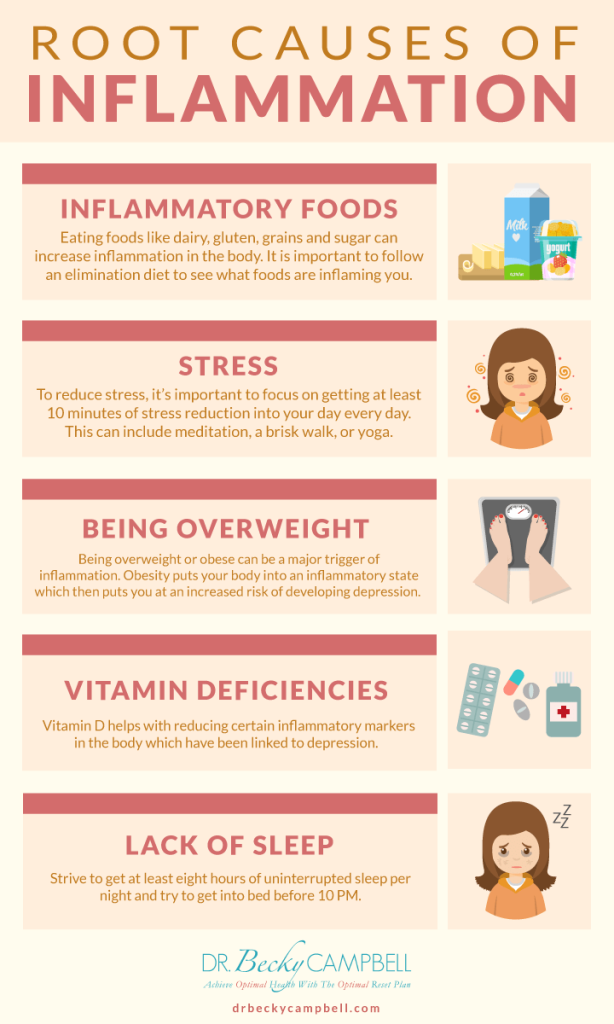
Getting Inflammation Under Control
While the research is there and very clearly linking depression to inflammation, it doesn’t stop there.
If we are going to treat the symptom which is depression instead of treating depression as a disease, it’s crucial to treat inflammation at its source.
Unfortunately, in our modern-day world, there are so many triggers of inflammation, and diet is one of them. The Standard American Diet is certainly to blame for many of the inflammatory conditions today.
The food we put into our body plays a major role in our overall health. It’s up to us to decide to eat clean and eliminate the inflammatory and disease-promoting foods from our diet.
Here are some of the other common causes of inflammation seen today, and what we should be doing to turn things around.
Toxic Foods
I want to touch on the importance of toxic ingredients when it comes to inflammation. While eating healthy is essential to combatting inflammation you need to know what exactly you should be avoiding.
As a good rule of thumb, it’s best to stay away from processed and packaged foods and stick to foods in their whole and natural state.
Here are some of the specific ingredients and foods you will want to avoid.
- Sugar
- High fructose corn syrup
- Artificial sweeteners such as aspartame, sucralose, saccharin
- Vegetable oil such as corn, soy, safflower, and canola
- Shortening & Palm oil
- Trans and hydrogenated fat
- Refined flour & all other gluten-containing products
- Conventional dairy products
- Grain-fed animal products
- Artificial colors
- MSG
- High sodium processed foods
- Nitrates & Nitrites
Stress
Yes, believe it or not, stress is a major cause of inflammation. When our bodies are in a chronic state of stress, hormone imbalance can occur, and an increase in inflammatory cytokines (the exact cytokines that trigger depression) can occur.
To reduce stress, it’s important to focus on getting at least 10 minutes of stress reduction into your day every day. This can include meditation, a brisk walk, or yoga. All you need is a couple of minutes each day to allow yourself to re-center and de-stress.
Being Overweight
Being overweight or obese can be a major trigger of inflammation. Obesity puts your body into an inflammatory state which then puts you at an increased risk of developing depression.
While weight gain and obesity are associated with an increase in inflammatory cytokines, weight loss is linked with a reduction in these cytokines which is another reason why it’s so important to maintain a healthy weight.
Below you will find out why including more physical activity in your day can help reduce your chances of weight gain and also help your mental health.
Sedentary Lifestyle
Living a sedentary lifestyle can lead to inflammation for a number of reasons. Our bodies were not designed to sit at a work desk all day. We were meant to be active and move our bodies daily. When I talk about a sedentary lifestyle I also want to point out that it’s important to move throughout the day and not just for an hour at the gym. Taking breaks and moving periodically during the day will help to get the blood flowing, strengthen our muscles, and get the oxygen moving through our organs. This is even more important if you work a desk job and are sedentary for extended periods of time.
Not only is a sedentary lifestyle a risk factor for inflammation, but it can also contribute to further depression and anxiety. Being physically inactive has also been linked to increasing the risk of certain cancers and puts you at a greater risk of developing high blood pressure and high cholesterol. (3)
To get your body moving try parking your car further away from the grocery store, take the stairs, get up and do a couple of laps around the office throughout the day, or take a walk during your work break. These are all great ways to get your body moving throughout the day and then you can incorporate some physical activity into your day by doing some type of enjoyable activity. Some great ways include getting some cycling in, swimming, yoga, Pilates, walking, or jogging.
One of the tricks that I like to tell my patients is to pick something that you enjoy doing to stay active. If you choose activities that you enjoy then you are more likely to stick to it and less likely to be sedentary.
Vitamin Deficiencies
Being deficient in certain vitamins and especially Vitamin D can be linked back to depression. Unfortunately, many people are deficient in Vitamin D and especially during the colder months when we aren’t outside getting enough sun.
Vitamin D helps with reducing certain inflammatory markers in the body which have been linked to depression. Therefore when we don’t get enough of this sunshine vitamin, we put ourselves at an increased risk of developing depression.
If you live in an area where you are unable to get some sun each day, you may want to consider supplementing with vitamin D. Not only is it helpful for inflammation but this particular vitamin is great for the immune system as well.
Lack of Sleep
So many Americans struggle with getting enough sleep. Whether this is due to hectic work schedules, or sleep insomnia not getting enough sleep can have a significant impact on your risk of depression.
Not getting enough sleep has been linked to inflammation which we now know is associated with depression.
Strive to get at least eight hours of uninterrupted sleep per night and try to get into bed before 10 PM to prevent an evening cortisol surge from keeping you awake at night.

Environmental Toxins
Just like toxic food ingredients, environmental toxins are important to steer clear of as well when trying to combat inflammation. While some toxins in the environment are impossible to completely avoid, there are some that are more avoidable than others. Some toxins are also found in our cleaning products we use at home or even the products that we put on our skin.
Here are some of the environmental toxins that are best to be avoided when you are trying to get your inflammation under control:
- Second-hand smoke
- Heavy metals
- Mold
- Lead
- Formaldehyde found in cleaning products
- Non-organic produce treated with pesticides
- High-mercury fish such as swordfish and tuna
- Toxins found in beauty and self-care products: Parabens, synthetic colors, fragrance, phthalates, formaldehyde, SLS
To help avoid some of these toxins, skip the fish that is high in mercury, choose organic foods whenever possible, stay away from cigarette smoke, and choose “greener” and more natural beauty and cleaning products. There are a ton of options available today that are free from the most common chemicals and you can even make your own household cleaner with essential oils.
Getting to the Root Cause
If you have been suffering from depression and are looking for a new way to look at this condition and possibly get to the root cause of the issue, here are three things you can do to get started:
- Reduce Your Inflammatory Load: You can start doing this by introducing more anti-inflammatory foods into your diet such as berries, wild caught salmon, and dark leafy greens. You will also want to focus on getting adequate sleep, reducing stress, and exercising 30 minutes each day. You will also want to eliminate processed foods.
- Get to the Bottom of the Inflammation: Speaking with a Functional Medicine Practitioner can help investigate the cause of the inflammation. Uncovering potential gut infections, other chronic infections, vitamin deficiencies, or other hidden causes of inflammation could help get to the bottom of what’s causing the depression in the first place.
- Implement the Action Steps Below: I have listed out some action steps below for controlling inflammation. When you lessen your inflammatory load, you are more likely to feel better both physically and emotionally! Try making some of the lifestyle adjustments and see what an anti-inflammatory approach can do for your wellbeing.
Action Steps to Controlling Inflammation
- Cut back on sugar
- Go gluten-free
- Eliminate all processed foods
- Switch to grass-fed animal products and stick to raw organic dairy if you do include some dairy in your diet
- Enjoy fatty wild-caught fish such as salmon 2-3 times per week
- Avoid environmental toxins
- Choose cleaner more natural home cleaning products or make your own
- Choose natural beauty products instead of the ones filled with chemicals
- Exercise daily
- Get your body moving throughout the day on top of daily exercise. This includes taking breaks from sitting at an office desk and including creative ways to get moving throughout the day.
- Reduce stress daily
- Improve sleep habits
If you are tired of feeling sick, not like yourself, and unable to get to the bottom of what may be causing your symptoms, I encourage you to start your own elimination diet to reduce inflammation. Not sure where to get started?
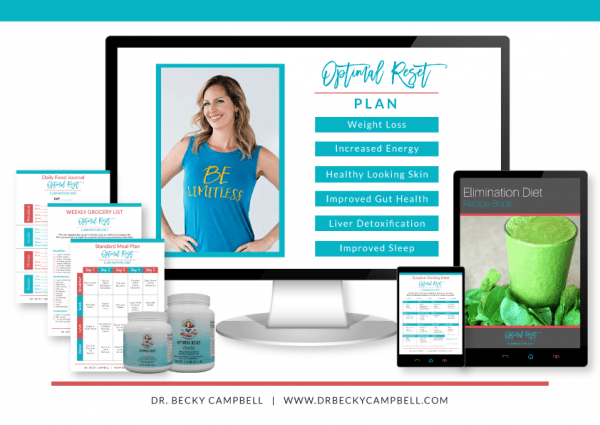
In my optimal reset plan, I walk you through this step by step to give you tons of tools to help you through this important process. I also teach you how to detoxify your body and start to heal your gut so that you are able to tolerate more foods long term.
Here are just a handful of benefits of an elimination diet:
- Weight loss
- Healthy looking skin
- Increased energy
- Deeper sleep
- Decreased joint pain
- Reduces headaches
- Improved gut health
- Helps those with leaky gut
- Can improve autoimmune conditions
- Less bloating/digestive discomfort
If you are ready to get started, Join me in my optimal reset do it yourself program.
If you are suffering from weight gain, fatigue, hair loss and more, click here to schedule a phone call with me, so I can find out where you’ve been, where you want to get to, and how I can help you get there.
I know exactly where you are because I’ve been there myself…I remember being so tired that I could barely function. I gained 30 pounds out of nowhere and had a severe case of brain fog. I also started to get severe anxiety and panic attacks. I was driven and motivated…until I wasn’t. I didn’t know what was happening to me. All I wanted was to get my life back…
Finally, I learned about functional medicine and found a practitioner that I hoped could help me. They ran specialized tests that were far different than I had ever had before. When I got the results back, it turned out I had candida, parasites, high cortisol, the Epstein Bar Virus and many food intolerances. I also had an issue with my thyroid that no one found before because they were using the conventional medicine lab ranges which are way too broad….which I now know is one of the leading causes of hypothyroid misdiagnosis.
I went through treatment of all of these things and it completely changed my life. I immediately lost the 30 pounds I had gained plus more, I had a lot more energy, and my brain fog was gone. I felt amazing and knew that I wanted to help people find the underlying causes of their symptoms and disease.
Sources
(1) Chris Kresser. (2014) Is Depression a Disease—or a Symptom of Inflammation?
(2) Ronald S Smith. Immunological Evidence Supporting The Immune-Cytokine Model of Depression.
(3) Health Risks of a Sedentary Lifestyle. (2013) Lifespan.
(4) So depression is an inflammatory disease, but where does the inflammation come from? (2013)
[sc name="Below all post"]

The Top 3 Roadblocks That are Keeping Supermoms Without Their Powers
So many busy moms are desperate to find the secret to gaining more energy throughout the day. Let’s face it, being a mom is busy and often times exhausting. The truth is that many supermoms today are being held back from their full potential due to three roadblocks getting in their way.
These roadblocks suck the energy out of you, hold you back from playing with your kids, and certainly don’t make you feel your best. If you are ready to get your supermom powers back, keep reading because I am going to uncover these 3 roadblocks that may be holding you back and keeping you from gaining more energy throughout the day. I am also going to share things you can start doing today to feel better and keep up with your kids all day long.
The Roadblocks That Keep You From Gaining More Energy Throughout the Day
Roadblock #1: Thyroid Dysfunction
In my practice, I see countless patients come to me with chronic fatigue, weight gain, and irritability. Many of these patients also come to me with “normal” lab values according to their doctors.
They have been walking around chronically fatigued for months, sometimes even years with little to no relief because they haven’t been properly diagnosed. The truth is that often times, you may be suffering from a thyroid condition that many lab tests will not detect. In my practice, I offer thorough lab testing, and I take a look at a complete thyroid panel. Just because your one lab test comes back “normal” doesn’t mean you aren’t suffering from thyroid dysfunction, especially if you have all of the most commonly seen symptoms.
Thyroid dysfunction can be a massive roadblock and can certainly hold you back from your truest supermom potential. It can make you feel like you have little to no energy, cause weight gain despite weight loss efforts, and make you feel irritable and anxious just to name a few. Here are some of the other common symptoms of thyroid dysfunction:
- Mood swings
- Muscle pain
- Dry skin
- Hair loss
- Constipation
- Brain fog
- Hormonal imbalances: PMS, irregular periods, low libido

As you can see, all of these symptoms can greatly impact the quality of your life. As a busy mom, we just don’t have time for symptoms such as these to hold us back from playing with our kids or spending time together as a family.
The great news is that with the proper testing, a treatment plan can be put into place. With some lifestyle changes, simple dietary adjustments, and even some supplements you could be well on your way to feeling better and gaining more energy throughout the day. Many of my patients who have thyroid dysfunction are able to make the adjustments they need without the use of thyroid medication. The trick here is to catch it as early as possible and make the necessary changes right away.
To help get you started, here are some things that you should avoid with a thyroid disorder. Keeping these out of your diet will be an excellent first step in taking control of your thyroid health.
- Gluten
- Sugar
- Dairy: Especially conventional dairy. Some people may be able to tolerate some organic raw dairy.
- Soy
- Processed foods
- Alcohol
Roadblock #2: Adrenal Dysfunction
Adrenal dysfunction is another thing I commonly see in my practice and something that often times keeps mom's too tired to do everything they want to do.
Adrenal dysfunction can occur when your adrenal glands aren’t working properly. This can occur when someone is under a tremendous amount of physical and or emotional stress.
Fatigue is the most common symptom associated with adrenal dysfunction which is why I often see a lot of moms suffering from this. Moms come to me wanting more energy and no matter what they do it just doesn’t seem to make a difference. The reason for this is because adrenal fatigue can cause a lower level of various hormones as well as neurotransmitters in the body which can ultimately impact every single part of your body. (1)
Some of the other common symptoms associated with adrenal dysfunction include:
- Difficulty getting up each morning even after getting a full night sleep
- Fatigue that lasts all day
- Difficulty handling stress
- Craving salty foods
- Overusing caffeine and sugar to stay awake
- A weak immune system

Having any of these symptoms can get in the way of your quality of life, but when you are trying to balance life as a mom it can be next to impossible to get the things done you need to do.
If adrenal dysfunction is something you suspect, it’s important to see a practitioner who has experience working with this condition. It will take a specific set of tests to look deeper into your hormone levels and make a proper diagnosis. If adrenal dysfunction is present, there are steps you can take to take your life back. These include:
- Changing your diet to better support your body and body’s stress response: I generally recommend an anti-inflammatory Paleo style diet for my patients.
- Enjoying a high-protein snack with some healthy fat every couple of hours to keep your blood sugar levels stable.
- Eating a balanced breakfast daily.
- Testing for food sensitivities: Food sensitivities can make symptoms worse. When you get the proper testing and work with a Functional Medicine Practitioner, you can start an appropriate diet tailored to your dietary needs.
- Eliminating caffeine
- Eliminating or significantly reducing your sugar intake
- Reducing stress: Practicing mindfulness, meditation, and yoga are essential.
- Improving sleep habits.
- Working with a practitioner to develop a diet that is going to help support your energy levels throughout the day and take some of the burden off of your body.
Roadblock #3: Leaky Gut/Food Sensitivities
Leaky gut is something that many people deal with today. Leaky gut is also called intestinal permeability where the lining of the small intestine can become damaged. When this lining is damaged, undigested food particles as well as toxins can leak into the blood stream. When these toxins leak into the body, an autoimmune response can be triggered which can cause inflammation, allergies, food sensitivities, and even migraines. (2)
For mom’s, dealing with leaky gut can be debilitating. Leaky gut, just like the other two roadblocks can cause fatigue, cravings, nutritional deficiencies, as well as a decreased immune function. As a mom, the last thing we need is to be getting sick or feeling like we can’t get through the day without a couple of naps. We need our energy to take care of our kids, and for some of us, we need the energy to get up and go to work as well. Leaky gut is just not something us as moms have time to deal with.
So, what causes leaky gut? Leaky gut is commonly caused by diet and can occur when you are consuming foods such as gluten, soy, sugar, and dairy. If your body is treating a certain food as an invader, an immune reaction can occur, and over time intestinal permeability can develop. Things like antibiotics, and over the counter pain relievers may also be to blame for leaky gut.
If leaky gut is suspected, it’s also important to test for food sensitivities. The last thing you want is to begin a healing protocol only to be consuming foods your body is still reacting to. This is something I will test for in my practice. Consuming foods that you are sensitive to can lead to a wide range of symptoms including digestive upset like bloating and constipation, headaches, and even irritability. When it comes to food sensitivities it's also important to remember that it's possible to be sensitive to a food that is generally considered healthy. Each person is going to have their own individual sensitivities which is why it's so important to get tested for both food sensitivities and leaky gut.
A healing diet would also be essential to support the gut. Starting a diet free from gluten, soy, dairy, and sugar is an important step in healing that gut lining and feeling better. There are also certain foods that are particularly healthy for the gut that can be included in the diet. These include:
A healing diet would also be essential to heal the gut. Starting a diet free from gluten, soy, dairy, and sugar is an important step in healing that gut lining and feeling better. There are also certain foods that are particularly healthy for the gut that can be included in the diet. These include:
- Bone broth
- Coconut oil
- Probiotics
- Sauerkraut
- Unsweetened coconut yogurt
- Grass fed meats
- Wild caught fish

If you are a busy mom who just doesn’t have the energy to do what you dream of achieving, it’s time to take a look at what roadblocks may be holding you back. By uncovering potential roadblocks in your life, you can achieve optimal health so that you can be the high performing mom you know that you, and having plenty of energy to last you all day long. To take care of others, you need to take care of you! Start today by reaching out for a consultation to see how to uncover your hidden roadblock and start living your life to the fullest.

If you are suffering from weight gain, fatigue, hair loss and more, click here to schedule a phone call with me, so I can find out where you’ve been, where you want to get to, and how I can help you get there.
I know exactly where you are because I’ve been there myself…I remember being so tired that I could barely function. I gained 30 pounds out of nowhere and had a severe case of brain fog. I also started to get severe anxiety and panic attacks. I was driven and motivated…until I wasn’t. I didn’t know what was happening to me. All I wanted was to get my life back…
Finally, I learned about functional medicine and found a practitioner that I hoped could help me. They ran specialized tests that were far different than I had ever had before. When I got the results back, it turned out I had candida, parasites, high cortisol, the Epstein Bar Virus and many food intolerances. I also had an issue with my thyroid that no one found before because they were using the conventional medicine lab ranges which are way too broad….which I now know is one of the leading causes of hypothyroid misdiagnosis.
I went through treatment of all of these things and it completely changed my life. I immediately lost the 30 pounds I had gained plus more, I had a lot more energy, and my brain fog was gone. I felt amazing and knew that I wanted to help people find the underlying causes of their symptoms and disease.
Sources
(1) The Adrenal Fatigue Solution. What Are The Symptoms Of Adrenal Fatigue?
(2) Healthy Women. 10 Signs You Have a Leaky Gut—and How to Heal It
[sc name="Below all post"]

How to Support Your Thyroid and Adrenals to Reach Your Full Superwoman Potential
So many women today are expected to be Superwoman. Many women I see in my practice are moms, run a business, or dedicate all of their time at their place of work. Women then come home from work to make dinner, take care of their kids, or parents and then try to make time for exercise to try to look good and feel healthy. There is so much put on women today that being Superwoman is almost expected.
This is why when I think of the term superwoman, I think about all women and what they have to juggle. With all that is put on us, it’s very easy for us to lose sight of our superwoman powers.
Here are some of the characteristics I think of when I think about who superwoman is:
- Strong: Superwoman is strong, resilient, and can tackle anything that comes into her way with strength and grace.
- Powerful: Superwoman is powerful. She confronts obstacles, tackles them and keeps her power all at the same time.
- Brave: Us women have to be brave, and superwoman is brave when it comes to reaching her full potential and pushing outside of her comfort zone to get to where she wants to be.
- Entrepreneur: I see so many women in my practice who are entrepreneurs. Superwomen are self-starters, so it’s no wonder an entrepreneurial spirit comes with the superwoman package.
- Mother: Mothers are superwomen, bottom-line. We are expected to be superwomen every day by taking care of our families, making dinner, and then taking care of ourselves in the mix of the chaos.

What Does Superwoman Need to Function at Her Best?
Given all the pressure that is put on us women today, in order to function at our best our body needs to be working at its highest potential. This is where functional medicine comes in and where I work with a ton of high-performance women to help them reach their absolute superwoman best.
Here are some of the things superwoman needs to function at her best:
- A Healthy Thyroid: One of my specialties in my practice is thyroid health. I see so many high-performance women come to my practice with less than optimal thyroid function. Often times women come to me with symptoms such as hair loss or thinning, weight gain, depression, anxiety, and even low libido. Do any of these sound familiar? Is so, you are not alone and you are not the only superwoman being held back from your full potential due to a thyroid disorder. If your thyroid is out of balance, your entire body is out of balance. The thyroid is necessary for your body to function at its best as thyroid hormones impact nearly even single body process. It’s no wonder that when our thyroid health is out of balance we suddenly gain weight, feel fatigued and suffer from brain fog. Walking around with all of these symptoms is certainly not the way to harness your superwoman powers. As a Functional Medicine Practitioner, I work with women to uncover potential thyroid imbalances and then get to the source to correct it. Keep reading, and you will learn my exact plan for how I can help you conquer your thyroid issue holding your superpowers back.
- Healthy Adrenal Function: I see adrenal fatigue more and more in my practice. Often times I see it among working mothers who are so burnt out that they just don’t have any time to take care of themselves. They have lost their superwoman powers due to symptoms of fatigue, irritability, difficulty sleeping, and anxiety. How can we function at our best when we feel that way? Adrenal function is one of the key components to functioning at your absolute best. To help balance adrenal function we need to work on balancing stress hormones such as cortisol and adrenaline. Blood sugar balance also comes into play here. When all of these are out of balance it’s very difficult to feel our best and perform our best every single day.
- A Body Free from Toxins: Having a body free from toxins is at the center of performing at our superwomen best! However, this isn’t always the case. I see countless women who come into my practice who have heavy metal toxicities or are in need of a major liver cleanse. Now, this isn’t entirely our fault. Things like pollution certainly don’t help. However, there are things that we can control to cleanse our body from heavy metals and toxins that weigh us down. Buildup of heavy metals such as mercury can cause thyroid dysfunction, and a toxic liver can lead to difficulty losing weight, fatigue, bloating, and acid reflux. These are symptoms that so many high-performance moms suffer from and they can hold you back from your utmost potential. When your body is free from toxins and heavy metals your ability to lose weight improves, you have more energy, and your overall mood will be much better than it was when you were being dragged down! Talk about superwoman powers. Having the ability to feel great every single day is what every high-performance mom dreams of, and this reality could be yours.
- Superwoman Diet: Diet is key. There’s no doubt that the food choices you make every single day is going to impact how you feel. If you consume a diet full of processed and sugary foods packed with artificial ingredients you will be more likely to have difficulty losing weight and experience blood sugar imbalances. Eat a diet packed full of superwoman foods and you will have sustained energy to keep up with your job and kids (if you have children) and have the energy to do the things you want to do. A diet designed for superwoman will also help keep you healthy and reduce inflammation. This is all part of my plan I am going to talk about to help you get your superwoman powers back, so keep reading.

What is Superwoman Capable of At Her Full Potential?
Do you remember what it was like during a period of your life when you felt like you had endless energy and could balance it all? For most of us, this may be a distant memory. Trust me, I’ve been there. There was a period in my life where I was fatigued, had gained 30 lbs. and just felt terrible every day. Feeling great and full of energy and able to multi-task was something that had seemed like a distant memory. This was before I started my journey in functional medicine. After uncovering my root cause I was able to harness my superwoman powers and have not looked back. Today I have sustained energy to run a business, keep up with my kids, and take care of myself. This is what I want for each one of you. I want each one of you to be capable of amazing things at your fullness potential. Don’t think it’s possible to do everything you use to do? Think again! It’s totally possible with the proper self-care and adjustments.
Here are some of the things superwoman is capable of at her fullest potential:
- Keeping up With Her Kids Without Getting Tired: How many of you wish that you could play with your kids without getting tired? I hear this from so many women who come to my practice totally drained and fatigued. Working, taking care of your family, and playing with your kids requires a ton of energy! However, guess what? This is completely possible once you uncover what is holding you back. At your fullest potential, you could be keeping up with all of your kid's activities, playing, helping with homework and whatever else needs to be done with even some energy to spare.
- Running Her Business: Many high-performance moms run their own business which again takes a ton of energy. Being a business owner, mother, and wife I know this all too well. Putting so much time into your business can leave you exhausted with little to no energy to spare. When superwoman is performing at her best, has uncovered any potential imbalances, and is eating a superwoman diet running her business becomes ten times easier. While the workload may not become easier, your motivation, focus, and energy improves which makes the world of difference. You may even find you become more successful when you take care of you!
- Making Food for Her Family: Do you make food for your family, if so do you find yourself dragging at the end of the night struggling to get something healthy on the table? You’re not alone here. Keeping up with the kids, working, and now having to make dinner and prep school lunches for the next day is extremely demanding. When you are performing at your highest potential though this doesn’t seem as daunting. In fact, you may actually enjoy whipping up a healthy meal and finding foods that fuel your body right and support a healthy family. You may even have the energy to include the kids in your cooking to teach them how to eat to support health.
- Taking Care of Her Parents: So many women are responsible for taking care of their parents. As our parent's age, often times they need us. Now not only do we have a job to hold down, a family to feed and care for, but we also become caregivers to our wonderful parents. This can be draining if you don’t take care of yourself. Ultimate self-care is essential here and when it’s done right you are capable of balancing it all without even thinking twice about it.
How to Get Your Superwoman Powers Back
Are you ready to get your superwoman powers back? I am here to help all high-performance women harness their superpowers and conquer their goals, keep up with their kids, and feel amazing every day.
Here is how I plan to help you get your superwoman powers back.
- Testing: As a Functional Medicine Practitioner, I offer thorough testing. I also offer testing that’s more in depth than what you may be offered just going to your regular M.D. We take a look at things like thyroid function, adrenal health, gut imbalances, food sensitivities just to name a few. These tests also look deeper than a modern medicine lab panel would so even if you have been tested for these before and tested negative doesn’t mean you don’t have an imbalance. I take a thorough look at all body systems to determine what exactly needs to be addressed.
- Superwoman Diet: We can’t be superwoman without a superwoman diet. I address dietary needs of each woman individually. After thorough testing, we come up with a plan that will work best for you. This plan includes superwoman foods such as grass-fed animal protein, veggies, fruits, gut-friendly probiotic-rich foods, and a powerful list of superfoods to help you feel your best each day.
- Superwoman Exercise Program: Depending on what your test results say, I will develop a specific exercise program to help you feel better and reach your health goals. Exercise is important, but it’s important that you do the right type of exercise for your body. Too much or too little can halt you from reaching your full potential. We will thoroughly review a specific program made just for you.
- Individualized Programs: It’s important to know that every patient I see is different. After I run testing and we gain a better understanding of what may be going on, I create an individualized plan just for you. This plan will be specifically tailored to help you get your superpowers back.
- Try a 30-Day Thyroid Reset: Want your superpowers back? I recommend reading my book, The 30-Day Thyroid Reset Plan; Disarming the 7 Hidden Triggers That Are Keeping Your Sick. You will learn everything you need to know about your thyroid and how to take care of it. This 30-day plan will help your improve your health with the help of my favorite thyroid-friendly recipes to nourish your body with delicious meals.

Final Thoughts
If you are looking for your superpowers, you don't have to do it alone. Following my tips can help you regain your health, but setting up a consultation will provide you with personalized attention, an individualized plan, and loving support from a functional health practitioner (hint: that's me!). If you are dealing with symptoms of Hashimoto’s disease, other thyroid issues, or any other health issues, I invite you to schedule a consultation with me. I can help to identify the root cause of your condition and recommend a personalized treatment plan to repair your body and regain your health and well-being. Schedule your consultation here.
[sc name="Below all post"]

The Truth About Coconut Oil: Is Coconut Oil Healthy?
Coconut oil has been deemed a superfood over the last couple of years, and many people have started including it as a regular part of their diet. But, is coconut oil healthy? I am going to dive into the truth about coconut oil and help clear some of the recent confusion surrounding this oil.
If you are feeling more confused than ever regarding whether or not coconut oil is healthy since the release of the American Heart Association June report, keep reading.
What is the American Heart Association Saying About Coconut Oil?
As if the topic of saturated fats wasn’t confusing enough, the June American Heart Association report has made things even more confusing. However, the truth is that this is certainly not the first time the American Heart Association has recommended cutting back saturated fat, they have consistently held their stance on saturated fats and have recommended reducing it from the diet. However, I am going to talk about why avoiding coconut oil is not the answer and share a little bit more on this recent report and why there may be some biased views and influences impacting this latest report. First, let's dive a little deeper into this AHA report.
For years, saturated fats were looked at as damaging and harmful to our cardiovascular health. However, over the years, other reports have shown the benefits of adding coconut oil to your diet which is very high in this particular fat.
The AHA has come out in saying that coconut oil may not be as healthy as what many may believe it to be. One of the biggest issues they have with coconut oil has to do with cholesterol. The American Heart Association is recommending that people stay away from this oil because they believe it to raise LDL cholesterol (the bad type of cholesterol.) However, they do not speak about the potential benefits of coconut’s ability to help raise the healthy type of cholesterol (HDL). It’s also been found that adding some coconut oil to your diet can help decrease waist circumference. (1)

The Industries Influence
What do I mean when I talk about industry influence? I am talking about the influence industries have on nutritional science. Now, you may be thinking that the American Heart Association wouldn't be impacted by industry influence as it's a non-profit organization but the truth is that non-profits can be influenced as well. As it turns out, the AHA receives funds from some large companies you would never think the AHA would be involved with.
Large companies such as Coca-Cola, Nestle, and The Sugar Association to name a few have representatives that serve on the American Heart Associations Industry Nutrition Advisory Panel, INAP. It's very possible that some of the representatives would have some influence over what the AHA recommends.
The American Heart Association’s Issue with Cholesterol
So, why is the American Heart Association so concerned with cholesterol levels? Their primary issue with coconut oil has to do with cholesterol since the AHA believes that LDL cholesterol has the ability to put you at a higher risk of developing heart disease.
While of course managing your cholesterol levels is important (keep in mind that both high and low cholesterol can pose an issue to health) it’s important to also take other areas of your health into account when looking at risk factors for heart disease. There are many different areas we need to look at when it comes to protecting our heart such as other dietary and lifestyle factors to help reduce the total inflammatory load on the body. Instead of solely focusing on cholesterol as the issue it’s important for us to look at the root cause of nearly all disease which happens to be inflammation.
One More Thing on Cholesterol
Another important point I want to make about cholesterol is the fact that it’s important to look at more than just your total cholesterol. You need to look at your actual cholesterol ratios. You will want to look at both your HDL and LDL cholesterol numbers. Unfortunately, it’s more common for medical organizations or even modern day physicians to put a large emphasis on your total cholesterol as opposed to the ratios. For this reason, whenever working with a doctor always ask about your cholesterol ratios so that you know where your levels stand.
I have also written an entire blog post on cholesterol so if you are interested in learning more about why cholesterol is an important part of our diet you can read more about that here.
Another Big Issue with the AHA Report
Another big issue I have with the report that came out about coconut oil is what is being recommended as a replacement for certain saturated fats. The report talks about the comparison between saturated fats such as those found in coconut oil and dairy products and polyunsaturated vegetable oils. The AHA report is in favor of the use of vegetable oils. (2)
So, what’s the big issue with this? Unfortunately, many of the vegetable oils seen today are genetically modified such as corn as well as soy oil. (3) These vegetable oils are also very high in omega-6 fatty acids. When we get more omega-6 than omega-3 fatty acids, we run the risk of increasing inflammation in the body. Too much omega-6 fatty acid is associated with an increased risk of nearly all inflammatory disease. (4) This is a major issue because we know that inflammation can cause heart disease so therefore increasing your vegetable oil intake may actually put you at a greater risk of developing heart disease.
Debunking the Myth About Saturated Fats
When asked the question is coconut oil healthy, the topic of saturated fat is always going to come up. This is especially true now that this new report has come out. I want to talk specifically about saturated fats to give you a little bit of a better understanding surrounding them and how they are used in the body.
The bottom line about saturated fats is that we need them. Did you know that about 50% of cell membranes are composed of saturated fats? Imagine what would happen if we didn’t get any in our diet.
Our bones also rely on saturated fats in order to effectively incorporate our calcium intake into our bones. (5) Saturated fats are also protective in the sense that they can help protect the liver and they are also important for brain health. When we completely remove or significantly restrict our saturated fat intake, we rob the brain of what it needs to function properly.
Our nerves also need a certain amount of saturated fat for proper nerve signaling. This is especially true for saturated fats found in things like coconut oil as well as butter. These fats help with nerve signaling that influences essential body functions such as metabolism.
If you also think back to the hunter and gatherer days where a Paleolithic diet was consumed, they were not at risk for cardiovascular disease like we are today. What's important about that is that their diets contained large amounts of fats and saturated fats at that. High-fat diets today such as the ketogenic diet have shown favorable odds for affecting the markers for cardiovascular disease according to a study done by The Journal of Nutrition.
While there are many mixed messages about consuming fat and it's impact on our health, the studies are there that show that keeping fat in the diet can ultimately be beneficial especially when you consume the right types of fat, and yes this includes coconut oil!
Saturated Fat & The Immune System
One last thing I want to talk about when it comes to saturated fat intake is the role it plays in our immune system. One of the greatest benefits of adding coconut oil to your diet is its ability to help boost the immune system. The lauric acid found in the coconut oil is responsible for this benefit. When we don’t get enough saturated fats into our diet, it can be difficult for our white blood cells to keep up with any foreign invaders that may come into our blood. This can put us at risk for bacteria, and viruses to invade and make us sick.
The truth is that our bodies need a certain amount of saturated fat in our diet. Of course, it’s important to focus on where you are getting your saturated fats from. For example, you don’t want to consume processed meats or damaged oils. Things like coconut oil, grass-fed and organic beef, and organic raw dairy products are all excellent sources. Despite what this current report states about coconut oil, the proof is there that a certain amount of saturated fat from healthy sources is necessary for overall health. Therefore, don’t be afraid to keep coconut oil in your diet. I even recommend swapping out other unhealthy oils such as vegetable oils in your diet for coconut oil.

So, is Coconut Oil Healthy?
So, now that you know a little bit more about what the AHA report is about as well as a little bit more about saturated fats and cholesterol you may be wondering is coconut oil healthy?
The bottom line is that coconut oil still contains properties that can benefit your health. This oil contains so many powerful properties that completely removing it from your diet may do more harm than good.
Here are just a handful of health promoting properties coconut oil holds:
Immune Health: As we have previously talked about, coconut oil is great for the immune system. Coconut oil acts as a natural antibacterial and antiviral. The lauric acid in coconut oil is also great for fighting off candida.
Brain Health: There have been numerous studies that have shown that coconut oil may be able to assist those who suffer from Alzheimer’s disease and even seizure disorders. Coconut oil contains medium chain fatty acids which work a little bit differently than other fats in the body. These fats are very easily absorbed and then converted into ketones. These ketone bodies serve as energy sources for the brain and may be very beneficial for those with Alzheimer’s disease. (6)
Energy Support: You may notice that many athletes make coconut oil a regular part of their diet and this again has to do with the medium chain fatty acids present in this oil. These fats are metabolized by the liver and can be used for energy which is why coconut oil is such a great energy supporting food.
Choosing the Right Kind of Coconut Oil
If you do decide to keep coconut oil in your diet, not all coconut oil is created equal. Here are some of the things you will want to watch out for when choosing which brand is going to be best for you.
- Choose Unrefined Coconut Oil: You may notice that some brands of coconut oil are labeled as “refined” when shopping at the grocery store. You want to stay away from this. Why? Because refined coconut oil has been bleached as well as deodorized. The unrefined version does not use any chemicals to treat the oil and therefore keeps more of the natural compounds present in the oil.
- Choose Virgin Coconut Oil: Virgin coconut oil is derived from the meat of mature coconuts, and it's full of healthy fats and free from any chemicals that you may find in refined versions. Virgin coconut oil does have a very distinct coconut taste, so you will likely notice the flavor of the oil when used in cooking. With that being said, I do recommend the use of virgin coconut oil if you are choosing to keep coconut oil in your diet.
Other Ways to Slash Your Heart Disease Risk
I am by no means saying that we shouldn’t be worried about our risk for cardiovascular disease because this is something we all need to pay attention to. However, I want to share some additional ways that you can help reduce your risk that doesn’t involve swapping out coconut oil for more damaging oils.
By taking a deeper look at your diet and lifestyle and making changes you could do your body a whole ton of good.
Here are some other ways that you can help reduce your risk of cardiovascular disease.
- Cut processed foods out of your diet. Foods made with damaged fats such as trans fats, and hydrogenated fats put you at an increased risk of developing heart disease.
- Eliminate as much refined sugar from your diet as you can.
- Eliminate gluten and cut back on grains.
- Eliminate processed meats from your diet.
- Enjoy more omega-3 fatty acids: Things like wild-caught fish, mackerel, chia seeds, flaxseeds, and walnuts are excellent sources.
- Enjoy more dark leafy green vegetables.
- Add fresh herbs and spices to your diet.
- Follow an anti-inflammatory diet with lots of vegetables, berries, and omega-3 rich foods.
- Stay active by getting some form of exercise into your daily routine.
- Reduce stress to help reduce the inflammatory load on your body.
- Maintain a healthy weight.
- Maintain healthy blood pressure readings.

If you are suffering from weight gain, fatigue, hair loss and more, click here to schedule a phone call with me, so I can find out where you’ve been, where you want to get to, and how I can help you get there.
I know exactly where you are because I’ve been there myself…I remember being so tired that I could barely function. I gained 30 pounds out of nowhere and had a severe case of brain fog. I also started to get severe anxiety and panic attacks. I was driven and motivated…until I wasn’t. I didn’t know what was happening to me. All I wanted was to get my life back…
Finally, I learned about functional medicine and found a practitioner that I hoped could help me. They ran specialized tests that were far different than I had ever had before. When I got the results back, it turned out I had candida, parasites, high cortisol, the Epstein Bar Virus and many food intolerances. I also had an issue with my thyroid that no one found before because they were using the conventional medicine lab ranges which are way too broad….which I now know is one of the leading causes of hypothyroid misdiagnosis.
I went through treatment of all of these things and it completely changed my life. I immediately lost the 30 pounds I had gained plus more, I had a lot more energy, and my brain fog was gone. I felt amazing and knew that I wanted to help people find the underlying causes of their symptoms and disease.
Resources
(1) A Coconut Extra Virgin Oil-Rich Diet Increases HDL Cholesterol and Decreases Waist Circumference And Body Mass in Coronary Artery Disease Patients. (2015) Pub Med
(2) Dietary Fats and Cardiovascular Disease: A Presidential Advisory From the American Heart Association. (2017) American Heart Association.
(3) Is Coconut Oil Healthy? The American Heart Association Doesn’t Think So. (2017) Dr. Axe.
(4) How too much Omega-6 and Not Enough Omega-3 is Making Us Sick. (2010) Chris Kresser.
(5) 7 Reasons to Eat More Saturated Fat. (2009) Dr. Mercola.
(6) The Role of Dietary Coconut for the Prevention and Treatment of Alzheimer’s Disease: Potential Mechanism of Action. (2015) Pub Med.
(7) A Ketogenic Diet Favorably Affects Serum Biomarkers for Cardiovascular Disease in Normal-Weight Men. (2002) The Journal of Nutrition
(8) Coconut Oil is Still Healthy, Despite AHA Claims. (2017) Chris Kresser
[sc name="Below all post"]