

How Too Much Exercise Can Make You Gain Weight
Until I turned 27, I had never had an issue with my weight. I was eating a healthy diet and exercising 6 days a week, doing high intensity training for over an hour each day. Yet I was gaining more and more weight, 30 pounds to be exact! I couldn’t understand why I was working so hard and getting the opposite results of all my efforts. I had some other symptoms creeping on too, like extreme fatigue and more and more hair loss. At first, I chalked it up to being in medical school and studying for about 5 hours a night after my 9-hour school days. Plus, all the doctors I went to for help with this told me I was fine.
At this point I was running about 5-6 miles a day and I started to get shin splints, making my runs very painful. I didn’t want to stop running because I was worried I was going to gain even more weight, but knew I had to rest for a while so my body could heal. I decided to start doing Pilates so that I could at least get some type of exercise in. After a couple weeks of doing Pilates with no running I started to lose some weight. This was so weird to me, I thought it had to be a fluke!
I decided at this point that there had to be something to this, so I went on a long search for an answer. This is when I found a functional medicine practitioner that did much more thorough testing than the other doctors I had been to that just blew me off. After thorough testing was done on my adrenal glands and my thyroid gland, I learned that my cortisol was really high. See, cortisol is the stress hormone that the adrenal glands produce. You will never guess what the biggest sign of high cortisol is…Yep, that’s right, weight gain!! The high intensity exercise I was doing was pushing my cortisol higher and since the adrenal glands and the thyroid gland work together, this was causing my thyroid to under function as well.
The adrenal glands and the thyroid gland run on the same axis, HPAT axis (Hypothalamic-Pituitary-Adrenal-Thyroid), so one can greatly affect the other. When cortisol is high, it not only can cause weight gain, but it can also cause fatigue, insomnia and a number of other unwanted symptoms. Strenuous exercise can cause an increase in cortisol levels. Strenuous exercise can also cause suppression of the immune system. Since about 97% of thyroid disease is autoimmune in nature, this can also cause strain on the thyroid gland leading to weight gain.

What is Considered Strenuous Exercise?
Having an elevated heart rate for more than a few minutes at a time is considered strenuous when there is adrenal insufficiency. You should be able to carry on a conversation the entire time you are training. Interval training is a better option because you are doing about 1 minute of high intensity training followed by a minute or so of rest. HIIT training and Tabata training are two popular methods of doing this type of burst training. For some with high cortisol and/or a thyroid condition, you may need to start with something like yoga or Pilates until the adrenal glands and thyroid gland have been supported for a period of time.
What Can You do to Support the Adrenal and Thyroid Glands?
Since these two glands respond so negatively to stress, this is where you must start when supporting these glands. There are many different types of meditation that more and more people are turning to for stress relief like mindfulness training, Vedic meditation, Ziva mediation and more. These types of mediation can help us teach or bodies to respond differently to the daily stresses of life. It has been scientifically proven to work and I highly urge you to give one of these a try. They usually consist of committing to 1-2 sessions of about 20 minutes of meditation each day. When people hear the word meditation, some think it is a spiritual process. It is actually more about brain and body retraining instead.
Next up is blood sugar control. Controlling your blood sugar with diet is key to controlling cortisol levels. Blood sugar greatly affects cortisol and vice versa. High cortisol tends to lead to high blood sugar, which again, can lead to weight gain. A diet low in sugar and higher in healthy fats like avocados, coconut oil, ghee and lean protein like chicken, turkey, grass-fed beef or bison, with tons of fibrous veggies like leafy greens, broccoli and cauliflower is the best way to do this.
How much sleep you get each night also plays a huge role in your weight. Sleep deprivation can raise cortisol levels and make you more prone to making bad choices with diet. Getting plenty of sunlight during the day and keeping things dark at night will help to keep your circadian rhythm in line, helping you achieve a good night’s sleep. Making sure you are in bed by 10pm is the best way to ensure that you will get an adequate amount of sleep. I recommend doing something calming like reading while diffusing some essential oils before bed instead of watching TV or working on your computer or phone.
Adaptogenic herbal supplements like ashwagandha and holy basil to name a few, can also help to keep cortisol levels from going too high or too low. Selenium rich foods like brazil nuts and organ meats and iodine rich foods like seaweed, raw dairy and eggs can give your thyroid the support it needs as well. I have also found taking adrenal and thyroid glandular supplements to be very beneficial to supporting these glands as well. I would recommend working with a functional medicine doctor to help you with dosing of these glandular supplements however because sometimes they can be too powerful and push the cortisol or adrenal hormones too high.

So, if you are like I was, and feel like all your hard work in the gym is not paying off, high cortisol may be the culprit. I recommend testing your cortisol levels using the DUTCH test which uses dried urine metabolites to determine your free and total cortisol levels. This test has the capability of measuring many other factors like sex hormone levels, oxidative stress levels, methylation status, neurotransmitter levels and more. I use this test in my practice and believe it is far more accurate than blood or saliva testing.

In "The 30-Day Thyroid Reset Plan", I talk more about what types of exercise are best for you cortisol levels. I also include a quiz to help you figure out if your cortisol levels are high and go in to great detail on what to do to support the adrenal and thyroid glands with my 30-day plan. Check it out here!

The Pros and Cons of the Keto Diet
What is the Keto Diet?
The ketogenic diet has exploded in popularity over the past couple of years. People are ditching carbs and sticking to a high-fat way of eating to help shed weight, but also gain control over certain health conditions. But, as with anything else, there are pros and cons of the keto diet which I am going to break down for you.
So, what exactly is the keto diet? The full name for this diet is the ketogenic diet. The goal of starting a ketogenic diet is to get your body into a state of ketosis where you are using ketone bodies for energy instead of carbs. This occurs when there is not enough glucose for the body to use, so your body will turn to an alternative fuel source, like fat. Your body will then take the fat stores, and your liver will break them down and then make glucose. During this process, ketones are formed and they can then be used as the alternative energy source your body is looking for.
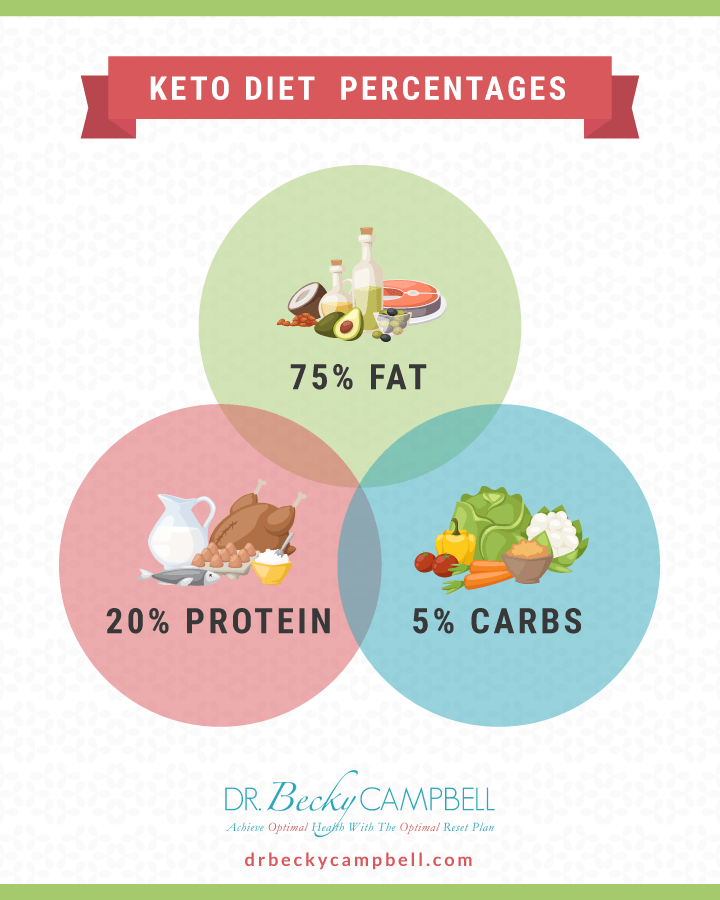
The diet primarily consists of fat. You will be getting roughly 75% of your daily calories from fat, 20% from protein, and less than 5% from carbs.
Why Do People Go Keto?
Why would someone want to get into a state of ketosis? Many people start a keto diet as a way to promote weight loss. When your body is burning fat vs. glucose, your body is literally burning its own fat stores which often results in weight loss. Getting into a state of ketosis is often associated with a decrease in appetite as well which is another reason people may start this diet to help support weight loss efforts.
There are other health reasons someone may start a ketogenic diet. Blood sugar regulation is a big one. When you are eliminating most of the carbohydrates from your diet, and consuming more fat, you may have an easier time stabilizing blood sugar levels. This can be especially helpful for someone who may have been consuming lots of refined carbohydrates. However, the key here is to stick to healthy fats, clean protein, and lots of non-starchy vegetables. Ditching carbs and sticking to a high-fat diet doesn’t mean you should eat just any type of fat. Quality is a key component of properly following the ketogenic diet.
Another major reason people may go on a ketogenic diet is to help control epilepsy. In fact, this diet was created as a way to help control seizures before medications were around! The keto diet has been used to help treat epilepsy since the 1920s. (1)
I have also seen those who suffer from migraine headaches do well on a ketogenic diet.
It’s Not One Size Fits All
As with any diet, I truly do not believe there is ever a one size fits all. While the ketogenic diet may be great for some, it is not going to work for others. Those who should not follow a ketogenic diet would include pregnant and breastfeeding moms, anyone who is significantly underweight, young children, those with metabolic disorders, gallbladder disease, or those who are prone to kidney stones. Keep in mind that this is not an all-inclusive list. I encourage you to always speak with your healthcare practitioner before starting any new diet.
Since I specialize in thyroid health, I have also found that thyroid patients do not usually do well on the keto diet, as it is important for them to get enough complex carbohydrates into their diet for proper thyroid function. This is also why people have been known to experience thyroid imbalance when they first go keto. The diet can throw your thyroid balance out of whack.
Those who have the lipoprotein(a) enzyme may also not be great candidates for this diet. Having this marker in the blood may be key in determining the risk of heart disease. Following a high-fat diet like the keto diet, may increase this marker not making it an ideal option for those who already have elevated Lp(a).
There may also be some people who may do well on the diet with some modifications. The approach I happen to like is Dave Asprey's, of Bulletproof, way to be Keto. The Bulletproof way is a cyclical keto diet and involves following a keto diet for 5-6 days a week, and then one day where you consume more carbs than usual. This helps to let your body know that it is not in a starvation mode, and refuels your body a bit. (2) I like this version of the keto diet because it also emphasizes the importance of consuming healthy fats as opposed to damaged fats. Some keto recipes you will find online are loaded with conventional dairy and damaged fats, and while they may be low in carbohydrates, these foods will still increase inflammation in the body. Instead, try consuming healthy fats like the ones listed in the chart below.

A cyclical ketogenic diet may also be very beneficial for those who are super active. When you are an athlete or have an intense workout routine, your body does well on carbs. I know there are many people that will not agree with the me on the need for carbs for athletes, but it is what I have observed with myself and with many of my patients. With that being said, I know there are also athletes that do well on a ketogenic diet, which is exactly why nothing is one size fits all.
Considerations to Keep in Mind
While the keto diet has been made to sound wonderful and a quick fix for weight loss, there are some things you will want to keep in mind. When you first start the ketogenic diet, you may go through something called the “keto flu.” This is when your body is going through a major transition from consuming carbs to significantly restricting them. Many people experience flu like symptoms, and some may even have side effects like poor sleep, extreme fatigue, and even hormone imbalances. Before you start a keto diet, work with a practitioner who can guide you in the right direction as to what you should be eating on a daily basis, and how to get through this unpleasant phase. For many, increasing their water intake, sipping on bone broth, and consuming more healthy fats can be very helpful.
Not everyone does well with this way of eating, and many people experience muscle cramping. Cramping often happens when the body is not getting what it needs. When you follow such a restrictive diet, your body may be missing vital nutrients, causing those unpleasant muscle cramps.
The Takeaway
While there are some benefits to this diet, I do not believe it is the best long-term diet. However, with the right modifications, like the Bulletproof Keto version, it may be beneficial for some. I also want to stress that the ketogenic diet can be very dangerous if you are not getting enough of what your body needs. I encourage you to work with a Functional Medicine Practitioner and talk about how to make this diet work for you if it is something you are interested in trying. Since you are almost eliminating an entire food group, it is so important to make sure you are getting the right balance of nutrition for your body to work at an optimal level.
If you are suffering from weight gain, fatigue, hair loss and more, click here to schedule a phone call with me, so I can find out where you’ve been, where you want to get to, and how I can help you get there.
I know exactly where you are because I’ve been there myself…I remember being so tired that I could barely function. I gained 30 pounds out of nowhere and had a severe case of brain fog. I also started to get severe anxiety and panic attacks. I was driven and motivated…until I wasn’t. I didn’t know what was happening to me. All I wanted was to get my life back…
Finally, I learned about functional medicine and found a practitioner that I hoped could help me. They ran specialized tests that were far different than I had ever had before. When I got the results back, it turned out I had candida, parasites, high cortisol, the Epstein Bar Virus and many food intolerances. I also had an issue with my thyroid that no one found before because they were using the conventional medicine lab ranges which are way too broad….which I now know is one of the leading causes of hypothyroid misdiagnosis.
I went through treatment of all of these things and it completely changed my life. I immediately lost the 30 pounds I had gained plus more, I had a lot more energy, and my brain fog was gone. I felt amazing and knew that I wanted to help people find the underlying causes of their symptoms and disease.
Resources
Ketogenic Diet. Epilepsy Society
Is the Full Ketogenic Diet Bulletproof? Bulletproof
