

GUEST BLOG POST: How Paleo Can Help You Cope With The Menopause
Guest Post By: Allison Thompson of Paleo Living
Today I want to share a guest post with you from Allison Thompson from Paleoliving.com. She talks about how a Paleo diet helped her cope with menopause and avoided needing any type of medication.
5 years ago I found myself facing a major scare in my life. It was the morning of my 48th Birthday. Whilst having a cuddle with my husband, he said, "have you felt this lump?" You can imagine my shock. I was someone who checked her breasts regularly.
Immediately we rang the doctor who asked us to come straight in. We live in Spain and have chosen to take out private healthcare. After seeing the doctor I was immediately sent for a mammogram. I then headed back to the doctors with x-rays in hand.
Although the doctor I'd seen said he couldn't see any problems. An appointment was set up for me to see the gynecologist. To cut a long story short on the Monday they rang to give me the all clear.
Whilst this was going on I'd also started to notice some other changes. A friend suggested I may be having a problem with my thyroid, but I felt it was just me getting older.
One my friend's suggested I arranged an appointment to see her doctor. He is a specialist in natural and homeopathic remedies. I first had to have some blood tests done. The results showed no problem with my thyroid. What it did show was that I had started going through menopause.
He suggested I use a natural progesterone cream to help deal with the symptoms associated with the menopause.
I did as he suggested for a year, but then decided to see if my Paleo lifestyle would help.
I had been following the Paleo diet for a while by then. I'd chosen to follow it as my friend had recommended it to my husband to help him lose weight.
The only thing was at the time I could only find information about Paleo helping to deal with other medical conditions. Plus most people tended to follow it to lose weight. So finding information to help me proved quite challenging.
Although there was little information available I still decided to stick with it.
Over the last five years, I've learnt a great deal about the kinds of foods that help me. But it isn't just Paleo that has helped me, I've chosen to include a few supplements into my diet as well.
I chose to follow a Paleo lifestyle because it felt right for me. Plus I wanted to ensure that my husband stuck with it as well.
Even if you were to make only a few small changes in your diet and lifestyle you may be surprised just what effect they have on you.
Here are a few tips to help you get started.
Cut Out Fast Food And Processed Food
The problem with most fast and processed foods these days is the amount of sodium, sugar, and fat they contain.
As well as these causing you to put on weight, they can also cause fluctuations in your mood.
Up Your Healthy Fat Intake
You don't need to remove fat from your diet altogether.
What you should be doing is eating more of the healthy kinds. So look for foods that contain high levels of Omega 3 fatty acids in them.
For me, the best sources of such fats are from fish such as salmon or sardines. I include these in my diet at least once a week.
Also, I like to include some flaxseed in my diet by adding a spoonful into a fruit smoothie.
Even just a handful of chopped walnuts can provide you with a good amount of healthy fats as well.
Reduce Refined Carbs
This means cutting back on foods such as rice, pasta, and bread.
You may find it hard, I thought I would, but now I don't miss them at all. You may not realise it but just 1 cup of pasta or rice will provide you with 200 calories.
In place of the rice or pasta have some vegetables instead. There are some great Paleo recipes you may want to try.
In place of pasta, why not give zucchini noodles a try, as for rice cook up some cauliflower instead. Not only do these contain far less calories, but contain a lot more fiber.
Limit Your Alcohol Intake
The biggest problem with drinking too much alcohol is that it can lead to weight gain.
Another problem is that it can also increase the severity of some of the symptoms associated with the menopause. The main ones it tends to affect are hot flashes and night sweats.
But it isn't all bad news.
Have Some Dark Chocolate
An ounce of dark chocolate can make a difference. Not only can it help to reduce any sweet cravings you have, it contains certain compounds that will help improve your mood.
Another benefit to include such food into your diet is that it's rich in magnesium. This mineral helps to reduce levels of cortisol in the body as well as reduce levels of bad estrogen in the body.
Unfortunately, I'm not a huge fan of dark chocolate so to help me I take a magnesium supplement.
I would suggest eating it before you go to bed as you'll find it helps you to sleep better.
As I've said I've chosen to follow a Paleo diet because I've found it has helped me.
But I've not just limited myself to changing my diet, I've also made sure that I exercise more.
Yes, you need to be willing to stick to such a regime, but your body will be grateful if you do. I know my body is.
BIO:
Allison Thompson, a mother of 1 daughter who has been living in Spain for the past 12 years. For the past 5 years has been following a Paleo lifestyle that has helped her to deal with the effects that going through the menopause can have on women, without the need to use any kind of medication.

The 5 Best Exercises for Hypothyroidism
One of the most common symptoms of hypothyroidism is extreme fatigue. This can make exercising next to impossible, and when you are so tired, it is probably the last thing you would think about doing. However, exercise brings a ton of health benefits so whether you suffer from hypothyroidism or not, it is important to keep the body moving. In this post, I am going to share the five best exercises for hypothyroidism so that you can stay in shape and give your body the energy boost it needs.
#1 Yoga
Yoga is one of my favorite forms of exercise, and I often recommend it to my patients. Yoga is a gentle yet effective way to tone your body while also reducing stress. I also love yoga because there are many variations and you can choose what works best for you. If you are suffering from hypothyroidism and fatigue is one of your primary concerns then restorative yoga is a great choice.
#2 Pilates
If you are looking for something a little more challenging, Pilates may be the way to go. Pilates is great because you focus on your breathing and many of the exercises require you to use your own body weight to tone instead of using weights. This is great for anyone with hypothyroidism as it is low impact.
#3 Cycling
Whether you decide to take a cycling class or you get on your bike, cycling is a great form of exercise to help keep you in shape when you have hypothyroidism. Cycling is ideal because it is lower impact than other types of cardiovascular workouts and it is also much easier on the joints. Try signing up for a low impact cycling class and go at your own pace or get outside on a nice day for a bike ride to get your heart rate up.
#4 Brisk Walking
Walking is an excellent form of exercise, and it is one of the easiest. The great thing about walking is that you can set your own pace. If you are feeling up to it, pick up the pace for a nice brisk walk. If you need to slow things down, you can! There are no rules here other than just getting up and getting some movement into your day.
#5 Strength Training
Strength training is good for muscle toning, and it doesn’t have to be high impact. You can use light weights that work for you and incorporate it into your workout schedule a couple of times per week. Building strength is important so as long as you are feeling up to it. Try using some resistance bands or very light hand weights during your next workout.

Why Exercise is Important for Hypothyroidism
So, what is it about exercise that makes it important for hypothyroidism? First and foremost, exercise is an important part of an overall healthy lifestyle. Our bodies were designed to move and not sit at a desk all day. With that being said, having a thyroid condition can cause fatigue which can make exercise a challenge. However, getting just a little bit of activity in per day may actually help boost energy levels. Not only that, but adding some exercise to your routine is a step in helping control blood sugar levels. Balancing blood sugar is an essential step in controlling hypothyroidism. Thyroid function is very dependent on normal blood sugar as frequent insulin spikes can lead to inflammation of the thyroid. When there is a blood sugar imbalance, it can cause issues for not only the thyroid but the gut and brain as well which in turn affects the entire body. It’s a vicious cycle, so it is important to balance blood sugar through a wholesome and balanced diet but also with light exercise as well.
Exercise is also an excellent way to naturally reduce stress which is an essential part of managing hypothyroidism. Taking care of your body is more than just taking care of yourself physically. It is essential to take care of your emotional health as well.
Exercise is great for the whole body and important for thyroid health as it can help boost the metabolism, increase mood, and reduce stress. Try one of these five types of exercise and see how it makes you feel. However, be sure to check with a medical professional before you begin any exercise program. If you are interested in finding a plan that is specifically tailored to you and want to talk about the benefits of adding exercise into your life and how to do it, contact me here.

Bonus Tip
If you have Hashimoto’s or another thyroid disease, I recommend reading and following the recommendations in my book, The 30-Day Thyroid Reset Plan: Disarming the 7 Hidden Triggers That are Keeping You Sick. You will learn everything you need to know about thyroid disease. I offer a 30-day plan to improve your health and my favorite thyroid-friendly recipes to nourish your body with delicious meals.
Final Thoughts
Extreme fatigue is one of the most common symptoms of Hashimoto’s and other thyroid problems. It may be surprising, but exercise can actually help your thyroid health and increase your energy. Follow my tips and try the exercises I recommend to improve your well-being.
If you are dealing with symptoms of Hashimoto’s disease or other thyroid issues, I invite you to schedule a consultation with me. I can help to identify the root cause of your condition and recommend a personalized treatment plan to repair your body and regain your health and well-being. Schedule your consultation here.

11 Tips to Avoid Getting Sick This Winter
This time of year, my patients are always asking how they can boost their immune system to stay healthy and avoid getting sick this winter. As cold and flu season is underway, I wanted to share some of my top tips for staying healthy this time of year.
Getting sick is a drag and not only that but if you happen to come down with a bacterial infection you may be stuck with taking an antibiotic. We want to avoid this as best we can as antibiotics strip the body of both harmful and beneficial bacteria and can cause some damage to your gut. Some people may find they wind up getting sick again after they finish a round of antibiotics simply because of the damage they caused to the gut.
Getting sick can also cause a flare up in those suffering from an autoimmune disease since it causes stress on the immune system.
Lastly, no one likes to get sick. It sucks the energy out of you, keeps you stuck in bed, and depending on how bad you're feeling you may need to take some time off of work.
Let's jump in and take a look at my favorite ways to prevent getting sick so that you don't fall victim to the yucky cold or flu this winter!
11 Tips to Avoid Getting Sick This Winter
#1 Boost Gut Health
I frequently talk about the importance of maintaining optimal gut health because it plays such an important role in the health of your immune system. The majority of our immune system resides in the gut so it is essential to take the steps needed to keep the digestive system happy and healthy.
To help boost gut health, I recommend eliminating processed foods from the diet and enjoying more probiotic-rich foods such as sauerkraut, unsweetened coconut yogurt, and kimchi. You may also want to supplement with a high-quality probiotic to keep the healthy bacteria up and thus help your body fight off infections.
#2 Eliminate Sugar
I encourage all my patients to enjoy a paleo-style diet which means eliminating sugar. Sugar can suppress the immune system when consumed in excess, not to mention the damage it can do to your gut. Too much sugar in the diet can lead to yeast overgrowth, and an imbalance in gut bacteria making you more susceptible to getting sick.
Try eliminating as much sugar from your diet as possible. You can start by eliminating processed and artificial sugar and use natural options such as raw honey, and pure maple syrup. However, keep in mind that these should also be consumed in moderation.
#3 Cut out Gluten
Another dietary recommendation I make to help support the immune system is eliminating gluten. Gluten can cause inflammation in the body and can even lead to leaky gut. As we have talked about, boosting gut health is one of the number one ways to build a strong immune system.
I recommend going gluten-free, not just during cold and flu season, but long-term in order to support overall health.
#4 Combat Stress
Have you ever noticed that you are more likely to get sick when you are stressed, and run down? Stress suppresses the immune system which sets your body up to be more vulnerable to the germs floating around this time of year.
Try to combat stress as best as you can with things like yoga, meditation, and getting out to do things you enjoy on a weekly basis. You would be amazed at what this can do for your overall stress levels.
#5 Get Enough Sleep
Getting enough sleep is one of the best and easiest ways you can avoid getting sick this winter. Sleep is essential for your body to function at its optimal level. Sleep allows the body to rest and fight off germs and toxins you may have come in contact with, and not getting enough can cause poor immune function.
Strive to get at least 8 hours of uninterrupted sleep per night.
#6 Supplement with Vitamin D
Vitamin D is excellent for the immune system and most of us aren't getting enough especially this time of year. The sunshine vitamin helps the body fight infections and it is also very important for anyone with an autoimmune disease.
#7 Get Moving
Keeping your body fit and active this time of year is a great way to support the immune system. Exercise can help beat stress and it also helps to get the blood flowing throughout your body, keeping the immune system strong.
Just be sure not to overdo any type of exercise as too much of a good thing is not good either. Strive to get a moderate amount of exercise into your day 4-5 times per week.
#8 Keep Your Hands Clean
Handwashing is the number one way of preventing the spread of germs. It is something so simple, but so effective. Keep your hands clean this year by washing them for at least 20 seconds being sure to scrub in between your fingers and under your fingernails.
Avoid getting sick this winter by following these eight tips! Remember that a healthy gut means a healthy immune system, and that diet, stress levels, and sleep all play a role.
Looking to add some supplements to boost the immune system this winter? I also recommend supplementing with the Optimal Reset Powder which supports both gut and liver health.
#9 Supplement with Zinc
Zinc is commonly used to fight the common cold and is very important for the immune system. However, it also supports digestive health and can help with inflammation. This trace element comes in different forms but information supports that they all act similarly so you don't have to worry about getting one form over another. The USDA dietary reference intakes for zinc are based on both age and gender.
They recommend the following:
Infants 0-6 months: 2mg
Infants 7-12 months: 3mg
Children 1-3 years: 3mg
Children 4-8 years: 5mg
Children 9-13 years: 8mg
Adolescents 14-18 (Males) 11mg
Adolescents 14-18 (Females) 9mg
Adults 19+ (Males) 11mg
Adults 19+ (Females) 8mg
#10 Try Elderberry
Elderberry is excellent for immune health and is thought to reduce the symptoms of the flu as well as fever, headaches, sore throat, and fatigue. It is also very high in antioxidants making it an ideal way to keep the immune system strong. If you find yourself coming down with a viral respiratory infection, elderberry may be able to help. There is no standard dosage recommendation for elderberry, however, some studies have shown 1 Tbsp. four times per day to be effective.
#11 Essential Oils for the Flu
Essential oils can be very helpful this time of year. You will want to try oils like peppermint, frankincense, clove, and thieves from Young Living Essential Oils. Try diffusing these oils in your home to keep germs at bay. Peppermint essential oil can also help if you have come down with a respiratory infection and are dealing with congestion.

If you are suffering from weight gain, fatigue, hair loss and more, click here to schedule a phone call with me, so I can find out where you’ve been, where you want to get to, and how I can help you get there.
I know exactly where you are because I’ve been there myself…I remember being so tired that I could barely function. I gained 30 pounds out of nowhere and had a severe case of brain fog. I also started to get severe anxiety and panic attacks. I was driven and motivated…until I wasn’t. I didn’t know what was happening to me. All I wanted was to get my life back…
Finally, I learned about functional medicine and found a practitioner that I hoped could help me. They ran specialized tests that were far different than I had ever had before. When I got the results back, it turned out I had candida, parasites, high cortisol, the Epstein Bar Virus and many food intolerances. I also had an issue with my thyroid that no one found before because they were using the conventional medicine lab ranges which are way too broad….which I now know is one of the leading causes of hypothyroid misdiagnosis.
I went through treatment of all of these things and it completely changed my life. I immediately lost the 30 pounds I had gained plus more, I had a lot more energy, and my brain fog was gone. I felt amazing and knew that I wanted to help people find the underlying causes of their symptoms and disease.

Give the Gift of Health: My 2017 Healthy Holiday Gift Guide

Can you believe that Thanksgiving came and went and that Christmas is only three weeks away? The holiday season always seems to creep up on me and figuring out what gifts to buy always presents itself as a challenge. When I started to think about gifts, I started putting together this healthy holiday gift guide to share with you because this year, I am doing things a little bit differently. I have decided to give everyone a gift to improve their health, and here's why...
Over the long Thanksgiving holiday weekend, I ended up in the hospital visiting a close family friend. His blood pressure was sky high and the doctors weren't sure if he was having a heart attack or not. After close evaluation, they determined that he needed to start blood pressure medication. The doctors sent him home with two new prescriptions. This family friend has a long history of eating fast food and not taking great care of himself. I had mentioned healthy eating to him in the past, but I didn't push hard enough...I should have pushed harder but I just didn't want to come across as being "pushy."
After he returned home he reached out and wanted to talk about how he could start eating healthy. After just one major modification of not eating any junk food and making more food at home, he experienced significant improvement in his health. After just two days of no junk food and healthier eating, he no longer needed his blood pressure medications. His blood pressure levels began to stabilize naturally all through the power of healthy eating.
Now, I don't tell you this story thinking that everyone will be able to come off of their blood pressure meds in just two days but I tell you this story because I know the power of healthy eating. I have seen it time and time again and this is just another example of how powerful food can be.
I wanted to share this personal story with you to encourage you to give the gift of health this holiday season. If you or a loved one is in need of a health boost, don't be like me and wait for things to get worse. If my friend was better after two days of clean eating, think about what I could have done if I pushed harder.
Instead of buying your friends and family something materialistic, think about buying them something that can really turn their health around.
In this holiday guide, I am sharing my top pick for this 2017 holiday season and gifts that I will also be buying for those in my life this year.
This guide features:
- An elimination diet program
- Detox shakes (great to reach weight loss goals)
- Clean skin care & beauty products for adults and kids
- Essential oils
- Healthier cooking supplies
- Kitchen tools to help you cook and eat clean
- Products to improve your sleep habits
Gifts to Help you Reach Your New Years Health Goals!
 The Optimal Reset Elimination Diet Program: If you are looking to give the gift of health or kickstart your own health this holiday season, this is the program for you! In my Optimal Reset Elimination Diet program, I walk you through removing inflammatory foods from your diet so that you can uncover potential food sensitivities, boost gut, thyroid, and skin health and feel your absolute best. You can access this program at any time and it even comes with a 30-day meal plan, recipe book, and tools to keep you on track and motivated.
- Optimal Reset Detox Powder (Chocolate): I designed the Optimal Reset Detox Powder specifically for my patients. It is the perfect addition to The Optimal Reset Elimination Diet Program or for anyone who wants to lose weight, support their liver, detoxify their body, and give themselves an all-day energy boost. I add this to my smoothie every day and it has helped me reach my health goals. Plus, it tastes delicious. Click here to buy the chocolate flavor, or below to buy the vanilla.
- Optimal Reset Detox Powder (Vanilla)
My Favorite Clean Skincare & Beauty Gifts (and a special gift for him!)

- Ocean & Pacific Palette: This is a beautiful palette that is back in stock just in time for the holidays. This palette comes with 9 different shades for the face and eyes and just like all Beautycounter products, this contains safer ingredients and is tested for heavy metals.
- Ultimate Nudes Eyeshadow Palette: This is another one of my favorites. I prefer a subtle more natural look when it comes to makeup and this palette gives you 18 different neutral shades to choose from. This is the perfect gift for anyone who wants a natural look and a product that is much safer than the makeup you find in stores.
- Flawless in Five by Beautycounter: This is my all-time favorite set from Beautycounter. It contains six safer makeup products that make you look and feel naturally beautiful! This is a great gift set for the makeup lover in your family.
- Hand Cream Citrus Mimosa: This is a great hand cream, especially for this time of year. It's perfect for relieving dry skin and contains Shea butter and vitamin E.
- Counterman Perfect Shave Set: This set comes with an exfoliating face wash, shaving cream, face lotion, beard oil, and a shaving brush. The products in this set are safer than what you would find in pharmacies or department stores and you don't have to worry about the shaving cream containing hormone or cancer-causing ingredients.
Cleaner Gifts for Little Ones

- Better Baby Care Set by Beautycounter: If you have a little one in your life this is an adorable set. It comes with a gentle wash, baby oil, and protective balm. This set also comes with a one of a kind stuffed raccoon made by Finn and Emma. This would also make a great gift for a mom to be.
- The Ultimate Baby Collection by Beautycounter: This is an awesome set for any moms with little ones at home. This set comes with cleaner and safer products for bath time, and it even comes with a diaper rash cream and a super cute diaper bag.
- Splish Splash Kids Bath Set by Beautcounter: This is the perfect set for the kids in your life. It comes with a body wash, shampoo, and conditioner. All of the products contain a mix of fruit extracts for a delicious and natural scent.
- Stainless Steel Lunch Box: I pack my kids lunch for school, and it makes me feel good to know that I am using a lunchbox that does not contain harmful toxins. These bento boxes are super cute and you may just find that your kids enjoy lunchtime a little more with the adorable way you can present healthy eating to them.
My Top Essential Oil Gifts

- Pine Essential Oil: This essential oil makes your entire house smell like Christmas. Instead of lighting artificial candles, try diffusing this essential oil throughout your house this holiday season.
- Seasonal Wellness Set: This is an excellent set and a great way to give the gift of health this holiday season. This set comes with thieves cough drops, R.C. essential oil blend, and ImmuPro which are chewable tablets that contain an immune supporting blend to keep you healthy this year.
- Gentle Mist Personal Diffuser Set: This diffuser set comes with a 5-ml bottle of lavender essential oil, and is a great way to have a personal diffuser on the go. I find this to be ideal for travel or even for use at the office.
- Essential Oil Starter Kit: This is the ultimate essential oil gift. This starter kit comes with everything you need to get started using oils. This kit comes with a diffuser, premium essential oil collection, and additional bonus sample packets. Young Living says that this is the kit to get for anyone who is serious about transforming their lives! I would highly recommend this starter pack if you are looking to get started with essential oils to see what they can do to boost your health.
Gifts for Healthy Cooking

- Vitamix: This is my favorite blender. It makes all of my shakes so smooth. it is also great for making soups and sauces.
- Instant Pot: An Instant Pot is a must have for anyone who feels like they are too busy to cook a healthy dinner. The Instant Pot does all the work for you and it has multiple functions so you can use it to saute your dish, make a stew, use it as a slow cooker, and you can even make hard-boiled eggs just to name a few. This is a game changer and there are so many Paleo-style recipes that can be made using an Instant Pot.
- Immersion blender: I use this immersion blender all the time to make homemade Paleo-style mayonnaise. It is so convenient to use and clean.
- Green pan: Believe it or not a ton of skillets and cooking pans contain toxins that can leach into your food. Green pan offers products that have a non-toxic ceramic coating, free from PUFAS and PFOA, and contain no persistent pollutants.
- Glass Baking Dishes: Skip the toxic dishes and opt for glass. With glass dishes, you don't have to worry about common toxins such as BPA and BPS.
- Vegetti: This thing makes spiralizing zucchini, carrots, sweet potatoes and any other vegetable of your choice so easy. I enjoy a grain-free diet so making healthy "pasta" dishes is something I do quite often and something my kids enjoy as well. This kitchen tool makes it so easy!
- Coconut oil: I love coconut oil. Not only is it excellent for you, but you can use it as your primary cooking oil, and it makes a great carrier oil when making homemade lotions with essential oils.
- Avocado oil: Avocado oil is great when making homemade salad dressings but it is also good for skin health.
- Thrive market gift cards: If you haven't heard of Thrive Market you have to check them out! This online store sells Paleo-friendly products at a much cheaper rate than you would find at your local grocery store. A gift card makes the perfect gift of health for anyone looking to eat healthier this year.
Gifts for Better Sleep

- Sound machine: White noise can greatly improve your sleep. If you find that you or a loved one is a light sleeper, give this sound machine a try. It may be just what you need to get a few extra hours of uninterrupted sleep.
- Lavender essential oil: Lavender is notoriously known to promote relaxation and support healthy sleep habits. When looking for any essential oil, it is important to choose a high-quality product. I love Young Living Essential Oils. The quality is top-notch and they are seed to seal certified.

Food Sensitivity Symptoms + How to Reduce Them
[embedyt] https://www.youtube.com/watch?v=SA995IsVfwM[/embedyt]
We have all heard of food allergies and food sensitivities, but understanding the difference between the two and getting to the bottom of the foods that are causing unwanted symptoms is a huge step in getting better. I often ask my patients if they suddenly feel like they cannot tolerate a certain food or if they feel different after meals. If this is the case, food sensitivities are often to blame.
One of the big issues with food sensitivities is that they can be difficult to uncover and if they are left unaddressed, they can lead to a food allergy or even an autoimmune condition. More on that later.
In this post, I am going to break down what a food sensitivity actually is, what the symptoms are, and what you can do about it starting today.
Food Sensitivities: What are They?
A food sensitivity is different from a food allergy. It is an inflammatory reaction that can occur over a certain period of time without you even realizing it. What many people don’t realize is that food sensitivities can occur at any time and with any food. People can have a very different reaction to food and you may be surprised to learn that food sensitivities can even occur with healthy food options. However, some of the most common foods people react to happen to be inflammatory foods which we will talk about later.
Research has shown that a sensitivity to a certain food can worsen the symptoms related to things like rheumatoid arthritis, asthma, as well as other conditions that are not necessarily related to food. (1)
What’s the Difference Between A Food Allergy & Food Sensitivity?
One way food sensitivities are different from food allergies is that symptoms tend to take longer to appear than with a true food allergy. This is one of the reasons it can be difficult to detect which food you are reacting to. You may consume a reactive food such as gluten and not experience any symptoms until a couple of days later.
The symptoms of a food sensitivity are often different than the symptoms of a food allergy, however, keep in mind that this is not the case for everyone. With a sensitivity, you may experience things like migraine headaches, cough, and congestion, and digestive issues whereas with a food allergy things like hives and respiratory issues may occur immediately after consuming the reactive food.
Are you Dealing with a Food Sensitivity?
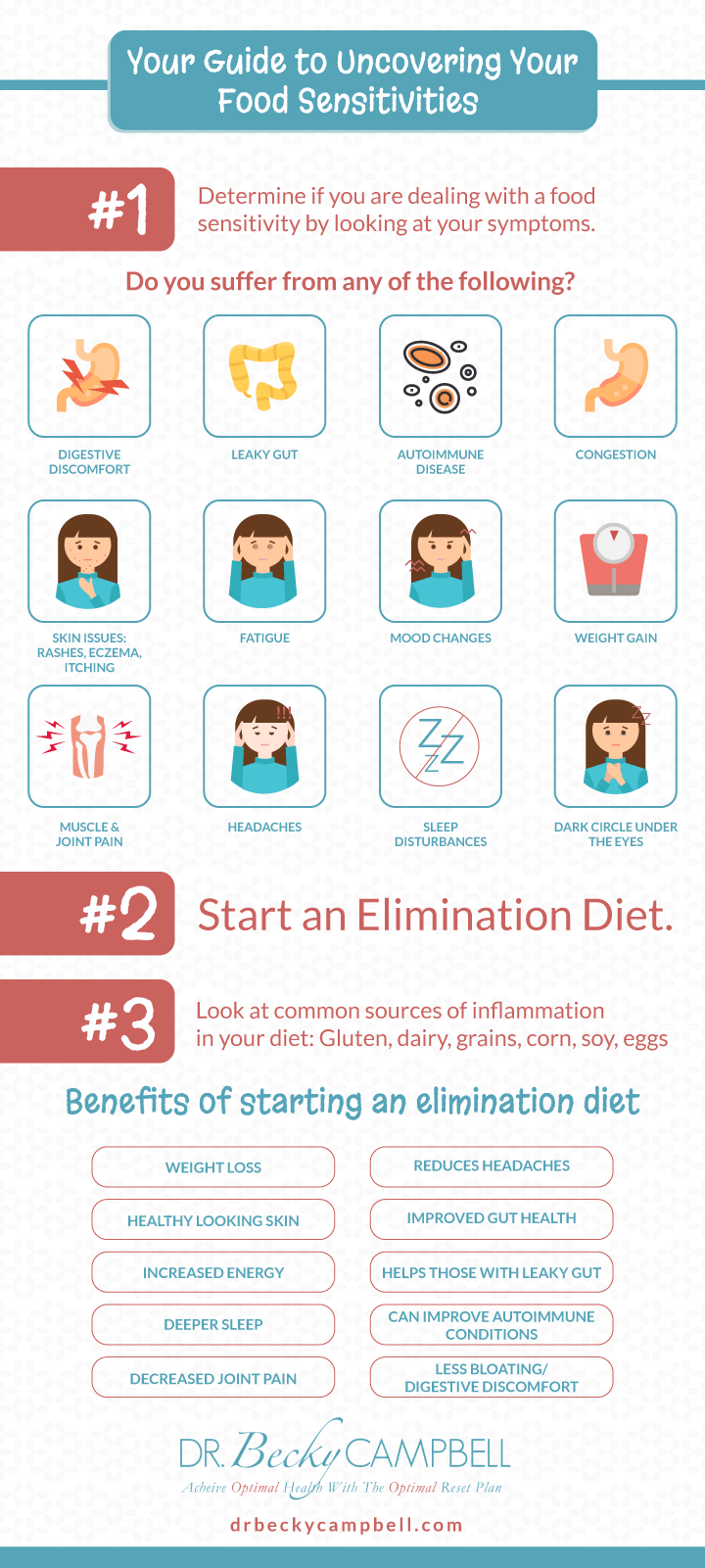
Many people suffer from food sensitivities without even knowing it as the symptoms can vary from person to person and can affect more than one area of the body. Here are some of the most common symptoms associated with a food sensitivity.
- Digestive discomfort
- Leaky Gut
- Autoimmune disease
- Congestion
- Skin issues: Rashes, eczema, itching
- Fatigue
- Mood changes
- Weight gain
- Muscle & joint pain
- Headaches
- Sleep disturbances
- Dark circles under the eyes

The Most Common Food Sensitivities
While people can react to any food, there are some food sensitivities that are more common than others. Here are some of the foods people are commonly intolerant to.
- Gluten
- Dairy
- Grains
- Corn
- Soy
- Eggs
What you can do Today to Uncover Your Food Sensitivities
The best thing you can do to uncover potential food sensitivities is to get rid of inflammatory foods with an elimination diet. An elimination diet will help you remove reactive foods from your diet over a period of time. After the elimination period, these foods will then be reintroduced one by one to determine which foods you are reacting to.
The large majority of my patients have suffered with one or more food sensitivities and found their path to health using an elimination diet and I know that you can too.
If you are tired of feeling sick, not like yourself, and unable to get to the bottom of what may be causing your symptoms, I encourage you to start your own elimination diet. Not sure where to get started?
In my Optimal Reset Plan, I walk you through this step by step to give you tons of tools to help you through this important process. I also teach you how to detoxify your body and start to heal your gut so that you are able to tolerate more foods long term.
Here are just a handful of benefits of my Optimal Reset Plan:
- Weight loss
- Healthy looking skin
- Increased energy
- Deeper sleep
- Decreased joint pain
- Reduces headaches
- Improved gut health
- Helps those with leaky gut
- Can improve autoimmune conditions
- Less bloating/digestive discomfort
If you are ready to get started, Optimal Reset Do it Yourself Program.
Resources
(1) Food Sensitivities. The World’s Healthiest Foods
Food Intolerance: Causes, Symptoms, and Diagnosis. (2016) Medical News Today
[sc name="Below all post"]

The SIBO and the Thyroid Connection
Are you experiencing stomach pains, diarrhea, digestive discomfort, gas, fatigue, or other uncomfortable digestive or body symptoms? You may have SIBO. Small intestinal overgrowth (SIBO) is a condition caused by too much bacteria in your small intestine. While SIBO can lead to a list of symptoms, it may also increase your risk of other health conditions, including thyroid conditions. Yes, that’s right, SIBO and thyroid dysfunction are connected in many cases, and it’s critical that you address both through a holistic treatment approach.
In this article, I will explain what SIBO is. You will learn about its symptoms and causes. I will explain everything you need to know about SIBO and thyroid diagnosis at a functional medicine doctor. You will understand the connection between SIBO and thyroid dysfunction. I will discuss traditional and functional medicine approaches to SIBO and thyroid dysfunction. I will offer my top natural solutions for SIBO and thyroid health.
What Is SIBO?
Small intestinal bacterial overgrowth (SIBO) is a serious condition characterized by too much bacteria in your small intestine. It happens when bacteria that normally would only grow only in other areas of your gut, start growing in your small intestines as well. Your small intestine is the longest part of your digestive tract. This is also the part where nutrients get absorbed into your bloodstream. It is not surprising that SIBO can have serious consequences. It can lead to nutrient malabsorption, malnutrition, damage to the stomach lining, and a list of unwanted symptoms fro diarrhea to abdominal pain. SIBO may also lead to a variety of other health issues. For example, SIBO and your thyroid are closely connected and I regularly see SIBO in thyroid patients. Later in this article, we will discuss the connection between SIBO and thyroid dysfunction (1, 2, 3, 4).
Symptoms of SIBO
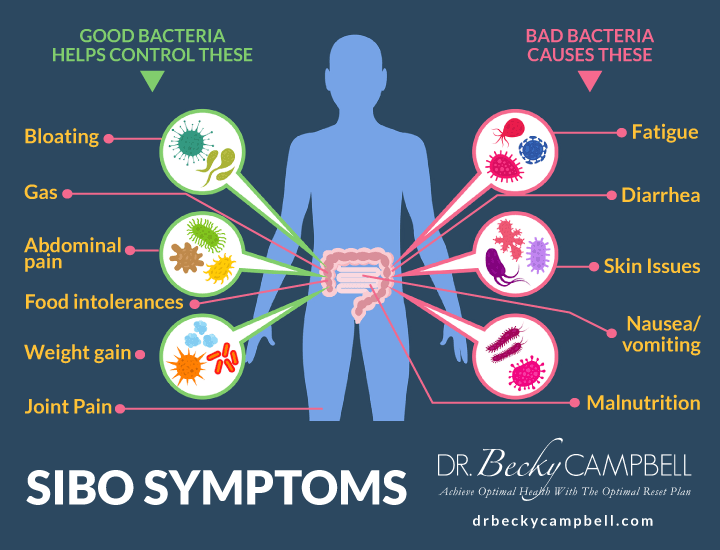
The symptoms that come with SIBO are often similar to conditions such as Irritable Bowel Syndrome. Here are some of the commonly seen symptoms:
-
- Bloating
- Gas
- Abdominal pain or cramping
- Malnutrition
- Diarrhea
- Constipation
- Nausea or vomiting
- Belching
- Food intolerances
- Weight loss
- Joint pain
- Fatigue
- Skin issues
- B12 deficiency
- Fat malabsorption
- Chronic pain and health issues
The microorganisms and metabolic waste in your gut due to SIBO can be challenging to your health, which can lead to abdominal pain, nausea, gas, diarrhea, constipation, belching, and other gut health symptoms. However, SIBO can lead to an array of health issues. It is connected to irritable bowel syndrome and has been associated with fibromyalgia, Celiac disease, autoimmune conditions, chronic fatigue, neuromuscular issues, liver problems, gallstones, rosacea, gastritis, and thyroid dysfunction. Later in this article, you will learn more about how your thyroid and SIBO connected (5, 6).
Causes of SIBO
SIBO may develop for a variety of reasons. Some of the causes and risk factors of SIBO include (7, 8, 9, 10, 11, 12):
- Complications of abdominal surgery, such as gastric bypass for obesity or gastrectomy for stomach cancer and peptic ulcers
- Structural problems in and around your small intestine, such as scars and bulging pouches of tissue
- Certain medication, including pharmaceutical drugs for Celiac disease, Crohn’s disease, diabetes, radiation enteritis, and scleroderma
- Low stomach acid that can lead to poor digestion and malabsorption
- Poor gut motility
- Intestinal neuropathy, or damage to nerves and muscles in the gut
- Diverticulosis
- History of radiation therapy of the abdomen
- Diabetes
- Crohn’s disease, scleroderma, or intestinal lymphoma involving the small intestine
- An abnormal passageway, or fistula between two segments of the bowel
SIBO Diagnosis
The breath test is the most commonly used test for SIBO which measures the concentration of hydrogen and methane in your breath. Before the test, you have to fast for 12 hours then breathe into a small balloon and repeat it every 15 minutes for 3 hours. Modern medicine practices tend to only use this test for SIBO. Functional medicine practitioners, like myself, take a more comprehensive approach.
Along with the breath test, there are two tests that can help us to understand your gut health better. An organic acid test is a simple urine test that looks at metabolic biomarkers to detect mitochondrial issues, toxicity, neurotransmitter disruption, B vitamin deficiencies, bacterial overgrowth, and yeast overgrowth. A comprehensive stool analysis helps us understand your large intestinal health better. Individuals with SIBO often also struggle with bacteria, parasites, yeast overgrowth, and gut flora imbalance in their large intestines as well. Remember, it is important to look at your entire good health and address it all, not only your small intestines and SIBO.
In my practice, after going through your symptoms and health history, I do a comprehensive analysis looking at all kinds of markers to understand the state of your health and potential root causes in order to create an individualized comprehensive treatment plan. Whenever a patient comes to my practice with gastrointestinal symptoms I will always check for gut infections, and this includes SIBO. Being that the gut bacteria in our gut plays such a crucial role in the health of every other part of the body, including the thyroid addressing gut health is one of the most important steps in feeling better.
SIBO and Your Thyroid
So, what does SIBO have to do with the thyroid? First and foremost, gut health and thyroid health are connected. Having thyroid issues such as hypothyroidism can actually cause SIBO. When you are dealing with a thyroid condition such as hypothyroidism, your thyroid is not performing the way that it should be. This means that your metabolic processes slow down and this includes digestion.
One of the most common symptoms of hypothyroidism is constipation. Unfortunately, being chronically constipated can lead to an overgrowth of harmful bacteria. A 2017 study has found that those with constipation-predominant SIBO (SIBO-C) also had thyroid panels with characteristics of hypothyroidism compared to the control group. Not only that, but many people who suffer from hypothyroidism also have lower levels of stomach acid, HCL. HCL helps us digest food so when we do not have enough it can be easy for the pathogenic bacteria in the gut to grow.
There is another connection between SIBO and the thyroid and that is the opposite of what we were just talking about. SIBO can also lead to hypothyroidism. A 2017 study found that hypothyroidism and T4 therapy were linked to a 2.6 and 3.0 times higher risk of SIBO. Since about 21 percent of T4 to T3 conversion occurs in the gut, problems can occur when you do not have optimal gut flora. When your gut is dealing with an overgrowth of harmful bacteria this can cause issues with the T4 to T3 conversion which can then lead to hypothyroidism.
The SIBO and thyroid connection is huge and unfortunately, it can lead to hypothyroidism but hypothyroidism can also lead to bacterial overgrowth. A 2007 study found that 54 percent of participants with hypothyroidism also had SIBO. The best thing to do if you suspect you have either one of these conditions is to work with a functional medicine practitioner, like myself, to get the proper testing to uncover if SIBO is affecting the health of your thyroid. In my practice, I offer extensive gut health testing, and based on your test results, I develop an individualized plan to address each patient’s unique health needs.
But why is it better to work with a functional medicine doctor and take on a holistic approach instead of working with a traditional medicine practitioner? Great question, I will go over everything that you need to know about traditional medicine and functional medicine approach to SIBO and thyroid health (13, 14, 15, 16).

Traditional Medicine Approach to SIBO
Unlike the functional medicine approach that I practice, traditional medicine doesn’t take a holistic approach and doesn’t look at underlying root causes of your symptoms and health problems. Dietary, lifestyle, and environmental factors are often ignored.
If SIBO is detected in a traditional medical practice there is a good chance that a patient will be prescribed antibiotics. The problem with this is that even with the use of antibiotics, SIBO can be very difficult to get under control and a healing dietary and lifestyle protocol need to be put into place. Not including dietary changes can make getting SIBO under control very difficult and you will learn why, so keep reading.
Research has found that people with SIBO who were only prescribed antibiotics actually had a higher recurrence rate. The problem here is that prescription antibiotics may not be enough to really deal with this digestive condition at its source. Dietary, lifestyle, and environmental factors need to be taken into consideration to achieve full recovery and health (17).
The great news is that there is a different way of going about getting SIBO under control and that’s with the use of functional medicine. Let’s take a look at how a functional medicine approach to dealing with SIBO is much different from the traditional medical approach.
Functional Medicine Approach to SIBO & Thyroid Dysfunction
In functional medicine, we use a holistic approach to addressing disease including things like thyroid disease and gut infections. The first step we take is to offer the proper testing to determine if SIBO is causing some or even all of your symptoms. Through these tests, we can uncover the potential root causes of your SIBO and address them appropriately. We will also understand how your other health issues, including thyroid dysfunction, may be connected to SIBO, and create a personalized holistic treatment.
After the test results come back, I often work with patients to eliminate certain foods from their diets such as sugar, refined carbohydrate, gluten, and alcohol. I also recommend a soil-based probiotic supplement. These are important for overall gut health as they will help to give the healthy bacteria in your gut a boost while your body is working to rid itself of the harmful bacteria overgrowth that may be occurring in the small intestine.
We also work on addressing specific dietary needs and come up with a lifestyle plan to get the SIBO under control as quickly and efficiently as possible. It takes some patience to get SIBO under control but with the right changes, it can be done. If you are also dealing with thyroid dysfunction or other health issues along with SIBO, we continue using the same holistic approach which includes testing, dietary and lifestyle changes, and supplementation.
The SIBO & FODMAPS Diet
The FODMAPS diet is a specific dietary approach that many people with SIBO find very beneficial. This diet focuses on removing FODMAPS from the diet.
FODMAPS are fermentable oligosaccharides, disaccharides, monosaccharides, and polyols. Don’t worry about understanding what each of those terms mean. Just know that FODMAPS are fermentable short-chained carbohydrates and they are not very well absorbed in the gut. They are sugars that are found in certain foods and in those with SIBO they can make symptoms worse. These foods can actually ferment in the digestive tract which is the very last thing you want when you are already dealing with bacterial overgrowth. When these foods ferment, they can feed the bacterial overgrowth and then make your SIBO symptoms worse or make it much more difficult to get this condition under control.
While some people find this diet helpful, I do not typically use this diet in my practice. Instead, I stick with a diet high in foods like this and typically have great success with this approach:
- Eggs
- Grass-fed beef
- Grass-fed lamb
- Free-range chicken & turkey
- Wild-caught fish
- Cucumbers
- Lettuce
- Carrots
- Bananas
- Oranges
- Blueberries
- Coconut oil
- Avocado oil
- Sprouted nut butter

Natural Solutions for SIBO & Thyroid Dysfunction
If you are experiencing symptoms of SIBO and may also have thyroid dysfunction, don’t worry. You can improve your health naturally with some simple yet effective natural solutions. Here are the natural solutions for SIBO and thyroid dysfunction I recommend.
Eat an Anti-Inflammatory, Gut-Friendly Diet
The natural approach to improving SIBO and thyroid imbalance always starts with an anti-inflammatory diet. To tackle SIBO, it is critical that you eliminate sugar, gluten, and refined carbs. Eat smaller meals instead of large ones. Eat 5 to 6 times a day instead of 2 to 3 times. Remove other inflammatory foods, such as caffeine, refined oils, grains, pasteurized dairy, artificial sweeteners, conventional animal products, junk food, and processed foods.
Eat plenty of greens, vegetables, herbs, spices, and fruits. Eat healthy fats, such as avocado oil, coconut oil, avocados, and sprouted nut butter. Consume high-quality organic animal protein such as grass-fed beef and lamb, free-range, pasture-raised poultry and eggs, and wild-caught fish. Add bone broth and glycine-rich foods, including oxtail, beef shanks, brisket, and chuck roast. Eat plenty of fermented foods, such as sauerkraut, yogurt, kefir, and kimchi for gut health, unless you have histamine intolerance or don’t tolerate probiotic-rich fermented foods well. Drink plenty of clean, purified water.
Take Soil-Based Probiotics
Probiotic supplementation can help to improve gut barrier strength and integrity, lower pathogenic bacteria levels, modulate the immune system, and decrease inflammation throughout the body. Your small-intestines are not supposed to have too much bacteria in it. However, most probiotics contain strains of lactobacillus or bifidobacterium which can add fuel to the fire and compromise your SIBO recovery because they release in your small intestine as well. This is where soil-based probiotics or SBO probiotics come in. Soil-based probiotics do not contain lactobacillus or bifidobacterium strains, yet they still provide all the benefits of a probiotic. I recommend MegaSporeBiotic, a probiotic supplement created without lactobacillus or bifidobacterium (18, 19, 20, 21, 22, 23).
Try Natural Antibiotic Herbal Supplements
Modern medicine treats SIBO with antibiotics. However, there are some natural herbal supplements with antibiotic properties that can support your SIBO recovery. Berberine is a plant alkaloid derived from Oregon grape root and other herbs. It has been known to destroy bacteria and microbes, lower inflammation, and improve your gut lining. Grapefruit seed extract (GSE) is full of anti-oxidant, disease-fighting, antibacterial, and antiviral properties that may benefit your gut health. Oregano oil is a potent antioxidant with natural antibiotic and pathogen-fighting properties that can help to destroy pathogenic bacteria, yeast, and viruses, and improve your gut health (24, 25, 26, 27, 28, 29, 30, 31, 32, 33, 34).
Try Digestive Enzymes
Digest Care is comprised of a proprietary blend of digestive enzymes along with betaine HCl to support optimal digestion of proteins, fats, and carbohydrates. This product contains the special protease DPP IV (dipeptidyl peptidase IV), which aids in the breakdown of the peptides gluteomorphin (from gluten) and casomorphin (from casein). Digest Care also includes the enzyme lactase, which helps break down the dairy sugar lactose. The use of Digestzymes™ before meals may be helpful when patients experience gas and bloating after eating, constipation, or a feeling of fullness after eating only a small quantity of food.
Improve Your Lifestyle
Chronic stress, poor sleep, and poor lifestyle choices can lead to and increase the symptoms of both gut health issues and thyroid dysfunction. Lower your stress levels and learn to cope with stress better. Practice meditation, journaling, gratitude, breathwork, and yoga. Take healing baths or get a massage. Engage in relaxing activities and spend time with loved ones and positive people. Spend time in nature. Make sure to get some ‘me-time’ in daily, even if it’s just a few minutes. Exercise regularly and lead an active lifestyle. Make sure to get 7 to 9 hours of quality sleep each night.
Try a 30-Day Thyroid Reset
If you are experiencing thyroid dysfunction as a result of or along with SIBO, I recommend a 30-day thyroid reset. To learn more about the Paleo-style anti-inflammatory diet I recommend or if you have Hashimoto’s or another thyroid disease, I recommend reading and following the recommendations in my book, The 30-Day Thyroid Reset Plan: Disarming the 7 Hidden Triggers That are Keeping You Sick. You will learn everything you need to know about thyroid disease. I offer a 30-day plan to improve your health and my favorite thyroid-friendly recipes to nourish your body with delicious meals.
Final Thoughts
Small intestinal overgrowth (SIBO) is a common condition caused by too much bacteria in your small intestine leading to abdominal pain, gas, belching, diarrhea, and a list of other symptoms. it may also increase your risk of other health conditions, including thyroid conditions. SIBO and your thyroid health are connected and SIBO and thyroid issues need to be both addressed. Follow my natural solutions for SIBO and thyroid dysfunction to repair your body and regain your health naturally.
If you are dealing with symptoms of SIBO, Hashimoto’s disease, or other thyroid issues, I invite you to schedule a consultation with me. I can help to identify the root cause of your condition and recommend a personalized treatment plan to repair your body and regain your health and well-being. Schedule your consultation here.
Sources:
1. Small Intestinal Bacterial Overgrowth: Roles of Antibiotics, Prebiotics, and Probiotics Link Here
2. Bures J, Cyrany J, Kohoutova D, et al. Small intestinal bacterial overgrowth syndrome. World Journal of Gastroenterology : WJG. 2010;16(24):2978-2990.
3. Camp JG, Kanther M, Semova I, Rawls JF. Patterns and scales in gastrointestinal microbial ecology. Gastroenterology. 2009 May;136(6):1989-2002. PMID: 19457423
4. Sachdev AH, Pimentel M. Gastrointestinal bacterial overgrowth: pathogenesis and clinical significance. Therapeutic Advances in Chronic Disease. 2013;4(5):223-231.
5. Posserud I, Stotzer PO, Björnsson ES, Abrahamsson H, Simrén M. Small intestinal bacterial overgrowth in patients with irritable bowel syndrome. Gut. 2007 Jun;56(6):802-8. Epub 2006 Dec 5. PMID: 17148502
6. Kirsch M. Bacterial overgrowth. Am J Gastroenterol. 1990 Mar;85(3):231-7. PMID: 2178395
7. Dukowicz AC, Lacy BE, Levine GM. Small Intestinal Bacterial Overgrowth: A Comprehensive Review. Gastroenterology & Hepatology. 2007;3(2):112-122.
8. Small intestinal bacterial overgrowth (SIBO). Mayo Clinic. Link Here
9. Sachdev AH, Pimentel M. Gastrointestinal bacterial overgrowth: pathogenesis and clinical significance. Ther Adv Chronic Dis. 2013 Sep;4(5):223-31. PMID: 23997926
10. Lombardo L, Foti M, Ruggia O, Chiecchio A. Increased incidence of small intestinal bacterial overgrowth during proton pump inhibitor therapy. Clin Gastroenterol Hepatol. 2010 Jun;8(6):504-8. PMID: 20060064
11. Wang Y-B, Liu J, Yang Z-X. Effects of intestinal mucosal blood flow and motility on intestinal mucosa. World Journal of Gastroenterology : WJG. 2011;17(5):657-661.
12. Roland BC, Ciarleglio MM, Clarke JO, Semler JR, Tomakin E, Mullin GE, Pasricha PJ. Small Intestinal Transit Time is Delayed in Small Intestinal Bacterial Overgrowth. J Clin Gastroenterol. 2014 Oct 14. PMID: 25319735
13. Patil AD. Link between hypothyroidism and small intestinal bacterial overgrowth. Indian J Endocrinol Metab. 2014 May;18(3):307-9. doi: 10.4103/2230-8210.131155. PMID: 24944923
14. Nay J, Menias CO, Mellnick VM, Balfe DM. Gastrointestinal manifestations of systemic disease: a multimodality review. Abdom Imaging. 2015;40(6):1926-1943. Link Here
15. Brechmann T, Sperlbaum A, Schmiegel W. Levothyroxine therapy and impaired clearance are the strongest contributors to small intestinal bacterial overgrowth: Results of a retrospective cohort study. World J Gastroenterol. 2017;23(5):842-852. Link Here
16. Lauritano EC, Bilotta AL, Gabrielli M, et al. Association between hypothyroidism and small intestinal bacterial overgrowth. J Clin Endocrinol Metab. 2007;92(11):4180-4184. Link Here
16. Konrad P, Chojnacki J, Kaczka A, et al. [Thyroid dysfunction in patients with small intestinal bacterial overgrowth]. Polski Merkuriusz Lekarski : Organ Polskiego Towarzystwa Lekarskiego. 2018 Jan;44(259):15-18. Link Here
17. Bures J, Cyrany J, Kohoutova D, Förstl M, Rejchrt S, Kvetina J, Vorisek V, Kopacova M. Small intestinal bacterial overgrowth syndrome. World J Gastroenterol. 2010 Jun 28;16(24):2978-90. doi: 10.3748/wjg.v16.i24.2978. PMID: 20572300
18. Small Intestinal Bacterial Overgrowth: Roles of Antibiotics, Prebiotics, and Probiotics Link Here
19. Hamvas J. [Proton-pump inhibitor therapy and small bowel bacterial contamination]. Orv Hetil. 2012 Aug 19;153(33):1287-93. PMID: 22890175
20. Gaon D, Garmendia C, Murrielo NO, de Cucco Games A, Cerchio A, Quintas R, González SN, Oliver G. Effect of Lactobacillus strains (L. casei and L. Acidophillus Strains cerela) on bacterial overgrowth-related chronic diarrhea. Medicina (B Aires). 2002;62(2):159-63. PMID: 12038039
21. Hosoi T, Ametani A, Kiuchi K, Kaminogawa S. Improved growth and viability of lactobacilli in the presence of Bacillus subtilis (natto), catalase, or subtilisin. Can J Microbiol. 2000 Oct;46(10):892-7. PMID: 11068675
22. Hong HA, Duc le H, Cutting SM. The use of bacterial spore formers as probiotics. FEMS Microbiol Rev. 2005 Sep;29(4):813-35. PMID: 16102604
23. Permpoonpattana P, Hong HA, Khaneja R, Cutting SM. Evaluation of Bacillus subtilis strains as probiotics and their potential as a food ingredient. Benef Microbes. 2012 Jun 1;3(2):127-35. PMID: 22433662
24. Yu HH, Kim KJ, Cha JD, Kim HK, Lee YE, Choi NY, You YO. Antimicrobial activity of berberine alone and in combination with ampicillin or oxacillin against methicillin-resistant Staphylococcus aureus. J Med Food. 2005 Winter;8(4):454-61. PMID: 16379555
25. Pérez-Rubio KG, González-Ortiz M, Martínez-Abundis E, Robles-Cervantes JA, Espinel-Bermúdez MC. Effect of berberine administration on metabolic syndrome, insulin sensitivity, and insulin secretion. Metab Syndr Relat Disord. 2013 Oct;11(5):366-9. PMID: 23808999
26. Dixit PV, Parihar G, Jain DK, Jaiswal P. Increased serotonergic neurotransmission is not responsible for the anticompulsive effect of berberine in a murine model of obsessive-compulsive disorder. Behav Pharmacol. 2012 Oct;23(7):716-21. PMID: 22890212
27. Li G, Wang X, Jiang T, Gong J, Niu L, Li N. Berberine Prevents Intestinal Mucosal Barrier Damage During Early Phase of Sepsis in Rat through the Toll-Like Receptors Signaling Pathway. The Korean Journal of Physiology & Pharmacology : Official Journal of the Korean Physiological Society and the Korean Society of Pharmacology. 2015;19(1):1-7.
28. Jayaprakasha GK, Girennavar B, Patil BS. Radical scavenging activities of Rio Red grapefruits and Sour orange fruit extracts in different in vitro model systems. Bioresour Technol. 2008 Jul;99(10):4484-94. PMID: 17935981
29. Manthey JA. Biological properties of flavonoids pertaining to inflammation. Microcirculation. 2000;7(6 Pt 2):S29-34. PMID: 11151968
30. Heggers JP, Cottingham J, Gusman J, Reagor L, McCoy L, Carino E, Cox R, Zhao JG. The effectiveness of processed grapefruit-seed extract as an antibacterial agent: II. Mechanism of action and in vitro toxicity. J Altern Complement Med. 2002 Jun;8(3):333-40. PMID: 12165191
31. Kavanaugh NL, Ribbeck K. Selected Antimicrobial Essential Oils Eradicate Pseudomonas spp. and Staphylococcus aureus Biofilms. Applied and Environmental Microbiology. 2012;78(11):4057-4061.
32. Barbour EK, Dankar SK, Shaib HA, Kumosani T, Azhar E, Masaudi S, Iyer A, Harakeh S. Antimicrobial profile of essential oils extracted from wild versus cultivated Origanum ehrenberjii against enteric bacteria. J Infect Dev Ctries. 2014 Oct 15;8(10):1344-9. PMID: 25313614
33. Eng W, Norman R. Development of an oregano-based ointment with anti-microbial activity including activity against methicillin-resistant Staphlococcus aureus. J Drugs Dermatol. 2010 Apr;9(4):377-80. PMID: 20514796
34. Yap PSX, Yiap BC, Ping HC, Lim SHE. Essential Oils, A New Horizon in Combating Bacterial Antibiotic Resistance. The Open Microbiology Journal. 2014;8:6-14.

The 5 Best Ways to Stay Fit with Adrenal Fatigue
Having adrenal fatigue can be absolutely draining, and many people think that they simply cannot exercise. While exercise may seem next to impossible when fatigue is impacting day to day life the great news is that there are some ways to stay fit with adrenal fatigue.
With some modifications and the right exercises, exercise may actually help alleviate certain symptoms, while making it possible to stay fit with adrenal fatigue.
Let’s start by first talking about what you need to watch out for when exercising with adrenal fatigue so that you can exercise the right way for your body.
Exercise & Adrenal Fatigue
When you have adrenal fatigue, exercise may be the furthest thing from your mind. There’s a good chance that you simply do not have the energy and whatever energy you do have you likely want to preserve to get other things done throughout the day. With that being said, you have likely been told to limit your exercise with adrenal fatigue, and here’s why.
When you are chronically fatigued, exercise is challenging. Exercise is also a physical stressor, and therefore it can worsen HPA dysfunction if you overdo it. (1) Any exposure to chronic stress or inflammation can worsen HPA dysfunction, AKA adrenal fatigue or adrenal exhaustion. This is why you may have been warned against exercise, and for good reason. However, what if you want to stay fit with adrenal fatigue? Are there safe ways to do so without causing further stress on your body?
The great news is yes. There are gentle exercises you can incorporate into your weekly routine to help stay fit with adrenal fatigue, and these exercises may even help you feel better emotionally and physically.
Let’s take a look at the five best ways to stay fit with adrenal fatigue.
5 Ways to Stay Fit with Adrenal Fatigue
#1 Walking
Walking is often overlooked because it is not something we generally look at as “working out.” However, walking is one of the most underestimated forms of exercise, and it is an excellent way to get the body moving and to keep your cardiovascular system in good shape. Walking is also low impact, and you can choose where you walk. Try getting outside on a nice day to soak in some sun while getting some light exercise in for an added boost and bring a friend along. You may be surprised at what a good walk can do for both your physical and emotional health.
#2 Yoga
Yoga is one of my favorite exercise recommendations for anyone suffering from adrenal fatigue. You can adapt each yoga routine to your personal fitness level, and there are so many great poses to help restore energy levels and to maintain strength and stability. Yoga is also great for stress reduction which is a huge part of combatting adrenal fatigue, so it is a great form of exercise for both the mind and the body. Restorative yoga is especially helpful, but you can work your way up to other forms of yoga as you see fit so long as you are not overextending your body. Yoga is also great for including some deep breathing exercises into your practice which can help shut off that fight-or-flight response in the body and reduce stress. Proper breathing can also help reduce fatigue and improve physical and mental wellness. (2)
#3 Gentle Cycling
Cycling can be a low impact form of exercise, and you don’t have to necessarily have a bike. Many gyms offer indoor cycling bikes that you can use, and the great thing about this is that you can set your own pace and ride as you see fit. It’s a great way to keep your cardiovascular system in shape without putting too much strain on the body. Just remember not to overdo it and to keep it light. The goal isn’t to pedal as if you were in a spin class but to pedal at a slow to moderate pace that feels good for your body.
#4 Swimming
Swimming is a great low-impact form of exercise that can help keep you in shape without you overextending your body. If you like to swim or your local gym has a pool then try doing some laps in the pool to keep your body in shape and to keep the body moving and blood flowing.
#5 Stretching
While not usually considered exercise, stretching is an important part of any exercise routine whether you suffer from adrenal fatigue or not. Be sure to choose some stretching days on the days that you are not actively exercising. This will help keep your joints and muscles from becoming tight and sore and it will also help relax your body. Try to get a couple of stretch days in per week. You can even use things like a foam roller or yoga blocks.

No matter what type of exercise you choose to do it is essential that you rest. You certainly do not have to exercise every single day especially on days where you just don’t feel up to it, and that’s ok. It’s important to start slow and then slowly work your way up to a level that you can tolerate.
With that being said, always take periods of rest both during exercise and then on your rest days. You will want to focus on getting high-quality nightly sleep and then tune into your body during the days that you feel like you just need a break. If you are feeling extra fatigued, take that day to just do some gentle stretching and maybe some very gentle yoga.
The goal here is not to overdo it but to keep your body moving as much as you can without stressing your body while also helping to boost your energy levels and to help you feel better emotionally.
When talking about staying fit with adrenal fatigue, it is also important to understand that you will want to focus on rebuilding your metabolic reserve. (1) In order to do this, you want to be sure not to overdo your exercise routine as we have been talking about.
Focus on these top 5 gentle yet effective exercises. These exercises are light, but they can help tone the body while also helping to rebuild your metabolic reserve. Rebuilding this reserve involves reducing your emotional stress and exercise is an excellent way to do that. It also means turning off your fight-or-flight response, gently moving the body, reducing inflammation, and balancing blood sugar levels.
All of this can be accomplished with exercise, but again, it is important to only do exercises that are going to work with your body and are not going to cause further stress.
Other Ways to Stay “Fit” With Adrenal Fatigue
While not necessarily physical exercises, staying emotionally “fit” is another way to combat adrenal fatigue and the symptoms that come with it. You will do your body a huge favor when you reduce your overall stress levels and help shut off that fight-or-flight response. Here are some additional strategies to give your body the extra boost it needs when dealing with adrenal fatigue.
Practice Mindfulness
Mindfulness is huge and a key player in combating adrenal fatigue. Being mindful is a great way to just be present and to collect yourself during a stressful time, and anyone can do it. To practice mindfulness, take a seat in a quiet and comfortable room and just notice your body and feel your breath. Take notice of when your mind wanders but don’t put any judgment on it and just return to your breath instead. Just keep coming back to your breath each time your mind wanders and be present in the moment. Start with a couple of minutes each day and then slowly increase to 10-15 minutes. That’s all there is to it and practice makes perfect! You could even add some essential oils to your mindfulness practice to bring an extra sense of calm to your practice. Try using Young Living Essential Oils and diffusing it in an oil diffuser throughout your mindfulness practice.
Set Aside You Time
Setting aside time for you on a daily basis is so important. Life is so busy, it is easy to get caught up in the rat race of life and not take any time for ourselves, but when dealing with adrenal fatigue, it is even more important to practice self-care. Try finding just 10-15 minutes per day for you where you can just be present with what is going on. Think about what this would look like for you. Maybe sipping on a cup of herbal tea outside for 10 minutes per day works for you or reading a good book a few minutes before bed. Choose what works for you and make it a habit.
Try finding just 10-15 minutes per day for you where you can just be present with what is going on. Think about what this would look like for you. Maybe sipping on a cup of herbal tea outside for 10 minutes per day works for you or reading a good book a few minutes before bed. Choose what works for you and make it a habit.
For added self-care pick one day a month to do something extra special for yourself. Maybe it’s a spa day or a massage. Book something every month that will make you feel good and will promote better self-care.
Get Enough Sleep
Getting enough sleep is key when dealing with adrenal fatigue. This is even more important when you start adding exercise into your routine. Strive to get at least 8 hours of uninterrupted sleep per night, however, keep in mind that this may not be enough sleep for everyone dealing with adrenal fatigue. Try to get to bed before 10 PM each night and cut out caffeine if possible to help with sleep regulation and to prevent any unnecessary cortisol spikes. If sleep is an issue for you, try lowering the temperature in your room, investing in some blackout curtains to keep the light out of your room, and diffusing some lavender essential oil to help promote a restful night sleep.
Find Time to Have Fun
Getting out and having fun is essential for anyone but it is also very important when dealing with adrenal fatigue. You want to reduce as much stress as possible and replace the stress with things that you enjoy doing. Get out and be social, join groups, or just do what makes you happy.
Improve Your Diet
Diet is such a key player in overall health, and adrenal health is no exception here. Try to improve your diet by cutting out processed foods, gluten, dairy, and sugar as much as possible. This will help balance blood sugar levels which is key to combatting adrenal fatigue. Focus on a Paleo style diet focusing on healthy fats and protein with lots of fresh fruits and vegetables. Try to opt for grass-fed and organic animal products when possible to avoid antibiotic and steroid exposure, and same goes for your produce to reduce your exposure to pesticides. You can also help reduce inflammation through diet and boost gut health by including some probiotic rich foods like sauerkraut, unsweetened coconut milk yogurt, kimchi, and kombucha into your diet. Boosting gut health is also an essential part of beating adrenal fatigue.

It’s important to remember that staying fit with adrenal fatigue is more than just staying physically fit. It is also about the emotional aspect of things so be sure to take care of you, get a good night sleep, and incorporate the five best ways to stay fit with adrenal fatigue. You may be surprised at how much better these steps make you feel and the longer you stick to it the better your long-term health outcome may be.
If you are suffering from weight gain, fatigue, hair loss and more, click here to schedule a phone call with me, so I can find out where you’ve been, where you want to get to, and how I can help you get there.
I know exactly where you are because I’ve been there myself…I remember being so tired that I could barely function. I gained 30 pounds out of nowhere and had a severe case of brain fog. I also started to get severe anxiety and panic attacks. I was driven and motivated…until I wasn’t. I didn’t know what was happening to me. All I wanted was to get my life back…
Finally, I learned about functional medicine and found a practitioner that I hoped could help me. They ran specialized tests that were far different than I had ever had before. When I got the results back, it turned out I had candida, parasites, high cortisol, the Epstein Bar Virus and many food intolerances. I also had an issue with my thyroid that no one found before because they were using the conventional medicine lab ranges which are way too broad….which I now know is one of the leading causes of hypothyroid misdiagnosis.
I went through treatment of all of these things and it completely changed my life. I immediately lost the 30 pounds I had gained plus more, I had a lot more energy, and my brain fog was gone. I felt amazing and knew that I wanted to help people find the underlying causes of their symptoms and disease.
Resources
(1) Mercola. (2017) Should You Exercise if You Have Adrenal Fatigue?
(2) Michael Lam. Yoga for Adrenal Fatigue Recovery
[sc name="Below all post"]

The Hidden Endocrine Disruptors in Everyday Cosmetics
Endocrine disruptors are lurking everywhere we turn today. It is hard to pick up a bottle of shampoo or a mascara at the pharmacy without having to worry about hidden toxins. In this post, I am going to shed some light on some of the hidden endocrine disruptors in everyday cosmetics. These are important to know about because living a healthy lifestyle isn’t just about what we put into our body it is also about the products that we choose to use on our body.
Avoiding these toxins can help protect your hormone balance and are especially important for anyone suffering from thyroid disease or any other autoimmune condition.
Let’s start by talking about what endocrine disruptors are and why we need to avoid them.

What are Endocrine Disruptors?
Endocrine disruptors can be defined as chemicals that interfere with the endocrine system. These chemicals can be found in many different products, not just cosmetics. The issue with these disruptors is that they can cause major issues in the body and some of these endocrine disruptors are carcinogenic. They can also cause immune disruption and even neurological problems.
Let’s take a look at some of these toxins so that you can be on the lookout and keep them out of your life as best as you can! I will also share some of my favorite non-toxic options that I commonly recommend to my patients.
The Endocrine Disruptors in Everyday Cosmetics
#1 Parabens
Parabens are one of the most talked about endocrine disruptors commonly found in cosmetics. These are found in things like shampoos, conditioners, lotion, and even face cleaners. Since parabens are not water soluble they are able to penetrate the skin which is a major issue due to the dangers parabens have on the endocrine system. Parabens can cause endocrine disruption and even reproductive issues which is why many pregnant women are cautioned against using products with parabens in them.
Another issue with parabens is that they are found under many different names so it can be challenging to determine if a product contains parabens or not. Some of the common names to look out for include butylparaben, propylparaben, isobutylparaben, and methylparaben. Just avoid anything that has a paraben at the end of it.
#2 Phthalates
Phthalates are another commonly added toxin in modern day cosmetic products. These are chemical compounds that are added to things like plastic as well as cosmetics and even find their way into some food products. (1) They can get into our food if we consume things like butter or milk from plastic containers that contain this harmful chemical.
A major problem with these toxins is that they can be absorbed in the body through both the air and the skin so cosmetic products are not the only things we have to worry about here. When talking about cosmetics, you will want to avoid things like perfumes, as well as moisturizers, eye shadows, nail polishes, shampoos, and conditioners that contain phthalates.
Phthalates are dangerous as they have been linked to reproductive disruption in both men and women. To steer clear of this chemical, avoid plastic containers and water bottles, and use as many homemade hair and skin care products as possible. I will be sharing some of my favorites so keep reading.
#3 Synthetic Colors
Believe it or not many synthetic colors are found in beauty products and they are added to make a product look more appealing. Think about things like hair dye, eye shadow, eye liner, and lipstick just to name a few. Many of these products contain harmful coloring that contain carcinogenic properties.
#4 Synthetic Fragrances
Fragrances are found in just about every cosmetic and beauty product you will find and they can cause some significant health issues. One of the many issues with synthetic fragrance is that they cause allergic responses to those that are sensitive. Not only that, but the chemicals that are used in synthetic fragrance are scary. It is estimated that approximately 95% of the chemicals used in these fragrances come from crude oil. They also include carcinogenic chemicals and chemicals that are linked to causing disruptions in many different body systems. (2)
One of the tricky things about avoiding these synthetic fragrances is that they are often just labeled as “fragrance” on a product label. This doesn’t give you the whole story about how many of these added fragrances can cause endocrine disruption that could lead to hormonal imbalance and even lead to weight gain. The rule of thumb is to be very cautious with any product that says it contains “fragrance.” This could be the same name used for thousands of different chemical ingredients and you don’t even know which one is in the product that you are purchasing and using on your body. Keep in mind that when you purchase these products and use them on your body, the chemicals in the synthetic fragrances have the ability to get into your bloodstream and not only cause endocrine disruption but many of the chemicals are carcinogenic and can cause nervous system disorders.
So, how do you avoid these fragrances? For one, avoid anything that has a label containing the words “fragrance” or “parfum.” You will also want to avoid using any air fresheners including plug in air fresheners, dryer sheets, candles, and many cosmetic and self-care products like deodorant. Now, I know that is a long list of things to avoid but it doesn’t mean you can’t still safely wear makeup, or deodorant it just means that you need to be selective with the options that you choose. I will share some of my favorites with you so you can see just how easy it is to avoid these toxic chemicals.
#5 Sodium Lauryl Sulfate
Commonly referred to as SLS, sodium lauryl sulfate is found in most shampoos, however, the scary thing is that is it also the same chemical found in many floor cleaners and even engine degreasers. It is crazy to think that an industrial product like SLS would be allowed to wind up in our bottle of shampoo or hand soap. SLS has been linked to endocrine disruption, neurotoxicity, organ toxicity, skin irritation, and even cancer. (3) The best way to avoid this chemical is to opt for shampoos, body washes, hand soaps, and toothpaste brands that are labeled as “SLS free.”

What to Use Instead
Now that you know what you need to be eliminating from your beauty routine and what chemicals to be on the lookout for when picking up products at the store, what can you use instead?
The great news is that there are some safe and natural alternatives that will work just as well as what you may be used to without the harmful effects endocrine disruptors have on the body. Let’s take a look at some of these options.
Essential Oils
One of my favorite non-toxic options for beauty and self-care products is the use of essential oils. These oils are great alternatives to fragrance. I love to use Young Living Essential Oils and then mix a couple of drops of their Endoflex oil with coconut oil and use it as my moisturizer. I completely avoid any store-bought product this way and it smells so much better than anything that would come out of a synthetic lotion bottle!
I also love to diffuse essential oils which is a great option for anyone who enjoys lighting candles but wants to avoid the artificial fragrances. The trick with essential oils is to get high-grade pure oils. You won’t want to buy the ones you see at your local grocery store as these are not going to be pure grade. Like I said, my favorite options are the essential oils from Young Living.
Beauty Counter
Beauty counter is a great resource for getting some non-toxic beauty products. You can find cosmetics and then things like shampoos and conditions where you can read the labels and find something that is free from SLS, phthalates, parabens, synthetic colors, and fragrances.
Young Living Cleaning Products
Young Living has a great line of home cleaning products and laundry detergent that are scented with essential oils instead of synthetic fragrances.
Homemade House Cleaning Products
If you are feeling adventurous and want to stay away from all store-bought options, you can always make your own house cleaning products and you can even make your own deodorant. A great way to make a homemade hand soap or all-purpose cleaning spray is to use some castile soap and a few drops of essential oil. You can also make your own homemade deodorant using coconut oil, baking soda, shea butter, and essential oil.

Toxins are found everywhere and the more educated we are about the products that we put on and in our body, the better we can protect our body. As you can see many of the beauty products found today are filled with endocrine disruptors and even carcinogenic chemicals so we want to avoid them at all costs.
Make the switch to more natural and organic options to help safeguard your health for the future. Remember that what we put on our body can be just as harmful as what we put into our body.
If you are suffering from weight gain, fatigue, hair loss and more, click here to schedule a phone call with me, so I can find out where you’ve been, where you want to get to, and how I can help you get there.
I know exactly where you are because I’ve been there myself…I remember being so tired that I could barely function. I gained 30 pounds out of nowhere and had a severe case of brain fog. I also started to get severe anxiety and panic attacks. I was driven and motivated…until I wasn’t. I didn’t know what was happening to me. All I wanted was to get my life back…
Finally, I learned about functional medicine and found a practitioner that I hoped could help me. They ran specialized tests that were far different than I had ever had before. When I got the results back, it turned out I had candida, parasites, high cortisol, the Epstein Bar Virus and many food intolerances. I also had an issue with my thyroid that no one found before because they were using the conventional medicine lab ranges which are way too broad….which I now know is one of the leading causes of hypothyroid misdiagnosis.
I went through treatment of all of these things and it completely changed my life. I immediately lost the 30 pounds I had gained plus more, I had a lot more energy, and my brain fog was gone. I felt amazing and knew that I wanted to help people find the underlying causes of their symptoms and disease.
Resources
(1) Dr. Axe. Phthalates: Dangerous Chemical Toxins That Must be Avoided
(2) Dr. Axe. Dangers of Synthetic Scents Include Cancer, Asthma, Kidney Damage and More.
(3) LiveStrong (2015) Dangers of Sodium Lauryl Sulfate.
National Institute of Environmental Health Sciences. Endocrine Disruptors
Safe Cosmetics.org. Parabens
[sc name="Below all post"]

Autoimmune Disease Diet: An Anti-inflammatory Approach
Anti-inflammatory diets have been around for a long time and have recently gained some popularity. Many people start an anti-inflammatory diet approach to cool inflammation related to joint pain or conditions such as arthritis. However, there is a huge benefit to an anti-inflammatory diet approach for autoimmune disease which is why I want to share this autoimmune disease diet approach with you today.
Before I talk specifically about this approach to combatting autoimmunity, I want to talk more about what an autoimmune disease is.
What is an Autoimmune Disease?
When you suffer from an autoimmune disease, the immune system attacks healthy cells instead of protecting them. This is not the norm. In someone without an autoimmune condition, the immune system works to protect the body from disease and infection. When autoimmunity is present, the immune system is hyperactive and may begin attacking your own healthy body tissue such as the thyroid gland in cases of Hashimoto’s thyroiditis.
Autoimmune diseases are also extremely complex and can take years to diagnose. In fact, many people see a handful of doctors before they get the proper diagnosis and that usually occurs over the span of four years. Yes, it can take four whole years of dealing with symptoms before a diagnosis is made! I see this quite often in my practice. A patient may come to me with classic autoimmune symptoms but they have not yet been diagnosed. This can be incredibly frustrating for patients and can even lead to the condition worsening over time if a proper diagnosis is not made early enough.
So, why is it so difficult to diagnose an autoimmune disease? For one, some of these diseases don’t cause immediate symptoms while others cause non-specific symptoms meaning that you experience discomfort in more than one area. This can make pinpointing what is actually going on in the body difficult. There are also so many different autoimmune diseases. There are more than 100 known autoimmune diseases seen today so you can imagine how challenging a diagnosis can be.
Want to learn even more about autoimmune diseases and learn about some of the common signs and symptoms? Check out another one of my blog posts here.
The Functional Medicine Approach to Dealing with Autoimmunity
In functional medicine, we work with patients to get to the root cause of the problem and uncover symptoms piece by piece to shed some light on what is really going on. Offering thorough testing can also be very useful in helping us determine if an autoimmune condition is present. Functional medicine helps to give us more insight as to what is going on in the body and potentially make a diagnosis sooner than if you were to go to your traditional medical practitioner. Unfortunately, many patients come to me after they have gone to a handful of doctors trying to get answers. However, even if you have not explored your symptoms further and you suspect autoimmunity may be affecting you, working with a functional medicine practitioner can help you get to your root cause and get you on a path to health.

What is an Anti-inflammatory Diet?
Now that you have some background information on autoimmune diseases, let’s get back to the anti-inflammatory approach for dealing with these conditions. Before we do that, let’s talk about what an anti-inflammatory diet is.
An anti-inflammatory diet is one that helps to combat chronic inflammation which is something that is on the rise today. When talking about this diet it is important to know that it is not so much a diet as it is a lifestyle change. Meaning, it is not about counting calories, macros, or losing weight, although you may notice a natural reduction in weight with this way of eating. The anti-inflammatory diet is about eating foods to support your health and combat inflammation and removing the foods that trigger inflammation, and disease. An anti-inflammatory diet can also help boost energy levels, improve vitamin and mineral reserves in the body, boost fiber intake for a healthier digestive system, and provide the body with a healthy dose of antioxidants and phytonutrients to fight off disease.
An anti-inflammatory diet helps add variety to your diet as well as it is encouraged to eat fruits and veggies of all colors. It’s also about adding more fresh food into your diet instead of packaged food options.
When you follow this way of eating it is also about taking a look at your lifestyle as well. While eating healthy is a huge step in the right direction, lifestyle choices need to be addressed as well. Things like chronic stress, lack of sleep, and not getting enough physical activity can lead to chronic inflammation as well. This is why it is so important to address these lifestyle factors along with your diet to be sure that you are reducing inflammation on all levels and not just by what foods you put in your body.
The same goes for environmental toxins as these can cause inflammation as well. It is best to stay away from toxic household cleaners and use more eco-friendly, natural, and organic options (I love Young Living essential oils and their household cleaning products.) You will also want to stay away from second-hand smoke, and toxic beauty and skincare products. All of these things can trigger inflammation and even endocrine disruption.
An Autoimmune Disease Diet Approach
So, how does this autoimmune disease diet approach to eating and living help those with autoimmune diseases? How exactly will following an anti-inflammatory diet and reducing your exposure to toxins help you if you suffer from autoimmunity?
For starters, autoimmune diseases are one of the most common inflammatory diseases and they are affecting nearly 24 million people today. (1) This includes conditions such as inflammatory bowel disease, thyroid disease, rheumatoid arthritis, and lupus to name a few. These are all inflammatory conditions. The problem we see in modern day medicine is that many patients suffering from these conditions are given medications to try to mask the symptoms while the root cause is not being addressed. Someone with a lot of pain may take anti-inflammatory medications and while it may temporarily alleviate some of the pain the actual cause of the inflammation is not being fixed.
In order to cool inflammation in the body such as in the case of autoimmune conditions, it is essential to find the actual cause of the inflammation in the first place which is where functional medicine comes in. This is also where an anti-inflammatory diet comes in for those suffering from autoimmune or any type of inflammatory condition.
For many patients with inflammatory conditions, finding what in their diet is causing the inflammation is an excellent starting point. An anti-inflammatory diet is a great place to start simply because the focus is on removing the most inflammatory foods seen in the Standard American Diet and then replacing those foods with things that will actually help to reduce inflammation. Keep in mind that each person will be different, and not all foods work for everyone. Even if a food is anti-inflammatory, it doesn’t necessarily mean everyone will tolerate that food well. For example, if someone has a sensitivity to berries, we would obviously not include those in a diet plan despite the fact that they help combat inflammation.
As we talked about before, following an anti-inflammatory diet is a great place to start but there are some lifestyle changes that can be made as well. Swapping out as many household cleaning products for natural options and using “clean” and “natural” beauty and skin care products can also help reduce the inflammatory load on your body. I personally love to use Young Living Essential oils mixed with some coconut oil for a moisturizer instead of toxic store-bought options. Not only does it smell amazing, but essential oils can also help balance many areas of the body as well.
Other Steps to Cooling Inflammation Associated with Autoimmune Disease
There are other steps you can take to help gain control over the inflammation going on in your body. Remember, it is all about finding the root cause of that inflammation and that can be done using a handful of steps.
#1 Get Tested for Hidden Inflammatory Triggers
As a Functional Medicine Practitioner, I often test patients for gut infections and food sensitivities which are great ways to detect any possible hidden source of inflammation. Once we get to the bottom of what is triggering the inflammation or autoimmune condition, we can start to develop a plan specifically tailored to you.
#2 Get Tested for Heavy Metal Toxicity
In my practice, heavy metal toxicity happens to be one of the leading causes of Hashimoto’s. Heavy metal toxicity can also cause other kinds of autoimmune diseases so it is so important to get checked for this when looking for the root cause of your inflammation.
#3 Focus on the Gut
Disease begins in the gut and I commonly seen many of my autoimmune patients suffering from things like leaky gut, candida, and SIBO. No matter what type of inflammation or autoimmune condition is present, focusing on gut health is huge. It is essential to fix the gut first and an anti-inflammatory diet is an excellent way to do that.
#4 Supplement when Necessary
A food first approach is always best, but there are some situations where supplementation may be very beneficial. This is especially true for someone who may have compromised gut function and may be deficient in a specific vitamin or mineral. Probiotics are also excellent for gut health.
#5 Take a Look at Your Lifestyle
As we have talked about, lifestyle is huge. Diet and lifestyle go hand in hand and the truth is that you can’t just change one and expect to see huge improvements in your health. Working on improving sleep habits, getting regular exercise, and practicing daily stress reduction are all essential. Now, this doesn’t mean that you have to do all of these things at once. You can start with one change and work on that until you feel consistent enough to add in something else. Go at a pace that will work for you and that you know you can realistically commit to lifelong.
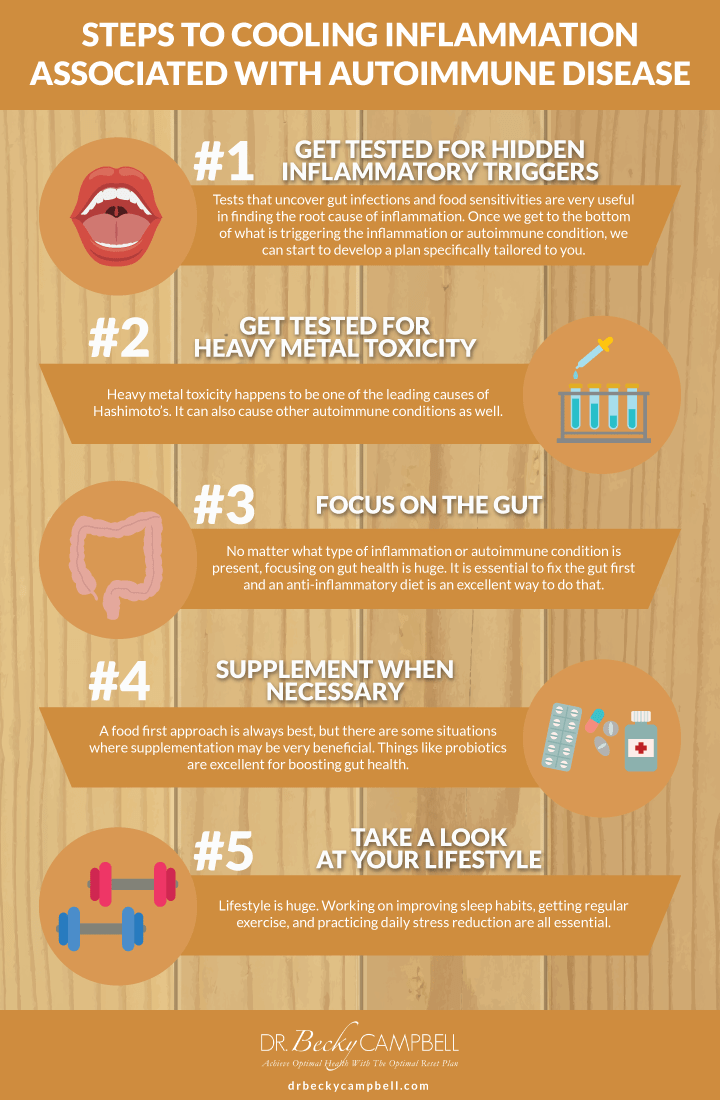
Anti-Inflammatory Foods to Add to Your Diet Today
Ready to start adding more anti-inflammatory foods to your diet? Here is a list of some great foods to consume regularly.
Enjoy Regularly
- Wild-caught fatty fish
- Organic berries
- Pineapple
- Dark leafy green vegetables
- Beets
- Chia seeds
- Turmeric
- Extra virgin olive oil
Foods to Avoid
While you add all these wonderful anti-inflammatory foods to your diet, here are some that should be kept out and especially for those with autoimmune disease.
- Fried & processed foods
- Frozen meals
- Soda
- Refined carbohydrates
- Hydrogenated fats & oils
- Conventional animal products
- Dairy
- Gluten
- Grains
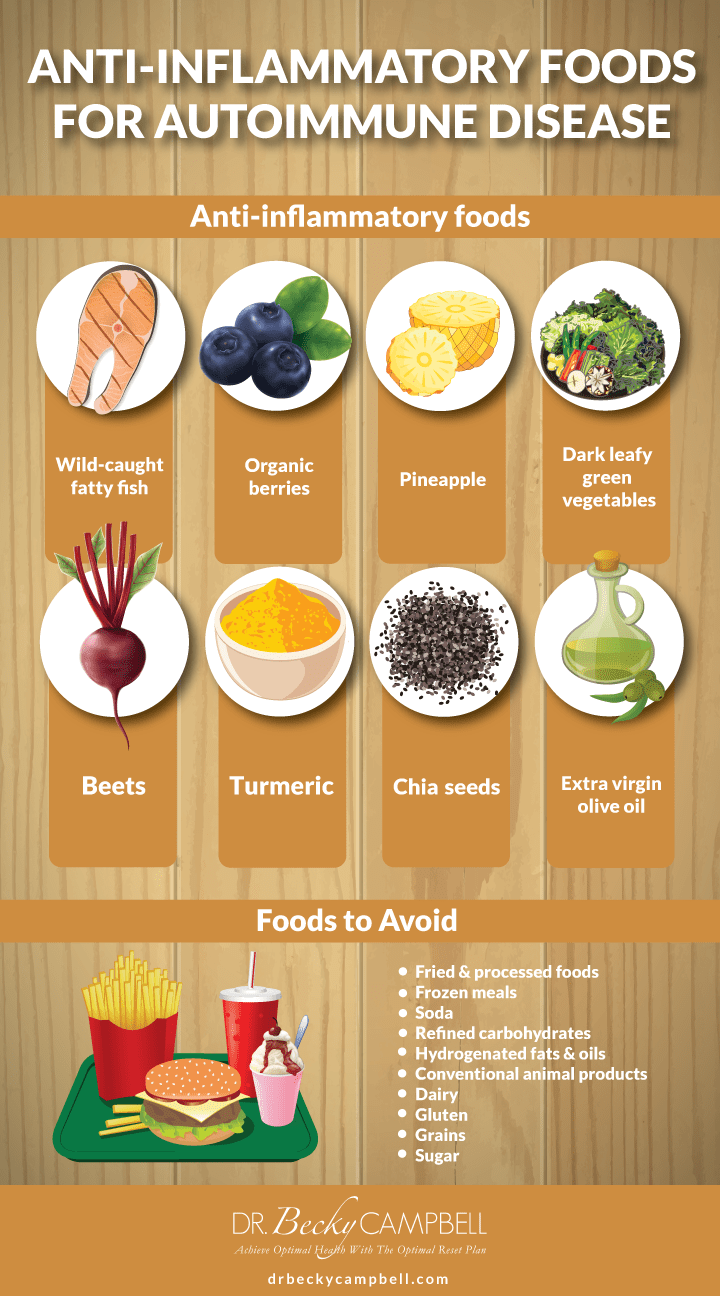
How to Improve Your Health
As you can see there is a tremendous benefit in following an anti-inflammatory diet and lifestyle when dealing with an autoimmune disease. If you can find the source of the inflammation and then work to correct that with diet and lifestyle then you will set yourself up on a path to wellness. Many of my patients come to me, find their root cause, change their diet, and lifestyle and then are able to stop their medications. It is all about a holistic approach to cooling that inflammation and treating each autoimmune disease like an inflammatory condition with the proper diet and lifestyle changes.
If you are tired of feeling sick, not like yourself, and unable to get to the bottom of what may be causing your symptoms, I encourage you to start your own elimination diet. Not sure where to get started?
Read My Book
If you have Hashimoto’s or another thyroid disease, I recommend reading and following the recommendations in my book, The 30-Day Thyroid Reset Plan: Disarming the 7 Hidden Triggers That are Keeping You Sick. You will learn everything you need to know about thyroid disease. I offer a 30-day plan to improve your health and my favorite thyroid-friendly recipes to nourish your body with delicious meals.
Try My Optimal Reseat Program
If you are looking to improve your health from Hashimoto's or any other autoimmune conditions, I recommend my Optimal Reset Program. In this program, I walk you through this step by step to give you tons of tools to help you through this important process. I also teach you how to detoxify your body and start to heal your gut so that you are able to tolerate more foods long term.
Here are just a handful of benefits of my Optimal Reset Plan:
- Weight loss
- Healthy looking skin
- Increased energy
- Deeper sleep
- Decreased joint pain
- Reduces headaches
- Improved gut health
- Helps those with leaky gut
- Can improve autoimmune conditions
- Less bloating/digestive discomfort
If you are ready to get started, Join me in my Optimal Reset Do it Yourself Program.
Final Thoughts
Autoimmune disorders are common. The good news is that with the right nutrition you can recover your body and regain your health. Follow my tips to support your body and reclaim your health and well-being.
If you are dealing with symptoms of an autoimmune disorder or thyroid issues, I invite you to schedule a consultation with me. I can help to identify the root cause of your condition and recommend a personalized treatment plan to repair your body and regain your health and well-being. Schedule your consultation here.
Resources
(1) Mark Hyman. How to Stop Attacking Yourself: 9 Steps to Heal Autoimmune Disease
Amy Sarah Marshall (2014). The Detective Work of Autoimmune Disease
American Autoimmune Related Diseases Association, Inc. Autoimmune Disease List
Dr. Weil. Dr. Weil’s Anti-Inflammatory Diet
[sc name="Below all post"]

Can Candida Affect the Thyroid?
Candida overgrowth is a frequent underlying cause behind fatigue, hormonal imbalances, frequent vaginal or urinary infections, skin issues, mood fluctuations, and other symptoms. Candida overgrowth may also lead to thyroid dysfunction or increase symptoms related to thyroid imbalance. The good news is that you can get out of this vicious cycle of candida overgrowth and thyroid issues.
In this article, you will learn what candida and candida overgrowth are. You will learn how candida overgrowth spreads in your body. You will understand the causes and symptoms of candida overgrowth. I will explain the possible links between candida overgrowth and thyroid dysfunctions. I will explain how testing works and offer my top natural solutions for candida overgrowth and thyroid dysfunction.
What Is Candida?
Candida is a form of yeast. It is a fungus that lives in your intestines and mouth. It plays a vital role in your body by helping your digestion and nutrient absorption. However, under normal circumstances, you only have small amounts of candida in your body. That’s all you need.
What Is Candida Overgrowth?
Candida overgrowth is very common. Candida albicans are the most common cause of yeast infections in the mouth, vagina, and GI tract. When candida overproduces, it leads to candida overgrowth, which means it can penetrate your bloodstream by breaking down and slipping through your intestinal wall. This process can lead to leaky gut, toxic byproducts, and an array of symptoms and health problems from fatigue to thyroid dysfunction. Later in this article, you will learn about the symptoms of candida overgrowth and you will understand the potential link between candida overgrowth and thyroid dysfunction (1, 2).
Causes of Candida Overgrowth?
Having a healthy good flora is key to your health. A healthy gut bacteria balance with plenty of ‘good’ bacteria helps to keep your candida levels in check. However, the candida population in your body can get out of control for a variety of reasons (3, 4, 5):
- Out of balance pH: When your pH balance is thrown off, candida has the chance to grow and populate into larger amounts than what’s beneficial. When the body does not have good strong healthy gut bacteria or the pH balance is out of whack, it can make it very difficult to fight off a candida infection.
- Certain Medications: Certain medications, antibiotics, and oral corticosteroids can increase your risk of candida overgrowth. The problem with antibiotics is that they take the good with the bad. While they kill off the harmful bacteria, they also rid the body of the healthy bacteria it needs to help with digestion as well as keeping things like candida in a healthy range. If you are frequently prescribed antibiotics then there is a chance that your intestinal bacteria are out of balance. This can lead to candida overgrowth. With oral corticosteroids, there is a chance that someone can develop a candida infection in the mouth. These medications are used to treat conditions like asthma, and when these corticosteroids are inhaled it is so important to follow the directions and swish your mouth out after each use. Additionally to antibiotics and corticosteroids, taking oral contraceptives can also increase your risk of candida infections.
- A Weak Immune System: Anyone who is immune-compromised is more likely to suffer from an infection like candida. This includes anyone who has an autoimmune condition such as Hashimoto’s Thyroiditis. Eating an inflammatory diet high in sugar and processed foods and low in greens, vegetables, fruits, healthy fats, and clean protein, poor sleep, high stress levels, smoking, drinking alcohol, leading a sedentary lifestyle, and environmental toxins can all weaken your immune system and increase your risk of candida infection and overgrowth.
How Does Candida Overgrowth Spread?
Candida is a sneaky yeast. It has a unique ability to change shape in order to protect itself from shifts in acidity level o temperature or other environmental changes. It can turn from a rounded yeast cell into elongated hyphal cells that can get through your gut lining and potentially cause leaky gut syndrome. Once candida gets into your bloodstream, it can turn from a gut health issue into a full-body health issue and can colonize in your mouth, skin, thyroid, ears, reproductive organs, and other parts of your body. It’s not surprising that candida overgrowth can produce symptoms in all parts of your body affecting your entire health.
Symptoms of Candida Overgrowth
Candida overgrowth can affect your entire body and can lead to a long list of chronic symptoms. These are the most common symptoms of candida overgrowth you may experience:
- Skin and fungal infections, such as athlete’s foot, toenail fungus, and ringworm
- Chronic skin issues, such as eczema, hives, rashes, or psoriasis
- Frequent vaginal infections, vaginal yeast infections, urinary tract infections (UTIs), vaginal itching, or rectal itching
- Exhaustion, feeling tired or worn down, or chronic fatigue
- Brain fog, difficulty concentrating, lack of focus, or poor memory
- Anxiety, depression, irritability, or mood swings
- Digestive issues, such as bloating, gas, constipation, or diarrhea
- Oral thrush (white tongue)
- Hormonal imbalances
- Fibromyalgia or fibromyalgia-like symptoms
- Autoimmune diseases, such as Hashimoto’s thyroiditis, psoriasis, lupus, ulcerative colitis, Crohn’s disease, or rheumatoid arthritis
- Severe seasonal allergies or itchy ears
- Strong cravings for sugar, refined carbohydrates, and sugary or carby processed or junk food

Candida Overgrowth & Your Thyroid
I frequently see patients who suffer from Hashimoto’s who also have an underlying candida overgrowth. We commonly have to address underlying candida overgrowth to support their thyroid health as well. Candida overgrowth can affect your thyroid for a number of reasons. Let’s take a look at some of the possible links between candida overgrowth and thyroid dysfunction.
Candida Overgrowth May Lead to Leaky Gut
Candida overgrowth can lead to leaky gut by breaking down the walls of the intestines and then getting into the bloodstream if this fungus is found in large amounts in the GI tract. When not addressed, leaky gut can lead to autoimmune conditions such as Hashimoto’s Thyroiditis as it taxes the body’s immune system and the immune system may begin attacking its own tissue and in certain circumstances, this is the thyroid gland.
Candida Overgrowth May Lead to Food Sensitivities & Intolerances
Your gut and the health of your gut bacteria are directly connected to thyroid health. Candida overgrowth is a very serious condition and can lead to food sensitivities as well as allergies. When you are consuming a food that you are sensitive to for a period of time there is a good chance that leaky gut can develop which can then lead to autoimmunity. Consuming reactive foods time and time again causes your immune system to go haywire and triggers inflammation. Any time your body is in a chronic state of inflammation, you are at a higher risk of developing disease, and when your immune system is in overdrive it can begin attacking your own body tissue. In this state, your body may go after your thyroid leading to autoimmune thyroid conditions, such as Hashimoto’s disease or Graves’ disease.
Unhealthy Gut Microbes Affect the Thyroid
The balance of bacteria in your gut is so important to your health as any type of imbalance can cause pathogenic bacteria from overgrowing and can prevent the healthy bacteria from doing what they need to do to keep you healthy. Unhealthy gut bacteria can affect the thyroid gland.
When there is an imbalance in the bacteria in the gut, T4 to T3 conversion can be disrupted. Amazingly enough, roughly 20 percent of T4 to active T3 conversion takes place in the GI tract. Gut microbes are able to do a large part of the work here by converting inactive T4 into T3 sulfate. When the bacteria in your gut are imbalanced or there is an overgrowth of harmful bacteria, this process can become disrupted. Your gut is also essential for nutrient absorption so when there is an imbalance in the gut, nutrient absorption may decrease which could ultimately lead to a vitamin or mineral deficiency. A deficiency can then cause a thyroid imbalance (6, 7, 8).
Candida Overgrowth May Impact Your Adrenals
Candida overgrowth in the gut can put stress on your adrenals as well as the HPA axis. Your adrenal glands work with your body’s stress response and also help with regulating the immune system. When dealing with candida overgrowth and even potentially nutrient malabsorption due to the overgrowth, hormonal imbalances can occur along with adrenal health issues and imbalances in stress hormones. Any type of hormone imbalance can ultimately lead to thyroid health problems and dealing with a thyroid condition on top of adrenal health issues can cause your symptoms to be much worse than they already are.
Your Immune System May Be the Link
Molecular mimicry means that there is a structural similarity between a foreign substance, called a foreign antigen that activates your immune system and your body’s self-antigen. There may be molecular mimicry between Candida and the thyroid gland leading your immune system to mistake your thyroid for a candida yeast infection leading to thyroid dysfunction. Candida may also release superantigens triggering your immune system to attack your thyroid gland causing autoimmunity. Moreover, a distracted immune system that is focused on attacking your thyroid gland by mistake but neglects to keep your candida levels balanced can lead to uncontrollable candida growth, serious candida overgrowth, and increased vulnerability to autoimmune thyroid disease (9).

Testing for Candida Overgrowth
If you are experiencing symptoms of candida overgrowth, getting tested is an important first step. Testing for candida overgrowth is something that you will want to do with a functional medicine practitioner, like myself. They all well-versed in candida and can help you uncover underlying and co-occurring problems as well.
Your functional medicine practitioner can help you to order different gut infection panels that can be very helpful to determine if you have a candida infection. These panels are able to spot another fungal, bacterial, or viral overgrowth, gut dysbiosis, and other gut health issues that may be present. These are simple stool and urine tests that can uncover some critical health issues. If you suspect that you are dealing with candida overgrowth or another gut infection, you can schedule a consultation with me here. After reviewing your symptoms, concerns, and health history, I can recommend appropriate testing for your specific case and create an individualized plan tailored to your needs to recover your health from candida overgrowth, thyroid issues, and other potential health problems.
Natural Solutions
If you have candida overgrowth that’s affecting your thyroid and overall health, it is time to make some changes to balance your body and regain your health. Here are my natural solutions for candida overgrowth and thyroid dysfunction:
Visit a Functional Medicine Practitioner
If you suspect that candida overgrowth may be an issue that you are dealing with, working with a functional medicine practitioner, like myself, may be a great first step. They can help you to uncover why the infection may be occurring, get proper testing, and set you up with a specific candida diet.
It is important to note that candida overgrowth can be easily misdiagnosed, especially when your symptoms may appear to be affecting different areas of your body. It is very common for doctors to mistake your symptoms for depression, sinus infections, or other infections, and simply prescribe antibiotics. As you know, antibiotics are one of the worst offenders for candida overgrowth and can feed into your symptoms instead of resolving them. Diagnosing candida overgrowth takes a holistic approach to get you on the proper healing path. It is important that you work with a functional medicine doctor who is well-versed in candida overgrowth and practices a holistic approach.
Eat an Anti-Inflammatory, Anti-Fungal Diet
The natural approach to improving candida overgrowth always starts with an anti-inflammatory diet. Remove inflammatory foods, such as gluten, sugar, refined carbs, alcohol caffeine, refined oil, grains, pasteurized dairy, artificial sweeteners, conventional animal products, junk food, and processed foods. Eat plenty of greens, vegetables, herbs, spices, and fruits. Eat healthy fats and high-quality organic animal protein. Add anti-inflammatory and anti-fungal foods to your diet, such as garlic, coconut oil, turmeric, aloe vera, pomegranate, and garlic.
Anti-Fungal Support
Using some anti-fungal herbs and supplements is often a critical step in recovering from candida overgrowth and rebuilding your gut flora balance. Oil of oregano is a fantastic herbal supplement with powerful anti-yeast, antiviral, antibiotic, and anti-parasitic properties. It is often used for candida overgrowth, other yeast overgrowths, parasitic and bacterial infections, and food poisoning. Pau D-Arco, grape seed extract, garlic, olive leaf extract, and berberine are other great herbal supplements that are often used for candida overgrowth. Be aware that these supplements may cause some die-off reactions, which means that you may get some uncomfortable symptoms, such as headaches, digestive issues, or flu-like symptoms for a couple days or weeks before you feel better. Working with a functional medicine doctor is a great way to select the supplements that are right for your body and situation (10, 11, 12, 13, 14).
Support Your Gut
Supporting your gut flora balance is absolutely critical to your recovery from candida overgrowth. Eat plenty of prebiotic-rich foods, including garlic, onions, Jerusalem artichokes, asparagus, leeks, dandelion greens, and chicory roots. Eat plenty of fermented foods, such as sauerkraut, yogurt, kefir, and kimchi for gut health. Take high-quality probiotics, such as Optimal Reset Microbe Synergy Complete. Support your gut lining with Optimal Reset Ultimate Gut Support. Support your liver with Optimal Reset Liver Love. For maximum gut health support, try my Low Carb Ultimate Gut Support Kit (15).
Support Your Thyroid
As you’ve learned candida overgrowth can lead to thyroid dysfunction, so it is important that you take care of your thyroid while focusing on repairing your body from candida overgrowth. If you are dealing with Hashimoto’s disease or any other thyroid dysfunction or thyroid disease, I recommend reading and following the recommendations in my book, The 30-Day Thyroid Reset Plan: Disarming the 7 Hidden Triggers That are Keeping You Sick. You will learn everything you need to know about thyroid disease. I offer a 30-day plan to improve your health and my favorite thyroid-friendly recipes to nourish your body with delicious meals.
Final Thoughts
Candida overgrowth is a common problem that may also lead to thyroid dysfunction or increase symptoms related to thyroid imbalance. The good news is that you don’t have to suffer from symptoms of candida overgrowth and thyroid dysfunction anymore. Follow my natural solutions for candida overgrowth to repair your body, regain your health, and reclaim your life.
If you are dealing with symptoms of candida overgrowth, Hashimoto’s disease, or other thyroid issues, I invite you to schedule a consultation with me. I can help to identify the root cause of your condition and recommend a personalized treatment plan to repair your body and regain your health and well-being. Schedule your consultation here.
Sources:
1.Raz-Pasteur A, Ullmann Y, Berdicevsky I. The pathogenesis of Candida infections in a human skin model: scanning electron microscope observations. ISRN Dermatol. 2011;2011:150642. doi: 10.5402/2011/150642. Epub 2011 Sep 5. PMID: 22363844
2. Candidiasis. Harvard Health. Link Here
3. Núñez MJ, Balboa J, Riveiro P, Liñares D, Mañá P, Rey-Méndez M, Rodríguez-Cobos A, Suárez-Quintanilla JA, García-Vallejo LA, Freire-Garabal M. Effects of psychological stress and alprazolam on development of oral candidiasis in rats. Clin Diagn Lab Immunol. 2002 Jul;9(4):852-7. doi: 10.1128/cdli.9.4.852-857.2002. PMID: 12093685
4. Spinillo A, Capuzzo E, Nicola S, Baltaro F, Ferrari A, Monaco A. The impact of oral contraception on vulvovaginal candidiasis. Contraception. 1995;51(5):293-297. Link Here
5. Vargas SL, Patrick CC, Ayers GD, Hughes WT. Modulating effect of dietary carbohydrate supplementation on Candida albicans colonization and invasion in a neutropenic mouse model. Infect Immun. 1993 Feb;61(2):619-26. doi: 10.1128/IAI.61.2.619-626.1993. PMID: 8423091
6. Yu J. Regulation of Hepatocyte Thyroxine 5′-Deiodinase by T3 and Nuclear Receptor Coactivators as a Model of the Sick Euthyroid Syndrome. Link Here
7. Watanabe, M., Houten, S., Mataki, C. et al. Bile acids induce energy expenditure by promoting intracellular thyroid hormone activation. Nature 439, 484–489 (2006). Link Here
8. Vought RL. Effect of Changing Intestinal Bacterial Flora on Thyroid Function in the Rat. Link Here
9. Kharrazian D, Herbert M, Vojdani A. Immunological reactivity using monoclonal and polyclonal antibodies of autoimmune thyroid target sites with dietary proteins. Link Here
10. Sujatha G, Kumar GS, Muruganandan J, Prasad TS. Aloe vera in dentistry. J Clin Diagn Res. 2014 Oct;8(10):ZI01-2. doi: 10.7860/JCDR/2014/8382.4983. Epub 2014 Oct 20. PMID: 25478478
11. Pai MB, Prashant GM, Murlikrishna KS, Shivakumar KM, Chandu GN. Antifungal efficacy of Punica granatum, Acacia nilotica, Cuminum cyminum and Foeniculum vulgare on Candida albicans: an in vitro study. Indian J Dent Res. 2010;21(3):334-336. Link Here
12. Khodavandi A, Alizadeh F, Harmal NS, et al. Comparison between efficacy of allicin and fluconazole against Candida albicans in vitro and in a systemic candidiasis mouse model. FEMS Microbiol Lett. 2011;315(2):87-93. Link Here
13. Kumar A, Dhamgaye S, Maurya IK, Singh A, Sharma M, Prasad R. Curcumin targets cell wall integrity via calcineurin-mediated signaling in Candida albicans. Antimicrob Agents Chemother. 2014;58(1):167-175. Link Here
14. Ogbolu DO, Oni AA, Daini OA, Oloko AP. In vitro antimicrobial properties of coconut oil on Candida species in Ibadan, Nigeria. J Med Food. 2007;10(2):384-387. Link Here
15. Mailänder-Sánchez D, Wagener J, Schaller M. Potential role of probiotic bacteria in the treatment and prevention of localised candidosis. Mycoses. 2012;55(1):17-26. Link Here
[sc name="Below all post"]