

5 Hashimoto's Foods to Avoid
Diet and thyroid health go hand in hand. Foods can either fuel health or cause some serious health issues including thyroid dysfunction. In this post, I am going to share five Hashimoto's foods to avoid. These are foods that cause thyroid dysfunction that I come across in my practice regularly. These foods are inflammatory, and can even lead to leaky gut, and autoimmune conditions such as Hashimoto’s. These are so commonly consumed and something that I see a number of thyroid patients consuming that I thought it was important to address each one.
If you are stuck on what you and should not be eating or dealing with a thyroid disorder and trying to get to the root cause of the issue, it may be time to take a look at diet. Let’s jump in and talk about the first food that can cause thyroid dysfunction.
#1 Gluten
Gluten is one of the first foods I recommend my patients remove from their diet. Not only is gluten inflammatory for the body but gluten can be especially harmful to those with thyroid disease. The issue with gluten consumption is that gluten can cause some mistaken identity within the immune system.
When someone with a thyroid issue consumes gluten, it can pass through the gut lining and then into the bloodstream in the case of leaky gut. Keep in mind that most people with an autoimmune condition also suffer from leaky gut. When the gluten gets into the bloodstream the immune system will mount an attack however the immune system often confuses gluten and the thyroid. What does this mean? This means that the immune system may not only attack the gluten but it will also attack the thyroid gland.
Another major issue with gluten is the fact that it can be detrimental for someone with leaky gut and I find that many of my thyroid patients also suffer from some sort of gut health issue such as leaky gut syndrome. When you consume gluten, the body produces zonulin which is a chemical responsible for causing those tight junctions in the gut to open up. In someone with a gluten sensitivity, this can cause a huge issue because those tight junctions are not able to heal as quickly as in someone who does not react to gluten. This will lead to further intestinal permeability.
This is another reason why I always recommend that patients with thyroid issues remove gluten from their diet as it has a ripple effect on health. Not only is it directly damaging for the thyroid itself, but it can lead to leaky gut which can ultimately lead to an autoimmune condition. The best thing to do is to keep it out of your diet altogether.
What to Eat Instead of Gluten?
Try quinoa, amaranth, buckwheat, teff, wild rice, and millet. They are delicious pseudograins with grain-like textures but without gluten. Sweet potatoes and Yukka are delicious hearty alternatives. Feeling like some pasta? Try zoodles (zucchini noodles) or make noodles from cucumbers, carrots, beets, or sweet potatoes by using a spiralizer. Try lettuce wraps, collard green wraps instead of bread, wraps, and buns. Try toasting sweet potatoes slices instead o bread.
#2 Dairy
Those who suffer from thyroid dysfunction need to be careful as many people are not able to tolerate dairy products very well. Dairy is problematic for a number of reasons.
For one, many people with autoimmune conditions also suffer from gut health issues as we just talked about. Lots of people have a difficult time breaking down and digesting dairy so it can cause further gastrointestinal upset.
Dairy often pops up on food sensitivity tests as well and many people may not even know that they were reacting to dairy as detecting a food sensitivity can be a challenge. Food sensitivities can present themselves with symptoms such as coughing, asthma, mucus, and skin issues but they can pop up days after you consume the reactive food. For this reason, many people who are sensitive to dairy may not even know it since their symptoms present themselves days after they have consumed a certain dairy product. Many people also notice that some of the symptoms they had been living with for so long such as bloating, skin issues, and other digestive complaints also start to decline once dairy is removed from the diet.
What to Eat Instead of Soy?
Do you love soy milk? I recommend almond milk hemp milk, cashew milk or hazelnut milk instead of soy milk for dairy-free milk alternatives. Try almond yogurt and other dairy-free ‘dairy’ options made from nut milk. Try nut cheeses instead of soy cheese. Forget about soy-based veggie burgers and veggie alternatives. Eat organic, pasture-raised meat, grain-fed poultry, and wild-caught fish instead of quality clean protein.
#3 Soy
Soy is another hot topic when talking about thyroid health. Many people ask me what I recommend when it comes to soy consumption, and I recommend that it is kept out of the diet, and here’s why.
Soy can cause some endocrine disruption which is the last thing that you want when dealing with thyroid issues. Soy contains isoflavones which are a type of phytoestrogen and closely resembles human estrogen. When someone consumes large amounts of soy it is possible to throw off hormonal balance and specifically estrogen in the body. Hormonal imbalance can lead to further thyroid issues.
Another problem with soy is that it is one of the largest GMO crops in the US and is commonly found in processed foods. It can be found under different names as well such as lecithin or emulsifier on a food label. These are commonly added to processed or hydrogenated oils. When we consume genetically modified foods, our bodies do not process them the same way we do whole foods that have not been genetically modified. When we consume these foreign foods, the immune system will likely respond which will then create inflammation. When we continue this pattern over and over again the inflammation can cause serious health issues. This immune response may also potentially lead to an autoimmune response when GMO foods are consumed such as soy. This can lead to things like Hashimoto’s.
What to Eat Instead of Dairy?
The good news is that there are so many delicious dairy-free milks out there. Almond milk, cashew milk, hazelnut milk, and hemp milk are great dairy-free options. Read the labels and buy organic, unsweetened varieties without additives or make your own nut milk at home. If you are craving cheese, try avocados, nut cheeses, or nut butter for healthy fats. If you are missing that cheesy flavor, sprinkle a bit of nutritional yeast on your meals and salads.
#4 Sugar
Sugar is a major autoimmune trigger and something I always recommend eliminating or at least reducing from the diet. Sugar is an issue for a couple of different reasons.
The first problem has to do with the gut. You have probably picked up on the gut and thyroid connection by now. Without proper gut health, it is impossible to have healthy thyroid function. The issue with sugar and the gut is that it can lead to leaky gut but it can also cause an imbalance in the healthy bacteria in the gut which can lead to other gut infections such as Candida, or SIBO. Sugar is also very inflammatory and any type of inflammation in the body can trigger disease as inflammation is the root cause of nearly all disease seen today.
High sugar intake can also cause blood sugar imbalances which can ultimately affect the adrenal gland. Not only that but when sugar is consumed in large amounts that constant secretion of insulin can lead to insulin resistance. Constant insulin surges can have a negative effect on the thyroid gland.
What to Eat Instead of Sugar?
Going sugar-free can be difficult and scary at first, but after the first initial weeks, your body will adjust to this new way of eating. You will feel so much better that you won’t miss sugar and sugary foods at all. You don’t have to live without sweetness though. I recommend removing all sources of refined sugar from the diet and opting for more natural options whenever possible. However, it is important to keep natural sugars in check as well. Things like pure grade B maple syrup or raw honey are ok in moderation but they should not be over-consumed. Try low-glycemic index fruits, such as strawberries, raspberries, and blueberries, and sweet vegetables, such as beets, sweet potatoes, and carrots will satisfy your sweet tooth. Same with high sugar fruits, try opting for lower sugar options such as berries, apples, and peaches. These are delicious and healthy options, and once you are off sugar, your body will find them plenty sweet. For sweeteners, you can use a bit of monk fruit or stevia without disrupting your blood sugar levels.
#5 Processed Foods
Processed foods are another group of foods commonly known to disrupt thyroid function. One of the major issues with these foods is that they often contain all four of the previous foods talked about all in one. This can wreak havoc on your health for more than one reason. These foods are so far from what our bodies can recognize that inflammation is triggered and the immune system may even react due to the fact that the body cannot recognize foods that are so far from their whole and natural state.
Foods that are packaged, frozen meals, snacks, pastries, and even some granola bars are best avoided. I recommend sticking to as many whole foods as possible that have not been manipulated in a lab. By skipping the processed and inflammatory foods and going for a more whole foods diet you will allow your body to reap all the benefits nutrient-dense foods have while avoiding the foods that cause inflammation and disease. Opt for things like grass-fed animal products, organic fruits, and vegetables, and healthy fats like avocados, coconut oil, and sprouted nuts and seeds. Add these foods to your diet and slowly eliminate the packaged food options.
What to Eat Instead of Processed Foods?
Instead of processed foods, try real foods. Shop in the produce aisle at your grocery store. Visit the farmers market. Grow your own food, if you can. Focus on greens, vegetables, herbs, spices, low-glycemic index fruits, nuts, seeds, healthy fats, and clean animal protein. Get cooking and start experimenting with recipes. My website and my boo, The 30-Day Thyroid Reset Plan: Disarming the 7 Hidden Triggers That are Keeping You Sick are full of delicious thyroid-friendly recipes.
The Hashimoto’s Diet Can Help
There you have it the five foods that can cause thyroid dysfunction. Removing these foods from your diet is an excellent way to safeguard your thyroid health but your overall health as well. By eliminating inflammatory foods from your diet you will do your whole body good.
If removing all of these foods all at once is intimidating to you, try removing one for 2 weeks and then move onto the next. Before you know it, your diet will be free from some of the most common foods that upset thyroid function.
Once these foods are removed it may also be a great idea to start a Paleo-style diet which is what I commonly recommend.
The Hashimoto’s diet I recommend is based on Paleo principles. The Paleo approach recommends that you remove sugar, gluten, soy, dairy, and processed foods from your diet, and choose a more natural and healthier way of eating. This dietary approach is free from sugar, processed foods, gluten, dairy, and other inflammatory foods that are just downright toxic for thyroid health.
By following the Hashimoto’s diet, you will be consuming fewer calories, more protein, and more healthy fats to keep your blood sugar levels steady throughout the day. It seems so simple but it’s true, you can feel better just by trying a few simple dietary modifications. I personally transformed my health using these principles and helped hundreds of patients doing the same.
If you have Hashimoto’s or another thyroid disease, I recommend reading and following the recommendations in my book, The 30-Day Thyroid Reset Plan: Disarming the 7 Hidden Triggers That are Keeping You Sick. You will learn everything you need to know about thyroid disease. I offer a 30-day plan to improve your health and my favorite thyroid-friendly recipes to nourish your body with delicious meals.

Final Thoughts
If you want to improve your Hashimoto’s and transforms your health, it is critical that you remove foods that are harmful for your thyroid. Ditch gluten, dairy, soy, sugar, and processed foods. Choose greens, vegetables, herbs, spices, low-glycemic index fruits, nuts, seeds, healthy fats, and clean animal protein instead to improve your thyroid and overall health.
If you are dealing with symptoms of Hashimoto’s disease or other thyroid issues, I invite you to schedule a consultation with me. I can help to identify the root cause of your condition and recommend a personalized treatment plan to repair your body and regain your health and well-being. Schedule your consultation here.

5 Reasons Leaky Gut Causes Thyroid Issues (#2 will surprise you)
There is a huge connection between leaky gut and thyroid issues. Believe it or not, the two go hand and hand and not only thyroid conditions but autoimmune conditions as well.
In this article, I am going to break down the top five reasons why leaky gut causes thyroid issues and why it is so important to address any type of gut issue such as leaky gut at its source. I will also talk specifically about how leaky gut can lead to Hashimoto’s Thyroiditis and then some steps that you can take today to heal the gut and take the right steps towards uncovering potential gut health issues.
To start, let’s jump right in and talk about why leaky gut is commonly associated with autoimmune disease.
#1 Leaky Gut is Often Associated with Autoimmune Disease
Did you know that it is impossible to have a healthy body without a healthy gut? This is because the gut houses nearly 70% of our immune system. More and more research is coming out on the importance of taking care of the digestive system as it plays an integral role in the overall health of our body, and this is especially true for anyone with any type of autoimmune condition such as Hashimoto’s Thyroiditis. With autoimmune conditions such as Hashimoto’s, there is a very large chance that leaky gut is also present as well. (1)
With leaky gut, those tight junctions in the gut become “leaky” and allow things like undigested food particles as well as other harmful toxins and microbes to enter your bloodstream. When this occurs, the immune system goes into high alert as what is being leaked into the bloodstream is recognized as a foreign invader. With the immune system being triggered, inflammation also sets in. Unfortunately, when leaky gut is not addressed and this pattern continues for long periods of time there is tremendous stress put on your immune system. After a period of time, your immune system may begin attacking your own body tissue unknowingly as it is so overworked and stressed from all the foreign particles coming in. This is where autoimmune disease can set in and things like Hashimoto’s can develop.
This is just one of the many reasons leaky gut causes thyroid issues and a major reason why it is so important to tackle leaky gut from a holistic approach to be sure it is being addressed appropriately. Overlooking leaky gut or being misdiagnosed could be the difference between catching it early enough to prevent an autoimmune condition or it getting bad enough to where autoimmunity sets in. This is also where functional medicine comes in as leaky gut is something that many functional medicine practitioners are very educated on and can help set you on a path to recovery and healing your gut.
#2 Leaky Gut Can Cause Vitamin & Mineral Deficiencies
One of the missing pieces many modern medical professionals miss when diagnosing leaky gut happens to be vitamin and mineral deficiencies. When a patient comes to my practice with a deficiency, looking at the gut is one of the things that I always address. Why? Because with conditions such as leaky gut there is a large possibility that the reason the deficiency is present is due to the fact that the body is not absorbing what it needs to appropriately. The answer could be leaky gut in many of these situations.
Ongoing inflammation in the gut can cause things like iron deficiency anemia, B12 deficiencies, as well as a number of different mineral deficiencies. These can cause things like fatigue, muscle pain, bone issues, and even hair loss. This is one of the reasons why leaky gut can cause thyroid issues. When the body is deficient in vitamins and minerals and particularly things like iron, and selenium, thyroid hormone balance can be thrown off.
The body needs iron in order to synthesize thyroid hormone so when anemia is present, patients could ultimately end up dealing with a thyroid condition. Selenium is another essential mineral for thyroid health and if one is deficient they can suffer from thyroid consequences. Selenium helps with the conversion of T4 to T3 and it is also an important mineral for overall immune health.
With any type of deficiency, your body is at risk for not performing at the optimal level that it needs to be to keep all body systems happy and healthy. If leaky gut is present it is essential to address it and get you on a path to health so that vitamin and mineral deficiencies do not occur and ultimately lead to complications with your thyroid health.
#3 Leaky Gut is Often Triggered by Inflammation
One of the causes of leaky gut happens to be inflammation. Inflammation can cause those tight junctions in the gut to become “leaky.” As we talked about before, once foreign particles begin leaking into the bloodstream, the immune system starts to make antibodies against what is viewed as foreign invaders. Your immune system begins to attack things like undigested food particles that may have never been an issue for you before, but now are being targeted as foreign since they are entering the bloodstream as larger molecules. This is also where food sensitivities set in for those with leaky gut.
The problem with these antibodies is that they can get into different tissues in the body and then trigger an immune reaction there as well. Next, autoantibodies may be created which can set you on a path for chronic inflammation. This is again where an autoimmune condition can occur. If the inflammation is triggered in the thyroid then Hashimoto’s or other thyroid diseases could occur. If the antibodies begin to attack the gut, gut conditions can arise. Any area of the body can be affected by leaky gut, it all depends on where the antibodies go and where the inflammation sets in.
As you can see, it all began with inflammation. Leaky gut starts with inflammation and then ultimately triggers inflammation in various areas of the body leading to further complications and even autoimmune diseases. It is very important to work with a skilled practitioner if you suspect you may be dealing with leaky gut as it can be tricky to detect. Many times, someone can consume a reactive food and not have any type of reaction for 24 hours. This can make it difficult to pinpoint what is causing the reaction if you are unsure what to look out for. There may also be a number of foods causing a reaction and worsening leaky gut so I always like to take a thorough look at what my patients are eating and then look at potential inflammatory responses.
#4 Leaky Gut Can be Caused by Gluten Consumption Which is Also Linked to Thyroid Issues
Over the past couple of years, gluten free diets have become increasingly popular and I believe that they are here to stay. While some people may view gluten free diets as just another “fad diet” I think it is incredibly important for my patients to remove gluten from their diet lifelong and especially those who have leaky gut or a thyroid condition.
There are many things we need to worry about with gluten. For one, gluten can certainly lead to leaky gut. When we consume gluten, a chemical called zonulin is triggered and then released. Zonulin tells those tight junctions in your gut to open which can ultimately lead to leaky gut. (2) When these tight junctions open, gluten can pass through those junctions along with any other undigested food particles and microbes. For this reason alone, it is very important to keep gluten out of the diet and especially if leaky gut is suspected. Leaky gut can lead to autoimmune disease so we definitely do not want to include any foods that could potentially lead to thyroid conditions or other autoimmune disorders into our diet.
Secondly, gluten is also a major issue for anyone who suffers from a thyroid disease as gluten closely resembles your own body tissues including the thyroid. When gluten is consumed by someone with thyroid disease, the immune system will respond by destroying gluten especially in the case of leaky gut. However, the immune system may also end up attacking the thyroid as the immune system may mistake your thyroid for gluten molecules.
Another point I would like to talk about here is that gluten can cause inflammation and unfortunately, inflammation is the leading cause of nearly all disease. While inflammation is a necessary component of the immune system, and our bodies natural response to targeting anything that should not be in the body, chronic inflammatory states can lead to major issues like autoimmunity.
A large majority of the population suffers from a gluten sensitivity and many of these cases go undiagnosed. This means that each time someone consumes gluten who doesn’t know they have a sensitivity, inflammation is triggered. This can cause the immune system to go haywire and can lead to a state of chronic inflammation. The only way to give your immune system the break it needs to recover is to remove gluten from the diet. The trick here is that gluten must be removed completely. This is so important because as it turns out, gluten consumption can actually spike your gluten antibodies for three whole months! (2) This means that even eating it once in a while can lead to serious issues among those with a gluten sensitivity or Celiac disease.
The bottom line here is to remove gluten from the diet. Not only is it damaging for someone who already has a thyroid condition, but it can also cause leaky gut which is another cause of autoimmune disease so there is truly no reason we should have this food a part of our diet.
#5 The Gut Houses 70% of the Immune System
As I have already mentioned, the gut houses a large majority of our immune system. Without a healthy gut, it is nearly impossible to achieve overall health which is why an unhealthy gut can lead to thyroid issues.
The portion of the immune system that resides in the gut is referred to as the GALT which stands for gut-associated lymphoid tissue. The GALT is home to different types of lymphoid tissues that store things like immune cells and these immune cells will produce the antibodies that attack particles in the body that are recognized as foreign invaders. (3) This is a protective function of the gut but when leaky gut is present, this function doesn’t work the way that it should. When particles seep into the bloodstream, as you now know, the immune system starts to attack and then autoimmune diseases can arise. When the gut is unhealthy the body is unhealthy which is why it is so important to take the proper dietary and lifestyle steps necessary to protect these tight junctions in the gut and to allow the GALT to function the way it needs to in order to keep the body healthy.
If you suspect you may be dealing with leaky gut or you have a thyroid or other autoimmune condition, here are some steps you can take today to help heal the gut.

Steps to Heal Your Gut Naturally
There are several steps you can take to repair your gut and improve your overall health naturally Here is what I recommend:
Remove Food Sensitivities
Food sensitivities are one of the main reasons behind leaky gut syndrome and common chronic symptoms from digestive issues, headaches, skin problems to fatigue, anxiety and so on. I recommend that you get tested for food sensitivities and/or try an elimination diet to spot your food sensitivities.
Get Tested for Gut Infection and Leaky Gut
I recommend that you work with a functional health practitioner, like myself, and get tested for gut infections and leaky gut syndrome. They will be able to help you with an individualized plan to tackle your gut sensitivities and leaky gut through gut-supporting nutrition, supplementation, and lifestyle strategies.
Eliminate Inflammatory Foods
Eliminate refined sugars, refined oil, processed foods, and artificial foods. Eliminate deep-fried foods and junk food. Cut out gluten, grains, and dairy. Remove all foods that you are sensitive or allergic to.
Eat an Anti-Inflammatory Diet
Eat plenty of greens, vegetables, herbs, spices, and low-glycemic index fruits. Enjoy more grass-fed animal products and wild-caught fish. Drink bone brought regularly to support your gut lining. Enjoy more fermented vegetables, such as kimchi, sauerkraut, coconut kefir, and kombucha to support healthy gut flora. Add anti-inflammatory coconut oil to your diet to help fight inflammation and viral, bacterial, and fungal overgrowth.
Reduce Chronic Stress
Reduce any sources of chronic stress and learn to respond to stress better. Spend time with supportive and uplifting people. Schedule regular me-time. Practice meditation, breathwork, journaling, gratitude, and yoga. Exercise regularly and spend plenty of time in nature.
Reduce Environmental Toxicity
Eliminate as many environmental toxins as possible. Avoid conventional cleaning, body, and beauty products, and choose organic, natural, and DIY alternatives. Improve your air quality with HEPA filters and having indoor plants in your home. Make sure your home is free of mold. Drink purified filtered water. Avoid plastic as much as possible, and use glass or aluminum bottles, glass jars and boxes, cloth bags, wooden or ceramic bowls, and other plastic-free options. If you are a smoker, stop smoking and avoid second-hand smoke.
Try a 30-Day Thyroid Reset
If you have thyroid imbalances or thyroid disease, I recommend reading and following the recommendations in my book, The 30-Day Thyroid Reset Plan: Disarming the 7 Hidden Triggers That are Keeping You Sick. This plan will help you to improve your gut health, repair your thyroids, and improve your overall health. You will learn everything you need to know about thyroid disease. I offer a 30-day plan to improve your health and my favorite thyroid-friendly recipes to nourish your body with delicious meals.

Final Thoughts
Your gut health and thyroid health are both important for your overall health. They come hand in hand and are closely connected. If you have leaky gut syndrome or other gut health issues, it is important to address it right away to avoid thyroid problems. If you have thyroid issues, it is important to uncover and address underlying gut health issues and leaky gut syndromes. Follow my tips to improve your gut health naturally.
If you are dealing with symptoms of leaky gut syndrome, Hashimoto’s disease, or other thyroid issues, I invite you to schedule a consultation with me. I can help to identify the root cause of your condition and recommend a personalized treatment plan to repair your body and regain your health and well-being. Schedule your consultation here.
Resources
(1) Amy Myers. Understanding the True Cause of Autoimmune Disease
(2) Amy Myers. 3 Important Reasons to Give up Gluten if you have an Autoimmune Disease
(3) Chris Kresser. The Thyroid-Gut Connection
5 Vitamin and Mineral Deficiencies Common in Thyroid Conditions. Natural Endocrine Solutions
[sc name="Below all post"]

What is Leaky Gut?
[embedyt] https://www.youtube.com/watch?v=rS4NlvmN4n8[/embedyt]
What is leaky gut? This is a question I often get asked as this condition is something that more people want to learn about. Leaky gut syndrome has developed into a widespread condition that affects many people today. More and more people are developing gut permeability due to diet, stress, medications, infections, and even bacterial imbalances.
In this article, you will learn everything you need to know about leaky gut so that you can take your health into your own hands if you suspect that this is something impacting your health today.
So, let’s get started and talk about what leaky gut syndrome is and the initial fast facts you will want to know.
Fast Facts
Leaky Gut Syndrome occurs when large particles of food or bacteria leak into the bloodstream through cell membranes that have become permeable over time due to stress, dietary or hormonal imbalance, medicinal side effects, or exposure to infection.
Many patients experience a near-allergic response to these irritants, resulting in gastrointestinal symptoms such as bloating, food sensitivity, gas, abnormal bowel movements and systemic inflammation. However, eczema, muscle aches, joint pain, depression, brain fog and fatigue can also be symptomatic of a Leaky Gut when gastrointestinal symptoms are not present.
If left unmanaged, a Leaky Gut can lead to autoimmune diseases like Type 1 Diabetes* and Hashimoto’s Disease.
How Does Leaky Gut Progress?
Leaky gut is a condition that progresses in stages. Leaky gut generally starts out with some type of gastrointestinal inflammation followed by a food intolerance, which can trigger an immune system reaction and then eventually autoimmunity.

Leaky Gut Symptoms
Many people may associate leaky gut with just gut related issues. However, various symptoms can pop up as this condition affects the entire body. Here are some of the most common leaky gut symptoms:
- Various food sensitives
- Fatigue
- Headaches
- Bloating
- Weight gain
- Skin problems
- Joint pain
- Thyroid issues
- Anxiety & depression
As you can see, leaky gut symptoms are not only isolated to the digestive system. When this condition is present in the body, it has the potential to impact more than one area which is why you may be suffering from so many different symptoms that don’t seem to be related to one another.
Your brain, skin, thyroid, joints, adrenals, sinuses, and colon can all be affected by leaky gut.
One of the main symptoms I see patients with leaky gut suffer from is anxiety or depression. There is a huge link between leaky gut and how it affects the brain as the gut and brain are intricately connected. It’s so important to heal your gut if you suffer from any type of psychological disorder. Removing things like gluten and dairy from the diet have shown to be very successful for those who suffer from conditions such as anxiety and depression and is, of course, a very important step in controlling leaky gut syndrome.
What Causes a Leaky Gut?
If you think you have a Leaky Gut, evaluate your exposure to the following potential culprits:
- Dietary: Alcohol, gluten, sugar, processed food and casein. Lectins in food can be particularly problematic. Lectins are proteins found in some grains, sugar, as well as conventional dairy products. These lectins can damage your gut and lead to leaky gut over time. In nature, they act as a protective barrier for plants, however, in the body, they aren’t so helpful. Lectins can attach to the digestive lining and thus cause significant inflammation. You will want to watch out for foods such as wheat, and soy as they contain large amounts of lectins.
- Infections: Bacterial overgrowth, yeast overgrowth, parasites and H. pylori
- Medications: Antibiotics, antacids, corticosteroids
- Stress: Increased cortisol
- Hormonal: Decreased thyroid hormones and sex hormones such as estrodial, progesterone and testosterone
- Autoimmune disease & Inflammation: Autoimmune disease and intestinal inflammation are also known contributors.
- Bacterial imbalances can also cause leaky gut: Dysbiosis which is an imbalance in gut flora can be a major cause of leaky gut. This is an imbalance between the healthy as well as the pathogenic bacteria in the gut, and it can be caused by antibiotics or a poor diet that lacks probiotic rich foods.
Diagnosis
Diagnosis can be difficult and must include testing from an experienced functional medicine practitioner. A functional medicine practitioner has the ability to offer specific leaky gut testing that modern day medical physicians may not offer.
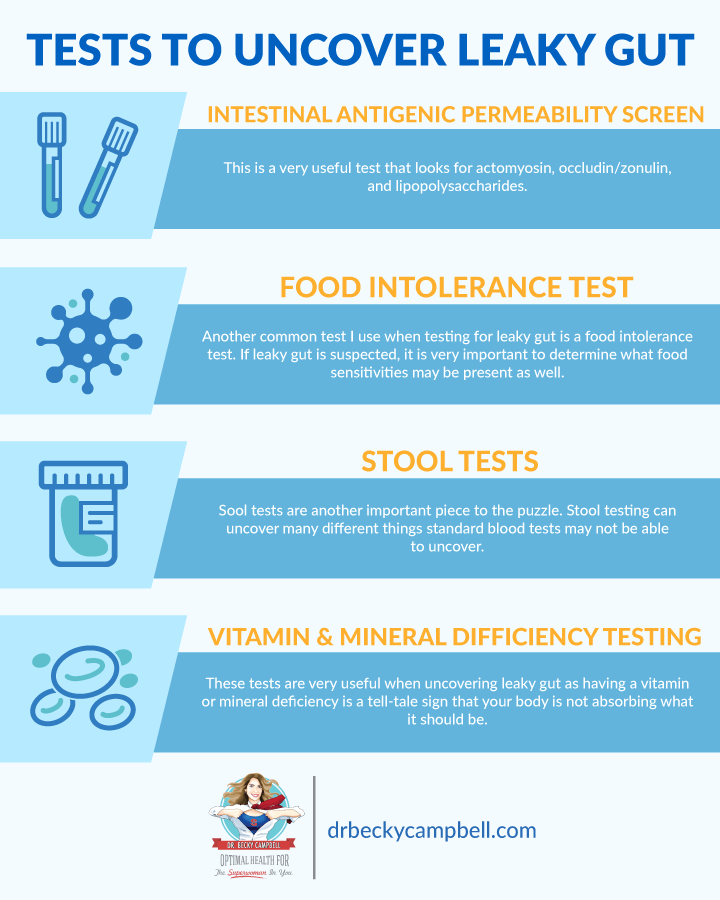
Some of the testing options for leaky gut include:
-
Zonulin or Lactulose Tests
The zonulin test is very useful because zonulin is what controls how large the openings between your gut lining as well as your bloodstream are. It’s normal to have some small openings as this helps to transport the nutrients that your body needs. However, if the openings are too large, it opens the opportunity for harmful toxins to get into the bloodstream. Zonulin levels often rise due to things like gluten, candida, or other GI infections. This particular leaky gut test will be able to tell us what your specific zonulin levels are which is a very useful tool in determining if leaky gut is something affecting you.
-
Food Intolerance Test
Another common test I use when testing for leaky gut is a food intolerance test. If leaky gut is suspected, it is very important to determine what food sensitivities may be present as well. This is because most people who suffer from leaky gut will wind up with food sensitivities as the result of this condition, and not addressing these at their source will make recovering from leaky gut very difficult, and it can even make the condition worse. One of the reasons why most people with leaky gut develop food sensitivities is because when toxins sneak into the bloodstream through those permeable junctions, the immune system responds to this foreign invader. Your body will then produce a large amount of antibodies as a way to try to defend the body from the particles that should not have been able to seep into the bloodstream. The immune system will then react each time you consume this food. Some of the most common immune triggers include gluten as well as dairy when dealing with leaky gut. This is true even if your body use to be able to tolerate these foods. Once leaky gut it present, there is a good chance that your body will react to these inflammatory foods.
-
Stool Tests
Sool tests are another important piece to the puzzle. Stool testing can uncover many different things that standard blood tests may not be able to uncover. They are very telling when it comes to the health of your digestive system. A stool test can take a look at bacterial levels as well as other markers such as the overall health of your intestines and any inflammation that may be present. These tests are also very helpful in uncovering potential infections of the gut such as parasites, yeast, and other bacterial infections that can all cause leaky gut or make the condition worse.
-
Vitamin & Mineral Deficiency Testing
These tests are very useful when uncovering leaky gut as having a vitamin or mineral deficiency is a tell-tale sign that your body is not absorbing what it should be. This can point to leaky gut. A deficiency can occur if there is damage to the gut microvilli in the case of leaky gut. I like to test for these deficiencies as another way to help diagnose this condition.
Treatment Options
Due to the variety of symptoms that result from lifestyle and physiological factors, this condition, its severity, and course of treatment vary from individual to individual. A skilled clinician can evaluate and identify what is going on in your gut and put you on a specific protocol to heal your body.
Regiments may include removing grains, sugar, GMO’s, non grass-fed meat and dairy from your diet. Replace them with foods with healing properties such as bone broths, fermented vegetables, and coconut products. Supplements like glutamine, digestive enzymes and probiotics can also aid in the repair of this condition.
Prognosis
For best results, it is important to try to identify all possible irritants for your Leaky Gut individually. Once a course of treatment is in place, many patients see improvement in four to six months. For those with Leaky Gut caused by autoimmune deficiencies, long-term lifestyle changes may be in order.
Steps you can Take Today
If you believe that you may be suffering from leaky gut, there are some steps that you can take today to start your road to recovery.
-
Get the Proper Testing
Getting the proper testing such as a zonulin, food sensitivity, stool, or vitamin and mineral deficiency test would be one of the first steps in taking control of your health. The sooner these tests are done, the better the outcome will be. If you are interested in setting up an appointment to start your healing journey, click here.
-
Make Dietary Changes
Start by removing gluten, dairy, and sugar from your diet and see how you feel. If you suspect that there are other foods that your body is reacting to, try removing those foods too and see how your body responds. Keep in mind that it may take a little while to feel better after removing a reactive food so give it a couple of weeks.
-
Enjoy Gut Healing Foods
While there are some foods that you will need to remove from your diet, there are also some foods that you may want to consider adding into your diet. Things like bone broth, fermented vegetables such as sauerkraut, and kimchi, and coconut oil are excellent for anyone suffering from leaky gut. Try adding some of these foods into your diet and removing processed and artificial foods.
-
Try Probiotics
A diet that lacks healthy probiotic rich foods can cause digestive health issues. Probiotics work to help support the healthy bacteria in the gut while keeping the pathogenic bacteria at bay. You can boost the probiotic rich foods in your diet by enjoying things like sauerkraut, and kimchi, but you can also try adding a probiotic supplement to your routine. Just be sure that you are getting a high-quality probiotic. I recommend Mega SporeBiotics and Prescript-Assist.
-
Reduce Stress
Since stress can trigger leaky gut, try your best to limit the amount of stress in your life. While certain amounts of stress are inevitable it’s important to practice some form of stress reduction daily such as yoga, exercise, or meditation.
-
Work with a Functional Medicine Practitioner
Working with a functional medicine practitioner will allow you to work together to get to the bottom of what is going on. Together, you can explore if an infection is present, what food sensitivities are present, and any other trigger for leaky gut. If you do have leaky gut, an individualized healing plan can be put into place that will work best for you and your body.

Leaky gut can cause debilitating symptoms and not dealing with this condition at its source can make things worse over time. The great news is that there are healing protocols that can be taken to heal the gut so that you can recover and start to feel better as soon as possible.
If you are suffering from weight gain, fatigue, hair loss and more, click here to schedule a phone call with me, so I can find out where you’ve been, where you want to get to, and how I can help you get there.
I know exactly where you are because I’ve been there myself…I remember being so tired that I could barely function. I gained 30 pounds out of nowhere and had a severe case of brain fog. I also started to get severe anxiety and panic attacks. I was driven and motivated…until I wasn’t. I didn’t know what was happening to me. All I wanted was to get my life back…
Finally, I learned about functional medicine and found a practitioner that I hoped could help me. They ran specialized tests that were far different than I had ever had before. When I got the results back, it turned out I had candida, parasites, high cortisol, the Epstein Bar Virus and many food intolerances. I also had an issue with my thyroid that no one found before because they were using the conventional medicine lab ranges which are way too broad….which I now know is one of the leading causes of hypothyroid misdiagnosis.
I went through treatment of all of these things and it completely changed my life. I immediately lost the 30 pounds I had gained plus more, I had a lot more energy, and my brain fog was gone. I felt amazing and knew that I wanted to help people find the underlying causes of their symptoms and disease.
Resources:
*Vaarala O, Atkinson MA, Neu J (2008) ‘The “Perfect Storm” for Type 1 Diabetes The Complex Interplay Between Intestinal Microbiota, Gut Permeability, and Mucosal Immunity’, Diabetes Journal, (57)10(2555-2562).
Dr. Axe. What Kind of Leaky Gut Test Should you Take?
Dr. Axe. 4 Steps to Heal a Leaky Gut and Autoimmune Disease

Epstein-Barr Virus Symptoms and Thyroid Connection
When it comes to thyroid health and particularly autoimmune thyroid conditions such as Hashimoto’s thyroiditis, there are many things in the body that can trigger this autoimmune response. One of the many triggers includes chronic infections such as the Epstein-Barr virus. The connection between the Epstein-Barr virus and thyroid health is pretty strong, and I am going to break down exactly why and talk about the most common Epstein-Barr virus symptoms so that you can uncover if this virus may be affecting your thyroid health.
Before we dive into that, let’s explore what exactly this virus is and how it affects your body.
What is the Epstein-Barr Virus?
You may be familiar with this virus and its link with mononucleosis which is a virus that commonly affects children and young adults. This virus which is commonly referred to as "mono" can cause symptoms such as fever, sore throat, and swollen lymph nodes. Epstein-Barr can cause mono. However, not everyone who is infected with Epstein-Barr will develop mononucleosis.
While Epstein-Barr can cause mononucleosis, it can also lead to more serious disease which we will talk about when we discuss the connection between the Epstein-Barr virus and thyroid health.
The problem with this virus is that once present in the body, it can persist for life. Epstein-Barr can also become reactivated which can cause symptoms, but at other times it may not cause any symptoms at all. Reactivation can become particularly problematic for those whose immune systems do not work as they should such as in the case of autoimmune conditions.
There is also quite a bit of confusion surrounding this particular virus. While modern-day medical practitioners know what the Epstein-Barr virus is, it is not as understood that there are over 60 varieties of this virus. Many doctors may diagnose this condition thinking that it’s a short-lasting thing, but often times it’s a long-term issue that can cause chaos in the body if not addressed appropriately. This virus can lead to problems such as thyroid disease, and chronic fatigue syndrome which is not something many medical practitioners talk about when addressing this virus.
Epstein-Barr Virus Symptoms
Some of the most common symptoms associated with Epstein-Barr include:
- Sore throat, usually severe
- Swollen lymph nodes
- Swollen tonsils
- Loss of appetite
- Fatigue
- Chills
- Headache
- Bloating
- Body aches
- Weakness
- Sweat
- Dizziness
Keep in mind that while these are some of the most commonly seen Epstein-Barr virus symptoms, some people experience symptoms not as commonly associated with Epstein-Barr which can easily lead to misdiagnoses which can ultimately make it difficult to feel better and get to the source of the problem if not working with an experienced health professional.

How Do You Contract the Virus?
So, we now know some of the symptoms of Epstein Barr, and we know that it is much more complicated than many medical professionals may know, but how exactly does someone develop Epstein-Barr?
One of the very first ways someone can contract the virus is if a mother had Epstein-Barr while pregnant, her baby could get it. Secondly, you can get the virus through blood transfusions infected with the virus, but you can also get it by just coming in contact with someone who is infected with this virus if they are in the infected stage. Keep in mind though that if someone has Epstein-Barr, it doesn’t mean that they are contagious at all times. It all depends on the stage the virus is at within the body which is what I am going to review next.
The Stages of Epstein-Barr
As if the virus wasn't confusing enough, it actually works in different stages. There are four stages to the virus.
Stage One
In stage one, you just caught the virus, and it’s possible that it is in its initial dormant stage where it just hangs out in your bloodstream while it quietly works to gain strength and then waits for the opportunity to cause an infection. This can occur if you are stressed out, burnt out, overworked, or maybe aren’t feeding your body right. If you let your body become too depleted the virus could become opportunistic and strike at this time. The virus may also take advantage during periods where your body may be going through some hormonal changes such as during pregnancy or for teenagers, during puberty.
The thing about stage one of the Epstein-Barr virus is that you can contract the virus, but it can hang around and wait for the perfect moment to strike for a long time, sometimes years.
Stage Two
Stage two is when the virus has decided to strike and can turn into mono as we spoke about before. Mononucleosis is considered to be stage two of the Epstein-Barr virus, and you have probably heard of this being referred to as the “kissing disease.” Stage two is when you would be the most contagious.
At this stage, symptoms will vary from person to person. Some people may go through this stage with only a mild sore throat and just some fatigue while others may experience more severe symptoms such as debilitating fatigue and a severe sore throat. Some people may even develop a rash. The length of time someone will experience these symptoms also varies. Some may only be down and out with the virus for about a week while others may be battling the symptoms for months.
Stage two is also the time where the virus may be targeting one or more than one of your organs to hang out in. Often times the EPV (Epstein-Barr virus) will choose the liver or the spleen as these two organs are home to certain toxins that the virus loves.
Stage Three
During stage three, things are a little bit different. The virus may have chosen its organ or organs of choice to call home, and if you were to get blood work, then lab tests may show antibodies which doctors would mark as having a past EBV infection. This is where the problem comes in. If your doctor is reading your lab work as if the virus is no longer active but you have not taken any steps to ridding your body of the EBV then the virus could very well be active in the body and still causing issues. The virus can go undetected as being active during this stage because chances are it is hiding out in one or more than one of your body organs. We will talk specifically about this and thyroid health coming up.
When the Epstein-Barr virus lives in one of your organs, it can cause inflammation, and it can do so without triggering your immune system since the virus is literally hiding. After stage two, your immune system may stop attacking the virus thinking that it has already ridden the body of the infection when in reality, EBV is just a very smart and tricky virus that knows how to hide in the body and not be detected.
Stage Four
In the final stage of the Epstein-Barr virus, its end goal is to affect your nervous system. If the virus invades your thyroid during stage three, there is a good chance you may begin to experience some unwanted symptoms such as nerve pain and just feeling achy throughout your body.
Unfortunately, during this stage blood work would not necessarily detect any sign of the infection so it can be very difficult to be diagnosed properly if you are not working with a health professional who has experience with this condition and its various stages.
Once it attacks your nervous system, you could experience things like ongoing fatigue, insomnia, and numbness in your extremities. It is during this stage that many people are misdiagnosed, and many people are given inappropriate medications or are thought to have hormonal imbalances because lab tests are not able to pick up on the infection.

How is the Epstein-Barr Virus Diagnosed?
Often times, this virus is diagnosed during stage two of the virus when symptoms are at their worst. Many people will head to the doctor complaining of a sore throat and fatigue, and their doctor will run blood work. It’s common that during stage two, the virus will show up as a type of mono.
After stage two, it can be very difficult for the virus to show up on lab tests and even when it's still active in your body, doctors often miss a diagnosis. It is not as simple as one would think, with four stages and the ability for the virus to hide out in your body for long periods of time you have to work with someone who knows the virus well to give you the proper diagnosis.
The Connection Between the Epstein-Barr Virus and Thyroid Health
We have talked about how the Epstein-Barr virus can affect different areas of the body, but I want to talk specifically about its effect on thyroid health. The connection between the Epstein-Barr virus and thyroid health occurs during stage three of the virus.
If you remember, stage three is when the virus has decided which organ or organs it wants to call home, but it can also leave its organ of choice and begin attacking other organs or even your thyroid when your immune system is out of control dealing with the virus.
The Epstein-Barr virus can actually cause Hashimoto’s disease as once the virus is in your thyroid, it can kill thyroid cells. Now, remember when I said that the Epstein-Barr virus is incredibly smart? Well here’s just another example, while your immune system would normally be able to ward off an infection like this the EBV is very smart in the sense that it can confuse the immune system due to neurotoxins it can create which can literally throw your immune system for a loop. This can make it very difficult for your immune system to number one, find the virus that may be hiding out in your thyroid, and number two go after it.
This virus specifically goes after the thyroid as a way to disrupt the endocrine system as a way to get closer to affecting the nervous system which generally occurs in stage four of the virus.
As awful as this virus sounds, there are things that you can do to support your body and keep the virus at bay if it is something you have been infected with which is what I am going to talk about next.
Steps you can Take Today
There are several steps you can take to tackle EBV and improve your health naturally.
Work with a Functional Health Practitioner
The first step you need to take if you suspect Epstein-Barr virus is to work with a Functional Medicine Practitioner, such as myself, who understands how EBV works. If you suspect this is something affecting you, you can contact me here for an initial consultation to talk about an individualized approach to getting to the bottom of your health concerns.
On top of working with a skilled Functional Medicine Practitioner, there are other steps you can take to support your body.
Eat an Anti-Inflammatory Diet with Healing Foods
Remove inflammatory foods from your diet, such as refined sugar, refined oil, artificial ingredients, junk food, deep-fried food, and processed foods. Eat plenty of anti-inflammatory foods, including greens, vegetables, fruits, herbs, spices, healthy fats, such as avocados, coconut oil, and organic ghee, and clean protein, such as pasture-raised beef, grass-fed poultry and eggs, and wild-caught fish. Add anti-inflammatory foods with antimicrobial properties, such as garlic, parsley, coconut oil, cilantro, and curcumin to your diet.
Reduce Stress
Make sure to reduce stress and learn to handle stress better. Reduce stressful situation and contact with people who bring you down. Spend time with uplifting, supportive people, and doing things you love. Practice stress-reducing strategies, including meditation, breathwork, gratitude, journaling, coloring, regular exercise, time in nature, grounding, healing baths, and ‘me-time’. Work with a therapist or a life coach to address emotional difficulties and learn stress reduction strategies if needed.
Get Enough Sleep
Make sure to sleep 7 to 8 hours a nigh. Support your circadian rhythms by going to bed and waking up around the same time. Develop a relaxing evening routine and avoid electronics, food, sugar, and caffeine in the evening. Create a peaceful sanctuary in your bedroom with a comfortable bed, bedding, and pillows, a salt lamp, calming essential oils, your favorite books, dark curtains, and anything else that makes you feel calm.
Try a 30-Day Thyroid Reset
As you’ve learned, there is a strong connection between EBV and thyroid issues. If you have thyroid imbalances or thyroid disease, I recommend reading and following the recommendations in my book, The 30-Day Thyroid Reset Plan: Disarming the 7 Hidden Triggers That are Keeping You Sick. This plan will help you to address underlying causes of your thyroid issues including EBV infections, repair your thyroids, and improve your overall health. You will learn everything you need to know about thyroid disease. I offer a 30-day plan to improve your health and my favorite thyroid-friendly recipes to nourish your body with delicious meals.
Final Thoughts
When it comes to thyroid health issues, especially autoimmune thyroid conditions such as Hashimoto’s disease, there are a variety of things that can trigger an autoimmune response. One of the many triggers includes chronic infections such as the Epstein-Barr virus. Understanding the connection between the Epstein-Barr virus and thyroid health is key to uncovering the root causes of your thyroid condition and creating the right recovery plan. I recommend that you work with a functional health practitioner and follow my tips to overcome EBV and thyroid issues naturally.
If you are dealing with symptoms of EBV, thyroid issues, or other health issues, I invite you to schedule a consultation with me. I can help to identify the root cause of your condition and recommend a personalized treatment plan to repair your body and regain your health and well-being. Schedule your consultation here.

If you are not ready to make an appointment but would like more information? Try my new book, The 30-Day Thyroid Reset Plan ,where I walk you through a step-by-step plan to support your thyroid as much possible..
Resources
Medical Medium. What’s Potentially at the Root of Medical Mysteries
Epstein Barr Virus Infection. EMedicineHealth.
[sc name="Below all post"]

How the Adrenals Affect the Thyroid
One of the questions I commonly get from patients is what affects the thyroid. How does thyroid disease start and are there things that one should be watching out for when trying to control things like Hashimoto’s disease? There are so many different players when it comes to thyroid health, and the adrenal glands are something that I want to speak about today. I want to specifically talk about how the adrenals affect the thyroid so that you can better understand the importance of taking care of your adrenals as well as how to do that.
To get started, let’s talk about what the adrenal glands are.
What Are the Adrenal Glands?
The adrenal glands are tiny little glands that sit on top of the kidneys. We have one adrenal gland for each kidney. Our adrenal glands are incredibly important as they produce essential hormones including sex hormones as well as cortisol. While having too much cortisol is not something that we want, cortisol is also important in helping the body cope with stress when cortisol levels are appropriately regulated.
The adrenal glands are also strategically located as they actually help to influence our kidney function by secreting aldosterone. Each gland also has three different parts, the capsule, cortex, and medulla which are all important and I will break down each part next to help you better understand how these tiny glands work.
The Different Parts of the Adrenal Gland
The Capsule
Just as it sounds, the capsule is the outer protective layer that surrounds each adrenal gland.
The Cortex
This part of the adrenal gland takes up about 80% of the volume and within the cortex, there are three different zones that have different functions. The cortex works to produce DHEA as well as other sex hormones, corticosteroids, as well as mineralocorticoids.
The Medulla
This is the innermost part of the adrenal glands and takes up about 20% of the volume of each adrenal gland and it helps our body respond to stress. The medulla is what secretes epinephrine, norepinephrine, as well as dopamine. These are what triggers the stress response in the body.

Signs Your Adrenals May be Stressed
If you deal with chronic stress, your adrenals can become fatigued. If you suspect that adrenal fatigue may be something affecting you, here are some of the common symptoms of adrenal fatigue.
- Hormone imbalance
- Always feeling worn out and tired
- Body aches
- Irritability
- Having difficulty concentrating
- Constantly feeling overwhelmed.
With these symptoms, it is common for a modern medical practitioner to overlook the condition and classify your symptoms as something else. This can be very frustrating for anyone trying to get a proper diagnosis and start a road to recovery. Working with a functional medicine practitioner is a great way to really focus on the whole picture and address each symptom so that a proper diagnosis can be made.
What Causes Adrenal Fatigue
Chronic stress is what commonly causes adrenal fatigue. Chronic stress is often to blame here, but even periods of acute stress can put a strain on your adrenal glands.
Here are some of the other causes of this condition:
- Poor diet
- Sedentary lifestyle
- Having constant exposure to environmental toxins
- Stressful life experiences including both emotional and physical stress like divorce or a surgery
- Chronic stress from things like financial strain or poor relationships
- Not getting enough sleep: Those with adrenal fatigue need at least 8-10 hours of sleep per night.

Adrenals & Thyroid Health
Now that you have a little bit of a better understanding as to what the adrenal glands are and how they work in the body, let’s talk about the adrenal glands and thyroid health.
The interesting thing about our adrenal glands is that they produce hormones that play a role in our metabolic health in a very similar way that the thyroid does. These hormones that are secreted by the adrenal glands help to regulate our bodies blood pressure, blood sugar, and digestion just to name a few. Now, remember when I said that the adrenal glands help our bodies respond to stress? Here is where those hormones come in. When we are under stress, the adrenal glands will be told to produce stress hormones and then release them in the body.
When these hormones are released, other body functions are interrupted including digestion, and the thyroid is even interrupted putting a halt to thyroid hormone production. Why? Well, this is the way the body works to stop other body processes that aren’t going to help the body conquer the stressful event that is occurring. If the stress is dealt with then the body can return to a normal state but when there is chronic stress, this isn’t always the case.
Chronic Stress & Thyroid Health
With chronic stress, which occurs more frequently than ever in today’s fast-paced society, the body doesn’t always return to a normal state of functioning right away which can cause issues with things like thyroid health.
With chronic stress, the adrenals are constantly secreting stress hormones which include cortisol. When cortisol is constantly being pushed out in large quantities, it can be difficult for the adrenal glands to keep up which can ultimately lead to adrenal fatigue This is where major issues come in with thyroid health. The sudden large quantities of stress hormones followed by a decline when the adrenal glands cannot keep up can cause thyroid imbalance.
When there is an imbalance in your cortisol levels, thyroid hormone production can slow down. Not only that but with an imbalance in your stress hormones, T4 and T3 can be affected as well. Now, keep in mind that when talking about T3, there is Free T3 referred to as FT3 and then there is Reverse T3 referred to as RT3. Reverse T3 is an inactive form and when we are chronically stressed out, there is a higher conversion of Reverse T3 as opposed to the active form of T3. When this happens, many of the metabolic processes in the body can be significantly slowed down and you may even begin to experience symptoms of hypothyroidism. (1)
As you can see, chronic stress can cause a number of imbalances with your thyroid health, and it can also affect your immune system and your gut which are two other body systems that can directly affect thyroid health.
Stress can suppress the immune system. Think about it this way. When you are really run down, stressed out, and not getting enough sleep you are more likely to get sick, right? This is because chronic stress can suppress the immune system as a way to help focus the attention on the stressor going on in the body. When we are dealing with chronic stress for long periods of time that suppresses the immune system, autoimmune disease such as Hashimoto’s can be triggered.
The bottom line here is that chronic stress takes a toll on our body and can directly impact thyroid health. With that being said, it’s so important to take care of our adrenals as they help support the stress response in our body.

What You Can Do to Support Adrenal Health
Chronic stress is damaging so let’s take a look at some of the ways that you can support adrenal health to better take care of your thyroid and entire body.
- Get tested for food sensitivities: Consuming reactive foods can put more strain on your body which is the last thing you want when dealing with adrenal issues and chronic stress.
- Eat a balanced breakfast daily: Balancing blood sugar levels are essential to supporting adrenal health so be sure to eat a well-balanced breakfast soon after waking up each morning.
- Eat regularly: Along the same lines of eating a balanced breakfast, it’s important to eat balanced meals regularly to keep your blood sugar in balance.
- Reduce stress as much as possible: This includes all sources of stress. It is very important to eliminate any negativity from your life and to reduce any unnecessary stress.
- Stay hydrated: Stick to water and be sure to get at least 8 cups of water per day and more if you are active.
- Cut out caffeine: Even if you feel exhausted due to chronic stress and adrenal burnout, resist the urge to drink that cup of coffee. Caffeine can raise cortisol levels and can cause further adrenal burnout.
- Reduce or eliminate sugar: Try to cut back on sugar as much as possible and focus on grass-fed animal products for protein and healthy fat from foods like avocados, coconut, and sprouted nuts and seeds.
- Add nutrient-dense foods to your diet: Try adding things like bone broth, coconut oil, and dark leafy greens to your diet.
- Boost fermented food intake: You will need to support your gut to help support adrenal health as well as every other body system. Try adding things like sauerkraut, kimchi, and unsweetened coconut yogurt to your diet.
- Practice self-care: Getting enough sleep and relaxation is critical in supporting adrenal health. Try to get to bed around the same time each night to establish a routine and practice daily stress reduction.
- Try a 30-Day Thyroid Reset: Reading my book, The 30-Day Thyroid Reset Plan; Disarming the 7 Hidden Triggers That Are Keeping Your Sick, you will learn everything you need to know about your thyroid and how to take care of it. Since the two go hand in hand, this plan will help you to improve your adrenal health as well. This 30-day plan will help your improve your health with the help of my favorite thyroid-friendly recipes to nourish your body with delicious meals.
Final Thoughts
Despite the fact that our adrenal glands are so small, they play a huge role in the overall health of our body and they can certainly impact the health of our thyroid. Not taking care of ourselves, letting stress get out of control, and not addressing it at its source can lead to adrenal burnout. The best way to prevent this from happening is to make changes to both your diet and lifestyle to support adrenal health. Try removing as much stress as possible, increasing sleep to at least 8 hours per night, and focus on a Paleo-style diet being sure to eat at regular intervals throughout the day. It is also important to make time to do the things that you enjoy in life. Making these lifestyle changes means taking a huge step in supporting your adrenal glands and ultimately supporting thyroid health.
If you are dealing with symptoms of adrenal fatigue, adrenal issues, Hashimoto’s disease, or other thyroid issues, I invite you to schedule a consultation with me. I can help to identify the root cause of your condition and recommend a personalized treatment plan to repair your body and regain your health and well-being. Schedule your consultation here.

The Truth About Coconut Oil: Is Coconut Oil Healthy?
Coconut oil has been deemed a superfood over the last couple of years, and many people have started including it as a regular part of their diet. But, is coconut oil healthy? I am going to dive into the truth about coconut oil and help clear some of the recent confusion surrounding this oil.
If you are feeling more confused than ever regarding whether or not coconut oil is healthy since the release of the American Heart Association June report, keep reading.
What is the American Heart Association Saying About Coconut Oil?
As if the topic of saturated fats wasn’t confusing enough, the June American Heart Association report has made things even more confusing. However, the truth is that this is certainly not the first time the American Heart Association has recommended cutting back saturated fat, they have consistently held their stance on saturated fats and have recommended reducing it from the diet. However, I am going to talk about why avoiding coconut oil is not the answer and share a little bit more on this recent report and why there may be some biased views and influences impacting this latest report. First, let's dive a little deeper into this AHA report.
For years, saturated fats were looked at as damaging and harmful to our cardiovascular health. However, over the years, other reports have shown the benefits of adding coconut oil to your diet which is very high in this particular fat.
The AHA has come out in saying that coconut oil may not be as healthy as what many may believe it to be. One of the biggest issues they have with coconut oil has to do with cholesterol. The American Heart Association is recommending that people stay away from this oil because they believe it to raise LDL cholesterol (the bad type of cholesterol.) However, they do not speak about the potential benefits of coconut’s ability to help raise the healthy type of cholesterol (HDL). It’s also been found that adding some coconut oil to your diet can help decrease waist circumference. (1)

The Industries Influence
What do I mean when I talk about industry influence? I am talking about the influence industries have on nutritional science. Now, you may be thinking that the American Heart Association wouldn't be impacted by industry influence as it's a non-profit organization but the truth is that non-profits can be influenced as well. As it turns out, the AHA receives funds from some large companies you would never think the AHA would be involved with.
Large companies such as Coca-Cola, Nestle, and The Sugar Association to name a few have representatives that serve on the American Heart Associations Industry Nutrition Advisory Panel, INAP. It's very possible that some of the representatives would have some influence over what the AHA recommends.
The American Heart Association’s Issue with Cholesterol
So, why is the American Heart Association so concerned with cholesterol levels? Their primary issue with coconut oil has to do with cholesterol since the AHA believes that LDL cholesterol has the ability to put you at a higher risk of developing heart disease.
While of course managing your cholesterol levels is important (keep in mind that both high and low cholesterol can pose an issue to health) it’s important to also take other areas of your health into account when looking at risk factors for heart disease. There are many different areas we need to look at when it comes to protecting our heart such as other dietary and lifestyle factors to help reduce the total inflammatory load on the body. Instead of solely focusing on cholesterol as the issue it’s important for us to look at the root cause of nearly all disease which happens to be inflammation.
One More Thing on Cholesterol
Another important point I want to make about cholesterol is the fact that it’s important to look at more than just your total cholesterol. You need to look at your actual cholesterol ratios. You will want to look at both your HDL and LDL cholesterol numbers. Unfortunately, it’s more common for medical organizations or even modern day physicians to put a large emphasis on your total cholesterol as opposed to the ratios. For this reason, whenever working with a doctor always ask about your cholesterol ratios so that you know where your levels stand.
I have also written an entire blog post on cholesterol so if you are interested in learning more about why cholesterol is an important part of our diet you can read more about that here.
Another Big Issue with the AHA Report
Another big issue I have with the report that came out about coconut oil is what is being recommended as a replacement for certain saturated fats. The report talks about the comparison between saturated fats such as those found in coconut oil and dairy products and polyunsaturated vegetable oils. The AHA report is in favor of the use of vegetable oils. (2)
So, what’s the big issue with this? Unfortunately, many of the vegetable oils seen today are genetically modified such as corn as well as soy oil. (3) These vegetable oils are also very high in omega-6 fatty acids. When we get more omega-6 than omega-3 fatty acids, we run the risk of increasing inflammation in the body. Too much omega-6 fatty acid is associated with an increased risk of nearly all inflammatory disease. (4) This is a major issue because we know that inflammation can cause heart disease so therefore increasing your vegetable oil intake may actually put you at a greater risk of developing heart disease.
Debunking the Myth About Saturated Fats
When asked the question is coconut oil healthy, the topic of saturated fat is always going to come up. This is especially true now that this new report has come out. I want to talk specifically about saturated fats to give you a little bit of a better understanding surrounding them and how they are used in the body.
The bottom line about saturated fats is that we need them. Did you know that about 50% of cell membranes are composed of saturated fats? Imagine what would happen if we didn’t get any in our diet.
Our bones also rely on saturated fats in order to effectively incorporate our calcium intake into our bones. (5) Saturated fats are also protective in the sense that they can help protect the liver and they are also important for brain health. When we completely remove or significantly restrict our saturated fat intake, we rob the brain of what it needs to function properly.
Our nerves also need a certain amount of saturated fat for proper nerve signaling. This is especially true for saturated fats found in things like coconut oil as well as butter. These fats help with nerve signaling that influences essential body functions such as metabolism.
If you also think back to the hunter and gatherer days where a Paleolithic diet was consumed, they were not at risk for cardiovascular disease like we are today. What's important about that is that their diets contained large amounts of fats and saturated fats at that. High-fat diets today such as the ketogenic diet have shown favorable odds for affecting the markers for cardiovascular disease according to a study done by The Journal of Nutrition.
While there are many mixed messages about consuming fat and it's impact on our health, the studies are there that show that keeping fat in the diet can ultimately be beneficial especially when you consume the right types of fat, and yes this includes coconut oil!
Saturated Fat & The Immune System
One last thing I want to talk about when it comes to saturated fat intake is the role it plays in our immune system. One of the greatest benefits of adding coconut oil to your diet is its ability to help boost the immune system. The lauric acid found in the coconut oil is responsible for this benefit. When we don’t get enough saturated fats into our diet, it can be difficult for our white blood cells to keep up with any foreign invaders that may come into our blood. This can put us at risk for bacteria, and viruses to invade and make us sick.
The truth is that our bodies need a certain amount of saturated fat in our diet. Of course, it’s important to focus on where you are getting your saturated fats from. For example, you don’t want to consume processed meats or damaged oils. Things like coconut oil, grass-fed and organic beef, and organic raw dairy products are all excellent sources. Despite what this current report states about coconut oil, the proof is there that a certain amount of saturated fat from healthy sources is necessary for overall health. Therefore, don’t be afraid to keep coconut oil in your diet. I even recommend swapping out other unhealthy oils such as vegetable oils in your diet for coconut oil.

So, is Coconut Oil Healthy?
So, now that you know a little bit more about what the AHA report is about as well as a little bit more about saturated fats and cholesterol you may be wondering is coconut oil healthy?
The bottom line is that coconut oil still contains properties that can benefit your health. This oil contains so many powerful properties that completely removing it from your diet may do more harm than good.
Here are just a handful of health promoting properties coconut oil holds:
Immune Health: As we have previously talked about, coconut oil is great for the immune system. Coconut oil acts as a natural antibacterial and antiviral. The lauric acid in coconut oil is also great for fighting off candida.
Brain Health: There have been numerous studies that have shown that coconut oil may be able to assist those who suffer from Alzheimer’s disease and even seizure disorders. Coconut oil contains medium chain fatty acids which work a little bit differently than other fats in the body. These fats are very easily absorbed and then converted into ketones. These ketone bodies serve as energy sources for the brain and may be very beneficial for those with Alzheimer’s disease. (6)
Energy Support: You may notice that many athletes make coconut oil a regular part of their diet and this again has to do with the medium chain fatty acids present in this oil. These fats are metabolized by the liver and can be used for energy which is why coconut oil is such a great energy supporting food.
Choosing the Right Kind of Coconut Oil
If you do decide to keep coconut oil in your diet, not all coconut oil is created equal. Here are some of the things you will want to watch out for when choosing which brand is going to be best for you.
- Choose Unrefined Coconut Oil: You may notice that some brands of coconut oil are labeled as “refined” when shopping at the grocery store. You want to stay away from this. Why? Because refined coconut oil has been bleached as well as deodorized. The unrefined version does not use any chemicals to treat the oil and therefore keeps more of the natural compounds present in the oil.
- Choose Virgin Coconut Oil: Virgin coconut oil is derived from the meat of mature coconuts, and it's full of healthy fats and free from any chemicals that you may find in refined versions. Virgin coconut oil does have a very distinct coconut taste, so you will likely notice the flavor of the oil when used in cooking. With that being said, I do recommend the use of virgin coconut oil if you are choosing to keep coconut oil in your diet.
Other Ways to Slash Your Heart Disease Risk
I am by no means saying that we shouldn’t be worried about our risk for cardiovascular disease because this is something we all need to pay attention to. However, I want to share some additional ways that you can help reduce your risk that doesn’t involve swapping out coconut oil for more damaging oils.
By taking a deeper look at your diet and lifestyle and making changes you could do your body a whole ton of good.
Here are some other ways that you can help reduce your risk of cardiovascular disease.
- Cut processed foods out of your diet. Foods made with damaged fats such as trans fats, and hydrogenated fats put you at an increased risk of developing heart disease.
- Eliminate as much refined sugar from your diet as you can.
- Eliminate gluten and cut back on grains.
- Eliminate processed meats from your diet.
- Enjoy more omega-3 fatty acids: Things like wild-caught fish, mackerel, chia seeds, flaxseeds, and walnuts are excellent sources.
- Enjoy more dark leafy green vegetables.
- Add fresh herbs and spices to your diet.
- Follow an anti-inflammatory diet with lots of vegetables, berries, and omega-3 rich foods.
- Stay active by getting some form of exercise into your daily routine.
- Reduce stress to help reduce the inflammatory load on your body.
- Maintain a healthy weight.
- Maintain healthy blood pressure readings.

If you are suffering from weight gain, fatigue, hair loss and more, click here to schedule a phone call with me, so I can find out where you’ve been, where you want to get to, and how I can help you get there.
I know exactly where you are because I’ve been there myself…I remember being so tired that I could barely function. I gained 30 pounds out of nowhere and had a severe case of brain fog. I also started to get severe anxiety and panic attacks. I was driven and motivated…until I wasn’t. I didn’t know what was happening to me. All I wanted was to get my life back…
Finally, I learned about functional medicine and found a practitioner that I hoped could help me. They ran specialized tests that were far different than I had ever had before. When I got the results back, it turned out I had candida, parasites, high cortisol, the Epstein Bar Virus and many food intolerances. I also had an issue with my thyroid that no one found before because they were using the conventional medicine lab ranges which are way too broad….which I now know is one of the leading causes of hypothyroid misdiagnosis.
I went through treatment of all of these things and it completely changed my life. I immediately lost the 30 pounds I had gained plus more, I had a lot more energy, and my brain fog was gone. I felt amazing and knew that I wanted to help people find the underlying causes of their symptoms and disease.
Resources
(1) A Coconut Extra Virgin Oil-Rich Diet Increases HDL Cholesterol and Decreases Waist Circumference And Body Mass in Coronary Artery Disease Patients. (2015) Pub Med
(2) Dietary Fats and Cardiovascular Disease: A Presidential Advisory From the American Heart Association. (2017) American Heart Association.
(3) Is Coconut Oil Healthy? The American Heart Association Doesn’t Think So. (2017) Dr. Axe.
(4) How too much Omega-6 and Not Enough Omega-3 is Making Us Sick. (2010) Chris Kresser.
(5) 7 Reasons to Eat More Saturated Fat. (2009) Dr. Mercola.
(6) The Role of Dietary Coconut for the Prevention and Treatment of Alzheimer’s Disease: Potential Mechanism of Action. (2015) Pub Med.
(7) A Ketogenic Diet Favorably Affects Serum Biomarkers for Cardiovascular Disease in Normal-Weight Men. (2002) The Journal of Nutrition
(8) Coconut Oil is Still Healthy, Despite AHA Claims. (2017) Chris Kresser
[sc name="Below all post"]

How to Support Your Thyroid and Adrenals to Reach Your Full Superwoman Potential
So many women today are expected to be Superwoman. Many women I see in my practice are moms, run a business, or dedicate all of their time at their place of work. Women then come home from work to make dinner, take care of their kids, or parents and then try to make time for exercise to try to look good and feel healthy. There is so much put on women today that being Superwoman is almost expected.
This is why when I think of the term superwoman, I think about all women and what they have to juggle. With all that is put on us, it’s very easy for us to lose sight of our superwoman powers.
Here are some of the characteristics I think of when I think about who superwoman is:
- Strong: Superwoman is strong, resilient, and can tackle anything that comes into her way with strength and grace.
- Powerful: Superwoman is powerful. She confronts obstacles, tackles them and keeps her power all at the same time.
- Brave: Us women have to be brave, and superwoman is brave when it comes to reaching her full potential and pushing outside of her comfort zone to get to where she wants to be.
- Entrepreneur: I see so many women in my practice who are entrepreneurs. Superwomen are self-starters, so it’s no wonder an entrepreneurial spirit comes with the superwoman package.
- Mother: Mothers are superwomen, bottom-line. We are expected to be superwomen every day by taking care of our families, making dinner, and then taking care of ourselves in the mix of the chaos.

What Does Superwoman Need to Function at Her Best?
Given all the pressure that is put on us women today, in order to function at our best our body needs to be working at its highest potential. This is where functional medicine comes in and where I work with a ton of high-performance women to help them reach their absolute superwoman best.
Here are some of the things superwoman needs to function at her best:
- A Healthy Thyroid: One of my specialties in my practice is thyroid health. I see so many high-performance women come to my practice with less than optimal thyroid function. Often times women come to me with symptoms such as hair loss or thinning, weight gain, depression, anxiety, and even low libido. Do any of these sound familiar? Is so, you are not alone and you are not the only superwoman being held back from your full potential due to a thyroid disorder. If your thyroid is out of balance, your entire body is out of balance. The thyroid is necessary for your body to function at its best as thyroid hormones impact nearly even single body process. It’s no wonder that when our thyroid health is out of balance we suddenly gain weight, feel fatigued and suffer from brain fog. Walking around with all of these symptoms is certainly not the way to harness your superwoman powers. As a Functional Medicine Practitioner, I work with women to uncover potential thyroid imbalances and then get to the source to correct it. Keep reading, and you will learn my exact plan for how I can help you conquer your thyroid issue holding your superpowers back.
- Healthy Adrenal Function: I see adrenal fatigue more and more in my practice. Often times I see it among working mothers who are so burnt out that they just don’t have any time to take care of themselves. They have lost their superwoman powers due to symptoms of fatigue, irritability, difficulty sleeping, and anxiety. How can we function at our best when we feel that way? Adrenal function is one of the key components to functioning at your absolute best. To help balance adrenal function we need to work on balancing stress hormones such as cortisol and adrenaline. Blood sugar balance also comes into play here. When all of these are out of balance it’s very difficult to feel our best and perform our best every single day.
- A Body Free from Toxins: Having a body free from toxins is at the center of performing at our superwomen best! However, this isn’t always the case. I see countless women who come into my practice who have heavy metal toxicities or are in need of a major liver cleanse. Now, this isn’t entirely our fault. Things like pollution certainly don’t help. However, there are things that we can control to cleanse our body from heavy metals and toxins that weigh us down. Buildup of heavy metals such as mercury can cause thyroid dysfunction, and a toxic liver can lead to difficulty losing weight, fatigue, bloating, and acid reflux. These are symptoms that so many high-performance moms suffer from and they can hold you back from your utmost potential. When your body is free from toxins and heavy metals your ability to lose weight improves, you have more energy, and your overall mood will be much better than it was when you were being dragged down! Talk about superwoman powers. Having the ability to feel great every single day is what every high-performance mom dreams of, and this reality could be yours.
- Superwoman Diet: Diet is key. There’s no doubt that the food choices you make every single day is going to impact how you feel. If you consume a diet full of processed and sugary foods packed with artificial ingredients you will be more likely to have difficulty losing weight and experience blood sugar imbalances. Eat a diet packed full of superwoman foods and you will have sustained energy to keep up with your job and kids (if you have children) and have the energy to do the things you want to do. A diet designed for superwoman will also help keep you healthy and reduce inflammation. This is all part of my plan I am going to talk about to help you get your superwoman powers back, so keep reading.

What is Superwoman Capable of At Her Full Potential?
Do you remember what it was like during a period of your life when you felt like you had endless energy and could balance it all? For most of us, this may be a distant memory. Trust me, I’ve been there. There was a period in my life where I was fatigued, had gained 30 lbs. and just felt terrible every day. Feeling great and full of energy and able to multi-task was something that had seemed like a distant memory. This was before I started my journey in functional medicine. After uncovering my root cause I was able to harness my superwoman powers and have not looked back. Today I have sustained energy to run a business, keep up with my kids, and take care of myself. This is what I want for each one of you. I want each one of you to be capable of amazing things at your fullness potential. Don’t think it’s possible to do everything you use to do? Think again! It’s totally possible with the proper self-care and adjustments.
Here are some of the things superwoman is capable of at her fullest potential:
- Keeping up With Her Kids Without Getting Tired: How many of you wish that you could play with your kids without getting tired? I hear this from so many women who come to my practice totally drained and fatigued. Working, taking care of your family, and playing with your kids requires a ton of energy! However, guess what? This is completely possible once you uncover what is holding you back. At your fullest potential, you could be keeping up with all of your kid's activities, playing, helping with homework and whatever else needs to be done with even some energy to spare.
- Running Her Business: Many high-performance moms run their own business which again takes a ton of energy. Being a business owner, mother, and wife I know this all too well. Putting so much time into your business can leave you exhausted with little to no energy to spare. When superwoman is performing at her best, has uncovered any potential imbalances, and is eating a superwoman diet running her business becomes ten times easier. While the workload may not become easier, your motivation, focus, and energy improves which makes the world of difference. You may even find you become more successful when you take care of you!
- Making Food for Her Family: Do you make food for your family, if so do you find yourself dragging at the end of the night struggling to get something healthy on the table? You’re not alone here. Keeping up with the kids, working, and now having to make dinner and prep school lunches for the next day is extremely demanding. When you are performing at your highest potential though this doesn’t seem as daunting. In fact, you may actually enjoy whipping up a healthy meal and finding foods that fuel your body right and support a healthy family. You may even have the energy to include the kids in your cooking to teach them how to eat to support health.
- Taking Care of Her Parents: So many women are responsible for taking care of their parents. As our parent's age, often times they need us. Now not only do we have a job to hold down, a family to feed and care for, but we also become caregivers to our wonderful parents. This can be draining if you don’t take care of yourself. Ultimate self-care is essential here and when it’s done right you are capable of balancing it all without even thinking twice about it.
How to Get Your Superwoman Powers Back
Are you ready to get your superwoman powers back? I am here to help all high-performance women harness their superpowers and conquer their goals, keep up with their kids, and feel amazing every day.
Here is how I plan to help you get your superwoman powers back.
- Testing: As a Functional Medicine Practitioner, I offer thorough testing. I also offer testing that’s more in depth than what you may be offered just going to your regular M.D. We take a look at things like thyroid function, adrenal health, gut imbalances, food sensitivities just to name a few. These tests also look deeper than a modern medicine lab panel would so even if you have been tested for these before and tested negative doesn’t mean you don’t have an imbalance. I take a thorough look at all body systems to determine what exactly needs to be addressed.
- Superwoman Diet: We can’t be superwoman without a superwoman diet. I address dietary needs of each woman individually. After thorough testing, we come up with a plan that will work best for you. This plan includes superwoman foods such as grass-fed animal protein, veggies, fruits, gut-friendly probiotic-rich foods, and a powerful list of superfoods to help you feel your best each day.
- Superwoman Exercise Program: Depending on what your test results say, I will develop a specific exercise program to help you feel better and reach your health goals. Exercise is important, but it’s important that you do the right type of exercise for your body. Too much or too little can halt you from reaching your full potential. We will thoroughly review a specific program made just for you.
- Individualized Programs: It’s important to know that every patient I see is different. After I run testing and we gain a better understanding of what may be going on, I create an individualized plan just for you. This plan will be specifically tailored to help you get your superpowers back.
- Try a 30-Day Thyroid Reset: Want your superpowers back? I recommend reading my book, The 30-Day Thyroid Reset Plan; Disarming the 7 Hidden Triggers That Are Keeping Your Sick. You will learn everything you need to know about your thyroid and how to take care of it. This 30-day plan will help your improve your health with the help of my favorite thyroid-friendly recipes to nourish your body with delicious meals.

Final Thoughts
If you are looking for your superpowers, you don't have to do it alone. Following my tips can help you regain your health, but setting up a consultation will provide you with personalized attention, an individualized plan, and loving support from a functional health practitioner (hint: that's me!). If you are dealing with symptoms of Hashimoto’s disease, other thyroid issues, or any other health issues, I invite you to schedule a consultation with me. I can help to identify the root cause of your condition and recommend a personalized treatment plan to repair your body and regain your health and well-being. Schedule your consultation here.
[sc name="Below all post"]

The Top 3 Roadblocks That are Keeping Supermoms Without Their Powers
So many busy moms are desperate to find the secret to gaining more energy throughout the day. Let’s face it, being a mom is busy and often times exhausting. The truth is that many supermoms today are being held back from their full potential due to three roadblocks getting in their way.
These roadblocks suck the energy out of you, hold you back from playing with your kids, and certainly don’t make you feel your best. If you are ready to get your supermom powers back, keep reading because I am going to uncover these 3 roadblocks that may be holding you back and keeping you from gaining more energy throughout the day. I am also going to share things you can start doing today to feel better and keep up with your kids all day long.
The Roadblocks That Keep You From Gaining More Energy Throughout the Day
Roadblock #1: Thyroid Dysfunction
In my practice, I see countless patients come to me with chronic fatigue, weight gain, and irritability. Many of these patients also come to me with “normal” lab values according to their doctors.
They have been walking around chronically fatigued for months, sometimes even years with little to no relief because they haven’t been properly diagnosed. The truth is that often times, you may be suffering from a thyroid condition that many lab tests will not detect. In my practice, I offer thorough lab testing, and I take a look at a complete thyroid panel. Just because your one lab test comes back “normal” doesn’t mean you aren’t suffering from thyroid dysfunction, especially if you have all of the most commonly seen symptoms.
Thyroid dysfunction can be a massive roadblock and can certainly hold you back from your truest supermom potential. It can make you feel like you have little to no energy, cause weight gain despite weight loss efforts, and make you feel irritable and anxious just to name a few. Here are some of the other common symptoms of thyroid dysfunction:
- Mood swings
- Muscle pain
- Dry skin
- Hair loss
- Constipation
- Brain fog
- Hormonal imbalances: PMS, irregular periods, low libido

As you can see, all of these symptoms can greatly impact the quality of your life. As a busy mom, we just don’t have time for symptoms such as these to hold us back from playing with our kids or spending time together as a family.
The great news is that with the proper testing, a treatment plan can be put into place. With some lifestyle changes, simple dietary adjustments, and even some supplements you could be well on your way to feeling better and gaining more energy throughout the day. Many of my patients who have thyroid dysfunction are able to make the adjustments they need without the use of thyroid medication. The trick here is to catch it as early as possible and make the necessary changes right away.
To help get you started, here are some things that you should avoid with a thyroid disorder. Keeping these out of your diet will be an excellent first step in taking control of your thyroid health.
- Gluten
- Sugar
- Dairy: Especially conventional dairy. Some people may be able to tolerate some organic raw dairy.
- Soy
- Processed foods
- Alcohol
Roadblock #2: Adrenal Dysfunction
Adrenal dysfunction is another thing I commonly see in my practice and something that often times keeps mom's too tired to do everything they want to do.
Adrenal dysfunction can occur when your adrenal glands aren’t working properly. This can occur when someone is under a tremendous amount of physical and or emotional stress.
Fatigue is the most common symptom associated with adrenal dysfunction which is why I often see a lot of moms suffering from this. Moms come to me wanting more energy and no matter what they do it just doesn’t seem to make a difference. The reason for this is because adrenal fatigue can cause a lower level of various hormones as well as neurotransmitters in the body which can ultimately impact every single part of your body. (1)
Some of the other common symptoms associated with adrenal dysfunction include:
- Difficulty getting up each morning even after getting a full night sleep
- Fatigue that lasts all day
- Difficulty handling stress
- Craving salty foods
- Overusing caffeine and sugar to stay awake
- A weak immune system

Having any of these symptoms can get in the way of your quality of life, but when you are trying to balance life as a mom it can be next to impossible to get the things done you need to do.
If adrenal dysfunction is something you suspect, it’s important to see a practitioner who has experience working with this condition. It will take a specific set of tests to look deeper into your hormone levels and make a proper diagnosis. If adrenal dysfunction is present, there are steps you can take to take your life back. These include:
- Changing your diet to better support your body and body’s stress response: I generally recommend an anti-inflammatory Paleo style diet for my patients.
- Enjoying a high-protein snack with some healthy fat every couple of hours to keep your blood sugar levels stable.
- Eating a balanced breakfast daily.
- Testing for food sensitivities: Food sensitivities can make symptoms worse. When you get the proper testing and work with a Functional Medicine Practitioner, you can start an appropriate diet tailored to your dietary needs.
- Eliminating caffeine
- Eliminating or significantly reducing your sugar intake
- Reducing stress: Practicing mindfulness, meditation, and yoga are essential.
- Improving sleep habits.
- Working with a practitioner to develop a diet that is going to help support your energy levels throughout the day and take some of the burden off of your body.
Roadblock #3: Leaky Gut/Food Sensitivities
Leaky gut is something that many people deal with today. Leaky gut is also called intestinal permeability where the lining of the small intestine can become damaged. When this lining is damaged, undigested food particles as well as toxins can leak into the blood stream. When these toxins leak into the body, an autoimmune response can be triggered which can cause inflammation, allergies, food sensitivities, and even migraines. (2)
For mom’s, dealing with leaky gut can be debilitating. Leaky gut, just like the other two roadblocks can cause fatigue, cravings, nutritional deficiencies, as well as a decreased immune function. As a mom, the last thing we need is to be getting sick or feeling like we can’t get through the day without a couple of naps. We need our energy to take care of our kids, and for some of us, we need the energy to get up and go to work as well. Leaky gut is just not something us as moms have time to deal with.
So, what causes leaky gut? Leaky gut is commonly caused by diet and can occur when you are consuming foods such as gluten, soy, sugar, and dairy. If your body is treating a certain food as an invader, an immune reaction can occur, and over time intestinal permeability can develop. Things like antibiotics, and over the counter pain relievers may also be to blame for leaky gut.
If leaky gut is suspected, it’s also important to test for food sensitivities. The last thing you want is to begin a healing protocol only to be consuming foods your body is still reacting to. This is something I will test for in my practice. Consuming foods that you are sensitive to can lead to a wide range of symptoms including digestive upset like bloating and constipation, headaches, and even irritability. When it comes to food sensitivities it's also important to remember that it's possible to be sensitive to a food that is generally considered healthy. Each person is going to have their own individual sensitivities which is why it's so important to get tested for both food sensitivities and leaky gut.
A healing diet would also be essential to support the gut. Starting a diet free from gluten, soy, dairy, and sugar is an important step in healing that gut lining and feeling better. There are also certain foods that are particularly healthy for the gut that can be included in the diet. These include:
A healing diet would also be essential to heal the gut. Starting a diet free from gluten, soy, dairy, and sugar is an important step in healing that gut lining and feeling better. There are also certain foods that are particularly healthy for the gut that can be included in the diet. These include:
- Bone broth
- Coconut oil
- Probiotics
- Sauerkraut
- Unsweetened coconut yogurt
- Grass fed meats
- Wild caught fish

If you are a busy mom who just doesn’t have the energy to do what you dream of achieving, it’s time to take a look at what roadblocks may be holding you back. By uncovering potential roadblocks in your life, you can achieve optimal health so that you can be the high performing mom you know that you, and having plenty of energy to last you all day long. To take care of others, you need to take care of you! Start today by reaching out for a consultation to see how to uncover your hidden roadblock and start living your life to the fullest.

If you are suffering from weight gain, fatigue, hair loss and more, click here to schedule a phone call with me, so I can find out where you’ve been, where you want to get to, and how I can help you get there.
I know exactly where you are because I’ve been there myself…I remember being so tired that I could barely function. I gained 30 pounds out of nowhere and had a severe case of brain fog. I also started to get severe anxiety and panic attacks. I was driven and motivated…until I wasn’t. I didn’t know what was happening to me. All I wanted was to get my life back…
Finally, I learned about functional medicine and found a practitioner that I hoped could help me. They ran specialized tests that were far different than I had ever had before. When I got the results back, it turned out I had candida, parasites, high cortisol, the Epstein Bar Virus and many food intolerances. I also had an issue with my thyroid that no one found before because they were using the conventional medicine lab ranges which are way too broad….which I now know is one of the leading causes of hypothyroid misdiagnosis.
I went through treatment of all of these things and it completely changed my life. I immediately lost the 30 pounds I had gained plus more, I had a lot more energy, and my brain fog was gone. I felt amazing and knew that I wanted to help people find the underlying causes of their symptoms and disease.
Sources
(1) The Adrenal Fatigue Solution. What Are The Symptoms Of Adrenal Fatigue?
(2) Healthy Women. 10 Signs You Have a Leaky Gut—and How to Heal It
[sc name="Below all post"]

The Depression and Inflammation Link
Depression is a widespread condition that affects nearly 15 million American adults per year which is around 6.7% of the United States adult population. (1) That’s a huge number and not something we should ignore. Depression and inflammation are also being linked, but more on that in a minute.
While there may be many different reasons depression occurs, many people associate depression with an imbalance of chemicals in our brain. This is where big-time pharmaceutical companies come in advertising anti-depressant drugs that claim to re-balance those chemicals and help treat depression.
While chemical imbalances may be the cause some of the time, inflammation is now something experts are starting to look at as a potential link and I'm about to explain why.
Why Chemical Imbalance May Not be to Blame
With new research coming out it’s becoming clear that chemical imbalances may not be the only cause of depression, and here’s why:
- Not everyone who suffers from depression has low levels of serotonin and norepinephrine. In fact, it has been shown that only about 25% of people with depression have a reduced amount of these neurotransmitters. (2)
- Some people with depression will actually have high levels of neurotransmitters instead of low levels.
- While a reduction in specific neurotransmitters has been shown to cause depression in animal studies, it does not have the same effect on humans.
These are just a couple of reasons it’s important to look outside of the standard “causes” of depression and dig further.
Many experts, and especially practitioners in the functional medicine field are starting to learn that depression may not be a disease at all, but a symptom of something else that is going on within the body.
The Depression & Inflammation Link
When we start to think about depression as a symptom of something bigger going on in the body, it’s important for us to talk about inflammation.
Inflammation is the root cause of nearly all chronic disease today, and depression may be no different here.
In fact, studies are now linking depression to those suffering from low-grade yet chronic inflammation.
So, what’s the link?
Studies as far back as the 1980’s found that inflammatory cytokines were responsible for a number of different symptoms associated with depression. These physicians had found that these inflammatory cytokines, when given to humans, triggered all of the symptoms needed to diagnose depression. (3) These cytokines are created in the body during an inflammatory reaction which is where the link comes in.
When we think about antidepressant drugs and particularly SSRI medications, these are some of the most widely used drugs in the United States. While they may target neurotransmitters, they may also play a role when it comes to these pro-inflammatory cytokines. SSRI drugs have been shown to decrease the production of these cytokines which would technically mean these drugs have some anti-inflammatory actions, again pointing to the fact that inflammation is indeed linked to depression.
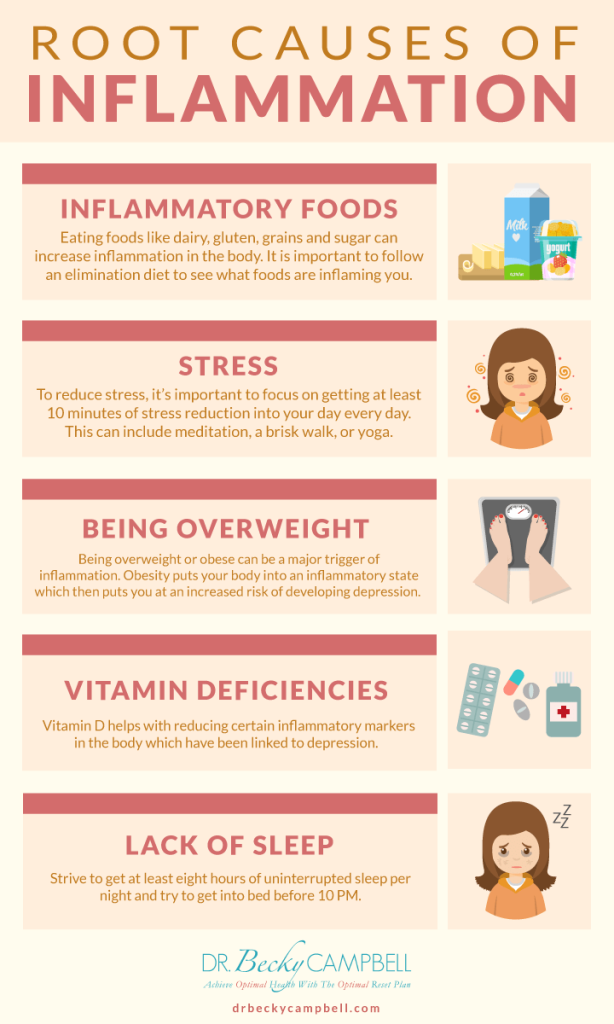
Getting Inflammation Under Control
While the research is there and very clearly linking depression to inflammation, it doesn’t stop there.
If we are going to treat the symptom which is depression instead of treating depression as a disease, it’s crucial to treat inflammation at its source.
Unfortunately, in our modern-day world, there are so many triggers of inflammation, and diet is one of them. The Standard American Diet is certainly to blame for many of the inflammatory conditions today.
The food we put into our body plays a major role in our overall health. It’s up to us to decide to eat clean and eliminate the inflammatory and disease-promoting foods from our diet.
Here are some of the other common causes of inflammation seen today, and what we should be doing to turn things around.
Toxic Foods
I want to touch on the importance of toxic ingredients when it comes to inflammation. While eating healthy is essential to combatting inflammation you need to know what exactly you should be avoiding.
As a good rule of thumb, it’s best to stay away from processed and packaged foods and stick to foods in their whole and natural state.
Here are some of the specific ingredients and foods you will want to avoid.
- Sugar
- High fructose corn syrup
- Artificial sweeteners such as aspartame, sucralose, saccharin
- Vegetable oil such as corn, soy, safflower, and canola
- Shortening & Palm oil
- Trans and hydrogenated fat
- Refined flour & all other gluten-containing products
- Conventional dairy products
- Grain-fed animal products
- Artificial colors
- MSG
- High sodium processed foods
- Nitrates & Nitrites
Stress
Yes, believe it or not, stress is a major cause of inflammation. When our bodies are in a chronic state of stress, hormone imbalance can occur, and an increase in inflammatory cytokines (the exact cytokines that trigger depression) can occur.
To reduce stress, it’s important to focus on getting at least 10 minutes of stress reduction into your day every day. This can include meditation, a brisk walk, or yoga. All you need is a couple of minutes each day to allow yourself to re-center and de-stress.
Being Overweight
Being overweight or obese can be a major trigger of inflammation. Obesity puts your body into an inflammatory state which then puts you at an increased risk of developing depression.
While weight gain and obesity are associated with an increase in inflammatory cytokines, weight loss is linked with a reduction in these cytokines which is another reason why it’s so important to maintain a healthy weight.
Below you will find out why including more physical activity in your day can help reduce your chances of weight gain and also help your mental health.
Sedentary Lifestyle
Living a sedentary lifestyle can lead to inflammation for a number of reasons. Our bodies were not designed to sit at a work desk all day. We were meant to be active and move our bodies daily. When I talk about a sedentary lifestyle I also want to point out that it’s important to move throughout the day and not just for an hour at the gym. Taking breaks and moving periodically during the day will help to get the blood flowing, strengthen our muscles, and get the oxygen moving through our organs. This is even more important if you work a desk job and are sedentary for extended periods of time.
Not only is a sedentary lifestyle a risk factor for inflammation, but it can also contribute to further depression and anxiety. Being physically inactive has also been linked to increasing the risk of certain cancers and puts you at a greater risk of developing high blood pressure and high cholesterol. (3)
To get your body moving try parking your car further away from the grocery store, take the stairs, get up and do a couple of laps around the office throughout the day, or take a walk during your work break. These are all great ways to get your body moving throughout the day and then you can incorporate some physical activity into your day by doing some type of enjoyable activity. Some great ways include getting some cycling in, swimming, yoga, Pilates, walking, or jogging.
One of the tricks that I like to tell my patients is to pick something that you enjoy doing to stay active. If you choose activities that you enjoy then you are more likely to stick to it and less likely to be sedentary.
Vitamin Deficiencies
Being deficient in certain vitamins and especially Vitamin D can be linked back to depression. Unfortunately, many people are deficient in Vitamin D and especially during the colder months when we aren’t outside getting enough sun.
Vitamin D helps with reducing certain inflammatory markers in the body which have been linked to depression. Therefore when we don’t get enough of this sunshine vitamin, we put ourselves at an increased risk of developing depression.
If you live in an area where you are unable to get some sun each day, you may want to consider supplementing with vitamin D. Not only is it helpful for inflammation but this particular vitamin is great for the immune system as well.
Lack of Sleep
So many Americans struggle with getting enough sleep. Whether this is due to hectic work schedules, or sleep insomnia not getting enough sleep can have a significant impact on your risk of depression.
Not getting enough sleep has been linked to inflammation which we now know is associated with depression.
Strive to get at least eight hours of uninterrupted sleep per night and try to get into bed before 10 PM to prevent an evening cortisol surge from keeping you awake at night.

Environmental Toxins
Just like toxic food ingredients, environmental toxins are important to steer clear of as well when trying to combat inflammation. While some toxins in the environment are impossible to completely avoid, there are some that are more avoidable than others. Some toxins are also found in our cleaning products we use at home or even the products that we put on our skin.
Here are some of the environmental toxins that are best to be avoided when you are trying to get your inflammation under control:
- Second-hand smoke
- Heavy metals
- Mold
- Lead
- Formaldehyde found in cleaning products
- Non-organic produce treated with pesticides
- High-mercury fish such as swordfish and tuna
- Toxins found in beauty and self-care products: Parabens, synthetic colors, fragrance, phthalates, formaldehyde, SLS
To help avoid some of these toxins, skip the fish that is high in mercury, choose organic foods whenever possible, stay away from cigarette smoke, and choose “greener” and more natural beauty and cleaning products. There are a ton of options available today that are free from the most common chemicals and you can even make your own household cleaner with essential oils.
Getting to the Root Cause
If you have been suffering from depression and are looking for a new way to look at this condition and possibly get to the root cause of the issue, here are three things you can do to get started:
- Reduce Your Inflammatory Load: You can start doing this by introducing more anti-inflammatory foods into your diet such as berries, wild caught salmon, and dark leafy greens. You will also want to focus on getting adequate sleep, reducing stress, and exercising 30 minutes each day. You will also want to eliminate processed foods.
- Get to the Bottom of the Inflammation: Speaking with a Functional Medicine Practitioner can help investigate the cause of the inflammation. Uncovering potential gut infections, other chronic infections, vitamin deficiencies, or other hidden causes of inflammation could help get to the bottom of what’s causing the depression in the first place.
- Implement the Action Steps Below: I have listed out some action steps below for controlling inflammation. When you lessen your inflammatory load, you are more likely to feel better both physically and emotionally! Try making some of the lifestyle adjustments and see what an anti-inflammatory approach can do for your wellbeing.
Action Steps to Controlling Inflammation
- Cut back on sugar
- Go gluten-free
- Eliminate all processed foods
- Switch to grass-fed animal products and stick to raw organic dairy if you do include some dairy in your diet
- Enjoy fatty wild-caught fish such as salmon 2-3 times per week
- Avoid environmental toxins
- Choose cleaner more natural home cleaning products or make your own
- Choose natural beauty products instead of the ones filled with chemicals
- Exercise daily
- Get your body moving throughout the day on top of daily exercise. This includes taking breaks from sitting at an office desk and including creative ways to get moving throughout the day.
- Reduce stress daily
- Improve sleep habits
If you are tired of feeling sick, not like yourself, and unable to get to the bottom of what may be causing your symptoms, I encourage you to start your own elimination diet to reduce inflammation. Not sure where to get started?
In my optimal reset plan, I walk you through this step by step to give you tons of tools to help you through this important process. I also teach you how to detoxify your body and start to heal your gut so that you are able to tolerate more foods long term.
Here are just a handful of benefits of an elimination diet:
- Weight loss
- Healthy looking skin
- Increased energy
- Deeper sleep
- Decreased joint pain
- Reduces headaches
- Improved gut health
- Helps those with leaky gut
- Can improve autoimmune conditions
- Less bloating/digestive discomfort
If you are ready to get started, Join me in my optimal reset do it yourself program.
If you are suffering from weight gain, fatigue, hair loss and more, click here to schedule a phone call with me, so I can find out where you’ve been, where you want to get to, and how I can help you get there.
I know exactly where you are because I’ve been there myself…I remember being so tired that I could barely function. I gained 30 pounds out of nowhere and had a severe case of brain fog. I also started to get severe anxiety and panic attacks. I was driven and motivated…until I wasn’t. I didn’t know what was happening to me. All I wanted was to get my life back…
Finally, I learned about functional medicine and found a practitioner that I hoped could help me. They ran specialized tests that were far different than I had ever had before. When I got the results back, it turned out I had candida, parasites, high cortisol, the Epstein Bar Virus and many food intolerances. I also had an issue with my thyroid that no one found before because they were using the conventional medicine lab ranges which are way too broad….which I now know is one of the leading causes of hypothyroid misdiagnosis.
I went through treatment of all of these things and it completely changed my life. I immediately lost the 30 pounds I had gained plus more, I had a lot more energy, and my brain fog was gone. I felt amazing and knew that I wanted to help people find the underlying causes of their symptoms and disease.
Sources
(1) Chris Kresser. (2014) Is Depression a Disease—or a Symptom of Inflammation?
(2) Ronald S Smith. Immunological Evidence Supporting The Immune-Cytokine Model of Depression.
(3) Health Risks of a Sedentary Lifestyle. (2013) Lifespan.
(4) So depression is an inflammatory disease, but where does the inflammation come from? (2013)
[sc name="Below all post"]

Hashimoto's Disease: Fast Facts
Hashimoto's Disease: Fast Facts
Hashimoto’s disease is an autoimmune disease that affects the thyroid, a small gland in the front of your throat.
Triggered by the pituitary gland, your thyroid produces hormones that regulate how your body uses energy. With Hashimoto’s disease, your immune system produces antibodies that interfere with this process, slowing down thyroid hormone production, heart rate, cognitive ability and how quickly your body turns food into energy.
Hashimoto’s Disease is the number one cause of hypothyroidism; it is estimated that 90 percent of hypothyroid patients have Hashimoto’s Disease. With this condition affecting so many Americans today, it’s important to understand what causes this condition, the symptoms associated with it and how a functional medicine approach may be the best way to start feeling better fast.
When it comes to Hashimoto’s disease one of the many important things you will want to know off the bat is that studies also show a strong link between Hashimoto’s Disease and gluten intolerance. Gliadin, the protein found in gluten, is similar in molecular structure to thyroid tissue. So, in cases where a patient with Hashimoto’s disease consumes gluten, your immune system is unable to distinguish between thyroid tissue and marks both for attack in the bloodstream. This is especially true for patients that also have leaky gut.
If you have Hashimoto’s disease or you suspect that you may be suffering from a thyroid condition, here is a list of some of the most commonly seen symptoms.
Symptoms
An underactive thyroid can go undetected for many years. Others may experience:
- Enlarged thyroid or goiter
- Fatigue
- Constipation
- Hair Loss
- High cholesterol
- Unexplained weight gain
- Muscle aches, often in shoulders and hips
- Joint pain
- Feeling cold
- Difficulty becoming pregnant
- A pale, puffy face
- Depression
- Prolonged or excessive menstrual bleeding
- Dry hair or skin
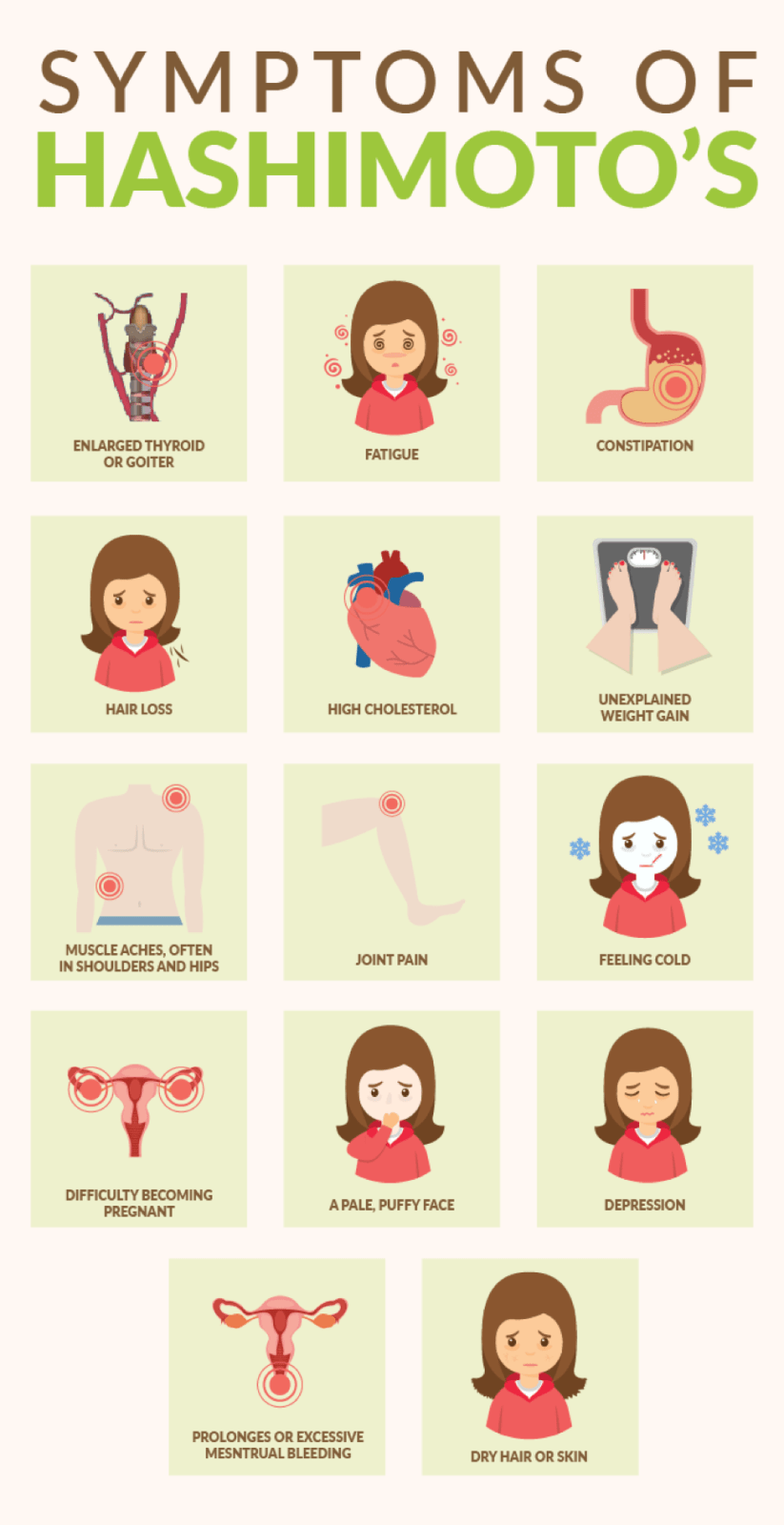
What Causes Hashimoto’s Disease?
While an exact cause is unclear, those who have or who have family members with other autoimmune diseases like lupus, rheumatoid arthritis, or type 1 diabetes are more likely to develop Hashimoto's disease. Leaky gut is also thought to be a contributing factor.
The most common autoimmune disease in the United States, Hashimoto’s disease affects more women than men and often follows pregnancy. It usually occurs during middle age.
As you will find out throughout this article, there are also a number of different things that can trigger this autoimmune disease. Environmental factors and even other imbalances in the body could be a hidden cause of Hashimoto’s. Without properly uncovering what may be causing Hashimoto’s in the first place it can be difficult to get well. This is where a functional medicine approach comes in.

Diagnosis
Diagnosing a thyroid condition can be tricky if you go to a modern medical physician, and you will find out why. For now, just know that if left untreated, hypothyroidism can lead to an enlarged thyroid or goiter, mental illness, heart problems and other complications. Babies born to mothers with hypothyroidism are at greater risk for birth defects and developmental issues.
A Doctor of Functional Medicine can perform hormone and antibody tests to evaluate the health of your thyroid. A functional medicine approach also takes a more holistic approach when determining what the underlying cause of Hashimoto’s is and may be able to diagnose the condition before certain lab tests may even be able to pick up on it.
If you have been diagnosed with Hashimoto’s or have been trying to determine what is causing all of your symptoms I am going to share the difference between the traditional medical option for Hashimoto’s VS the functional medicine approach. Both are quite different, especially when it comes to diagnosing this condition.
Traditional Medical Options for Hashimoto’s
Many of the patients that I see come to me after they have been down the modern medical route many times before. Some patients have already been diagnosed with Hashimoto’s while others suffer from many of the classic symptoms but are told that their lab values are within the “normal” range.
Unfortunately, the traditional medical options for Hashimoto’s are often disappointing as they leave lots of room for missing a diagnosis. The pathologic lab values are likely the lab values your physician uses when they order blood work. The problem with this is that the ranges are far too broad and can easily miss a Hashimoto’s diagnosis. This is just one of the many things that separate a traditional approach of looking at disease when compared to a functional medicine approach to working with patients.
Traditional medical options also almost always include a prescription medication of some sort. Now, while some patients will absolutely need to take their thyroid medication, there are other modalities that can be used along with that medication to help the patient feel better long term.
There are many different things about the modern medical world that makes many patients frustrated and leads them towards wanting to take a more holistic approach to their health.
Let’s take a look at this approach and how it may benefit you.
Functional Medicine Options for Hashimoto’s
A functional medicine approach is much different than traditional medicine in many different areas. The first area it's different is apparent during the very first interaction with a patient. In functional medicine, we take a holistic and participatory approach to wellness, so we encourage our patients to be a part of the process. This includes involving them in what tests should be run and including each patient is the various different options that are available.
Let’s start by talking about testing. In functional medicine, we look at much more than just a single lab test. Plus, when we do run bloodwork we use the functional lab ranges which are not nearly as broad as the pathological ranges so it allows us to see if there is a thyroid issue going on earlier than other blood tests may detect.
We also look at more than one test and take symptoms into account. How many times have you been to the doctor describing unbearable symptoms only to be told that they are all in your head because every test they run turns out to be “normal?” This is something I see on a daily basis and something that can be extremely discouraging to patients. Even if your previous lab work has come back within normal range, as a Functional Medicine Practitioner, I take all symptoms into account to help uncover what may be going on.
A functional medicine approach also looks at different body systems, not just the thyroid to see where the root cause of the issue may be. I am going to talk more about the tests offered coming up, so keep reading.
How We Can Help
We first evaluate underlying causes such as stress, gut infections, adrenal gland dysfunction, dysglycemia (high or low blood sugar), individual food sensitivities and other contributing factors. By determining your triggers through a variety of tests, we can determine a natural course of support toward healing that is specific to what your own body needs.
It’s important to know that there may be a number of different triggers and uncovering them is a huge step in feeling better. Let’s say we uncover a gut infection; we would work towards ridding the body of that infection first or even in conjunction with a protocol for Hashimoto’s. If there is an imbalance elsewhere in the body that is triggering Hashimoto’s, then it’s important to address that at its source and start a very specific protocol tailored to you.
Tests Offered
When any patient with Hashimoto’s symptoms comes to my practice, I always run thorough testing. It doesn’t matter if you have already had lab tests run by your doctor as you now know that many of these tests are read using broad lab ranges. Here are some of the comprehensive tests I offer in my practice to help determine what the underlying cause of Hashimoto’s is.
- Complete thyroid panel
- Food sensitivity testing
- Gut infection testing
- Heavy metal testing
- Adrenal gland tests
- Blood sugar testing

When all of these tests are run, it allows us to take a look at the entire body and how well it is functioning and what needs work. When thorough and complete tests are run it gives us a whole-body picture as to what could be triggering the autoimmune condition. This will ultimately help us get it under control and keep it under control.
Using a functional medicine approach is not about putting a Band-Aid on your symptoms. It’s about finding out what is causing your symptoms so that remission is possible long term.
Prognosis
Once we have identified your triggers, you can get the gene to change its expression or shut off (known as epigenetics). When this happens many, if not all, of the symptoms being caused by this, can disappear. The key to keeping this at bay is to manage stress and maintain a healthy diet & lifestyle.
Since each person is unique, specific dietary and lifestyle recommendations will vary. For example, while one person may do well with one particular food in their diet another person may have a sensitivity to it. The same goes for if there are gut infections or other imbalances going on in the body that need to be addressed as part of the protocol. The action steps I am listing below for taking control of Hashimoto’s are general recommendations. Bear in mind that each and every person will need a bit of a different approach depending on what is going on in the body.
To start taking control of your Hashimoto’s, take a look at the action steps below that you can implement to hopefully start to feel better, and to take control of your health.
Take Control of Hashimoto’s
There are a variety of steps you can take to take control of your Hashimoto’s and regain your health. Here is what I recommend:
Get Testing for Hashimoto’s
Get proper testing to uncover the root cause of your symptoms and thyroid issues. A functional health practitioner, like myself, can help you to recommend and arrange proper testing.
Eliminate Any Reactive Foods
Eliminate any foods that trigger your symptoms or make you feel sick. Trying an elimination diet may help you to uncover your triggers. A functional health practitioner can help you with that.
Start a Paleo-Style Diet
For Hashimoto’s disease, I recommend a Paleo-style anti-inflammatory diet. Remove inflammatory foods, including refined sugar, refined oil, gluten, conventional dairy, artificial ingredients, and processed food. Eat plenty of greens, vegetables, herbs, spices, fermented food, low glycemic index fruits, healthy fats, and clean animal protein.
Try a 30-Day Thyroid Reset
If you have Hashimoto’s disease or another thyroid disease, I recommend reading and following the recommendations in my book, The 30-Day Thyroid Reset Plan: Disarming the 7 Hidden Triggers That are Keeping You Sick. You will learn everything you need to know about thyroid disease. I offer a 30-day plan to improve your health and my favorite thyroid-friendly recipes to nourish your body with delicious meals.
Reduce Stress
Lower your stress levels and learn to cope better with stress. Try meditation, journaling, breathwork, nature walks, coloring, stretching, gratitude, and yoga.
Improve Your Sleep
Make sure to sleep at least 7 to 9 hours at night. Develop an evening routine that relaxes your body and calms your mind. Avoid electronics and food close to bedtime and engage in relaxing activities
Stay Active
Live an active lifestyle as it is appropriate to your body. If you can, exercise 5 days a week for 20 to 30 minutes incorporating both cardio and strength training. Stay active throughout the day by taking walks, dancing to your favorite songs, gardening, or playing with your kids and pets.
When following these steps, keep in mind that each person will be different and I always work with each patient on an individual basis to determine which form of exercise will work best for them. With any autoimmune disease, it’s important to find the right balance where you are not doing too much, but you are doing enough to keep yourself healthy.
While finding out that you have Hashimoto’s can be confusing, frustrating, and make you feel completely overwhelmed know that there are many steps that you can take. Even if you end up on thyroid medication, including a functional medicine approach into your plan is only going to help keep symptoms at bay long term.
Hashimoto’s is a complex condition and takes a professional who has lots of experience to really dive into the true cause and to help create a plan that is unique to you. It’s important to know that it takes many different approaches to get Hashimoto’s into remission and that unfortunately, there is no one size fits all. For example, you can’t just eliminate gluten and feel completely better. It takes a whole-body holistic approach to address both the physical and mental aspects of health and wellness. However, with just a little effort and some adjustments to your diet and lifestyle, you could be well on your way to feeling better and living your best life.
I have worked with patients who have been able to come off of their thyroid medication and have worked with patients who were able to be diagnosed early enough to where medication wasn’t necessary. No matter what the case, for you, know that a holistic approach is a way to approach this autoimmune condition and that with the right steps you could be feeling better fast.
Final Thoughts
Hashimoto’s disease is a common autoimmune thyroid condition. However, if you have Hashimoto’s you don’t have to deal with uncomfortable symptoms for the rest of your life. Follow my tips to improve your thyroid health and regain your health and wellness naturally.
If you are dealing with symptoms of Hashimoto’s disease or other thyroid issues, I invite you to schedule a consultation with me. I can help to identify the root cause of your condition and recommend a personalized treatment plan to repair your body and regain your health and well-being. Schedule your consultation here.
[sc name="Below all post"]