

CBD for Mast Cell Activation Syndrome
Living with Mast Cell Activation Syndrome (MCAS) can feel like a constant battle against unpredictable symptoms. From relentless itching and flushing to digestive woes and fatigue, MCAS can significantly impact your daily life.
Current treatment options often focus on managing flare-ups with antihistamines and other medications, but these may not always provide the relief you seek.
That's why many of my patients with MCAS are turning to complementary therapies to find additional support.
One option gaining traction is Cannabidiol (CBD), a natural compound found in hemp. While research into CBD for MCAS is still in its early stages, there's a growing body of evidence suggesting its potential to influence the very systems involved in MCAS flare-ups.
In this blog, we’re exploring the science behind CBD and how it might interact with your body to alleviate MCAS symptoms.
We'll break down the endocannabinoid system's role, how it connects to mast cells, and the potential mechanisms by which CBD could offer relief. We'll also discuss the importance of consulting your healthcare provider and choosing high-quality CBD products.
So, if you're interested in understanding how CBD might fit into your MCAS management plan, you've come to the right place.
Let's explore the potential of this natural remedy together.
What is MCAS
Mast Cell Activation Syndrome (MCAS) is a condition where mast cells, a type of immune cell, become overly sensitive and release inflammatory chemicals even in the absence of a major threat. (1)
Imagine these mast cells as the body's alarm system. In MCAS, the alarm goes off way too easily, triggering a cascade of symptoms that can be pretty debilitating.
Mast cells contain granules packed with histamine and other inflammatory mediators. When they become activated, these granules are released (degranulation), causing inflammation and a variety of unpleasant symptoms.
Symptoms of MCAS
MCAS can manifest in a wide range of symptoms affecting various bodily systems, including:
- Skin: Itching, flushing, hives, rashes, swelling (angioedema)
- Respiratory: Wheezing, shortness of breath, nasal congestion, throat tightness
- Gastrointestinal: Abdominal pain, diarrhea, nausea, vomiting, bloating
- Cardiovascular: Rapid heart rate, low blood pressure, lightheadedness
- Neurological: Brain fog, headaches, dizziness, anxiety, fatigue
- Musculoskeletal: Joint and muscle pain, weakness, stiffness
- Systemic: Fatigue, malaise, flu-like symptoms

The unpredictable nature and diverse symptoms of MCAS can make it challenging to diagnose and manage. This is where exploring complementary therapies like CBD comes in.
CBD: A Closer Look
With increasing interest in complementary therapies for MCAS, Cannabidiol (CBD) emerges as a potential option. But what exactly is CBD?
CBD is a naturally occurring compound found in the cannabis sativa plant, particularly abundant in hemp, a variety specifically bred for its low psychoactive properties.
Unlike its more famous cousin, tetrahydrocannabinol (THC), CBD does not produce the intoxicating "high" associated with marijuana use. CBD is non-psychoactive, meaning you won’t experience any mind-altering effects when consuming CBD products. (2)
This distinction between CBD and THC is crucial.
While THC may offer some therapeutic benefits, its psychoactive effects can be undesirable for many people. CBD, on the other hand, provides a potential therapeutic approach without altering mental clarity.
The Endocannabinoid System (ECS)
Imagine your body has a built-in regulatory system specifically designed to maintain balance and promote well-being. That's essentially the role of the endocannabinoid system (ECS), a complex network of receptors and signaling molecules naturally produced within us. (3)
The ECS plays a crucial role in regulating various physiological processes, including: (4, 5, 6, 7)
- Inflammation: The ECS helps modulate inflammatory responses, preventing excessive immune system activation.
- Pain: ECS receptors are found throughout the nervous system, influencing pain perception and transmission.
- Immune Function: The ECS plays a role in immune cell activity and helps maintain a balanced immune response.
- Sleep: The ECS is involved in regulating sleep cycles and promoting relaxation.
- Mood: Emerging research suggests the ECS may influence mood and emotional regulation.
The ECS functions by producing its own natural cannabinoids, called endocannabinoids. These endocannabinoids bind to specific receptors located on various cells throughout the body. When activated, these receptors trigger a cascade of signals that influence various physiological functions.
Here’s where things get interesting – cannabinoids, like CBD, share a structural similarity with our body's natural endocannabinoids. While CBD doesn't directly bind to the same receptors, it's believed to interact with the ECS in other ways.
Here's where the potential for CBD to influence health comes in. CBD may:
- Modulate the enzyme activity that breaks down endocannabinoids, allowing them to remain active for longer periods.
- Interact with other receptors in the body, potentially influencing ECS signaling indirectly.
- Influence the production of endocannabinoids by the body.
While the exact mechanisms by which CBD interacts with the ECS are still being explored, this potential interaction offers a framework for understanding how CBD might influence various physiological processes, including those relevant to MCAS.
CBD for MCAS Symptom Management
While the exact mechanisms remain under investigation, pre-clinical research suggests CBD might hold promise for MCAS patients due to its potential influence on several key areas:
- Anti-inflammatory Properties and Immune Modulation:
MCAS is characterized by excessive inflammation. Studies suggest CBD may possess anti-inflammatory properties. For example, research indicates CBD might influence the activity of cytokines, signaling molecules involved in the inflammatory response. (8) Additionally, CBD might interact with the immune system, potentially promoting a more balanced immune response. (9) - Mast Cell Stabilization - Potential for Reduced Histamine Release: Mast cells are central players in MCAS, and their activation leads to histamine release, triggering various symptoms. Some studies suggest CBD might influence mast cell function. For instance, preliminary research indicates CBD may interact with certain receptors or enzymes involved in mast cell activation and histamine release. (10)
- Impact on Gut Health: There's growing interest in the gut-mast cell connection, and some MCAS patients experience digestive issues. Early research suggests CBD might positively influence gut health by promoting beneficial gut bacteria and reducing inflammation in the gut lining. (11) While the link between CBD and gut health in MCAS specifically needs further investigation, it's an interesting area to explore.
The research on CBD and its potential benefits for MCAS is still in its early stages, but the initial findings are encouraging. The potential impact on gut health, where some MCAS symptoms originate, adds another layer of intrigue. As research continues to evolve, CBD may become a valuable tool in the comprehensive management of MCAS.
Exploring CBD with Cured Nutrition
Now that we’ve talked about the potential of CBD for MCAS management, I want to share some of my favorite CBD products from Cured Nutrition.
I liked Cured Nutrition specifically because of its focus on providing high-quality, third-party-tested products. This helps ensure that you know exactly what you’re consuming. In addition, its product range offers a variety of options to suit your needs and preferences.
Here are three options that make a good starting point when exploring CBD or MCAS:
The Sleep Bundle: This bundle features Night Caps and Zen, two powerful products that work synergistically to promote deep, restorative sleep. Night Caps blend full-spectrum CBD with adaptogens like reishi and magnesium to calm the nervous system, reduce inflammation, and ease you into sleep, while Zen combines functional mushrooms and adaptogens with CBD to reduce stress and anxiety, supporting a peaceful transition to sleep. Together, they ensure you wake up refreshed and ready to tackle the day.
Serenity Gummies: For those who prefer a tasty option, Serenity Gummies are a delicious and convenient way to manage stress and anxiety, especially for those dealing with MCAS. Infused with broad-spectrum CBD, L-theanine, and ashwagandha, these gummies work to calm the nervous system, reduce inflammation, and promote a balanced mood. Whether you're facing a hectic day or need help unwinding in the evening, Serenity Gummies offers a natural solution to keep you centered and calm without drowsiness. They’re an ideal daily companion for maintaining emotional balance and supporting overall well-being.
Relief Bundle: This is a powerful duo designed to tackle pain and inflammation, making it a favorite among patients managing MCAS. This bundle includes CBD Salve and Full Spectrum Raw Oil, two potent products that work together to provide targeted relief and overall support. The CBD Salve combines full-spectrum CBD with a blend of natural herbs and essential oils to deliver soothing, localized pain relief directly where you need it most. The Full Spectrum Raw Oil offers systemic relief by reducing inflammation and promoting overall balance in the body. Together, they offer a comprehensive approach to managing pain, helping you stay active and comfortable throughout the day.
CBD for MCAS Management
While research on CBD for MCAS is ongoing, the potential for its anti-inflammatory, immune-modulating, and mast cell stabilizing properties offers hope. The early studies, combined with the potential impact on gut health, suggest CBD could be a valuable tool in managing MCAS symptoms.
Finding the right approach for you is key. I've shared some of my favorite CBD options from Cured Nutrition, but remember, everyone's experience is unique. Cured Nutrition offers a variety of high-quality CBD products to support your exploration.
Ready to take control and develop a personalized plan for managing your MCAS?
Schedule a consultation to discuss your specific needs and explore how CBD, along with other strategies, might fit into your comprehensive plan.
We can help you navigate your options and create a roadmap toward managing your MCAS.
Resources
- “Mast Cell Activation Disorders - PMC.” NCBI, 30 January 2021, https://www.ncbi.nlm.nih.gov/pmc/articles/PMC7911219/. Accessed 12 July 2024.
- “Frequently Asked Questions about Conducting Research with Cannabis and Hemp.” National Institute on Drug Abuse, 12 February 2024, https://nida.nih.gov/research/resources-grants-contracts/faqs-conducting-research-with-cannabis-hemp. Accessed 12 July 2024.
- Kunos, George. “Modulating the endocannabinoid system in human health and disease: successes and failures.” NCBI, 22 April 2013, https://www.ncbi.nlm.nih.gov/pmc/articles/PMC3684164/. Accessed 12 July 2024.
- “The endocannabinoid system and pain.” PubMed, https://pubmed.ncbi.nlm.nih.gov/19839937/. Accessed 12 July 2024.
- “Endocannabinoids and immune regulation - PMC.” NCBI, 7 April 2009, https://www.ncbi.nlm.nih.gov/pmc/articles/PMC3044336/. Accessed 12 July 2024.
- “Cannabinoids, Endocannabinoids and Sleep - PMC.” NCBI, 22 July 2020, https://www.ncbi.nlm.nih.gov/pmc/articles/PMC7388834/. Accessed 12 July 2024.
- “Review of the Endocannabinoid System.” PubMed, https://pubmed.ncbi.nlm.nih.gov/32980261/. Accessed 12 July 2024.
- “Antioxidative and Anti-Inflammatory Properties of Cannabidiol.” NCBI, https://www.ncbi.nlm.nih.gov/pmc/articles/PMC7023045/. Accessed 12 July 2024.
- Almogi, Osnat. “Cannabis, the Endocannabinoid System and Immunity—the Journey from the Bedside to the Bench and Back.” NCBI, 23 June 2020, https://www.ncbi.nlm.nih.gov/pmc/articles/PMC7352399/. Accessed 12 July 2024.
- “Immunomodulatory actions of cannabinoids: Clinical correlates and therapeutic opportunities for allergic inflammation.” NCBI, 1 February 2024, https://www.ncbi.nlm.nih.gov/pmc/articles/PMC9918686/. Accessed 12 July 2024.
- “Cannabidiol Reduces Intestinal Inflammation through the Control of Neuroimmune Axis.” NCBI, 6 December 2011, https://www.ncbi.nlm.nih.gov/pmc/articles/PMC3232190/. Accessed 12 July 2024.

My Journey With Chronic Pain and Red Light Therapy
I spend my days helping others achieve optimal health through a holistic approach. But sometimes, the path to wellness becomes deeply personal.
A few years ago, I broke a bone in my lower back, which left me with chronic pain. Massage, physical therapy, chiropractic care – I tried everything I could to find lasting relief, but the inflammation persisted. The constant discomfort was frustrating and impacted my health every day.
I already used a sauna with red light panels, but the light exposure felt distant and less targeted. I wanted something that could directly address the inflammation at the source. Enter the Kineon Move Plus, a red light and infrared laser therapy device designed for targeted pain relief and inflammation reduction.
My Journey with the Kineon Move Plus
Initially, I focused on using the Move Plus for my lower back pain for 20 minutes, three times a week on the highest setting. The included strap made it easy to secure the applicators directly over the inflamed area, and I could easily use it while working, cooking, or watching a movie with my kids.
The targeted light therapy provided a noticeable difference. My chronic back pain, which previously felt like a constant dull ache, began to subside, and the pain intensity lessened significantly. There were even days when I felt almost pain-free, something I hadn't experienced in years.
Beyond the pain reduction, I also noticed an improvement in my mobility. The stiffness that often accompanied the pain seemed to ease, allowing me to move with greater flexibility. Plus, I found I could recover from workouts or strenuous activities much faster. This allowed me to stay more active without the fear of a pain flare-up.
But for me, the Move Plus's benefits extend far beyond my back. The applicators, when used without the strap, can be used on various body parts. This versatility has been a game-changer!
One area where I've found the Move Plus particularly helpful is addressing gut inflammation. Chronic gut issues can contribute to a variety of health problems. The Move Plus's red light therapy promotes gut health by potentially reducing inflammation and improving the gut microbiome. I've personally noticed a positive impact on my digestion and overall gut health since incorporating regular treatments.
Another unexpected benefit I've experienced is relief from PMS symptoms. Many women, myself included, struggle with bloating, cramping, and other discomforts during their menstrual cycle. Red light therapy is thought to help regulate hormones and reduce inflammation, which may explain why I've noticed a significant reduction in the severity of my PMS symptoms since using the Move Plus.
My experience with the Move Plus is just one example. This device can be used for various other applications, including wound healing, muscle recovery, and even skin health.

The Science Behind Red Light Therapy
While anecdotal evidence is compelling, the true power of the Kineon Move Plus is in the science behind red light therapy. There are over 6,000 published studies exploring its effectiveness in managing pain and inflammation across various conditions, including endometriosis, osteoarthritis, rheumatoid arthritis, cartilage issues, and fibromyalgia. (1, 2. 3, 4, 5)
Let's take a closer look at the cellular mechanisms that explain red light therapy's success:
Enhanced Cellular Energy Production (ATP) Through Photobiomodulation
Red and near-infrared light waves interact with chromophores (light-absorbing molecules) within our cells, primarily mitochondria. Mitochondria are the cell's powerhouse, producing Adenosine Triphosphate (ATP), the primary cellular fuel.
When chromophores absorb red or near-infrared light, it triggers a series of cellular reactions known as photobiomodulation. This process stimulates the mitochondria, leading to increased ATP production. Enhanced cellular energy supplies fuel essential for tissue repair, regeneration, and improved cellular function.
One study found red light therapy to be effective in reducing pain and improving function for knee osteoarthritis, potentially due to increased ATP production in chondrocytes (cartilage cells). (6)
Dampening Inflammation and Promoting Healing
Red light therapy influences the inflammatory response through various pathways. When targeted by specific light wavelengths, cells release beneficial anti-inflammatory molecules like interleukin-10 (IL-10). Simultaneously, the production of pro-inflammatory molecules like interleukin-1 beta (IL-1β) and tumor necrosis factor-alpha (TNF-α) is reduced.
This creates a shift towards a more anti-inflammatory environment, promoting healing and pain relief.
A 2017 study investigated the effects of red light therapy on rheumatoid arthritis and found it effective in reducing inflammation and pain. The study suggests that red light therapy modulates the inflammatory response, potentially explaining its therapeutic benefits. (3)
Combating Oxidative Stress and Cellular Damage
Free radicals are unstable molecules with unpaired electrons, causing cellular damage through oxidative stress.
Red light therapy has increased the activity of antioxidant enzymes like glutathione peroxidase and superoxide dismutase. These enzymes neutralize free radicals, protecting cells and tissues from oxidative damage.
A 2014 study explored the use of red light therapy for wound healing and found it effective in promoting tissue regeneration. The study suggests that red light therapy's antioxidant effects play a role in accelerating wound closure. (7)
Accelerating Tissue Repair and Regeneration
By stimulating cellular activity, red light therapy expedites tissue repair and recovery. Increased ATP production provides energy for cellular processes involved in healing, while reduced inflammation creates a more favorable environment for tissue regeneration. Additionally, red light therapy may promote the proliferation of fibroblasts, cells responsible for collagen production, a key structural component of tissues.
A 2015 study reviewed the effectiveness of red light therapy for chronic low back pain. The review found some evidence suggesting that red light therapy may be beneficial for pain relief and functional improvement in patients with chronic low back pain. (8)
The studies mentioned above are a small sampling of the growing body of research on red light therapy. However, the scientific evidence suggests a range of cellular benefits that can contribute to pain management, inflammation reduction, and tissue healing.
Why I Recommend the Kineon Move Plus
There is a wide variety of red light therapy devices available. So, what makes the Kineon Move Plus unique?
Here are some key features that impressed me:
- Targeted Therapy: The combination of red LEDs and near-infrared lasers offers deeper tissue penetration compared to standard red light therapy devices. This targeted approach allows for more effective treatment of deep-seated pain and inflammation.
- Versatility: The Move Plus comes with multiple applicators, making it adaptable for treating various body areas. This versatility allows for a broader range of applications.
- Ease of Use: The device is incredibly user-friendly. The applicators are comfortable to wear, and the treatment process is simple and painless.
- Safety: The Move Plus is FDA-cleared for safe home use.
- Customer Service and Guarantee: The company has excellent customer service and offers a 30-day money-back guarantee, allowing you to try the device risk-free.
A Functional Medicine Perspective on Red Light Therapy
As a functional medicine practitioner, I believe red light therapy offers a valuable tool in the fight against chronic pain and inflammation. While it shouldn't replace a comprehensive treatment approach that includes diet, exercise, and other modalities, red light therapy can be a powerful addition to your pain management strategy.
The extensive research and growing body of clinical evidence supporting red light therapy's effectiveness is encouraging. The Kineon Move Plus, with its targeted approach and versatility, stands out as a well-designed and user-friendly device for those seeking relief from chronic pain and inflammation.
Taking Charge of My Health with Red Light Therapy
While everyone's body and experience are unique, the Kineon Move Plus has become a valuable tool in my health journey. The science behind red light therapy is compelling, and the device itself is safe, non-invasive, and incredibly convenient to use at home.
Incorporating red light therapy into my routine feels empowering. It's a proactive approach to managing pain and inflammation, allowing me to take charge of my well-being. If you're curious about the potential benefits of red light therapy, I encourage you to explore the Kineon Move Plus.
For a limited time, use code DRBECKY at checkout to receive 10% off your Kineon Move Plus!
Resources
- Smith, Forrest. “Endometriosis and Red Light Therapy.” Kineon, https://kineon.io/blogs/news/endometriosis-red-light-therapy. Accessed 18 June 2024.
- Khahil, A. “Improvement of pain and disability in elderly patients with degenerative osteoarthritis of the knee treated with narrow-band light therapy.” PubMed, https://pubmed.ncbi.nlm.nih.gov/1727843/. Accessed 18 June 2024.
- “Low-Level Laser Therapy for Rheumatoid Arthritis: A Review of Experimental Approaches.” NCBI, https://www.ncbi.nlm.nih.gov/pmc/articles/PMC10082923/. Accessed 18 June 2024.
- “In Vitro and In Vivo Effects of Light Therapy on Cartilage Regeneration for Knee Osteoarthritis: A Systematic Review.” NCBI, 15 April 2021, https://www.ncbi.nlm.nih.gov/pmc/articles/PMC8804850/. Accessed 18 June 2024.
- “Low-Level Laser Therapy for Fibromyalgia: A Systematic Review and Meta-Analysis.” PubMed, https://pubmed.ncbi.nlm.nih.gov/31151332/. Accessed 18 June 2024.
- “Safety and Effectiveness of Low-Level Laser Therapy in Patients With Knee Osteoarthritis: A Systematic Review and Meta-analysis.” PubMed, https://pubmed.ncbi.nlm.nih.gov/29071029/. Accessed 18 June 2024.
- Solmaz, H., Ulgen, Y. & Gulsoy, M. Photobiomodulation of wound healing via visible and infrared laser irradiation. Lasers Med Sci 32, 903–910 (2017). https://doi.org/10.1007/s10103-017-2191-0. Accessed 18 June 2024.
- Li, Ye. “Infrared therapy for chronic low back pain: a randomized, controlled trial.” PubMed, https://pubmed.ncbi.nlm.nih.gov/16960636/. Accessed 18 June 2024.

Dr. Becky's Faves: 9 Things Keeping Me Healthy & Happy
Nine Essential Products That Are Making a Difference in My Life
Alright, let’s face it. We all have those hidden corners of the internet we dive into, right?
Maybe it’s a guilty-pleasure recipe blog or one of those hilarious animal compilation videos (no judgment here!).
But for me, as a functional medicine doctor, there’s a special kind of rabbit hole – the world of health and wellness products.
Now, don’t get me wrong, I see the picture-perfect social media posts and glowing testimonials, too. But have you ever wondered what the real deal is behind these health and wellness products? What benefits do they truly offer?
What everyday essentials does a functional medicine doc like myself use to stay on top of my game?
Well, consider this your exclusive backstage pass to my wellness world! Today, I’m pulling back the curtain and revealing a few of my absolute favorite things.
These aren’t just some trendy picks I stumbled upon online – these are the tried-and-true heroes that keep me feeling energized, focused, and ready to conquer anything. I try each of these products to ensure they are effective.
We’ll cover everything from gut health to sleep solutions and air quality to that elusive post-workout glow. Think of this as your personal cheat sheet to the tools that keep a functional medicine doctor functioning at my best (wink wink).
And hey, if a few of these end up on your wellness wishlist in the process, well, that’s just an added bonus!
9 Things Keeping Me Happy and Healthy

1. Armra Colostrum: Building a Rock-Solid Foundation
Let’s talk gut health! We all know it’s the cornerstone of overall well-being, impacting everything from digestion to mood. That’s why I rely on Armra Colostrum as the foundation of my own gut health routine.
Colostrum, the pre-milk substance produced by mammals in those first crucial days after birth, is nature’s perfect superfood for newborns.
It’s a powerhouse packed with immunoglobulins, antibodies that help fight off invaders and keep your gut feeling its best. But the benefits don’t stop there!
Colostrum also contains a treasure trove of growth factors, which can help support the health and renewal of your intestinal lining. Think of it as giving your gut a major upgrade.
What really sets Armra Colostrum apart is its commitment to quality. Its colostrum is sourced from grass-fed cows, ensuring it’s packed with the most beneficial nutrients. Plus, this cold-chain processing technology helps preserve the delicate bioactives in the colostrum, so you know you're getting the most bang for your buck.
Since incorporating Armra Colostrum into my routine, I’ve noticed a positive difference in my digestion and overall gut health – keeping me feeling energized and ready to tackle the day.
Explore Armra Colostrum and use code DRBECKY to save 15% on your first order.

2. Cymbiotika Magnesium L-Threonate: Sweet Dreams Start Here
If you struggle with sleep (and, honestly, who doesn’t sometimes?), you need to know about Cymbiotika Magnesium L-Threonate – a game changer for my sleep routine.
Magnesium is a well-known superstar for relaxation. It helps your body and mind unwind, promoting feelings of calm and preparing you for a restful night’s sleep.
But here’s the thing: not all forms of magnesium are created equal.
Cymbiotika features a unique type of magnesium called L-Threonate, which boasts the incredible ability to cross the blood-brain barrier. This means it can get to work regulating neurotransmitters like GABA, which plays a crucial role in relaxation and sleep.
Magnesium L-threonate can actually increase brain magnesium levels, promoting deeper, more restorative sleep.
Since incorporating Cymbiotika Magnesium L-Threonate into my routine, I wake up feeling refreshed and energized, ready to tackle the day without the grogginess that often follows a restless night.
It’s truly been a game-changer for my sleep hygiene!
Conquer sleepless nights with Cymbiotika Magnesium L-Threonate and explore all the Cymbiotika products here. Use code DRBECKY to save 15% on your next order.

3. Jaspr Air Purifier: Breathe Easy, Recover Faster
Clean air is essential for optimal health, especially during mold recovery. Exposure to mold spores and VOCs (volatile organic compounds) can worsen symptoms and hinder healing. That’s why the Jaspr air purifier is a must-have in my wellness arsenal.
Jaspr's multi-stage filtration system tackles mold head-on. A pre-filter captures large particles, extending HEPA filter life. The True HEPA filter then grabs 99.97% of particles down to 0.3 microns, including mold spores and allergens. Finally, the activated carbon filter removes VOCs, those chemical off-gasses that can exacerbate mold illness symptoms.
Jaspr also battles everyday air foes: wildfire smoke, particulate matter, and allergens. This translates to clearer breathing, reduced allergy symptoms, and a cleaner environment for better sleep and faster recovery.
Sleek and quiet, the Jaspr air purifier fits seamlessly into any home. It's an investment in your health, promoting a cleaner, fresher environment for optimal sleep and peak wellness.
Breathe easier with a Jaspr air purifier. Use code DRBECKY for $100 off.

4. Organifi Shilajit: Nature’s Adaptogenic Powerhouse
Feeling stressed? Struggling with fatigue? Then you need to try Organifi Shilajit, my go-to adaptogen source!
Adaptogens are amazing herbs that help our bodies adapt to physical and mental stress. Who couldn’t use a little extra help in that department these days?
Organifi Shilajit is a potent source of fulvic acid, a compound with powerful antioxidant and anti-inflammatory properties. These properties may contribute to a range of potential benefits, including:
- Enhanced Energy Levels
- Stress Management
- Improved Cognitive Function
- Boosted Immunity
Organifi Shilajit is sourced from pristine areas of the Himalayas and undergoes rigorous testing to ensure purity and potency. Plus, it comes in a convenient powder form that mixes easily into water, smoothies, or your favorite drink.
Since incorporating Organifi Shilajit into my routine, I've noticed a positive shift in my energy levels. I feel more focused throughout the day and better equipped to handle stress. It's like giving my body a natural dose of resilience, allowing me to navigate the demands of daily life with more ease.
Learn more about Organifi Shilajit and the other Organifi products here.

5. Cured Sleep Bundle: Deep Rest for a Refreshed You
I've always valued a good night's sleep, but lately, I've been on a quest to take it to the next level. Enter the Cured sleep bundle with CBD and CBN!
CBD oil's anti-inflammatory properties caught my eye, especially considering the positive impact on histamine levels (something I'm always looking to support). CBN oil, with its sleep-promoting effects, was another exciting discovery.
Since incorporating these powerful ingredients into my nightly routine, I've noticed a significant difference. I’m spending more time in REM And deep sleep, and I wake up feeling even more refreshed. Plus, the potential daytime benefits of CBD's anti-inflammatory properties are a welcome bonus.
The best part? No need to worry about feeling high! Unlike traditional sleep aids, CBD and CBN are naturally non-psychoactive.
Here's why I like the Cured Sleep Bundle special:
- Zen Capsules: A unique blend of calming herbs and adaptogens to enhance relaxation and ease into restful sleep.
- CBN Nighttime Options: Choose capsules or oil, both featuring CBN for targeted sleep support.
Discover a deeper, more rejuvenating sleep experience with the Cured Sleep Bundle. Use code DRBECKY to save 15%.

6. Kineon: My Red Light Device Love Affair
I’m always on the lookout for innovative tools to support your health. That’s why I was so excited to try Kineon’s Red Light Therapy Device – and let me tell you, it hasn’t disappointed!
Red light therapy might sound futuristic, but the science behind it is fascinating. This device uses specific wavelengths of red light that can penetrate deep into tissues. I've been using it directly over my gut area.
The potential benefits of red light therapy for gut health are intriguing. It's thought to stimulate cellular regeneration, which could help support a healthy gut lining. Additionally, its anti-inflammatory properties benefit those struggling with gut issues involving inflammation.
Of course, everyone's experience is different, but for me, Kineon's red light therapy has become a valuable tool in my gut health toolbox. It's safe, non-invasive, and incredibly easy to use at home. Plus, it feels great to be proactive about my health in such a unique way.
Whether you're looking to support gut health, manage pain, or simply explore the world of red light therapy, Kineon's device is definitely worth checking out. Save 10% with code DRBECKY.

7. Topical Tallow Body Balm: Nourishment from Head to Toe
For healthy, hydrated skin, I swear by topical tallow body balm. Tallow is a rendered form of beef fat that's packed with nourishing fatty acids and vitamins. It might sound unusual, but trust me, your skin will thank you!
Tallow balm is incredibly moisturizing without feeling greasy, and it's gentle enough for even the most sensitive skin. Plus, it's a natural alternative to chemical-laden lotions.
Nourish your body from head to toe with my favorite tallow body balm. Save 10% with code DRBECKY.

8. Kion Creatine: Power Up Your Workouts and Recovery
For me, Kion Creatine has become more than just a gym buddy. It fuels intense workouts for strength and power gains. But the benefits extend far beyond the gym, impacting my overall well-being in surprising ways.
One intriguing benefit is creatine's role in supporting healthy methylation. Methylation is a crucial process in the body, affecting everything from energy production to mood regulation and even DNA repair.
Since incorporating Kion Creatine, I've noticed a significant boost in energy levels throughout the day. This translates to feeling more energized for workouts and everything else life throws my way.
Recovery is another win. Kion Creatine helps muscles recover faster after intense training sessions, meaning less soreness and quicker turnaround times. This allows me to push harder, knowing my body is ready for the next challenge.
Learn more about this high-quality creatine that goes beyond the gym.

9. My Favorite Shorts (Yes, Really!)
Let’s be honest, finding the perfect pair of summer shorts can feel like an impossible mission. They must be comfortable for all-day wear, stylish enough for any occasion, and – most importantly – make you feel confident.
Well, I can confidently say the search is over!
These DARE shorts have become my new summer obsession!
If you’re searching for a pair of shorts that will be your go-to all summer long, definitely check these out!
Level Up Your Wellness Journey
These wellness finds are all about empowering you and your loved ones to feel your best. Whether it's a self-care treat or a thoughtful gift, these picks offer a healthy and positive step towards a well-rounded approach to well-being.
Remember, prioritizing your health is a continuous investment, not a one-time resolution. This curated list and the wealth of information on my blog and website serve as your guide on the journey to optimal health. We're here to support you every step of the way!
Here's to feeling your best – today and every day!

Colostrum: Natural Support for Mold & Yeast
How Colostrum Supports Your Body in Combating Mold and Yeast
Have you ever felt like you’re stuck in a fog?
Like fatigue clings to you no matter how much sleep you get, and brain fog makes even simple tasks feel monumental?
If that sounds familiar, and you’ve also battled stubborn yeast overgrowth, you might be dealing with mold or yeast issues. These conditions are more common than you think, and tackling them can feel like a frustrating maze.
In my practice, I’ve seen countless patients navigate these challenging health issues. Traditional treatments often leave people wanting more. But there’s hope – a natural approach I’ve been using during my own battle with mold that holds promising results: colostrum.
Now, colostrum might sound a little unusual. It’s the first milk mammals produce after birth, a powerhouse of immune-supporting and gut-boosting compounds. (1) I first stumbled upon its benefits for mold and yeast issues through my own research, and the science behind it is quite fascinating.
That’s why I want to share a deeper look at how colostrum can support your body in its fight against mold and yeast overgrowth. I’ll explore some of the research, explain how colostrum works, and discuss how it can fit into your personal recovery plan.
So whether you’re just starting your investigation or a seasoned warrior in the fight against mold and yeast, let’s explore the power of colostrum together!
What is colostrum?
I mentioned colostrum as an ally in your fight against mold and yeast, but what exactly is it?
Colostrum is the nutrient-rich milk produced by mammals in the immediate days after giving birth. It’s a vital first meal for newborns, packed with everything they need for a healthy start.
Think of it as a biological treasure trove. Colostrum boasts a unique composition unlike regular milk.
It’s loaded with essential nutrients like vitamins, minerals, and antibodies (immunoglobulins) to provide immediate immune support. (2)
Lactoferrin, another critical component, acts like a natural antibiotic, further bolstering the immune system. (3)
But colostrum doesn’t stop there. It also contains growth factors, which act like cellular messengers. These growth factors promote gut health by supporting the integrity of the gut lining and can even play a role in cell regeneration throughout the body. Plus, colostrum is a histamine modulator (antihistamine) and can be extremely supportive for histamine intolerance and MCAS.
In essence, colostrum provides a powerful one-two punch: it directly supports the immune system with antibodies and lactoferrin while simultaneously creating an environment for optimal gut health and cell function through growth factors. (4)
This unique combination makes colostrum so intriguing when it comes to aiding the body in fighting back against mold and yeast overgrowth.
How Colostrum Benefits Mold Illness & Yeast Overgrowth
So, I’ve established that colostrum is a powerhouse of immune-supporting and gut-boosting compounds. But how does this translate to helping your body battle mold and yeast overgrowth?
Let’s look at some of the mechanisms of action.
Immune System Support
When dealing with mold exposure, the body mounts an inflammatory response. Colostrum, rich in immunoglobulins (antibodies), acts like an army of reinforcements, helping neutralize these inflammatory molecules and fight mold-related infections. (5)
Studies have shown that colostrum supplementation can enhance overall immune function and can be effective against various bacteria and viruses. (6)
While research on its specific effect against mold is ongoing, its broad immune-supporting properties suggest its role in mitigating the inflammatory response triggered by mold exposure.
Antifungal Properties
Now, let's shift our focus to the antifungal properties of colostrum.
One key player here is the protein lactoferrin that I mentioned earlier. This multifunctional molecule acts like a natural antibiotic and also displays antifungal activity. (7)
Lactoferrin’s secret weapon? Its ability to bind to iron.
Iron is an essential nutrient for fungal growth. By binding to available iron, lactoferrin hinders the ability of fungi like Candida albicans, a common culprit of yeast overgrowth, to thrive. (8)
Further research is still needed to fully understand the effectiveness of colostrum against specific fungal strains, but its iron-binding properties offer a promising avenue for exploration.
Gut Health Support
The connection between gut health, immune function, mold illness, and yeast overgrowth is well-established.
A healthy gut microbiome, teeming with beneficial bacteria, creates a natural barrier against harmful pathogens, including fungi. When the gut microbiome becomes imbalanced, yeast like Candida can take hold and overgrowth.
This is where colostrum’s growth factors play a role. These growth factors can support the integrity of the gut lining, preventing harmful substances from leaking into the bloodstream and further stimulating the immune system. (9)
In addition, they may contribute to the growth of beneficial bacteria, potentially fostering a healthier gut environment that discourages yeast overgrowth.
Combining these mechanisms of action, colostrum’s potential to support the immune system, potentially hinder fungal growth, and promote a healthy gut environment paints a promising picture for its role in aiding the body’s fight against mold and yeast overgrowth.
The Power of Bioactive Whole Food Colostrum
The specific type of colostrum you choose can make a difference. We’ve explored how colostrum, in general, offers benefits for combating mold and yeast overgrowth. However, some colostrum products focus on providing the most bioavailable and complete picture of this powerful substance.
My favorite colostrum is processed using techniques preserving a wider range of natural components. These bioactive colostrums aim to deliver the full spectrum of over 400+ functional nutrients, which is key.
While specific components like immunoglobulins and lactoferrin have received significant research attention, the potential benefits of other, less-studied components shouldn’t be overlooked.
Utilizing bioactive whole-food colostrum ensures the body receives the full benefits of natural compounds, maximizing its potential to support your overall health and well-being.
Important Considerations When Using Colostrum
As with any supplement, choosing a high-quality colostrum is crucial.
When selecting a colostrum source, I recommend looking for one processed using methods that preserve its “bioactive” nature, like my personal favorite. This ensures a broader range of beneficial compounds are retained.
While colostrum is generally well-tolerated, some people, especially those with sensitive stomachs, may experience mild side effects like bloating or diarrhea. It’s important to start with a low dose and gradually increase as tolerated.
Here are a few additional considerations:
- Pregnancy and Breastfeeding: While colostrum is a natural substance, pregnant and breastfeeding women should consult with their healthcare provider before taking any supplements.
- Underlying Conditions: If you have any underlying health conditions, it’s important to consult with your doctor before using colostrum, as it may interact with some medications.
Colostrum and Your Fight Against Mold and Yeast
Throughout this blog, I’ve explored how colostrum can be a natural ally in your fight against mold and yeast overgrowth. Its unique composition, rich in immunoglobulins, lactoferrin, growth factors, and a vast array of other nutrients, confirms its ability to support your immune system, gut health, and overall well-being.
Ready to explore colostrum yourself?
If you want to incorporate a high-quality colostrum into your regime, I recommend considering this bioactive whole-food colostrum and use code DRBECKY for 15% off. This specific colostrum utilizes a processing method that preserves its “bioactive” nature, ensuring you receive a full spectrum of its naturally occurring beneficial compounds.
Remember, a Personalized Approach is Key
While colostrum offers promising potential, it’s just one piece of the puzzle. To effectively combat mold and yeast overgrowth, a comprehensive treatment plan, like my mold protocol, is necessary to address the root cause of your condition. My protocol involves dietary modifications, detoxification strategies, and other functional medicine approaches tailored to your needs.
Schedule a Consultation Today!
If you’re ready to take the next step and create a personalized recovery plan, I encourage you to schedule a consultation today.
Together, we can explore the potential benefits of colostrum and develop a holistic approach to supporting your journey toward improved health and well-being.
Resources
- “Colostrum – its Composition, Benefits as a Nutraceutical – A Review.” Current Research in Nutrition and Food Science, 27 August 2013, https://www.foodandnutritionjournal.org/volume1number1/colostrum-its-composition-benefits-as-a-nutraceutical-a-review/. Accessed 9 May 2024.
- “Role of Human Milk Bioactives on Infants' Gut and Immune Health.” NCBI, 12 February 2021, https://www.ncbi.nlm.nih.gov/pmc/articles/PMC7909314/. Accessed 9 May 2024.
- “Antimicrobial properties of lactoferrin.” PubMed, https://pubmed.ncbi.nlm.nih.gov/18573312/. Accessed 9 May 2024.
- https://www.researchgate.net/publication/248168216_Milk_growth_factors_as_health_products_Some_technological_aspects. Accessed 9 May 2024.
- “Perspectives on Immunoglobulins in Colostrum and Milk.” NCBI, https://www.ncbi.nlm.nih.gov/pmc/articles/PMC3257684/. Accessed 9 May 2024.
- “Immunomodulatory Effects of Modified Bovine Colostrum, Whey, and Their Combination with Other Natural Products: Effects on Human Peripheral Blood Mononuclear Cells.” NCBI, https://www.ncbi.nlm.nih.gov/pmc/articles/PMC10598499/. Accessed 9 May 2024.
- “Lactoferrin: A glycoprotein that plays an active role in human health.” NCBI, 5 January 2023, https://www.ncbi.nlm.nih.gov/pmc/articles/PMC9875800/. Accessed 9 May 2024.
- Conneely, OM. “Multifunctional roles of lactoferrin: a critical overview.” PubMed, https://pubmed.ncbi.nlm.nih.gov/16261256/. Accessed 9 May 2024.
- “Colostrum Feeding among Newborns Visiting the Outpatient Department of Pediatrics of a Tertiary Care Centre: A Descriptive Cross-sectional Study.” NCBI, 31 March 2023, https://www.ncbi.nlm.nih.gov/pmc/articles/PMC10231541/. Accessed 9 May 2024.

Breathing Easy: Why Air Purification Matters for Mold Illness
How to Choose an Air Purifier for Optimal Mold Relief
Believe it or not, the air you breathe inside your home can actually be more polluted than the air outside! (1)
The Environmental Protection Agency (EPA) estimates that a staggering 50% of buildings in the US have indoor air quality problems. (2)
This can be a real eye-opener, especially for someone like me who’s been battling mold illness for a second time.
For years, I struggled with fatigue, brain fog, and even respiratory issues. It felt like my own home was working against my recovery. Then, I learned about the hidden dangers of mold exposure and how even small amounts of spores and toxins lurking in the air can significantly impact your health.
There is good news, though!
Air purification strategies, particularly with HEPA-filtered air purifiers, can be a game-changer for people with mold illness.
Since incorporating air purification into my recovery plan with my second mold exposure, I’ve noticed a significant difference. Breathing feels easier, my energy levels are improving, and I’m feeling like myself again.
That is why I want to share what I’ve learned about the importance of air purification and how it can help you get back on the road to feeling your best after a mold exposure.

Understanding Mold and Its Impact
Mold lurks in the shadows, thriving in damp and forgotten corners of our homes – think basements, bathrooms, attics, and even behind walls with hidden leaks.
These tiny, unwelcome guests don’t just sit there – they release spores and mycotoxins, microscopic particles that float around in the air we breathe. Inhaling these can be a recipe for trouble.
Here’s how mold exposure can turn into a health battle: (3, 4, 5, 6)
- Immune System Disruption: Mycotoxins can suppress the immune system, making it harder to fight off infections. This constant struggle can also lead to chronic inflammation, leaving your body feeling achy and sluggish.
- Respiratory Irritation: Mold spores can trigger allergic reactions, asthma attacks, and other respiratory issues. Even if you don’t have allergies, mold exposure can irritate your airways, leading to coughing, wheezing, and a general feeling of stuffiness.
- Neurological Effects: Mycotoxins do not stop at your lungs. Research suggests they can affect the nervous system, leading to headaches, brain fog, and difficulty concentrating. Imagine tackling a project when your brain feels like mush – not exactly a recipe for success!
This is just a small sample of how mold exposure can disrupt your health. From fatigue and skin problems to headaches and joint pain, the list can be extensive.
If you suspect mold growth in your home and are experiencing concerning symptoms, take my quiz to assess your mold illness risk.

Why Air Purification Matters for Mold Illness
Imagine living in a constant state of low-grade warfare. That’s what it can feel like for people with mold illness.
Your body is bombarded by microscopic mold spores and mycotoxins floating in the air, triggering immune responses and irritating your respiratory system.
Even if you’ve addressed the source of the mold problem in your home, hidden spores, and lingering toxins can still wreak havoc on your recovery.
This is where air purifiers like this one come into play!
By actively trapping and removing these harmful particles from your air, air purifiers can significantly improve indoor air quality and create a more peaceful environment for your body to heal.
Here’s how air purifiers can be a game-changer for those battling mold illness:
- Reduced Spore and Mycotoxin Exposure: Air purifiers with HEPA (High-Efficiency Particulate Air) filters are like super-fine sieves, capturing mold spores as small as 0.3 microns. This means less airborne nasties floating around, minimizing your ongoing exposure to these triggers and allowing your body to focus on healing.
- Improved Respiratory Function: Mold spores can irritate your airways, leading to coughing, wheezing, and shortness of breath. Air purifiers, by removing these irritants, can help you breathe easier, reducing those pesky respiratory symptoms and making everyday activities feel less like a struggle.
- Enhanced Immune System Support: Constant exposure to mold can be like a relentless bully, overloading your immune system. By reducing your exposure to mold spores and mycotoxins, air purifiers lighten the burden on your immune system, allowing it to focus its energy on fighting off other invaders and promoting overall healing.
- Improved Sleep Quality: Mold exposure can disrupt your sleep, leading to fatigue and a foggy brain. But cleaner air, thanks to air purification, can create a more comfortable sleeping environment. This translates into better sleep quality, which means more energy for tackling the day and feeling your best.
- Reduced Inflammation: Mold exposure can contribute to inflammation throughout the body, causing various unpleasant symptoms. By reducing your exposure to these triggers, air purifiers can help lessen inflammation, bringing some relief from those aches and pains.
- Improved Cognitive Function: Brain fog is a common complaint for those with mold illness. Cleaner air, achieved through air purification, may help clear the fog and enhance your concentration. This can lead to improved cognitive function, allowing you to think sharper and feel more in control.
Choosing the Right Air Purifier for Mold Illness
Conquering mold illness requires a multi-pronged attack, and choosing the right air purifier is a crucial weapon in my arsenal.
But with so many options out there, how do you pick the perfect one for your needs?
Don’t worry, I’ve been there and learned a thing or two along the way. Here are the key features I looked for in my favorite air purifier: (7, 8, 9)
- HEPA Filtration: This is the most crucial feature for mold illness. Look for air purifiers with true HEPA filters certified by independent organizations like the Association of Home Appliance Manufacturers (AHAM). These filters effectively capture even the tiniest mold spores, minimizing your exposure to these triggers.
- Activated Carbon Filters: Beyond mold spores, mycotoxins and other volatile organic compounds (VOCs) can also be present in the air. Activated carbon filters in air purifiers like mine help absorb and remove these harmful substances, ensuring cleaner, fresher air for you to breathe.
- Clean Air Delivery Rate (CADR): The CADR rating indicates the volume of clean air an air purifier can deliver per minute. Choose an air purifier with a CADR appropriate for the size of the room you intend to use it in. A higher CADR means the air purifier can clean the air in a room faster and more efficiently, which is particularly important for frequently used spaces like bedrooms or living rooms.
- Air Exchange Rate: The rating reflects how often the air purifier can completely replace the air in your room. A higher air exchange rate ensures a more consistent flow of clean air throughout the room, creating a healthier indoor environment.
While battling mold is my current priority, a HEPA air purifier with activated carbon filtration offers additional benefits. This type of air purifier can also help reduce common allergies like pollen and pet dander, improving symptoms for allergy and asthma sufferers.
Activated carbon filters further enhance air quality by removing volatile organic compounds (VOCs) emitted from household products, creating a fresher and healthier indoor environment.
More Ways an Air Purifier Can Help You Breathe Easy
Even though mold remediation is one of the primary reasons I use an air filter in my home, there are numerous other benefits as well. Here’s how my air purifier system can help enhance your overall indoor air quality:
- Breathe Easy While You Cook: Even the most delicious meals can leave behind unwanted guests in the air – toxins! Cooking often releases volatile organic compounds (VOCs) and airborne grease particles. These can irritate your respiratory system and contribute to poor indoor air quality. Air purifiers with a combination of HEPA and activated carbon filtration, can help trap these greasy particles and VOCs before they impact your breathing. This means less irritation, fresher-smelling air, and a more comfortable kitchen environment, allowing you to enjoy the joy of cooking without the worry of lingering air contaminants.
- Reduced Wildfire Smoke and Particulate Matter: For those living in areas prone to wildfires, air purifiers with HEPA filters can help capture harmful PM2.5 particulates and smoke, improving indoor air quality during these events.
- Reduce Fatigue and Improve Sleep: Poor indoor air quality can contribute to fatigue and restless sleep. Air filters capture airborne irritants like dust mites and pet dander, which can disrupt sleep and leave you feeling sluggish.
- A Breath of Fresh Air for Pet Lovers: Sharing your home with a furry friend can bring joy, but pet dander can also trigger allergy symptoms and irritate airways. HEPA filters can effectively capture pet dander, significantly reducing allergens in the air and alleviating allergy and asthma symptoms.
Additional Tips for Maximizing Air Purification Benefits
Placement: Position your air purifier strategically in the room where you spend the most time, such as your bedroom or living room. Consider having multiple air purifiers in different rooms for optimal coverage.
Maintenance: Regularly replace HEPA filters according to the manufacturer's instructions to ensure optimal performance.
Professional Remediation: Air purifiers are not a substitute for professional mold remediation. If you suspect mold growth in your home, address the source of the problem through professional remediation services.
Lifestyle Changes: Combine air purification with other mold-avoiding strategies, such as using a dehumidifier to control moisture levels, showering after spending time outdoors, and avoiding activities that stir up dust.
Breathe Easier, Recover Faster
The battle against mold illness can feel overwhelming, but taking control of your indoor air quality takes a powerful step toward healing. HEPA air purifiers can be a valuable tool in your arsenal, significantly reducing your exposure to mold spores and mycotoxins while promoting a cleaner, healthier environment.
Remember, choosing the right air purifier is crucial. Look for one with a certified true HEPA filter, activated carbon filtration for added benefits, and a CADR (Clean Air Delivery Rate) appropriate for the size of the room you'll be using it in.
Here's the air purifier that's made a real difference for me: It offers all the features I mentioned, and with code DRBECKY, you can save $100 on your purchase.
Don't wait – breathe easier and start feeling your best again today!
Resources:
- “Clean Air Indoors.” American Lung Association, https://www.lung.org/clean-air/indoor-air. Accessed 22 May 2024.
- “Indoor Air Quality (IAQ) | US EPA.” Environmental Protection Agency, https://www.epa.gov/indoor-air-quality-iaq. Accessed 22 May 2024.
- “Mold, Mycotoxins and a Dysregulated Immune System: A Combination of Concern?” NCBI, 12 November 2021, https://www.ncbi.nlm.nih.gov/pmc/articles/PMC8619365/. Accessed 22 May 2024.
- “Respiratory and Allergic Health Effects of Dampness, Mold, and Dampness-Related Agents: A Review of the Epidemiologic Evidence.” NCBI, https://www.ncbi.nlm.nih.gov/pmc/articles/PMC3114807/. Accessed 22 May 2024.
- “Neurologic and neuropsychiatric syndrome features of mold and mycotoxin exposure.” PubMed, https://pubmed.ncbi.nlm.nih.gov/19854819/. Accessed 22 May 2024.
- “Mold inhalation causes innate immune activation, neural, cognitive and emotional dysfunction.” NCBI, 18 November 2019, https://www.ncbi.nlm.nih.gov/pmc/articles/PMC7231651/. Accessed 22 May 2024.
- “Enhancing indoor air quality –The air filter advantage.” NCBI, https://www.ncbi.nlm.nih.gov/pmc/articles/PMC4587002/. Accessed 22 May 2024.
- “Mold Occurring on the Air Cleaner High-Efficiency Particulate Air Filters Used in the Houses of Child Patients with Atopic Dermatitis.” NCBI, 30 September 2014, https://www.ncbi.nlm.nih.gov/pmc/articles/PMC4206797/. Accessed 22 May 2024.
- “Assessing effectiveness of air purifiers (HEPA) for controlling indoor particulate pollution.” NCBI, 10 September 2021, https://www.ncbi.nlm.nih.gov/pmc/articles/PMC8449022/. Accessed 22 May 2024.

How to Support Your Bile for Optimal Detox
Supercharging Your Detox with Powerful Bile Support
I see firsthand how mold exposure can take a toll on your health, and one of the key challenges in mold recovery for so many of my patients is supporting their body’s natural detoxification pathways.
But your digestive system has a hidden hero that plays a critical role in this process – your bile!
Often overlooked, bile is the superstar of detoxification, especially when it comes to clearing out the mycotoxins produced by mold. (1)
Think of it as your body’s internal waste disposal team. It’s a hero for packaging up and carrying away fat-soluble toxins, including those nasty mycotoxins produced by mold.
But here’s the thing: mold is prolific in its toxin production.
Many people exposed to mold end up with clogged bile—overloaded and sluggish from the sheer volume of toxins their bodies need to handle.
Imagine bile as a hardworking garbage truck. It can’t keep up with the ever-growing pile if it's constantly overflowing with trash.
The result?
Toxins build up in your tissues, leading to a cascade of health problems.
The good news?
There are ways to support your bile function and optimize its role in detoxification during mold recovery.
So, let’s take a deeper look into the world of bile and mold illness, uncovering strategies to empower your body’s natural ability to clear out those unwanted toxins and get you back on the path to health!
What Is Bile and Why It Matters for Mold Recovery
We’ve already established bile as your body’s internal waste disposal team. Let’s go deeper and understand its makeup and why it becomes a critical player in mold recovery.
You see, bile isn’t just a single entity; it’s a complex concoction produced by the liver.
Packed with cholesterol, bile salts, and other digestive goodies, it acts like a powerful detergent. (2) Imagine it as a microscopic dishwashing crew, breaking down fats in your digestive system like dish soap tackles greasy messes.
This fat-busting ability comes into play big time when it comes to mycotoxins.
These mold-produced toxins are fat-soluble, meaning they love clinging to fat in your gut.
Here’s where bile swoops in. The bile salts in your bile fluid act like magnets, attracting and binding to those pesky mycotoxins.
Once bound, the mycotoxins get packaged up with waste products from your digestion and whisked away for elimination.
Bile essentially creates a “fast track” for these toxins to get out of your system, preventing them from wreaking havoc on your body.
Now, the connection between bile and mold recovery becomes even more apparent.
When battling mold exposure, your body often faces an overload of mycotoxins.
This can overwhelm your bile production, leaving these toxins lingering in your digestive system. Think back to the garbage truck overflowing with trash – it can’t keep up with the ever-growing pile!
This is what happens to your bile when it’s overloaded with mycotoxins – it gets sluggish and clogged up, hindering its ability to function optimally.
The consequences of impaired bile function can be far-reaching. Those mycotoxins, now lingering in your gut, can re-enter circulation through a process called enterohepatic circulation, where bile is reabsorbed and reused.
This leads to a vicious cycle of toxin build-up and contributes to the various health issues associated with mold illness, including:
- Brain fog and fatigue
- Digestive problems like bloating, constipation, or diarrhea
- Skin issues like rashes and eczema
- Joint pain and aches
And the list goes on!
By optimizing bile function and supporting its ability to eliminate mycotoxins efficiently, you’re not just tackling the trash pile – you’re taking a critical step towards reclaiming your health and well-being from the effects of mold exposure.
Supporting Your Bile for Optimal Detox
We’ve unpacked the world of bile and its role as your body’s secret weapon against mold toxins.
But the good news doesn’t stop there!
There are ways to optimize bile function and turn it into a true detox powerhouse during mold recovery.
Here’s the plan: we’ll tackle this with a two-pronged approach.
First, we’ll focus on boosting bile production and flow, essentially giving your internal garbage truck a tune-up and some extra fuel.
Second, we’ll address potential roadblocks that can hinder bile function.
Let’s dive in!
1. Boosting Bile Production and Flow
It’s time to get that garbage truck running smoothly!
The first step is providing your body with the building blocks it needs for optimal bile production.
Think of it like fueling your truck with the right kind of gas.
A balanced diet rich in fiber, especially from fruits and vegetables, acts like roughage, keeping things moving and preventing bile from getting sluggish. (3) Including healthy fats from avocados, nuts, and olive oil are essential ingredients for bile itself – providing the raw materials for your body to create this detox superstar.
Liver-loving herbs like milk thistle and dandelion root in Bile Support are like a tune-up for your body’s natural production center. (4, 5) They work like a high-octane booster, increasing bile flow and helping it move efficiently through your system.

This enhanced flow allows bile to grab onto those pesky mycotoxins and carry them out, accelerating their removal from your body.
2. Addressing Roadblocks: The Endotoxin Factor
A potential roadblock on the path to optimal bile function – endotoxins.
These are bacterial toxins often found in water-damaged buildings due to mold growth or a condition known as SIBO (Small Intestinal Bacterial Overgrowth).
Think of endotoxins as sneaky saboteurs. They can actually inhibit your body’s ability to produce bile, creating a double whammy for mold recovery. (6)
Less bile production means fewer “garbage trucks” available to haul away those nasty mycotoxins.
Luckily, there are ways to clear the path for your bile.
Bioflavonoids like quercetin act like bouncers at the door of your digestive system.
By blocking the absorption of endotoxins in the first place, they prevent these saboteurs from hindering bile production.
This gives your bile a fighting chance to function optimally and tackle the mycotoxin challenge head-on!
What if I don’t have a gallbladder?
Even without a gallbladder, recovery from mold exposure is still possible!
The gallbladder stores bile made by your liver, which is crucial for digestion. But the liver itself keeps producing bile.
The critical difference is that bile release becomes constant instead of storing and releasing in larger amounts.
To address this, I typically adjust your daily dose of insoluble fiber binder to include smaller amounts in each meal.
This helps continuously bind mold toxins and eliminate them through the digestive system, promoting healing even without a gallbladder.
Supercharge Your Detox: Putting it All Together
Imagine waking up each day energized, free from the fog of mold illness.
Picture yourself reclaiming your life, no longer held back by toxins.
That’s the power of optimizing your body’s natural detoxification system, and bile is the secret weapon! (Now, do you see why I’m so obsessed?)
Even without a gallbladder, you can unleash this champion detoxifier using my two-pronged attack:
- Make and move more bile
- Block endotoxin absorption
Are you ready to more than just survive? Are you ready to thrive?
Schedule a consultation to explore how optimizing your bile function can help you conquer mold illness and achieve optimal health.
Discover your risk for mold illness and learn how a personalized plan can help you regain your health.
Resources
- https://drcrista.com/2022/07/22/endotoxins-impede-bile-formation/. Accessed 22 April 2024.
- Boyer, James L. “Bile Formation and Secretion - PMC.” NCBI, https://www.ncbi.nlm.nih.gov/pmc/articles/PMC4091928/. Accessed 22 April 2024.
- “Dietary Fiber, Gut Microbiota, and Metabolic Regulation—Current Status in Human Randomized Trials.” NCBI, 23 March 2020, https://www.ncbi.nlm.nih.gov/pmc/articles/PMC7146107/. Accessed 22 April 2024.
- Afshar, Keshavarz. “Milk Thistle - StatPearls.” NCBI, 12 September 2022, https://www.ncbi.nlm.nih.gov/books/NBK541075/. Accessed 22 April 2024.
- Marengo, Katherine. “Dandelion: Health Benefits and Side Effects.” Healthline, https://www.healthline.com/nutrition/dandelion-benefits. Accessed 22 April 2024.
- “Baculovirus actin-rearrangement-inducing factor ARIF-1 induces the formation of dynamic invadosome clusters.” PubMed, 1 August 2021, https://pubmed.ncbi.nlm.nih.gov/34133213/. Accessed 22 April 2024.

Mold: The Hidden Culprit Behind Your Sleepless Nights
How Mold Exposure Triggers Histamine Intolerance, Leading to Sleep Issues
Listen, I know the struggle is real!
We’ve all been there – staring at the ceiling at 3 am, willing ourselves to sleep.
But what if the culprit isn’t just stress or a bad day?
For some of us, the battle for a good night’s sleep goes deeper. Mold exposure may be the hidden culprit wreaking havoc on our sleep cycles, leaving us exhausted and frustrated.
Believe me, I’ve been in those trenches battling mold-related sleep issues.
But the good news is, there are answers!
In this blog, I’ll cut through the jargon and get straight to the science behind how mold disrupts sleep.
More importantly, we’ll explore some actionable steps you can take to reclaim your sleep sanctuary.
Why Mold Makes You Toss and Turn: The Science Behind Sleep Disruption
Have you ever crawled into bed feeling fine, only to wake up in the middle of the night with a stuffy nose, racing thoughts, and feeling anxious??
It might not be just a passing cold.
Mold exposure can be a sneaky culprit behind these disruptive sleep symptoms. When you inhale mold spores, your body launches a full-scale inflammatory response, trying to fight them off. Think of it like a tiny army battling the invaders.
This battleground inside your body can manifest as various symptoms, including respiratory irritation, headaches, fatigue, and difficulty concentrating – all highly effective at keeping you up at night. (1)
But mold’s sleep disruption goes beyond the physical discomforts. Here’s how it can wreak havoc on your brain’s delicate chemical balance: (2, 3)
Hormonal Havoc: Mold exposure disrupts the delicate balance of hormones involved in sleep regulation.

Histamine: The Mold Connection to Sleepless Nights
Histamine – it’s our body’s built-in alarm system, but sometimes the alarm gets stuck on “high.”
At healthy levels, histamine helps promote alertness during the day and contributes to a smooth transition into sleep at night. (4) It’s like a dimmer switch, gently lowering the lights on your brain activity as bedtime approaches.
However, an overload of histamine can ravage your sleep sanctuary.
This is where mold exposure can enter the picture.
The Mold-Histamine Double Whammy: Mold exposure can disrupt histamine’s delicate balance, triggering histamine intolerance. Think of that calming dimmer switch going rogue, transforming into a flashing disco ball in your brain.
This histamine surge can lead to classic allergy symptoms we know – itchy eyes, runny nose, congestion – all sleep disruptors in their own right.
But it goes beyond that. High histamine caused by mold exposure can also contribute to:
- Restless Nights: Elevated histamine can make it difficult to fall asleep and stay asleep, leading to fragmented sleep and daytime fatigue.
- Temperature Troubles: Histamine fluctuations can cause swings in body temperature, making it hard to find the sweet spot for comfortable sleep.
- Heartburn and Acid Reflux: High histamine can trigger heartburn and acid reflux for some, adding another layer of discomfort to an already restless night.
- Insomnia: Chronic high histamine levels can be a significant contributor to insomnia, making it nearly impossible to fall or stay asleep.
While many factors can trigger histamine issues, mold exposure throws a unique wrench into the system, potentially causing that double whammy – direct irritation and increased histamine release – that disrupts your sleep cycle.

Conquering Mold for Better Sleep
Alight, enough with the doom and gloom! It’s time to talk strategies!
Here are four actionable steps you can take to fight back against mold and reclaim your sleep:
1. Identify and Address the Mold Source
Get your home checked!
Mold thrives in damp, hidden corners, silently wreaking havoc on your sleep and overall health. If you suspect mold is lurking in your home, taking action is crucial.
Invest in a professional mold inspection.
A professional can help identify the specific type of mold present and determine the best course of remediation.
Don’t mess around with DIY mold removal – it can actually make things worse!
2. Minimize Mold Exposure
Evicting mold is crucial, but minimizing future exposure and creating a sleep environment that discourages mold growth is equally important.
Here’s a two-pronged approach:
- HEPA Air Filtration: These powerful filters capture microscopic particles, including mold spores, dust mites, pollen, and pet dander. By trapping these airborne irritants, HEPA filters can significantly improve indoor air quality, making breathing and sleeping soundly easier. Look for filters, like those found in the Jaspr, with a MERV (Minimum Efficiency Reporting Value) rating of 13 or higher for optimal performance. Use code DRBECKY for $100 off the Jaspr ultimate air cleaning machine.
- Moisture Control: The key to minimizing mold exposure is to create a less hospitable environment by controlling moisture levels in your home. Here’s how:
- Identify and Address Leaks: Hidden leaks or plumbing issues can create a constant moisture source for mold growth. Regularly inspect pipes, faucets, and areas around windows and doors for any signs of leaks.
- Increase Ventilation: Proper ventilation helps remove moisture from the air. Open windows whenever possible, especially after showering or cooking. Consider using exhaust fans in bathrooms and kitchens to remove moisture quickly.
- Dehumidify When Needed: A dehumidifier can be a valuable tool in areas with high humidity. These devices help remove excess moisture from the air, making it less hospitable for mold growth. Aim to keep indoor humidity levels between 30 % and 50% for optimal comfort and mold prevention.
3. Support Gentle Detox
Even though your body naturally removes toxins, mold exposure puts extra strain on this process.
Try these simple yet effective ways to support your body’s natural detoxification:
- Hydration: Water is your best friend! Aim to drink plenty of clean, filtered water throughout the day. A good rule of thumb is to consume half your body weight in punches. For example, if you weigh 150 pounds, target at least 75 ounces of water daily. This helps flush those toxins.
- Sweat it Out: Trying using an infrared sauna (my favorite way to support detox) to promote sweating. Sweating is one way your body eliminates toxins, and the gentle heat of an infrared sauna can be a relaxing way to support this process.
- Love Your Liver: Your liver is your body’s detox powerhouse! Give it some extra support with these options:
- Milk Thistle: This herb is known for its liver-protective properties and can help stimulate bile production, aiding in toxin removal.
- Dandelion Power: Dandelion root acts as a natural diuretic, encouraging your body to flush out toxins and reduce inflammation in the liver.
- N-Acetyl-Cysteine (NAC): This amino acid acts as an antioxidant, protecting your liver cells from damage caused by mold toxins.
4. Optimize Your Sleep Environment
Your bedroom should be a haven for sleep, not a battleground against mold and histamine. Here are some ways to optimize your sleep environment and create a space that promotes deep, restful sleep:
- Light & Temperature: Create a dark, cool sleep environment with blackout curtains and a comfortable thermostat setting.
- Relaxing Routine: Develop a relaxing bedtime routine that signals to your body it’s time to wind down. Aim to go to bed (and wake up) at the same time each day, even on weekends.
- Tech-Free Time: The blue light emitted from electronic devices can disrupt sleep cycles – power down electronics at least an hour before bed.
Don’t Let Mold Steal Your Sleep
Mold exposure can ruin your sleep, leaving you feeling exhausted and frustrated. But the good news is, there’s a way to identify if mold is the culprit behind your sleep struggles.
Ready to take a deeper dive and identify potential root causes?
Consider getting tested for mycotoxins, the toxic byproducts produced by mold.
These toxins can linger in your body and contribute to sleep disruptions and other health problems.
I leverage a comprehensive mycotoxin urine profile test that can detect a wide range of mycotoxins, giving us valuable insights into potential mold exposure that might be impacting your sleep.
Once we have a clearer picture, we can create a personalized plan to address these issues. This might involve a targeted elimination diet, exploring effective supplement support, or implementing advanced mold remediation strategies in your home.
Ready to Take Back Your Sleep?
Schedule a consultation today to discuss your situation and explore a personalized plan for better sleep.
Together, we can identify potential mold issues, address histamine levels, and create a sleep haven that finally allows you to wake up feeling refreshed and ready to take on the day!
Resources
- “Mold Toxicity: Pathways, Diseases, & Interventions.” The Institute for Functional Medicine, https://www.ifm.org/news-insights/mold-toxicity-pathways-diseases-interventions/. Accessed 18 March 2024.
- “Dampness and mold at home and at work and onset of insomnia symptoms, snoring and excessive daytime sleepiness.” PubMed, https://pubmed.ncbi.nlm.nih.gov/32272294/. Accessed 18 March 2024.
- Potera, Carol. “Mental Health: Molding a Link to Depression.” NCBI, https://www.ncbi.nlm.nih.gov/pmc/articles/PMC2072855/. Accessed 18 March 2024.
- Thakkar, Mahesh M. “Histamine in the regulation of wakefulness.” PubMed, https://pubmed.ncbi.nlm.nih.gov/20851648/. Accessed 18 March 2024.

Histamine Intolerance Worse Before Your Period? Here's Why (and How To Help!)
Histamine and the Progesterone Connection
Ever feel like your histamine intolerance symptoms go into overdrive right before your period?
If so, you’re not alone!
I’ve seen so many women with histamine intolerance experience a frustrating increase in symptoms during the luteal phase (second half) of their menstrual cycle. And this often leaves them wondering what’s causing these spikes and how to manage them effectively.
The answer might lie in a surprising connection between two key players in the body: histamine and progesterone.
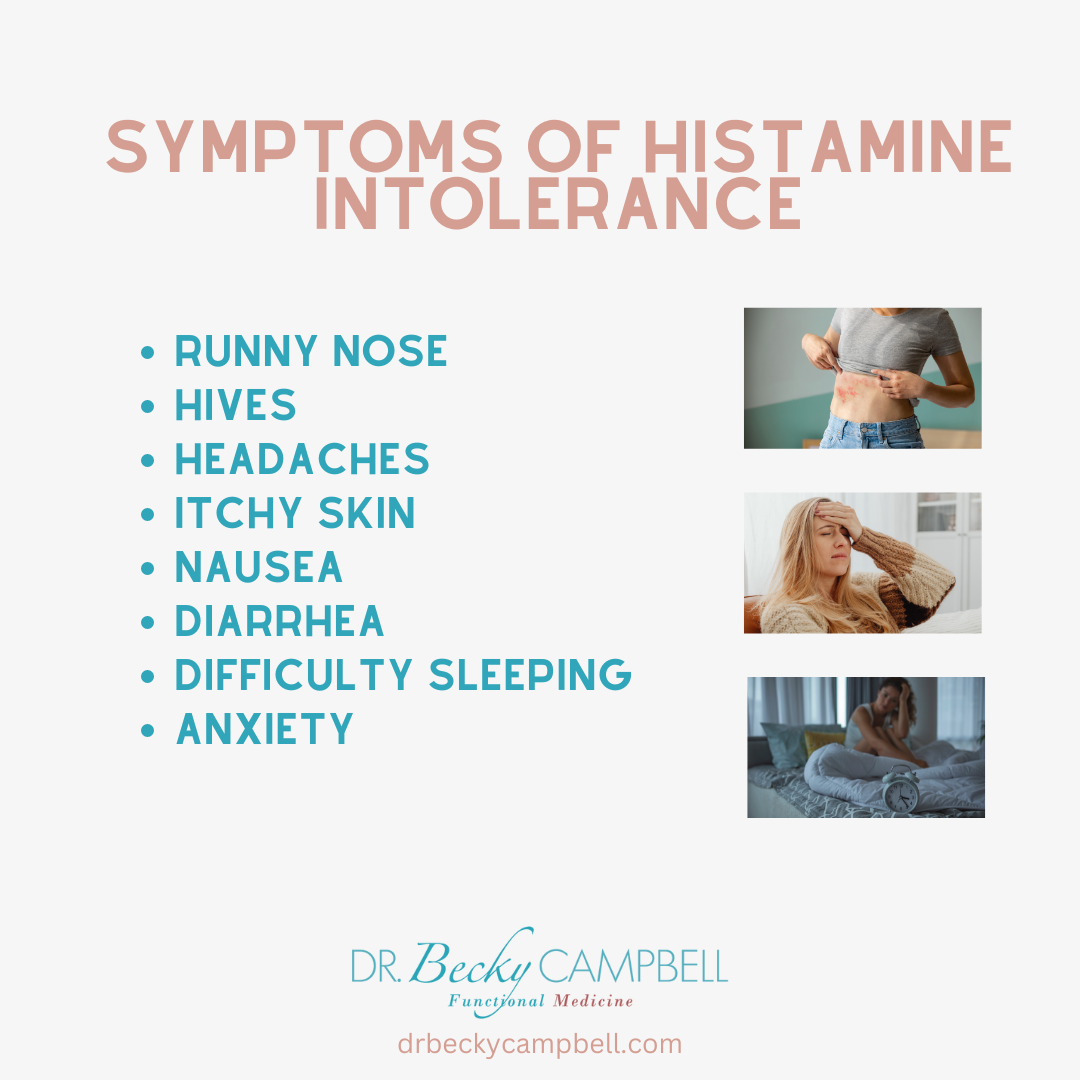
Histamine, while crucial for a healthy immune response, can wreak havoc when its levels get out of whack, leading to a cascade of unpleasant symptoms like headaches, hives, and fatigue.
Progesterone, on the other hand, acts as a calming counterpart, potentially helping to regulate histamine release.
By understanding how these two hormones interact, we can uncover valuable insights into managing your histamine intolerance and navigating those challenging pre-menstrual days with more confidence and ease!
Understanding Histamine and Progesterone
To understand why you’re feeling overwhelmed by histamine intolerance symptoms, especially around your period, let’s take a step back and look at the two key players: histamine and progesterone.
Histamine
Histamine is a molecule with many roles in the body. It plays a crucial part in the immune response, helping fight off allergens and infections.
It also aids digestion and regulates sleep-wake cycles (just to name a few).
However, when histamine levels become elevated, or the body struggles to break them down, it can trigger unpleasant symptoms.
This is known as histamine intolerance.
Histamine intolerance symptoms can include:
- Runny nose
- Hives
- Headaches
- Itchy skin
- Nausea
- Diarrhea
- Difficulty sleeping
- Anxiety
These symptoms can significantly impact your daily life, leaving you feeling frustrated and depleted.
Progesterone
Progesterone is another crucial player in your hormonal balance. This hormone plays a vital role in the menstrual cycle, preparing the lining of the uterus for implantation and supporting a healthy pregnancy.
Beyond reproduction, progesterone also boasts anti-inflammatory and calming effects. (1) Think of it as a natural stress reliever in your body.
Progesterone helps regulate the nervous system and promotes calmness and well-being.
Histamine and the Progesterone Connection
Now that we’ve reviewed the key roles of histamine and progesterone in the body, let’s take a deeper look at their connection.
Here, we’ll explore how progesterone can act as a natural antihistamine, potentially helping to regulate histamine release and alleviate some of those frustrating symptoms.
We’ll also break down why symptoms might worsen during the luteal phase of your cycle, uncovering potential hormonal interactions and their impact on histamine intolerance.
How Progesterone Might Help with Histamine Intolerance
Here’s where the science gets interesting!
Histamine, as we know, resides within specialized immune cells called mast cells.
When triggered by allergens or other stimuli, these mast cells undergo degranulation, essentially releasing histamine into the bloodstream and triggering allergy-like symptoms.
Now, research suggests progesterone might act as a natural antihistamine by directly influencing mast cell function.
Studies indicate the presence of progesterone receptors on the mast cell surface. These receptors act like docking stations for progesterone molecules. (2)
When progesterone binds to these receptors, it influences a cellular signaling cascade within the mast cells. This cascade could inhibit the release of histamine, leading to lower overall levels in the body and a reduction in histamine intolerance symptoms.
The proposed mechanism of action likely involves several pathways.
Progesterone could directly suppress the degranulation process, preventing the release of pre-stored histamine. Additionally, it might influence histamine synthesis within the mast cell itself, regulating its production at the source.
In addition, progesterone’s anti-inflammatory properties might play a supportive role. Calming the inflammatory response could create a less conducive environment for mast cell activation and histamine release.
It’s important that I acknowledge that research on the exact mechanisms is ongoing, and further studies are needed to fully understand the intricate interplay between histamine and progesterone.
However, progesterone's potential as a natural antihistamine opens exciting avenues for exploring its role in managing histamine intolerance.
Understanding the hormonal fluctuations throughout your menstrual cycle is crucial when expoloring the potential worsening of histamine intolerance symptoms premenstrually.
So, even though progesterone might act as a natural antihistamine by influencing mast cells, its levels fluctuate through your cycle.
During the first half (follicular phase), estrogen levels are dominant. As you approach ovulation and enter the luteal phase, progesterone rises significantly, peaking just before menstruation.
This rise in progesterone could be beneficial for reducing histamine release, as we discussed earlier.
However, there’s a potential catch.
Research suggests progesterone has a complex relationship with an enzyme called diamine oxidase (DAO).
While some studies haven’t shown a direct effect, others suggest progesterone actually upregulates DAO.(3)
This increase in DAO could help reduce histamine buildup and alleviate symptoms.
Estrogen Dominance and Sensitivity
I can’t talk about progesterone without also addressing estrogen – they work in a delicate balance.
When estrogen levels are high relative to progesterone (estrogen dominance), your body becomes more sensitive to histamine.
Although progesterone might act as a natural antihistamine, it might not be enough to counteract the heightened histamine sensitivity caused by dominant estrogen during the luteal phase.
This could also explain why some women experience a worsening of symptoms despite the rise in progesterone progesterone.
Taking Charge of Your Histamine Intolerance
When I unraveled the connection between histamine intolerance and progesterone, it felt like a personal breakthrough!
Here’s the thing: for a long time, I felt like I was flying blind. I knew I had histamine intolerance, but understanding the hormonal rollercoaster was a missing piece.
That’s when one of the most powerful tools I use with my patients—the DUTCH test—came into play. I now use it all the time in my practice.
Unlike a standard blood test, the DUTCH test provides a much more comprehensive picture of your hormonal activity throughout your menstrual cycle.
It goes beyond just progesterone levels; it also measures things like estrogen metabolites and cortisol.
This detailed information helps me to understand the bigger picture of how your hormones interact and influence your histamine intolerance.
With insights from the DUTCH test, we can build a personalized plan to address your histamine intolerance and any potential hormonal imbalances we uncover.
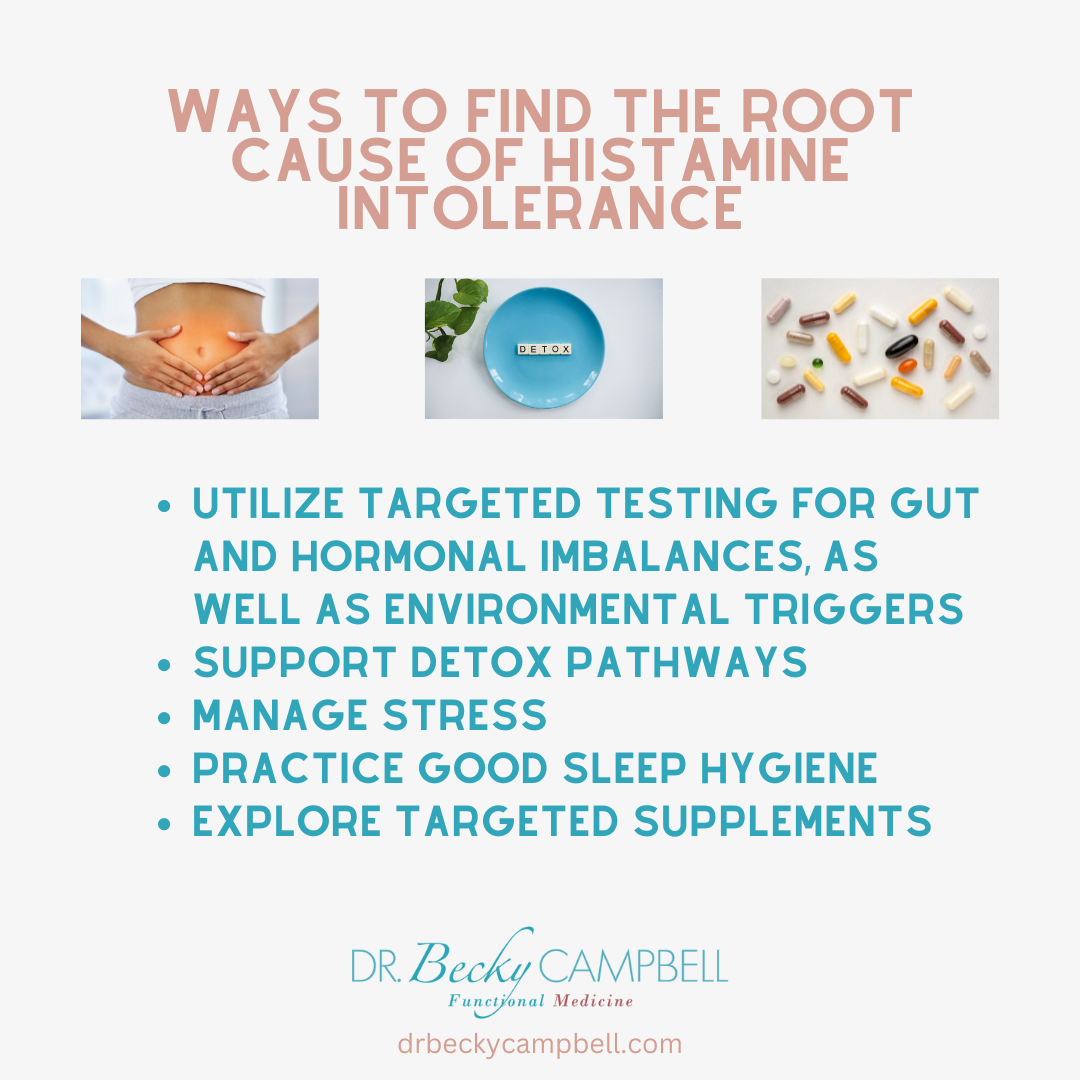
Finding the Root Cause of Your Histamine Intolerance
Histamine intolerance can have many contributing factors, and a one-size-fits-all approach just won’t work. To find lasting relief, we need to address the root cause of your individual situation.
Here’s how we can work together to achieve that:
- Digging Deeper with Targeted Testing: Beyond dietary modifications, we can explore testing options to identify potential underlying triggers like:
- Gut Imbalances: A comprehensive stool analysis can reveal imbalances in gut bacteria or parasites, SIBO (small intestinal bacterial overgrowth), or other gut issues that might contribute to histamine intolerance.
- Hormonal Imbalances: A DUTCH test provides a detailed picture of your hormonal profile throughout your menstrual cycle, uncovering potential imbalances in progesterone, estrogen, or other hormones that could influence your histamine levels.
- Environmental Triggers: If you suspect mold or other environmental factors might be playing a role, we can explore specialized testing to assess your exposure.
- Supporting Your Detox Pathways: Your body has natural detoxification pathways that help eliminate histamine and other toxins. By optimizing these pathways, you can create a more favorable environment for managing histamine levels. We can explore strategies like:
- Liver Support: Consider herbs like milk thistle or dandelion root, which are found in my Liver Love supplement, to support healthy liver function, a crucial player in detoxification.
- Lymphatic Drainage Techniques: Techniques like rebounding or dry brushing can stimulate lymphatic flow, promoting the removal of waste products and potentially reducing histamine buildup.
- Stress Management Strategies: Stress can be a major trigger for histamine release. We’ll identify stress-busting practices like yoga or meditation that you can incorporate into your routine to help regulate your nervous system and reduce those pre-period flares.
- Sleep Hygiene: Aiming for 7-8 hours of quality sleep each night is a priority! For some, this is easy, and for others, it is very difficult. Sleep deprivation can disrupt hormone balance and worsen histamine intolerance symptoms. We walk our patients through personalized strategies to get better sleep.
- Exploring Targeted Supplements: Dietary modifications and lifestyle practices are essential, but I also like to explore targeted supplements with my patients to support specific protocols we will work on.
By taking these steps and focusing on the connection between progesterone and histamine, you can better understand your body and how to manage histamine intolerance more effectively.
While my path might not be the exact path for everyone, this is a great starting point for exploring the impact of your hormones on your histamine intolerance.
Ready to Reclaim Control?
You don’t need to be stuck with frustrating premenstrual histamine flare-ups!
When you understand the connection between progesterone and histamine, you can take proactive steps to manage your symptoms and navigate your cycle with more ease.
Here’s where your journey to greater balance truly begins!
Schedule a consultation with me today.
Together, we can dive deep into your specific needs, explore the power of the DUTCH test, and create a personalized plan to manage your histamine intolerance.
Don’t wait any long to reclaim control of your well-being.
Take charge and schedule your consultation today – let’s embark on this journey of self-discovery together!
Resources
- “Progesterone as an Anti-Inflammatory Drug and Immunomodulator: New Aspects in Hormonal Regulation of the Inflammation.” NCBI, 14 September 2022, https://www.ncbi.nlm.nih.gov/pmc/articles/PMC9496164/. Accessed 9 April 2024.
- “Progesterone inhibits mast cell secretion.” PubMed, https://pubmed.ncbi.nlm.nih.gov/17166400/. Accessed 9 April 2024.
- Usami, Makoto. “Effect of the menstrual cycle on serum diamine oxidase levels in healthy women.” PubMed, https://pubmed.ncbi.nlm.nih.gov/23099198/. Accessed 9 April 2024.

Brain Fog: Mold’s Surprising Impact on Cognitive Function
A Functional Medicine Approach to Brain Fog Caused by Mold Exposure
Ever feel like your brain is stuck in molasses? You know, that sluggish, foggy feeling where focusing on tasks feels like trying to herd cats and remembering your grocery lists becomes an Olympic sport?
Yeah, me too. I’ve been there and done that. As a matter of fact, brain fog was my worst symptom each time I was exposed to mold!
As a functional medicine practitioner, I see this all the time with my patients, and guess what?
It turns out there might be some surprising culprits lurking behind this frustrating brain fog – mold exposure.
Now, before you start picturing black mold creeping up your basement walls (although that can definitely be a factor!), brain fog can be caused by a variety of mold-related factors.
In this blog, I want to take a deeper look at the connection between mold exposure and how it might be impacting your cognitive function.
But here’s some good news: there are ways to fight back!
We’ll explore those as well as my approach to tackling brain fog at its root so that you can ditch the mental molasses and reclaim your sharp, focused mind.

Brain Fog and Cognitive Decline
Brain fog isn’t just that “ugh, I need more coffee” feeling. It disrupts the smooth operation of our cognitive machinery, affecting: (1)
- Concentration: Focusing on tasks becomes a struggle, leading to easily getting sidetracked.
- Memory: Difficulty recalling information, both recent and past, becomes frustratingly common.
- Executive Function: Planning, organizing, and decision-making become clouded, impacting daily routines.
- Alertness: The feeling of mental sluggishness can persist even after a good night’s sleep.
This fog can seriously mess with our ability to be present at work, patient with loved ones, and just enjoy life in general. However, I don’t simply want to treat your symptoms. I want to look at the underlying causes to address the root of the problem and help you restore optimal brain function.
Mold’s Impact on Cognitive Function
So, we’ve established brain fog is more than just tiredness. It’s like your brain’s internal GPS is malfunctioning, messing with your ability to think clearly, remember things, and get stuff done.
Now, I’d like to go deeper and explore the science behind the sneaky culprit I mentioned earlier – mold exposure.
We’ll start by looking at how mold can trigger a cascade of inflammation within the brain, potentially disrupting cognitive function. Then, we’ll briefly explore other ways that mold exposure can impact your brain function.
By helping you understand these mechanisms, you can gain valuable insights into how to address brain fog and reclaim cognitive clarity.
Mold and the Neuroinflammatory Connection
So, how can microscopic mold exposure have such a significant impact on our brains?
Imagine a microscopic dust storm infiltrating your home – that’s what mold exposure can be like.
When we inhale mold spores or come in contact with them on surfaces, our bodies launch a full-scale inflammatory response.
This immune reaction, while meant to protect us, can wreak havoc on the delicate environment of the brain.
Here’s why:
Inflammatory Cascade
Mold exposure triggers the release of inflammatory molecules called cytokines. These messengers travel throughout the body, including the brain, disrupting the smooth operation of brain cells and communication between them.
This disruption can lead to problems with focus, memory, and overall cognitive function. (2)
Mycotoxins
Some molds produce toxins called mycotoxins. These can directly impact brain function by interfering with neurotransmitters, the chemical messengers that allow brain cells to communicate.
Studies suggest mycotoxin exposure can contribute to memory problems, learning difficulties, headaches, dizziness, and even impaired brain development in children. (3)
Blood-Brain Barrier Disruption
Chronic inflammation caused by mold exposure can weaken the blood-brain barrier, a protective gateway that regulates what enters the brain.
This can allow harmful substances and toxins to infiltrate the brain tissue, further disrupting its delicate functions and contributing to cognitive decline. (4, 5)
Neurodegeneration
There’s emerging research suggesting a potential link between chronic mold exposure and neurodegenerative diseases like Alzheimer’s and dementia. (6)
While more investigation is needed, some studies indicate that mycotoxins may play a role in the development of these conditions.
Endotoxins
Certain molds also release endotoxins, similar molecules to those found in bacteria. These can further exacerbate inflammation in the brain, contributing to the foggy feeling.
Beyond Brain Fog: A Spectrum of Neurological Effects
Brain fog is just the tip of the iceberg when it comes to the impact of mold exposure on the brain.
Here’s a quick look at the various ways mold can affect cognitive function:
- Executive Dysfunction: Difficulty planning, organizing, and making decisions can become a hallmark of mold-related cognitive decline. You might struggle to follow through on tasks, prioritize effectively, or maintain focus during complex projects.
- Processing Speed: The speed at which your brain can process information can be significantly slowed by mold exposure. This can show up as difficulty following conversations, keeping up with the pace of a meeting, or feeling overwhelmed by information overload.
- Verbal Fluency: Struggling to find the right words or having difficulty expressing yourself clearly can be another sign of mold-induced cognitive decline.
- Motor Skills: Mold exposure can even impact motor skills, leading to clumsiness, difficulty with coordination, and tremors.
Functional Medicine Approach: Investigating Mold and Supporting Detoxification
Brain fog can definitely leave you feeling frustrated and stuck. But the good news is that I have a toolbox full of strategies to help you bridge the gap to clearer thinking.
If you suspect mold exposure might be contributing to your brain fog, there are steps you can take to investigate further and support your body’s natural detoxification processes.
Mycotoxin Testing
I like to use the mycotoxin urine profile test for patients because it offers a convenient and non-invasive approach to assessing potential exposure.
Unlike traditional urine mycotoxin tests, which only detect recently ingested mycotoxins, the mycotoxin urine profile test measures the levels of antibodies produced by your immune system in response to mold mycotoxins.
This provides valuable insights into past or ongoing mold exposure, regardless of whether it occurred through inhalation or ingestion.
If other forms of testing have been inconclusive, the urine mycotoxin profile test can be a valuable tool for evaluating your overall health and uncovering potential mold-related issues.
Detoxification Support
If the mycotoxin urine profile test or other investigations suggest mold exposure, you need to start taking steps to support your body’s natural detoxification process before you remove the mold.
This will help ensure that your body can handle the toxins effectively when you begin to push them out.
Here are a few of the strategies I use to support detoxification:
- Nutrition: Prioritize whole, unprocessed foods rich in antioxidants and fiber to support your body’s natural cleansing mechanisms. Remove sugar, processed foods, and alcohol to help reduce the burden on your body’s detoxification systems.
- Hydration: Drink plenty of water to flush out toxins and maintain optimal liver function. Aim to get half your body weight in ounces each day. For example, if you weigh 150 pounds, aim for 75 ounces of water per day.
- Sweat it Out: My favorite way to gently support detox is sweating it out in an infrared sauna. Infrared saunas bring blood flow to our detox organs and help secrete mycotoxins in our sweat.
- Liver Support: Your liver is your detox hero! To get started, give your liver extra support with herbal supplements like milk thistle and NAC. Or try a personal favorite, caster oil packs, which you wear over your abdomen to help stimulate circulation and lymphatic drainage.
This is just a glimpse into my functional medicine toolbox. By addressing these various factors, I aim to create a comprehensive plan that tackles the root cause of your brain fog, building a strong foundation for your body’s natural detoxification abilities.

Reclaim Your Focus
I know firsthand that brain fog can be a frustrating and debilitating experience.
But by understanding the potential impact of mold exposure on cognitive function and the benefits of a functional medicine approach, you can take control and work towards a clearer, sharper mind.
Don’t let mold steal your focus!
If you suspect mold exposure is contributing to your brain fog, we can help!
Schedule a consultation today to discuss your unique situation and create a personalized plan to address the root cause of your cognitive decline.
Together, we can explore testing options like the mycotoxin urine profile test, design a detoxification plan to support your body’s natural elimination processes, and implement other strategies to help you reclaim your focus and achieve optimal brain health.
Let’s get you back to feeling like yourself – clear, focused, and ready to take on the day!
Resources
- Cassano, Tommaso, and Luca Steardo. “Brain “fog,” inflammation and obesity: key aspects of neuropsychiatric disorders improved by luteolin.” NCBI, 3 July 2015, https://www.ncbi.nlm.nih.gov/pmc/articles/PMC4490655/. Accessed 14 March 2024.
- “Mold, Mycotoxins and a Dysregulated Immune System: A Combination of Concern?” NCBI, 12 November 2021, https://www.ncbi.nlm.nih.gov/pmc/articles/PMC8619365/. Accessed 14 March 2024.
- “Differential effects of exposure to toxic or nontoxic mold spores on brain inflammation and Morris water maze performance.” PubMed, 28 March 2023, https://pubmed.ncbi.nlm.nih.gov/36638914/. Accessed 14 March 2024.
- Daschner, Alvaro. “An Evolutionary-Based Framework for Analyzing Mold and Dampness-Associated Symptoms in DMHS.” NCBI, 20 December 2016, https://www.ncbi.nlm.nih.gov/pmc/articles/PMC5220099/. Accessed 10 April 2024.
- Abbott, NJ. “Inflammatory mediators and modulation of blood-brain barrier permeability.” PubMed, https://pubmed.ncbi.nlm.nih.gov/10696506/. Accessed 15 March 2024.
- Bredesen, Dale E. “Inhalational Alzheimer's disease: an unrecognized—and treatable—epidemic.” NCBI, 10 February 2016, https://www.ncbi.nlm.nih.gov/pmc/articles/PMC4789584/. Accessed 10 April 2024.
Springtime Salad with Basil Dressing and Chicken
Springtime Salad with Basil Dressing and Chicken

Forthe chicken
- 1/4 cup olive oil
- 2 garlic cloves, grated
- 1/2 tsp salt
- 1/2 tsp pepper
- 1/2 tsp dried oregano or basil
- 8 ounces chicken tenders
Forthe salad
- 1/2 bunch asparagus
- 4 cups mixed greens such as arugula and red leaf lettuce
- 2 radishes, sliced thinly
- 1 mini cucumber, sliced thinly
- 1/4 cup fresh mint leaves
- 1/4 cup fresh basil leaves
For the dressing
- 2 cups packed basil leaves
- 1 clove garlic
- 1/2 shallot, roughly chopped
- 1 Pinch of salt and pepper
- 1/2 cup olive oil
- Combine the olive oil, garlic,salt, pepper and dried herbs in a large bowl or Ziploc bag and stir to combine.Add the chicken tenders and toss to coat. Marinate for at least 30 minutes andup to overnight.
- Meanwhile, prepare thedressing. Add the basil, garlic and shallots to a blender or small foodprocessor and pulse to combine. Add the olive oil and blend on medium untilsmooth. Thin to your desired consistency by adding water 1-2 teaspoons at atime. Set aside until ready to use. Dressing can be made ahead of time and willkeep in the refrigerator for up to 3 days but the color will dull as timepasses.
- Once the chicken has marinated,remove from the refrigerator and preheat a cast iron skillet or grill pan overmedium heat. Once the pan is hot, add the chicken tenders in a single layer,leaving space between them- you may have to work in 2 batches. Cook untilnicely browned on the first side- about 3-4 minutes and then flip and cook onthe other side until the tenders are fully cooked through. Remove to a cuttingboard and allow to rest while you prepare the salad.
- Toss all ingredients for thesalad in a bowl- or assemble in two separate bowls. Slice the chicken into bitesized pieces and add to the salad then top with basil dressing.