Acid Reflux, Silent Reflux, and Histamine Intolerance: The Connection
You go out for lunch with friends. It’s a delicious meal. A spinach-strawberry salad followed by a BLT sandwich with avocado. You split a chocolate-walnut brownie for dessert. Then suddenly you are not feeling too well. Heartburn, indigestion, acid reflux…not again. Why is it happening to you all the time?
It was a high-histamine meal. Is it possible that histamine intolerance is causing your acid reflux? The answer is yes. Histamine intolerance originates in your gut and is a common cause of symptoms of acid reflux and silent reflux.
In this article, you will learn what acid reflux and GERD are. I will go over their symptoms. You will understand what is silent reflux, its symptoms, and how it’s different from acid reflux and GERD. You will understand what histamine intolerance is. I will explain the connection between histamine intolerance, acid reflux, and silent reflux. Finally, I will offer some solutions to improve your health naturally if you have histamine intolerance, acid reflux, or silent reflux.
What Is Acid Reflux
Acid reflux and gastroesophageal reflux disease (GERD) are often used interchangeably. Though the two are closely related, they are not the exact same thing.
Acid reflux may also be referred to as gastroesophageal reflux (GER), heartburn, or acid indigestion. It refers to a backward flow of stomach acid back. When stomach acid flows back into the pipe connecting your mouth, esophagus, and stomach. Acid reflux may cause irritation and a burning sensation called heartburn.
Anyone can experience time to time. You may feel some irritation, discomfort, or heartburn after drinking coffee or alcohol, finishing a large meal, or eating a sour or spicy meal. If you are experiencing acid reflux on a regular basis, it can progress into GERD. Just like acid reflux, GERD happens when stomach acid backflows from your stomach. However, it is usually a chronic and more frustrating condition. If you have GERD, you may experience acid reflux and heartburn several times a week. Some people experience acid reflux from GERD on a daily basis. It may cause difficulty swallowing, pain, coughing, wheezing, indigestion, and difficulty sleeping (1).
Symptoms of Acid Reflux and GERD
Symptoms of acid reflux and GERD may include:
- Irritation in your throat and chest
- Heartburn after meals
- Heartburn that may get worse at night
- Feeling like you have a lump in your throat
- Difficulty swallowing
- Chest pain
- Regurgitation of sour liquid or food
- Belching
- Nausea
- Chronic cough
- Disrupted or poor sleep
- Laryngitis
- New or worsening symptoms of asthma

What Is Silent Reflux
Laryngopharyngeal reflux (LPR) is also known as silent reflux. It is a similar condition to GERD caused by the backflow of stomach acid. However, the symptoms of silent reflux and GERD are different. If you have silent reflux, you will likely not experience heartburn and irritation in your chest. Instead, it can cause irritation of your throat and vocal cords, discomfort, coughing, throat clearing, and hoarseness. Silent reflux and GERD may be linked and some people may have symptoms of both conditions (2, 3).
Symptoms of Silent Reflux
Symptoms of silent reflux may include:
- Sore throat
- Chronic cough
- Having a burning sensation in your throat
- Bitter taste in your throat or mouth
- Hoarseness
- Difficulty swallowing
- Need to clear your throat frequently
- Feeling like you have a lump in your throat
- Feeling like you have mucus buildup or post-nasal drip
- Red, swollen, or irritated vocal cords or voice box (larynx)
- Asthma
Silent reflux may lead to:
- Chronic cough or sore throat
- Swelling of your vocal cords
- Ulcers on your vocal folds
- Chronic or repeated laryngitis
- Recurrent pneumonia
- Development of masses (granulomas) in your throat
- Development of oral cavity disorders
- Increased risk of lung and breathing disorders, laryngeal cancer, and esophageal cancer
- Having frequent and worsening symptoms of asthma, bronchitis, and emphysema

What Is Histamine Intolerance
Histamine is an essential chemical in your body. It is necessary for a multitude of functions. Histamine supports your immune system by getting rid of allergens. This can lead to an allergic response, such as itching, redness, swelling, or sneezing. This explains why we are commonly recommended to take antihistamines for allergy-symptom relief by conventional medicine practitioners.
In addition to dealing with allergies, histamine also communicates with your brain and triggers stomach acid release to support digestion affecting your entire body. You will see how this becomes important when it comes to the connection between acid reflux and histamine intolerance.
Though histamine is absolutely necessary for your health, if there is too much histamine in your body causing a build-up, it can turn into a problem. Histamine intolerance is not a sensitivity to histamine. Histamine intolerance means that your body has too much histamine. In a healthy body, your body sends enzymes (eg. DAO) to break down histamine in order to prevent too much build-up. However, when there is too much histamine, it becomes difficult to break it down and metabolize it. Your body may also be dealing with trouble making DAO enzymes which can also lead to histamine intolerance.
Histamine intolerance can affect your entire body, including your gut, brain, lungs, and cardiovascular system. This may mean a long list of widespread symptoms, including skin problems, red eyes, low blood pressure, fast heart rate, anxiety, hormonal issues, headaches, seasonal allergies, digestive issues, sleep disturbances, bladder problems, and more. You can learn more about histamine intolerance, its symptoms, causes, and treatment options, in this article.
Acid Reflux, Silent Reflux, and Histamine Intolerance
According to a 2021 review published in Nutrients, histamine intolerance originates in your gut, thus it can cause various gastrointestinal problems (4). I have written about the connection between your gut health and histamine intolerance before. You can read it here. Understanding this connection, it may not be surprising to hear that histamine intolerance can play a role in acid reflux and silent reflux.
Histamine Triggers Stomach Acid Release
As you know, one of the main jobs of histamine is to trigger stomach acid release to support digestion. If the cells in your stomach’s mucous lining release histamine, it will increase stomach acid production by binding with histamine H2 receptors (5). It’s not surprising that Proton Pump Inhibitors (PPIs) and other medications that work as H2 antagonists can prevent stomach acid production (6).
Increased stomach acid production from increased histamine release may result in inflammation, oxidative stress, tissue damage, and gastrointestinal issues, including acid reflux and silent reflux However, if H2 antagonists block stomach acid production, it may lead to too low stomach acid levels. Low stomach acid may also result in symptoms of acid reflux and silent reflux. According to a 2004 review published in the American Journal of Medicine, stomach acid production decreases with age and the risk and frequency of GERD and other acid-related health issues increase with age. This suggests a possible link between low stomach acid and reflux disorders (7).
High-Histamine Foods May Trigger Acid Reflux
Furthermore, a histamine reaction to a high-histamine food may also cause gastrointestinal problems. It presents as acid reflux or silent reflux along with other digestive symptoms, such as bloating, diarrhea, or nausea.
A 2007 study published in the Journal of Pediatric Gastroenterology and Nutrition, esophageal cells in the esophagus may experience an allergic reaction from certain food triggers causing symptoms of acid reflux (8). A 2020 case report published in the Ear, Nose, and Throat Journal, the symptoms of silent reflux may be triggered by histamine intolerance (9).
Gut Dysbiosis, H Pylori, and SIBO May Cause Acid Reflux
Gut Dysbiosis
Moreover, histamine intolerance is often linked to gut dysbiosis and small intestinal overgrowth (SIBO). An overgrowth of certain bacteria and pathogens in your gut can result in a buildup of histamine and cause a variety of symptoms, including acid reflux, silent reflux, and other gastrointestinal issues. However, gut dysbiosis, bacteria overgrowth, and SIBO, are some of the common underlying causes of acid reflux and silent reflux as well.
H Pylori
H Pylori is a type of bacteria that’s able to survive in your stomach’s acidic environment. A 1997 study published in Gastroenterology has found that H Pylori may reduce stomach acid secretion which can cause acid reflux, silent reflux, and other issues (10). A 1998 study published in the American Journal of Physiology has found that addressing an H Pylori infection with antibiotics may improve both stomach acidity and symptoms (11).
According to a 2019 study published in the Journal of Thoracic Diseases, there may be a link between microbiome health and esophageal diseases, such as GERD, acid reflux, and silent reflux (12). Microbiome imbalance and bacterial overgrowth may cause symptoms of acid reflux and silent reflux. SIBO, specifically, can cause extra gas which may lead to heartburn, belching, and other symptoms of acid reflux. On the other hand, treating SIBO with PPIs can reduce stomach acid and worsen the condition (6).
SIBO
H pylori infection, SIBO, and other bacterial overgrowth can further trigger increased histamine release which can feed the cycle of histamine intolerance and related symptoms. If you want to stop the cycle of histamine intolerance, acid reflux, silent reflux, and other symptoms, you have to address all players and root causes of the problem instead of putting a bandaid on your symptoms. In the next section, I will offer my best natural solutions for histamine intolerance, acid reflux, and silent reflux.

Natural Solutions for Acid Reflux and Silent Reflux
If you are experiencing symptoms of acid reflux and silent reflux, as well as, histamine intolerance, I recommend the following strategies to improve your health naturally:
Follow an Anti-Inflammatory, Low-Histamine Diet
Changing your diet is the first step to health. According to a 2019 study published in the Journal of Thoracic Disorders, your diet may play a critical role in the development and treatment of acid reflux and silent reflux (13). Simply removing simple sugars, spicy foods, mint, caffeine, and chocolate and avoiding large, calorie-dense, or late-night meals may help to reduce your symptoms. If you are dealing with histamine intolerance, however, removing these few foods won’t be enough. You need to focus on a low-histamine diet.
First step
Your first step to getting better is removing all inflammatory foods, including refined sugar, refined oils, canned and processed meat, artificial ingredients, junk food, and highly processed foods. These foods may taste good at the moment, but they are highly inflammatory and going to wreck your digestion.
To reduce histamine intolerance, you also need to remove high-histamine foods, such as fermented food (eg. sauerkraut, kimchi, fermented vegetables, kombucha, etc), fermented alcohol (eg. beer, wine, champagne, etc), aged food (eg. aged cheese, processed and canned meat, canned fish, etc), over-ripe fruits and vegetables, soured food (eg. buttermilk, sour cream, sour milk, etc), vinegar-containing foods (eg. vinegar, olives, pickles, etc), smoked and certain other fish (eg. mackerel, anchovies, tuna, mahi mahi, etc), legumes (eg. beans, lentils, etc), processed foods, leftovers, and foods that are naturally high in histamine ( eg. avocadoes, eggplant, spinach, dried fruits, etc). In addition to high-histamine foods, avoid foods that may trigger histamine release, such as tomatoes, most citrus, bananas, most nuts, and dairy. Also avoid foods that may block the DAO-enzyme, including black tea, green tea, alcohol, and energy drinks.
Now comes the yummy part. Follow a nutrient-dense, anti-inflammatory, and low-histamine diet rich in greens, vegetables, herbs, spices, fruits, healthy fats, and organic meat. Low-histamine foods include most fresh leafy greens and vegetables, non-citrus fruits, such apples, pear, papaya, and grapes, fresh grass-fed meat, pasture-raised poultry and eggs, and wild-caught fish, olives, extra-virgin olive oil, ghee, coconut oil, leafy herbs, and herbal tea. My book, The 4-Phase Histamine Reset Plan includes an extensive list of foods that you can eat and should avoid on a low-histamine diet.
Following an anti-inflammatory, low-histamine diet
Following an anti-inflammatory, low-histamine diet is delicious and fun. Yes, I said fun. I firmly believe that the key to any new diet or lifestyle change is experimentation and fun. Have fun in the kitchen and try new recipes. I recommend all the low-histamine recipes in The 4-Phase Histamine Reset Plan and my new recipe book, Fifty One Low Histamine Air Fryer Recipes. They are all simple, easy to make, low-histamine, gluten-free, Paleo-friendly, and super healthy. The best part: you don’t have to give up social and shared meals either. These low-histamine, healthy meals are so delicious that your family and friends will love them too.
Address Your Gut Problems
Your gut health affects your entire body. Poor gut flora, H Pylori overgrowth, and SIBO can lead to histamine intolerance, acid reflux, and silent reflux. You may benefit from working with a functional medicine doctor (hint: set up your consultation here) and getting some gut testing done for signs of gut dysbiosis and gut infections.
Along with a gut-friendly anti-inflammatory diet, I recommend working with a functional medicine practitioner (like me) to test your gut and see if opportunistic bacteria, yeast overgrowth, parasites, H. pylori and/or leaky gut can be what is driving your histamine issue.
Improve Stomach Acid Levels
If you want to reduce acid reflux, GERD, or silent reflux, you need to improve your stomach acid levels. Drinking plenty of water is important for detoxification, bowel motility, and healthy stomach acid levels. I recommend drinking at least 10 glasses of water throughout the day. However, avoid drinking water at least 30 minutes before, during, and 30 minutes after your meal. Drinking water before, during, or after meals can dilute your gastric juices, but holding off on water can support digestion and proper stomach acid activity.
In order to make enough stomach acids, your body need to be relaxed and activate your parasympathetic nervous system. Being stress and busy will reduce stomach acid production and may cause acid reflux or silent reflux. To ensure that your body makes plenty of stomach acid for healthy digestion, eat your largest meal when you feel the most relaxed. Your body will start pumping out stomach acid at the beginning of your meals. If you are starting your meal with protein instead of greens and veggies, stomach acid production may increase even further. I recommend that you eat your salad and vegetables along with or after protein, instead of starting with a salad.
Lower Your Stress Levels and Get Better Sleep
Lowering your stress level and sleeping better are critical for improving histamine intolerance, acid reflux, and silent reflux. Chronic stress and poor sleep can both add to your histamine bucket and increase histamine intolerance. They may also contribute to reflux issues.
According to a 2007 study published in the Journal of Clinical Biochemistry and Nutrition inflammation may contribute to or worsen acid reflux and silent reflux (15). Beyond diet, chronic stress and poor sleep are some of the major causes of inflammation. A 2018 study published in the European Archives of Otorhinolaryngology has found a link between poor sleep, sleep apnea, and silent reflux (16). Poor sleep can also contribute to chronic stress and chronic stress can cause poor sleep leading to an endless cycle of stress and poor sleep unless you address both players.
To reduce your stress levels, I recommend practicing meditation, breathwork, guided visualization, positive affirmations, gratitude, journaling, yoga, Tai Chi, and Qi Gong. Spending time in nature and moving your body regularly may also help to lower stress. Taking an Epsom salt bath is another great way to relax your muscles, calm your mind, and detoxify your body. Seek out a supportive community and time with friends and family. Don’t forget about some me-time though. Even if it’s just 10 minutes in your busy day, it’s important to have some time for yourself.
My recommendation
I recommend that you sleep at least 7 to 9 hours a night. Invest in a supportive mattress and pillows and comfortable bedding. Create a calm and peaceful sanctuary in your bedroom where you can unwind, relax, and sleep well. Organic candles, essential oils, a salt lamp, dim lights, and your favorite books are just some ideas. Avoid electronics a few hours before going to bed and leave electronics outside your bedroom. Instead of using your phone, invest in an actual alarm clock so you are not tempted to check social media or the news before going to sleep or upon waking. Try some blackout curtains or an eye mask to create a dark space supporting your sleep.
Reduce Your Histamine Bucket
High-histamine foods are the number one common culprit behind histamine intolerance. However, they are not the only factors that can contribute to histamine intolerance. Chronic stress, poor sleep, a sedentary lifestyle, environmental toxins, and other lifestyle factors can fill up your histamine bucket and lead to histamine intolerance and related symptoms, such as acid reflux and silent reflux.
We have already covered the importance of reducing stress and improving your sleep. Moving your body regularly is another way to reduce inflammation, decrease stress, and lower your histamine bucket. Move your body throughout the day. Dancing in your living room, stretching and shaking out your body, and playing with your pets and kids are just some fun ideas to sneak some movement in.
For exercise, I recommend resistance training to a level that makes you feel good after, not exhausted. I also recommend trying to get between 10k - 15k steps per day. Going on a walk date with a friend, joining a walking group, scheduling family walks or hikes, or passing time with an audiobook or good music are great ways to have a good time while getting your steps in. However, a solo walk with silence can be a calming and meditative experience, especially in nature.
Exercise should be fun. Experiment with different workouts until you find what brings you joy. But remember, strength and resistance training is non-negotiable to maintain muscle mass, protect your bones, feel energized, and have a toned, youthful body.
Besides improving your sleep, reducing stress, and exercising regularly, reducing environmental toxicity is also incredibly important for reducing histamine intolerance. Environmental toxins can contribute to inflammation, cause histamine release, and result in chronic symptoms. Toxins can hide everywhere though from your food to your cleaning products.
My recommendation
I recommend that you choose organic produce and food to reduce exposure to pesticides, herbicides, and hormones. Drink filtered water instead of tap water. Check your home for mold and if you find any, get it professionally removed. Use a high-quality HEPA air-filtration system to clean your indoor air. Switch from chemical-filled conventional cleaning, hygiene, and beauty products to organic, natural, and DIY options instead. Opt for cloth bags, glassware, glass containers, bamboo bowls, stainless steel bottles and pans, and silicone zip lock bags instead of plastic bags and plastic products.
Try Supplements for Histamine Intolerance
I recommend HistoRelief to support your recovery and to alleviate the symptoms of interstitial cystitis This supplement is a synergistic blend of nutrients that provides natural support to balance your immune response. This blend features, Tinofend®, a patented and clinically researched extract derived from the plant Tinospora cordifolia, which has a powerful ability to support immune regulation and immune response. As a result, it boosts your body’s ability to fight interstitial cystitis symptoms.
HistoRelief also includes quercetin, nettle leaf, vitamin C, and bicarbonate salts. Quercetin is a powerful bioflavonoid with anti-inflammatory and antioxidant properties that naturally inhibits histamine release. Research has shown that supplementing with quercetin may help to decrease pain in those with interstitial cystitis. Bicarbonate salts also help to maintain normal histamine metabolism, while nettle leaf and vitamin C further boost your immune system and are often recommended to fight interstitial cystitis
Avoid Antacids, Apple Cider Vinegar, Lemon, and Lime
Lastly, I want to touch on antacid. When experiencing acid reflux or heartburn, it is easy to reach for antacids to relieve pain, burning, and discomfort. Please, don’t do this. Antacids can put a bandaid on your symptoms for a while by reducing acidity. However, eventually, they will stop improving your symptoms. Even worse, they can make your problem worst by reducing stomach acidity. As you know, low stomach acid can lead to acid reflux over time (7).
By reducing stomach acid with antacids, you are essentially throwing fuel to the fire and making matters worse. Antacids may also deplete your body of essential nutrients, such as B vitamins, vitamin C, iron, magnesium, and calcium (17). Instead, support your body with a healthy, low-histamine diet and lifestyle following the strategies in this article.
Moreover, if you have histamine intolerance or MCAS, certain natural support strategies are not right for you. I’ve already mentioned that though fermented foods and fermented drinks may be beneficial for people without histamine intolerance, if you have you have histamine intolerance, they will cause further digestive problems and other histamine-related symptoms.
Many practitioners recommend drinking apple cider vinegar water, lemon water, or ginger tea with lemon or lime to relieve acid reflux. Unfortunately, vinegar, including apple cider vinegar and many citrus, including lemon and lime, are high in histamine. Some people, however, do tolerate them. These strategies may be beneficial for the general population, but if you have histamine intolerance, they are not right for you. The good news is that ginger is low in histamine and doesn’t act as a histamine-liberator. You may drink ginger tea to relieve your symptoms just don’t add lemon or lime to your drink.

Final Thoughts
GERD, acid reflux, and silent reflux can come with uncomfortable symptoms. If you’ve tried to improve your symptoms without luck, histamine intolerance may be the missing piece. I recommend following a low-histamine diet and my other strategies to improve your health naturally.
If you are dealing with GERD, acid reflux, silent reflux, or symptoms of histamine intolerance, I invite you to schedule a consultation with us. We can help identify the root cause of your condition and recommend a personalized treatment plan to repair your body and regain your health and well-being. Schedule your consultation here. You can also get started on your own with my Histamine Online Program.

Sources I:
1. Clarrett DM, Hachem C. Gastroesophageal Reflux Disease (GERD). Mo Med. 2018 May-Jun;115(3):214-218. PMID: 30228725
2. Campagnolo AM, Priston J, Thoen RH, Medeiros T, Assunção AR. Laryngopharyngeal reflux: diagnosis, treatment, and latest research. Int Arch Otorhinolaryngol. 2014 Apr;18(2):184-91. doi: 10.1055/s-0033-1352504. Epub 2013 Nov 5. PMID: 25992088
3. Mosli M, Alkhathlan B, Abumohssin A, Merdad M, Alherabi A, Marglani O, Jawa H, Alkhatib T, Marzouki HZ. Prevalence and clinical predictors of LPR among patients diagnosed with GERD according to the reflux symptom index questionnaire. Saudi J Gastroenterol. 2018 Jul-Aug;24(4):236-241. doi: 10.4103/sjg.SJG_518_17. PMID: 29652032
4. Schnedl WJ, Enko D. Histamine Intolerance Originates in the Gut. Nutrients. 2021 Apr 12;13(4):1262. doi: 10.3390/nu13041262. PMID: 33921522
5. Beales IL. Easy as 1, 2, 3? Histamine receptors and gastric acid. Gut. 2002 Jun;50(6):747-8. doi: 10.1136/gut.50.6.747. PMID: 12010870
6. Gutiérrez Cabano CA. Histamina y secreción ácida gástrica [Histamine and gastric acid secretion]. Acta Gastroenterol Latinoam. 1980;10(1):77-84. Spanish. PMID: 6159765
7. Greenwald DA. Aging, the gastrointestinal tract, and risk of acid-related disease. Am J Med. 2004 Sep 6;117 Suppl 5A:8S-13S. doi: 10.1016/j.amjmed.2004.07.019. PMID: 15478847
8. Kirsch, Richard*; Bokhary, Rana*; Marcon, Margaret A†; Cutz, Ernest* Activated Mucosal Mast Cells Differentiate Eosinophilic (Allergic) Esophagitis From Gastroesophageal Reflux Disease, Journal of Pediatric Gastroenterology and Nutrition: January 2007 - Volume 44 - Issue 1 - p 20-26. LinkHere
9. Alnouri. Histamine Sensitivity: An Uncommon Recognized Cause of Living Laryngopharyngeal Reflux Symptoms and Signs—A Case Report. Earn, Nose, and Throat Journal. 2020. LInk Here
10. El-Omar EM, Oien K, El-Nujumi A, Gillen D, Wirz A, Dahill S, Williams C, Ardill JE, McColl KE. Helicobacter pylori infection and chronic gastric acid hyposecretion. Gastroenterology. 1997 Jul;113(1):15-24. doi: 10.1016/s0016-5085(97)70075-1. PMID: 9207257
Sources II:
11. Feldman M, Cryer B, Lee E. Effects of Helicobacter pylori gastritis on gastric secretion in healthy human beings. Am J Physiol. 1998 Jun;274(6):G1011-7. doi: 10.1152/ajpgi.1998.274.6.G1011. PMID: 9696699
12. Okereke I, Hamilton C, Wenholz A, Jala V, Giang T, Reynolds S, Miller A, Pyles R. Associations of the microbiome and esophageal disease. J Thorac Dis. 2019 Aug;11(Suppl 12):S1588-S1593. doi: 10.21037/jtd.2019.05.82. PMID: 31489225
13. Newberry C, Lynch K. The role of diet in the development and management of gastroesophageal reflux disease: why we feel the burn. J Thorac Dis. 2019 Aug;11(Suppl 12):S1594-S1601. doi: 10.21037/jtd.2019.06.42. PMID: 31489226
14. Kines K, Krupczak T. Nutritional Interventions for Gastroesophageal Reflux, Irritable Bowel Syndrome, and Hypochlorhydria: A Case Report. Integr Med (Encinitas). 2016 Aug;15(4):49-53. PMID: 27574495
15. Yoshida N. Inflammation and oxidative stress in gastroesophageal reflux disease. J Clin Biochem Nutr. 2007 Jan;40(1):13-23. doi: 10.3164/jcbn.40.13. PMID: 18437209
16. Erdem D, Yılmaz YF, Özcan M, Titiz A, Özlügedik S, Ünal A. Correlation of sleep-disordered breathing and laryngopharyngeal reflux: a two-channel triple-sensor pHmetry catheter study. Eur Arch Otorhinolaryngol. 2018 Oct;275(10):2585-2592. doi: 10.1007/s00405-018-5107-0. Epub 2018 Aug 28. PMID: 30155640
17. Heidelbaugh JJ. Proton pump inhibitors and risk of vitamin and mineral deficiency: evidence and clinical implications. Ther Adv Drug Saf. 2013 Jun;4(3):125-33. doi: 10.1177/2042098613482484. PMID: 25083257

Your Thyroid and Mast Cells: The Connection
Health issues rarely come in one. Your body is an interconnected system of cells, organs, tissues, hormones, and so on. If one thing goes wrong, chances are it will affect other areas of your body too. This is the thing with your thyroid.
Thyroid disease doesn’t just happen on its own. Your diet, lifestyle, and overall health all play a role. Increasing evidence suggests that your mast cells may also play a role in thyroid disease.
In this article, I want to discuss the connection between your thyroid and mast cells. You will learn what your thyroid is and what thyroid disease is. You will learn about hypothyroidism and its symptoms. I will go over the function of your mast cells and what mast cell activation syndrome is. You will learn about the connection between your thyroid and mast cell activation. I will discuss the connection between your thyroid, histamine, and your gut health. Finally, I will offer some natural strategies to improve your thyroid and mast cell health and overall well-being.
What Is Your Thyroid?
Your thyroid is a butterfly-shaped gland found right in front of your neck. It produces thyroid hormones that your body needs for energy. Your thyroid hormones support your digestion, breathing, heart rate, mood, weight, and other areas of your health (1, 2).
What Is Thyroid Disease
There are a variety of different thyroid diseases that can affect your thyroid health, including hyperthyroidism, hypothyroidism, goiter, thyroid nodules, thyroid cancer, and thyroiditis. For the purpose of this article, the thyroid disease I want to discuss is hypothyroidism, as it may be the most connected to mast cell activation issues.
What Is Hypothyroidism
Hypothyroidism is caused by an underactive thyroid. It means that your thyroid gland doesn’t make enough of some crucial thyroid hormones. Hashimoto’s disease is the most common form of hypothyroidism. It is an autoimmune condition where your immune system attacks your own thyroid. However, you can have non-autoimmune hypothyroid issues as well (3, 4, 5).
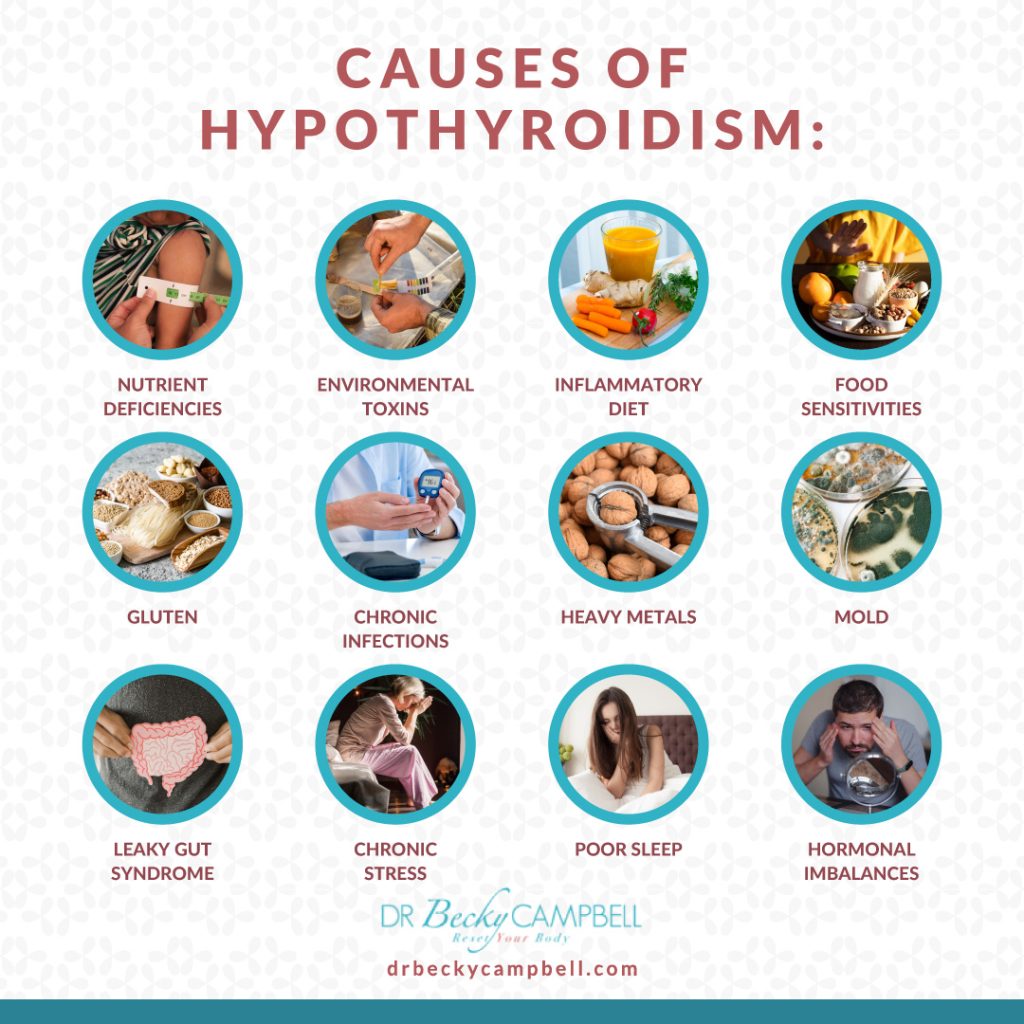
Causes of hypothyroidism:
- Nutrient deficiencies
- Environmental toxins
- Inflammatory diet
- Food sensitivities
- Gluten
- Chronic infections
- Heavy metals
- Mold
- Leaky gut syndrome
- Chronic stress
- Poor sleep
- Hormonal imbalances
Symptoms of hypothyroidism:
- Fatigue
- Sluggishness
- Sleepiness and sleep issues
- Increased sensitivity to cold
- Constipation
- Muscle weakness
- Muscles aches, stiffness, or tenderness
- Joint pain and stiffness
- Dry skin
- Brittle nails
- Hair loss
- Puffy face
- Depression
- Concentration issues
- Memory issues
- Brain fog
- Irregular periods
- Heavy periods
- Enlarged tongue
- Goiter (swelling of the thyroid)

Mast Cells and Histamine
Mast cell activation issues may be connected to your thyroid health. Before I get into this connection, I want to go over what are your mast cells, what histamine is, why you need them, and potential problems.
What Is Mast Cell Activation Syndrome
Your mast cells are essential for your immune and overall health. They are white blood cells that store histamine and other inflammatory mediators. They are located in your digestive tract, respiratory tract, urinary tract, skin, and blood.
When your body is attacked by an allergen, toxin, or other triggers, it will lead to mast cell activations. Your mast cells will cause an allergic response and release histamine along with other chemicals. This protective mechanism is essential for your immune health.
However, if your mast cells become dysregulated or overactive, it can turn into a serious issue. Mast cell activation syndrome (MCAS) means that your mast cells release too much histamine and other chemicals. This can lead to a variety of symptoms and affect your entire body. You may develop MCAS due to a variety of triggers, including mold, chemicals, toxins, heavy metals, allergens, medications, infections, viruses, food, and alcohol.
Symptoms of MCAS may include the following:
- Rashes
- Hives
- Itching
- Heart palpitations
- Low blood pressure
- Headaches
- Chest pain
- Weight changes, including rapid weight loss or weight gain
- Digestive trouble, including diarrhea, nausea, and vomiting
- Loss of appetite or low appetite
- Anxiety
- Fatigue
- Vision changes
- Weakness
- Dizziness
What Is Histamine Intolerance
Histamine gets a bad rap because of anti-histamine medications. The ‘anti’ part of anti-histamine, may make you believe that histamine is bad. It’s the opposite. Histamine is absolutely necessary for your health.
It is a chemical that supports your body in getting rid of allergens. It also supports your digestion by releasing hydrochloric acid to break down food and your brain health by serving as a chemical messenger. Too much of a good thing is rarely good, though.
If your body is releasing too much histamine and your body is unable to keep up and break down all the excess histamine, it will lead to histamine buildup. Histamine intolerance means that there is too much histamine in your body.
Under normal circumstances, your body sends enzymes to break down excess histamine and prevent build-up. If you have too much histamine or you don’t have enough of these enzymes, it won’t be able to break everything down, which can lead to histamine intolerance. Histamine intolerance can affect your entire body and lead to widespread symptoms.
Symptoms of histamine intolerance include the following:
- Itchy skin, eyes, ears, and nose
- Eczema or other types of dermatitis
- Hives
- Red eyes
- Facial swelling
- Crawling sensation on the skin or the scalp
- Tightness in the throat
- Difficulty regulating body temperature
- Sudden drop in blood pressure when standing up
- Low blood pressure
- Fast heart rate
- Heart palpitations
- Dizziness or vertigo
- Difficulty falling asleep or sleep issues
- Fatigue
- Confusion
- Brain fog
- Irritability
- Anxiety or panic attacks
- Congestion or runny nose
- Seasonal allergies
- Asthma
- Migraines and headaches
- Hair loss
- Acid reflux
- Diarrhea
- Abnormal menstrual cycle
- Premenstrual syndrome (PMS)
Mast Cell Activation Syndrome vs Histamine Intolerance
I believe that MCAS is the primary cause of histamine intolerance, but it may not be the cause for everyone. But considering the similarities between the symptoms of MCAS and histamine intolerance, you may feel confused.
Are these two conditions the same? No, they are not the same. Though symptoms of MCAS and histamine intolerance can be similar and are both caused by high levels of histamine, MCAS and histamine intolerance are not the same.
If your body has too much histamine and it can’t handle it, you may develop histamine intolerance. This usually happens due to a high-histamine diet. However, stress, poor sleep, environmental toxins, certain medications, and other factors may add to your histamine bucket as well. If your body has trouble breaking down the extra histamine, it will lead to histamine build-up and histamine intolerance.
While histamine intolerance simply means you have too much histamine in your body, you develop MCAS if your mast cells get triggered all the time. If you have MCAS, your mast cells get triggered by mold, allergens, or other triggers, they will release histamine and other chemicals into your body. Increased histamine release from mast cell activation can lead to too much histamine in your body. This can lead to a wide range of symptoms that are very similar to the symptoms of histamine intolerance.
As I mentioned before, MCAS is one of the primary causes of histamine intolerance. However, it is not the cause for everyone. You can have histamine intolerance without MCAS. You can also have MCAS without histamine intolerance. But you may have both MCAS and histamine intolerance. I see patients who have both conditions regularly (1, 2, 3).
If you have both conditions, your body will have increased difficulty breaking down the excess histamine. This can lead to widespread symptoms of MCAS and histamine intolerance. To figure out, whether you are dealing with symptoms of MCAS, histamine intolerance, or both. I recommend working with a functional medicine doctor who is well-versed in both conditions. (Tips: My team and I would love to help you with your diagnosis and treatment. Schedule your consultation here.)
To learn more about MCAS and histamine intolerance, I recommend reading my book, The 4-Phase Histamine Reset Plan: Getting to the Root of Migraines, Eczema, Vertigo, Allergies and More.
The Connection Between Thyroid Health and Mast Cells
Research, including a 2015 study published in Mediators of Inflammation, has found that mast cell activation may play a role in a variety of autoimmune conditions, including multiple sclerosis and rheumatoid arthritis (6). I have written an in-depth article about the connection between mast cells, histamine intolerance, multiple sclerosis, and other autoimmune issues. You can check out this article here.
It’s logical to assume that mast cell activation may also play a role in autoimmune thyroid issues, thyroid disease, and overall thyroid function. Though there is limited research on this connection, we have increased evidence on the topic. A 2016 review published in Archivos Venezolanos de Farmacología y Terapéutica has found that mast cell activation may be linked to autoimmune thyroid issues (7).
According to a 2019 review published in Frontiers in Cellular Neuroscience, thyroid antibodies can attach to the surface of your mast cells (8). When they bind to your mast cells, your mast cells may activate. It seems that if you have too many thyroid antibodies due to Hashimoto’s disease, it may lead to increased mast cell activation. This may increase your risk of MCAS and histamine intolerance (8).
Researchers also found that your mast cells may be able to synthesize and store your T3 hormones. This means that when your mast cells are activated, they not only release histamine and other chemicals, but they may also be affecting your thyroid hormone levels and thyroid function (8).
The review has also found that in hypothyroid conditions, an increased number of mast cells are common (8). A 2022 study published in Animals has also found an increase in mast cells, mast cell degranulation, and histamine in hypothyroidism (9). More mast cells can mean increased mast cell activation. This can lead to the increased release of histamine and other chemicals and consequent symptoms (8).
Researchers have also found that histamine can affect the release of TSH. Thus having an underactive thyroid may increase the chance of developing MCAS and histamine intolerance. Moreover, it seems that your mast cells may not only play an important part in autoimmune thyroid disease and thyroiditis but also in the follicular variants of papillary thyroid cancer (8).

The Connection Between Histamine and Thyroid Health
I also want to touch on how your gut health may play a role in the connection between mast cell issues, histamine intolerance, and thyroid disease. Just to recap, hypothyroidism may increase the number of mast cells. Since your mast cells are responsible for histamine production, more mast cells can lead to increased histamine release. This may lead to histamine intolerance and related issues.
In a healthy body, DAO enzymes can clean up excess histamine. If you have too much histamine, your body may not be able to handle it all. On top of that, if you have low DAO enzyme production, it will further decrease histamine breakdown. This will lead to increased histamine levels. The combination of high histamine levels, low DAO enzyme levels, and a high-histamine diet can set you up for small bacterial overgrowth (SIBO), gut health issues, and histamine intolerance.
A 2007 study published in the Journal of Clinical Endocrinology and Metabolism has found that people with hypothyroidism were significantly more likely to have SIBO compared to those without (10). According to a 2012 study published in the Medicinal Clinics of North America, SIBO may be present in over half of those with hypothyroid issues (11).
SIBO and gut microbiome imbalance may lead to decreased DAO production, increased mast cell activation, an increase in histamine-producing bacteria, and an increased risk of histamine intolerance. Increased mast cell activation may be negatively affecting your thyroid hormone levels and thyroid function (8). However, thyroid dysfunction itself may lead to further mast cell activation (9).
On the top of that, increased mast cell activation, histamine intolerance, and a high histamine diet may increase gut health issues. As you can see, this can quickly turn into a vicious cycle of thyroid dysfunction, mast cell activation, histamine intolerance, microbiome imbalance, and gut health issues. We need to address all these underlying and interconnected issues to improve your health.
To learn more about the connection between thyroid health and histamine, I recommend reading this article I’ve written. To learn more about the connection between your mast cells, histamine, and your gut, I recommend this article.

Recommendations for Thyroid and Mast Cell Health
Here are my recommendations to improve your thyroid and mast cell health naturally:
Get a Full Thyroid Panel
I recommend that you work with a functional medicine practitioner (hint: call our office and schedule your consultation here).
A full thyroid panel checks for:
- Thyroid-stimulating hormone (TSH)
- Thyroxine (Total & Free T4)
- Triiodothyronine (Free T3 & total T3)
- Reverse T3
- Thyroid peroxidase antibodies (TPO)
- Thyroglobulin antibodies
Why should you work with a functional medicine doctor instead of your regular healthcare provider? Most healthcare providers don’t use a complete thyroid panel and only look at your TSH. This doesn’t tell the full picture, and many issues may be missed.
If your thyroid doesn’t make enough T4 or T3, you have an underactive thyroid. This may indicate an autoimmune thyroid condition, Hashimoto’s disease. If your thyroid makes too much T4 or T3, you have an overactive thyroid condition. In most cases, this is an autoimmune condition, Graves disease. Most doctors only test for TSH instead of ordering a full thyroid panel, and they fail to diagnose thyroid issues. Your TSH may still be fine, while your T3 or T4 may be off already.
Functional medicine doctors also use a slightly different range. This helps us to detect preclinical thyroid issues before full-blown thyroid disease.
Checking your thyroid levels will not only help us with the proper diagnosis. Your test results can guide us in creating an individualized treatment plan. Regular testing can help us check your progress and adjust your treatment plan if needed.
Eat an Anti-Inflammatory, Thyroid-Friendly, and Low-Histamine Diet
I recommend following a low-histamine, anti-inflammatory, thyroid-friendly, nutrient-dense, whole-food diet. Remove inflammatory foods, including refined sugar, refined oils, canned and processed meat, artificial ingredients, junk food, and highly processed foods. Eat lots of greens, vegetables, herbs, spices, fruits, healthy fats, and organic meat.
Add lots of thyroid-supporting foods to your diet, including organic vegetables, wild-caught fish, olive oil, coconut oil, low-sugar fruits, such as cherries, cantaloupe, and berries, grass-fed and pasture-raised animal products, seaweed, herbs, and herbal tea. My book, The 30-Day Thyroid Reset Plan: Disarming the 7 Hidden Triggers That Are Keeping Your Sick, has some great recommendations for thyroid-friendly foods and meals.
However, if you are dealing with mast cell activation or histamine intolerance, along with thyroid issues, you have to follow a low-histamine diet. For example, fermented food and apple cider vinegar are great options for healthy individuals or those with thyroid issues without mast cell activation or histamine intolerance. However, if you have mast cell activation or histamine intolerance, you need to avoid fermented foods and apple cider vinegar as they are high in histamine.
Remove high-histamine foods and foods that can increase your histamine load. High-histamine foods that you should avoid include age cheese (e.g., goat cheese), citrus fruits, canned and cured meat (e.g., pepperoni, salami, bacon, lunch meat, hot dogs, and canned meat), dried fruits (e.g., apricots, dates, raisins, figs, and prunes), fermented foods (e.g., kefir, sauerkraut, soy sauce, and vinegar), fermented alcohol (e.g., beer, wine, and champagne), legumes (e.g., beans, lentils, soy, and peanut), certain nuts (e.g., cashew and walnuts), soured foods (e.g., buttermilk, sour milk, sour cream), smoked fish and certain types of fish (e.g., mackerel, mahi-mahi, anchovies, sardines, tuna, and fish sauce), certain vegetables (e.g., avocados, tomatoes, eggplant, and spinach), vinegar-containing foods (e.g., pickles and olives), and all overly processed foods because of the high histamine load from preservatives.
Avoid histamine-liberating foods that are low in histamine but trigger histamine release in your body, including alcohol, nuts, bananas, papaya, pineapple, strawberries, tomatoes, chocolates, wheat germ, cow’s milk, shellfish, and many artificial preservatives and dyes. Avoid DAO enzyme-blocking foods and drinks, such as alcohol, black tea, green tea, mate tea, and energy drinks.
Try new recipes. I recommend all the low-histamine recipes in The 4-Phase Histamine Reset Plan: Getting to the Root of Migraines, Eczema, Vertigo, Allergies and More and my recipe books, Fifty One Low Histamine Air Fryer Recipes and Low Histamine Cooking in Your Instant Pot.
Try Some Mast Cell-Stabilizing and Histamine-Reducing Foods and Supplements
You can boost the benefits of your anti-inflammatory, low-histamine diet by adding some foods that may help to reduce your levels of histamine and stabilize your mast cells. Quercetin helps to reduce histamine. Add quercetin-rich foods to your diet, such as grapes, apples, cranberries, black plums, cherries, black currants, chokeberries, blueberries, olive oil, cruciferous vegetables, kale, romaine lettuce, chicory greens, red leaf lettuce, cabbage, sprouts, asparagus, snap peas, peppers, and red onion. You may also try a quercetin supplement.
I also recommend adding foods that can help to stabilize your mast cells, including onion, peaches, nettle, apples, chamomile, moringa, watercress, Thai ginger, and fiber-rich foods. You may also try a DAO enzyme supplement to support histamine breakdown and HistoRelief.
HistoRelief is a synergistic blend of nutrients that provides natural support to balance your immune response. This blend features Tinofend®, a patented and clinically researched extract derived from the plant Tinospora cordifolia, which has a powerful ability to support immune regulation and immune response. As a result, it boosts your body’s ability to fight interstitial cystitis symptoms. It includes quercetin, nettle leaf, vitamin C, and bicarbonate salt to help inhibit histamine release, supports normal histamine metabolism, and improves immune health.
Reduce Your Histamine Load
Beyond a high-histamine diet, certain lifestyle choices may add to your histamine load as well. I recommend improving your lifestyle to reduce histamine intolerance. These lifestyle practices may also support your thyroid health, hormonal health, and overall health and wellness.
Reduce Your Stress Levels
Chronic stress can increase histamine intolerance, trigger mast cell activation, and impact your thyroid health. To reduce stress and improve sleep, I recommend practicing breathwork, meditation, positive affirmation, journaling, yoga, grounding, and time in nature for stress and anxiety reduction. Taking an Epsom salt bath is another great way to relax your muscles, calm your mind, and detoxify your body.
Get Enough Sleep Sleep
Inadequate and poor sleep is another major root cause behind histamine intolerance, MCAS, and thyroid issues. Make sure to sleep at least 7 to 9 hours a night. I recommend that you reduce your stress levels throughout the day but especially in the evening time to support sleep. Take a bath, read a good book, listen to some music, journal, try coloring, and spend time with your family. Avoid sugar, alcohol, and heavy food in the evening. I recommend investing in a supportive mattress, comfortable and supportive pillows and blankets, and quality, organic cotton sheets.
Move Your Body
A lack of movement may also increase the risk of histamine intolerance and thyroid problems.. Moving your body is a great way to reduce stress, improve detoxification, support hormonal health, support lymphatic flow, boost your mood, and support your overall health. Stay active throughout the day by taking a stroll in the park, stretching regularly, dancing to your favorite songs, playing with your kids or pets, and finding creative ways to incorporate movement. A standing desk or treadmill desk may be a great idea. Exercise at least 20 to 30 minutes five days a week and move your body regularly. I recommend getting 10 to 15K steps in a day if you can. Add resistance and strength training to your routine.
Remove Toxins
Toxin overload can increase chronic inflammation, mast cell activation, histamine release, histamine intolerance and thyroid dysfunction. I recommend reducing your exposure to environmental toxins. Use a high-quality air filtration system for better indoor air. Drink purified water to avoid toxins from your tap water. Avoid conventional cleaning, hygiene, body, and beauty products as they are loaded with chemicals. Choose natural, organic, and homemade options instead. Reduce the use of plastic and avoid BPA completely. Choose glass, bamboo, wood, organic cotton, silicon, and other natural alternatives instead of plastic. Avoid overly processed food products that can contain artificial ingredients. Choose organic food whenever possible.
Reduce Your Mast Cell Triggers
There are a number of triggers that can lead to mast cell activation and related histamine release and symptoms. Mast cell triggers tend to come from your environment. Common triggers of MCAS include mold, allergens, chemicals, toxins, heavy metals, and viruses.
Improve Your Gut Health
As you’ve learned your gut health and gut microbiome imbalance may be closely connected to thyroid disease, mast cell activation, and histamine intolerance. We have to address all areas of the puzzle. Improving your gut health is critical for improving your symptoms and regaining your health. Along with a gut-friendly anti-inflammatory diet, I recommend that you take a high-quality probiotics supplement to support your gut microbiome balance. For further gut-supporting supplements and a specific gut-health protocol, I recommend working with a functional medicine practitioner, like us.
Try Thyroid-Supporting Nutrients
You may also try to add some thyroid-supporting nutrients to your regimen:
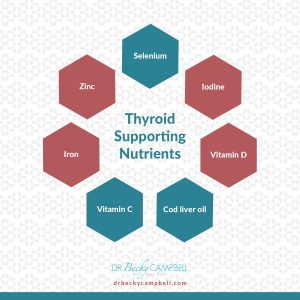
Selenium
Selenium is a great nutrient for thyroid function. It may help to protect your thyroid from too much iodine exposure. It may also be important for the conversion of T4 into T3. Selenium may also help to reduce inflammatory activity, which may reduce the risk or symptoms of autoimmune thyroid disease (12). The best part of selenium is that you don’t even need to supplement. Food form is usually better. Only two Brazil nuts a day should cover your selenium needs. Fish and organ meat are also great sources.
Iodine
Iodine is absolutely critical for thyroid hormone synthesis (13). Being a woman at child-bearing age, pregnancy, and being vegan may increase your risk of deficiencies. Children are also at a higher risk. Seaweed, fish, eggs, and beef liver may be good sources of iodine. Iodized table salt has also become popular in the past decades to reduce deficiencies.
However, too much iodine can also be a problem, especially if there is a selenium deficiency present too. It’s important that you only supplement with iodine if you have an actual deficiency and use a thyroid-specific supplement with a proper iodine-selenium balance.
I recommend that you start with your diet first instead of reaching for expensive supplements. I recommend that you work with a functional medicine practitioner and get some blood testing done before any supplementation. We can help you spot your actual nutrient deficiencies and specific needs. We can figure out what you may benefit from beyond your diet. This will prevent you from spending money on supplements that you may not need and only using the ones that actually support your health and well-being.
Cod Liver Oil and Vitamin D
Vitamin D is essential for your immune system, bone health, muscle health, brain and mental health, and other areas of your health (14). Vitamin D deficiency may also increase your risk of hypothyroidism (15). Sunshine is the best way to boost your vitamin D levels. However, with our indoor lifestyle, cold climates, and fear of harm from UV damage, most of us don’t meet our needs from sunshine alone.
Cod liver oil is a fantastic source of vitamin D, A, and E, and omega-3 EPA and DHA. These nutrients may all help to support your immune health and reduce inflammation. For some people, cod liver oil supplementation is enough. Others may require additional vitamin D supplementation.
Vitamin C
Vitamin C is a powerful antioxidant that may also help to protect your body (16). Lemon, lime, oranges, grapefruit, tangerines, and other citrus are great sources of vitamin C. However, citrus may be triggering histamine intolerance. Some people notice that they can tolerate some citrus fruits and others they cannot. That is why they are on my maybe list. I encourage you to see how you respond. I could always tolerate lime, but couldn't tolerate lemon for a while. Other great and low-histamine sources of vitamin C include kiwi, bell pepper, broccoli, Brussels sprouts, cabbage, and cauliflower.
Curcumin and Resveratrol
Curcumin is the active compound of the spice turmeric. Resveratrol is a polyphenol found in the skin of grapes, red wine, berries, and pistachios. They offer antioxidant, immune-supporting, and anti-inflammatory benefits that may help to reduce the risk and symptoms of autoimmunity (17, 18). Thus they may help with autoimmune thyroid issues (19, 20). You may benefit from consuming food rich in curcumin and resveratrol. You may also benefit from supplementation.
Iron
Iron deficiency may increase the risk of issues with thyroid hormone production It may reduce thyroid peroxidase activity in the thyroid. However, too much iron can also become an issue. Too much iron may increase the risk of thyroid issues and iron toxicity (21).
Don’t take iron supplements, unless you actually need it. Consume iron-rich foods, including beef, liver, oysters, clams, and venison. Get your iron levels tested. If your doctor finds iron deficiency, you may benefit from iron supplementation, usually only short-term.
Zinc
Zinc is a powerful mineral that is essential for your immune health and hormonal balance. It plays a role in the conversion of T4 to T3 and supports normal T4 and T3 levels (22). Food rich in zinc include oysters, red meat, poultry, and lobsters. Broccoli, spinach, mushrooms, kale, and garlic also contain plenty of zinc.

Check Out the Health Babes’ Guide to Balancing Your Hormones
To learn more about your hormones and learn how to improve your hormonal health naturally, I recommend our book (co-authored by Dr. Krystal Hohn and myself) The Health Babes’ Guide to Balancing Your Hormones: A Detailed Plan with Recipes to Support Mood, Energy Levels, Libido, and More. This book is not only full of information but with an easy-to-follow plan and easy-to-make, delicious hormone-friendly recipes.
Final Thoughts
Your thyroid health and your mast cells may be connected. Underlying mast cell activation issues are not uncommon in thyroid disease. If you are dealing with thyroid health issues, I recommend looking into potential underlying mast cells and histamine-related issues and addressing them as well.
If you are dealing with symptoms of MCAS or histamine intolerance, I invite you to schedule a consultation with us. We can help identify the root cause of your condition and recommend a personalized treatment plan to repair your body and regain your health and well-being. Schedule your consultation here. You can also get started on your own with my Histamine Online Program.

Sources I:
- Thyroid test National Institute of Health. National Institute of Diabates and Digestive and Kidney Disease link Here
- Beynon ME, Pinneri K. An Overview of the Thyroid Gland and Thyroid-Related Deaths for the Forensic Pathologist. Acad Forensic Pathol. 2016 Jun;6(2):217-236. doi: 10.23907/2016.024. Epub 2016 Jun 1. PMID: 31239894
- Fasano, A. (2012). Leaky gut and autoimmune diseases. Clinical Reviews in Allergy and Immunology, 42(1), 71–78. PMID: 22109896
- Mu, Q., Kirby, J., Reilly, C. M., & Luo, X. M. (2017). Leaky gut as a danger signal for autoimmune diseases. Frontiers in Immunology. PMID: 28588585
- Pollard, K. M., Hultman, P., & Kono, D. H. (2010). Toxicology of autoimmune diseases. Chemical Research in Toxicology. PMID: 20078109
- Xu Y, Chen G. Mast cell and autoimmune diseases. Mediators Inflamm. 2015;2015:246126. doi: 10.1155/2015/246126. Epub 2015 Apr 5. PMID: 25944979
- Rojas, J. Mast cell activation disease associated with autoimmune thyroid disease: case report and review of literature Archivos Venezolanos de Farmacologica y Terapeutica 2016
- Landucci E, Laurino A, Cinci L, Gencarelli M, Raimondi L. Thyroid Hormone, Thyroid Hormone Metabolites and Mast Cells: A Less Explored Issue. Front Cell Neurosci. 2019 Mar 29;13:79. doi: 10.3389/fncel.2019.00079. PMID: 30983971
- Baccari. Animals. 2022. Mast Cell Population and Histamine Content in Hypothyroid Rat Tissues.
- Lauritano, E.C., Bilotta, A.L., Gabrielli, M., Scarpellini, E., Lupascu, A., Laginestra, A., et al. Association between hypothyroidism and small intestinal bacterial overgrowth. J Clin Endocrinol Metab. 2007;92:4180–4. Link here
- Almandoz, J.P., Gharib, H. Hypothyroidism: Etiology, diagnosis, and management. Med Clin North Am. 2012;96:203–21. Link Here
Sources II:
- Ventura M, Melo M, Carrilho F. Selenium and Thyroid Disease: From Pathophysiology to Treatment. Int J Endocrinol. 2017;2017:1297658. doi: 10.1155/2017/1297658. Epub 2017 Jan 31. PMID: 28255299
- Chung HR. Iodine and thyroid function. Ann Pediatr Endocrinol Metab. 2014 Mar;19(1):8-12. doi: 10.6065/apem.2014.19.1.8. Epub 2014 Mar 31. PMID: 24926457
- Aranow C. Vitamin D and the immune system. J Investig Med. 2011 Aug;59(6):881-6. doi: 10.2310/JIM.0b013e31821b8755. PMID: 21527855
- Mackawy AM, Al-Ayed BM, Al-Rashidi BM. Vitamin d deficiency and its association with thyroid disease. Int J Health Sci (Qassim). 2013 Nov;7(3):267-75. doi: 10.12816/0006054. PMID: 24533019
- Carr AC, Maggini S. Vitamin C and Immune Function. Nutrients. 2017 Nov 3;9(11):1211. doi: 10.3390/nu9111211. PMID: 29099763
- Hewlings SJ, Kalman DS. Curcumin: A Review of Its Effects on Human Health. Foods. 2017 Oct 22;6(10):92. doi: 10.3390/foods6100092. PMID: 29065496
- Meng T, Xiao D, Muhammed A, Deng J, Chen L, He J. Anti-Inflammatory Action and Mechanisms of Resveratrol. Molecules. 2021 Jan 5;26(1):229. doi: 10.3390/molecules26010229. PMID: 33466247
- Abdelaleem MM, El-Tahawy NFG, Abozaid SMM, Abdel-Hakim SA. Possible protective effect of curcumin on the thyroid gland changes induced by sodium fluoride in albino rats: light and electron microscopic study. Endocr Regul. 2018 Apr 1;52(2):59-68. doi: 10.2478/enr-2018-0007. PMID: 29715188
- Duntas LH. Resveratrol and its impact on aging and thyroid function. J Endocrinol Invest. 2011 Nov;34(10):788-92. doi: 10.3275/7926. Epub 2011 Sep 23. PMID: 21946130
- Soliman AT, De Sanctis V, Yassin M, Wagdy M, Soliman N. Chronic anemia and thyroid function. Acta Biomed. 2017 Apr 28;88(1):119-127. doi: 10.23750/abm.v88i1.6048. PMID: 28467346
- Maxwell C, Volpe SL. Effect of zinc supplementation on thyroid hormone function. A case study of two college females. Ann Nutr Metab. 2007;51(2):188-94. doi: 10.1159/000103324. Epub 2007 May 30. PMID: 17541266
Lectins and Histamine Intolerance: The Answer to Your Symptoms
You’ve cleaned up your diet. You removed refined sugar, gluten, and refined foods. There is no junk food near your kitchen. You started following a low-histamine diet. Yet, you are still having symptoms. You might’ve noticed some symptoms subsiding, but others are sticking around. What can be the issue? If you are still experiencing symptoms, such as digestive issues, joint pain, fatigue, skin problems, and so on, you may be reacting to another food. Lectins may be the culprit and the missing piece.
Lectins can trigger mast cell activation, histamine intolerance, and chronic inflammation. High-lectin foods can cause and worsen unwanted chronic symptoms. So let’s talk about lectins for a moment.
In this article, you will learn about lectins. You will learn what lectins are. I will discuss potential problems with lectins and the symptoms of lectin intolerance. I will go over the list of foods that are high in lectin. You will learn about histamine intolerance and mast cell activation syndrome (MCAS) and the difference between the two. I will discuss the connection between lectins, mast cell activation, and histamine intolerance. Finally, I will offer some natural solutions for lectin intolerance and histamine intolerance.
What Are Lectins
Lectins are a form of carbohydrate-binding proteins. They are found in various plant foods. They are particularly high in beans, legumes, wheat, bell peppers, squash, and nightshades.
Though lectins are commonly referred to as anti-nutrients, they are not completely bad. Lectins offer support for cell communication and cell development. They may also support your immune health by helping immune regulation and immune response (1, 2, 3).
For most people, consuming lectin in moderation in well-cooked foods doesn’t cause any health issues. For other people, however, eating lectin-rich foods, especially in moderate or higher quantities, can turn into a problem. Since lection may increase the risk of chronic inflammation, it can lead to digestion issues, leaky gut syndrome, nutrient deficiencies, and related health issues. If you have histamine intolerance and have already removed all high-histamine foods yet, still struggling with symptoms, you may also be dealing with lectin intolerance.
Problems with Lectins
According to a 2020 study published in Foods, lectins can act as dietary allergens that may lead to allergic reactions (4). Lectins may increase the risk of chronic inflammation and immune reactions. Since lectins may decrease the absorption of zinc, iron, calcium, and phosphorus, it may lead to nutrient deficiencies and related health issues.
Lectins can lead to vomiting, diarrhea, and other digestive issues. They may increase your risk of gut microbiome imbalance and leaky gut syndrome. Microbiome imbalances and leaky gut syndrome may further increase chronic inflammation, gut health issues, chronic symptoms, and the increased risk of autoimmunity.
A 2015 review published in Alternative Therapies has found that lectins may increase autoimmune reactions (5). A 2000 review published in the British Journal of Nutrition has found that lectins may increase symptoms of rheumatoid arthritis (6). However, eliminating lectins and other problematic foods can reduce symptoms.
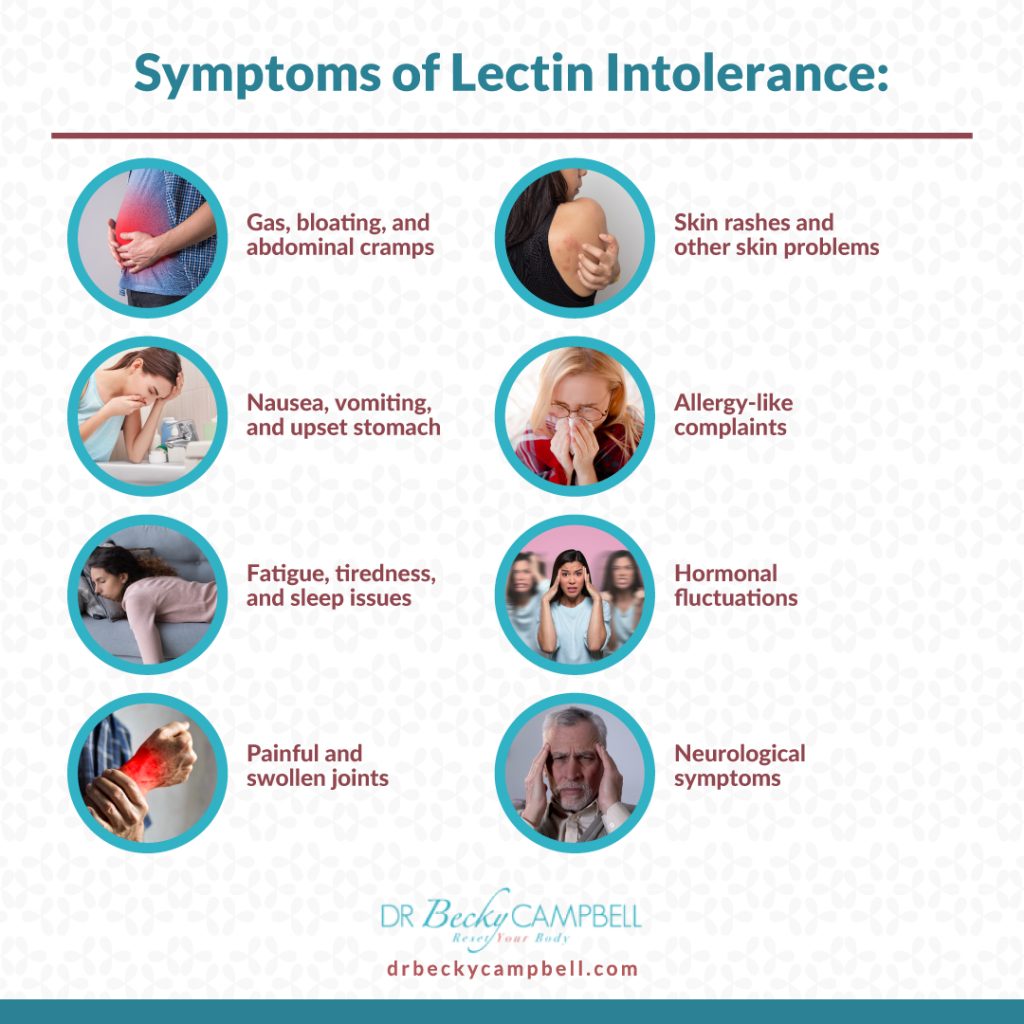
Symptoms of Lectin Intolerance
Symptoms of lectin intolerance may include:
- Gas, bloating, and abdominal cramps
- Nausea, vomiting, and upset stomach
- Fatigue, tiredness, and sleep issues
- Painful and swollen joints
- Skin rashes and other skin problems
- Allergy-like complaints
- Hormonal fluctuations
- Neurological symptoms
Foods High in Lectin
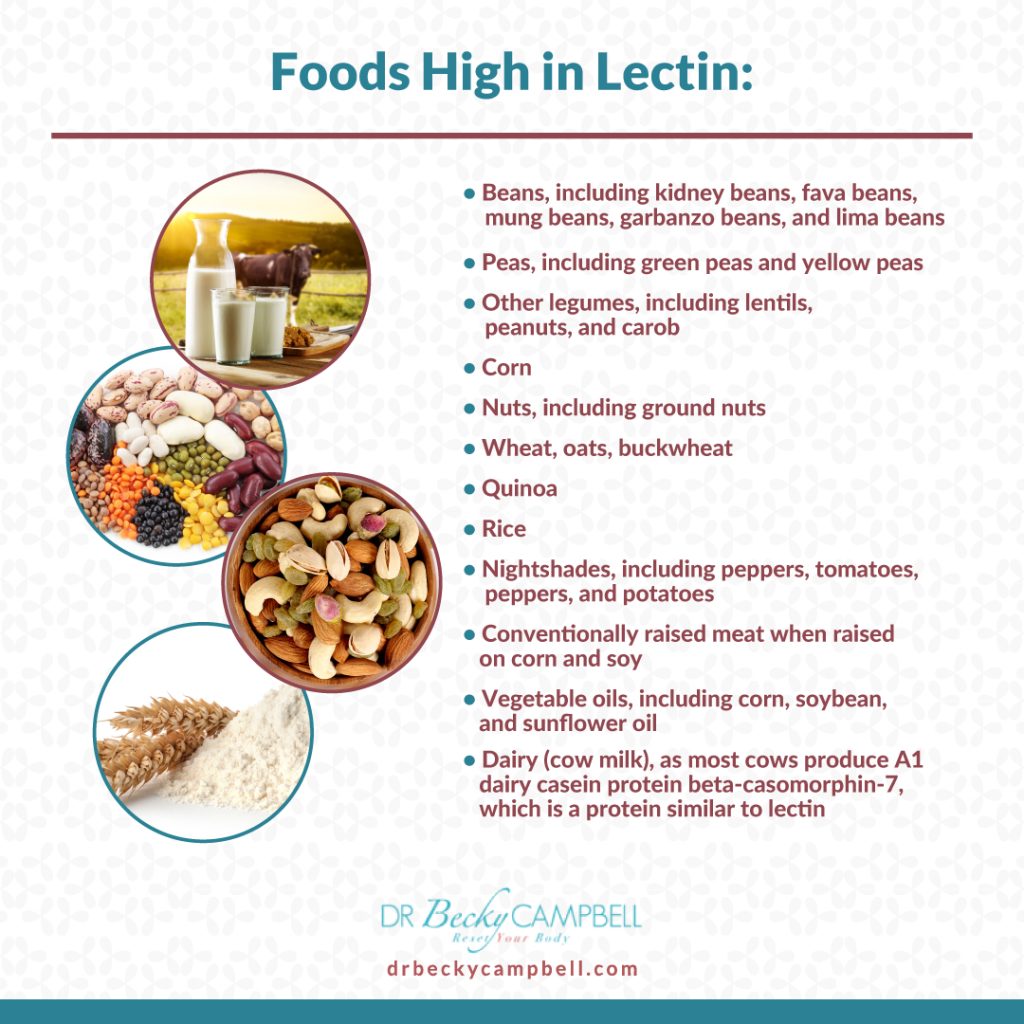
Foods high in lectin include:
- Beans, including kidney beans, fava beans, mung beans, garbanzo beans, and lima beans
- Peas, including green peas and yellow peas
- Other legumes, including lentils, peanuts, and carob
- Corn
- Nuts, including ground nuts
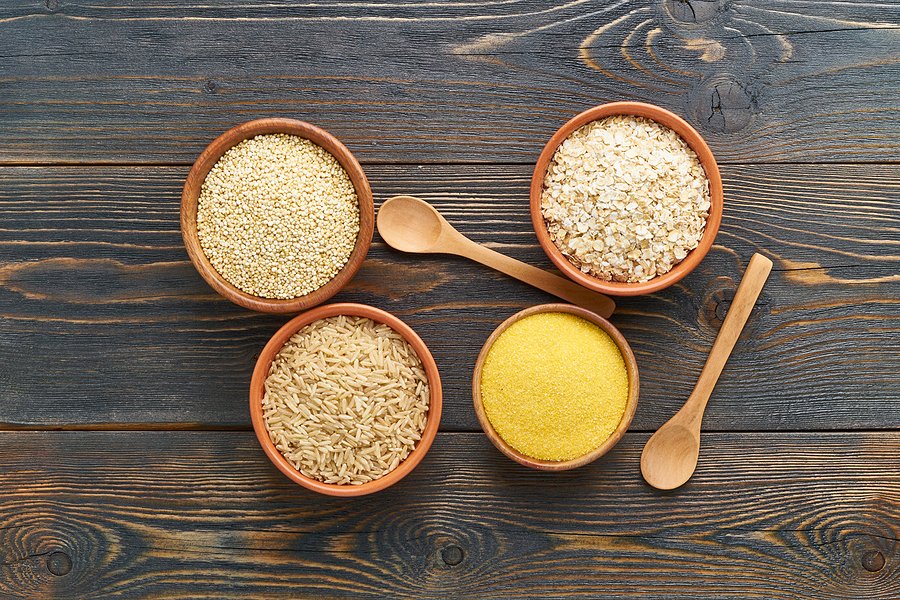
- Wheat, oats, buckwheat
- Quinoa
- Rice
- Nightshades, including peppers, tomatoes, peppers, and potatoes
- Conventionally raised meat when raised on corn and soy
- Vegetable oils, including corn, soybean, and sunflower oil
- Dairy (cow milk), as most cows produce A1 dairy casein protein beta-casomorphin-7, which is a protein similar to lectin
Risk Factors for Lectin Intolerance
You may develop lectin intolerance for a variety of reasons. The main risk factors for lectin intolerance and risk factors for increased symptoms of lectin intolerance may include:
- Frequent use of antibiotics
- Gut microbiome imbalances
- Leaky gut syndrome
- Following a vegan or vegetarian diet high in high-lectin foods, especially legumes and/or grains
- Autoimmune disorders or family history of autoimmune disorders
- Joint problems of rheumatoid arthritis
- Poor sleep and fatigue
- Neurological issues
- Mental health issues
- Skin conditions

Lectins and Histamine Intolerance
Lectins may be a problem if you have histamine intolerance or mast cell activation syndrome (MCAS) in a variety of ways.
What Is Histamine Intolerance?
When you think about histamine, I’m positive that anti-histamines for allergies come to mind first. Because of the ‘anti’ part of anti-histamine, histamine often gets a bad rap. Yet, histamine is absolutely essential for your immune health and overall well-being.
Histamine is an important chemical that helps to remove allergens as part of your immune response. It also aids digestion by releasing hydrochloric acid to break down food and bacteria and supports your brain and mental health by serving as a chemical messenger between your brain and the rest of your body.
At healthy levels, histamine is a good guy that supports your health. Too much histamine, on the other hand, can turn into a serious health issue. If your body is releasing too much histamine and cannot break down excess histamine, it will cause a histamine buildup. This histamine buildup is called histamine intolerance. Histamine intolerance can affect your entire body, including your gut, brain, lungs, and cardiovascular system, causing widespread symptoms (7).
Symptoms of Histamine Intolerance
Symptoms of histamine intolerance can affect your entire body. They can be widespread, affecting many areas of your body at the same time. Some people may only experience a couple of random symptoms, others may experience every histamine intolerance symptom possible. Some may only experience mild symptoms, while others experience severe symptoms that seriously interfere with their lives.
As you will notice, many symptoms of histamine intolerance are similar to lectin intolerance. This overlap may not be a coincidence. Lectin intolerance may also worsen your histamine intolerance symptoms, and histamine intolerance may worsen lectin intolerance. Unless you address both, it may turn into a never-ending vicious cycle.
Symptoms of histamine intolerance include the following:
- Itchy skin, eyes, ears, and nose
- Eczema or other types of dermatitis
- Hives
- Red eyes
- Facial swelling
- Crawling sensation on the skin or the scalp
- Tightness in the throat
- Difficulty regulating body temperature
- Sudden drop in blood pressure when standing up
- Low blood pressure
- Fast heart rate
- Heart palpitations
- Dizziness or vertigo
- Difficulty falling asleep or sleep issues
- Fatigue
- Confusion
- Brain fog
- Irritability
- Anxiety or panic attacks
- Congestion or runny nose
- Seasonal allergies
- Asthma
- Migraines and headaches
- Acid reflux
- Diarrhea
- Abnormal menstrual cycle
- Premenstrual syndrome (PMS)
What Is Mast Cell Activation Syndrome
Your mast cells are white blood cells. They are located in tissues throughout your body, including your digestive tract, respiratory tracts, skin, reproductive organs, surrounding nerves, and blood. Since your mast cells store inflammatory mediators, including histamine, they play an important role in your immune health. When your body encounters allergens, toxins, or other foreign invaders, it will have an allergic reaction. Your mast cells will trigger an allergic response causing the release of histamine and other chemicals.
Though the activation of your mast cells is important, overactivation and other mast cell activation issues can become a problem. Mast cell activation syndrome (MCAS) is a complex health issue that involves a number of different systems in your body leading to an array of symptoms. MCAS may develop due to a variety of triggers, including mold, chemicals, toxins, heavy metals, allergens, medications, infections, viruses, food, and alcohol. If you have MCAS, some or all of these triggers can cause your mast cells to release inflammatory mediators, including histamine resulting in unwanted symptoms (8, 9, 10, 11).
Symptoms of Mast Cell Activation Syndrome (MCAS)
Symptoms of MCAS will impact more than one part or system of your body. Symptoms may vary from person to person. Symptoms of MCAS may include:
- Rashes
- Hives
- Itching
- Heart palpitations
- Low blood pressure
- Headaches
- Chest pain
- Weight changes, including rapid weight loss or weight gain
- Digestive trouble, including diarrhea, nausea, and vomiting
- Loss of appetite or low appetite
- Anxiety
- Fatigue
- Vision changes
- Weakness
- Dizziness
Are MCAS and Histamine Intolerance the Same?
MCAS and histamine intolerance are not the same. If you have histamine intolerance, you have a build-up of histamine from high-histamine foods, stress, environmental toxins, and other histamine-promoting factors that your body cannot break down properly. If you have MCAS, your mast cells get triggered by allergens, mold, toxins, medications, infections, pain, stress, and other triggers, causing an immune response and mast cell histamine release.
MCAS can cause histamine intolerance. In fact, I’ve found that MCAS is one of the most common driving factors for histamine intolerance. However, you can develop histamine intolerance without MCAS. You may also have MCAS without symptoms of histamine intolerance. Though you may have both conditions, it is absolutely possible to only have one.
Lectins, Mast Cell Activation, and Histamine Intolerance
Now that you understand what histamine intolerance is, let's talk about the connection between lectins and histamine.
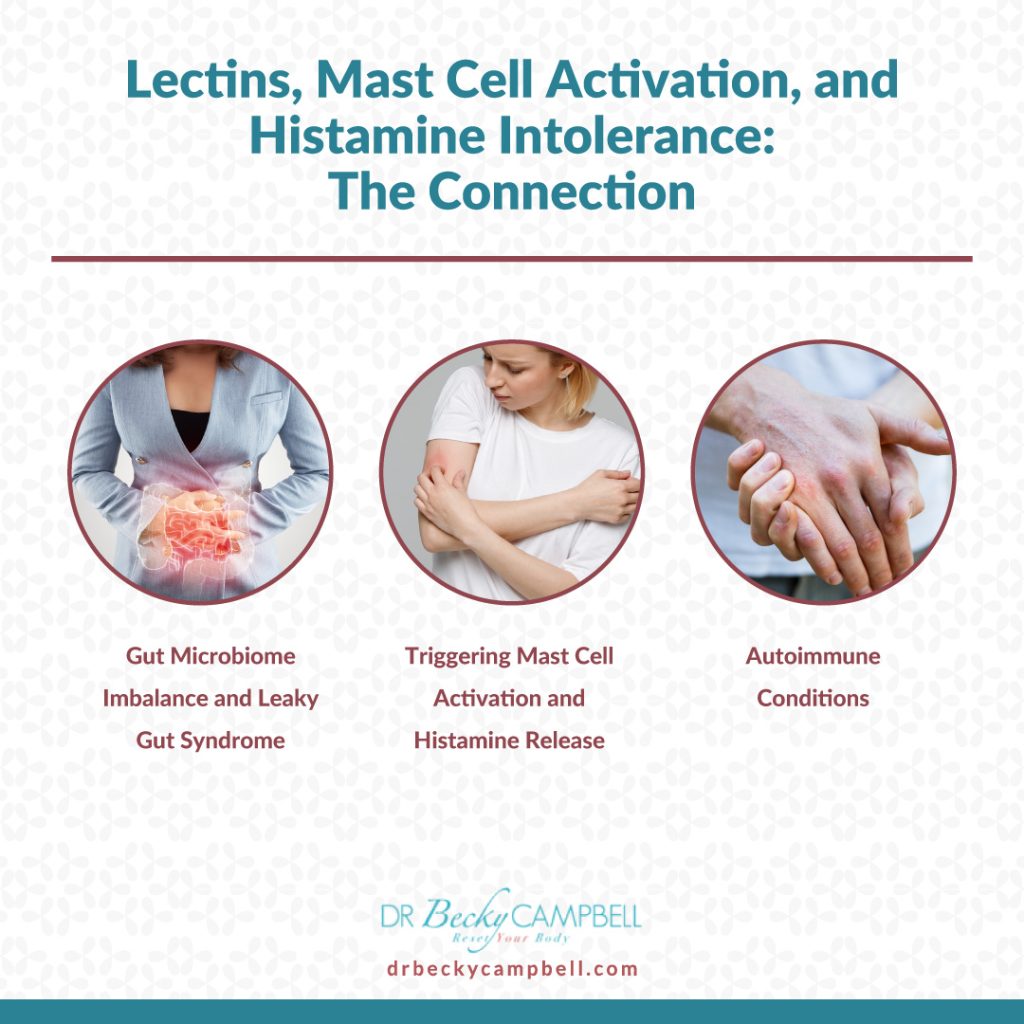
Gut Microbiome Imbalance and Leaky Gut Syndrome
I have already talked about how lectins may increase gut microbiome imbalance, gut inflammation, intestinal permeability, or leaky gut syndrome. According to a 1999 review published in the BMJ, lectins may be able to pass through the gut wall and open the gut barrier (12). Lectins may also be able to bind to the gut mucosa causing further gut health problems. As I broke down in this article, leaky gut syndrome, gut microbiome imbalances, and gut infections are some of the main underlying causes of histamine intolerance that can further trigger your symptoms.
Triggering Mast Cell Activation and Histamine Release
A 2020 study published in Foods has found that lectins may act as dietary allergens that may lead to allergic reactions (4). They can aggravate allergies, allergic reactions, histamine release, histamine intolerance, and further sensitivities to other foods.
Your mast cells are home to hundreds of different kinds of receptors. These receptors on the outside of your mast cells help your body notice anything foreign, pathogenic, toxic, or harmful coming their way. A toll-like receptor is a specific receptor on your mast cells that helps to recognize mold, bacteria, viruses, lectins, and other problematic substances.
Coming into contact with lectins, your mast cell toll-like receptors may set off mast cell activation, especially if you have lectin intolerance, lectin sensitivity, or mast cell activation problems. An overactivation of your toll-like receptors will lead to the release of histamine and other inflammatory mast cell mediators to protect you from harm. However, if you are consuming high-lectin foods regularly, it will lead to increased mast cell activation and histamine release, which can lead to chronic inflammation and chronic symptoms.
Furthermore, if you have leaky gut syndrome, lectins can pass into your bloodstream, where they can further activate your mast cells and other immune cells. This can lead to a further release of histamine and increase histamine intolerance symptoms.
Immunoglobulin E (IgE) is an antibody that allows your body to recognize allergens. IgE also plays a role in lectin sensitivities and lectin allergens. If you have pre-existing mast cell activation or allergies, lectins may make your symptoms worse when IgEs recognize lectins. A 2007 study published in Clinical and Experimental Immunology has found that foods high in lectins, such as potatoes, may activate mast cells and basophils in those with allergies tendencies and food sensitivities (13). Researchers found that removing high-lectin foods helped to reduce symptoms.
Autoimmune Conditions
Furthermore, there may be a link between autoimmune conditions and lectins. Lectins may increase the risk of autoimmunity and may further trigger existing autoimmune conditions. According to a 2015 review published in Alternative Therapies and 2000 review published in the British Journal of Nutrition, lectins may increase autoimmune reactions (5, 6).
Many people with histamine intolerance and MCAS also have an autoimmune condition. For example, I see patients all the time with Hashimoto’s disease (an autoimmune thyroid condition) and histamine intolerance. You can learn more about this connection between your thyroid and histamine intolerance here. Irritable bowel diseases (IBDs), such as ulcerative colitis and Crohn’s disease are common underlying issues behind histamine intolerance as well.
Solutions for Lectin Intolerance
Lectin intolerance can come with uncomfortable chronic symptoms. Fortunately, you can reduce lectin intolerance with the help of some simple dietary and lifestyle strategies. Here is what I recommend:
Learn a Better Way to Cook Lectins
High-lectin foods generally cause the most issues when you are eating them raw. The good news is that most high-lectin foods are rarely or never eaten raw. However, not preparing them carefully or undercooking them can cause problems too.
Soaking high-lectin foods, especially beans and legumes, before cooking them is important. Boiling, stewing, or using other high-heat cooking methods may also help to reduce lectin levels significantly, making them safe to consume for most people.
However, this may not be enough. If you have poor gut health, chronic inflammation, or other chronic health issues, you may not tolerate lectin well even when prepared and cooked properly.
Some high-lectin foods may have other problems besides lectin too. Beans and legumes are high-histamine foods that can also cause histamine intolerance. Wheat is high in gluten which can increase the risk of gluten-related chronic inflammation, food sensitivities and intolerance, gut symptoms, leaky gut syndrome, and other health problems. Many high-heat cooking methods can increase histamine in your food, increasing histamine intolerance. If you have problems with high-lectin foods despite preparation and cooking, you may benefit from a low-lectin or lectin-free diet.
Try a Low-Lectin or Lectin-Free Diet
If cooking high-lectin foods appropriately and only eating them at moderate amounts doesn’t help, you may benefit from a low-lectin or lectin-free diet. Remove high-lectin foods from your diet, such as beans, legumes, and nightshades. Consume only low-lectin and/or lectin-free foods. Try a low-lectin or lectin-free diet for about a month and see if your symptoms improve.
If your symptoms improve, you may choose to stay on a low-lectin diet completely. However, once you repair your gut health and reduce chronic inflammation, you may be able to reintroduce well-cooked high-lectin foods in moderate amounts. If you are ready to reintroduce them after 2 to 3 months, begin with a small amount and watch your body’s reactions. If you are reacting to certain high-lectin foods, remove them from your diet. If you are still reacting to all high-lectin foods, stay on a low-lectin diet.
Improve Your Gut Health
Your gut health affects your entire body. Poor gut microbiome imbalance and leaky gut syndrome may increase chronic inflammation, histamine intolerance, lectin intolerance, and related symptoms. Along with a gut-friendly anti-inflammatory diet, I recommend that you take a high-quality probiotics supplement to support your gut microbiome balance.
Follow a Low-Histamine Diet
If you have both histamine intolerance and lectin intolerance, you may benefit from a low-lectin AND low-histamine diet. I recommend following a low-histamine, anti-inflammatory, nutrient-dense, whole foods diet. Remove inflammatory foods, including refined sugar, refined oils, canned and processed meat, artificial ingredients, junk food, and highly processed foods. Remove high-histamine foods. Follow a nutrient-dense, anti-inflammatory, and low-histamine diet rich in greens, vegetables, herbs, spices, fruits, healthy fats, and organic meat. Try new recipes. I recommend all the low-histamine recipes in The 4-Phase Histamine Reset Plan and Low Histamine Cooking in Your Instant Pot. If you want to go a step further, you should join my Histamine Reset Online Program.
Lower Your Histamine
Reducing your histamine levels is more than just diet. Following a low-histamine nutrition plan is key to your recovery. However, poor sleep, stress, environmental toxins, and other factors can also increase your histamine load. Improving your sleep, reducing stress, reducing environmental toxins, supporting your liver and gut, and other strategies can all play a role in lowering your histamine bucket and improving your health and well-being. You may also benefit from certain supplements for histamine intolerance.
I recommend that you work with a functional health practitioner (hint: my team and I) to check for histamine intolerance. If you are dealing with symptoms of histamine intolerance, I recommend that you follow my Histamine Reset Plan outlined in my Histamine Online Program.
Look Into Salicylate and Oxalate Issues
If you are following a low-histamine and low-oxalate diet and still noticing issues with certain foods and have some of the same symptoms, it may be time to look further. Oxalates and salicylates are two other food compounds that can cause similar symptoms to histamine intolerance and lectin intolerance. Histamine intolerance can come hand in hand with problems with oxalates and salicylates. You can learn about the connection between oxalates, salicylates, and histamine intolerance by reading this article.

Final Thoughts
Lectins are a form of carbohydrate-binding proteins found in various plant foods, such as beans, legumes, wheat, bell peppers, squash, and nightshades. Lectin intolerance, histamine intolerance, and mast cell activation often come hand in hand. Without addressing all, you cannot eliminate all your symptoms. You may benefit from a low-histamine and low-lectin diet.
If you are dealing with symptoms of lectin intolerance histamine intolerance or MCAS, I invite you to schedule a consultation with us. We can help identify the root cause of your condition and recommend a personalized treatment plan to repair your body and regain your health and well-being. Schedule your consultation here. You can also get started on your own with my Histamine Online Program.
Sources:
1. Lagarda-Diaz I, Guzman-Partida AM, Vazquez-Moreno L. Legume Lectins: Proteins with Diverse Applications. Int J Mol Sci. 2017 Jun 12;18(6):1242. doi: 10.3390/ijms18061242. PMID: 28604616
2. Jiang QL, Zhang S, Tian M, Zhang SY, Xie T, Chen DY, Chen YJ, He J, Liu J, Ouyang L, Jiang X. Plant lectins, from ancient sugar-binding proteins to emerging anti-cancer drugs in apoptosis and autophagy. Cell Prolif. 2015 Feb;48(1):17-28. doi: 10.1111/cpr.12155. Epub 2014 Dec 9. PMID: 25488051
3. Lepenies B, Lang R. Editorial: Lectins and Their Ligands in Shaping Immune Responses. Front Immunol. 2019 Oct 9;10:2379. doi: 10.3389/fimmu.2019.02379. PMID: 31649680
4. Barre A, Damme EJMV, Simplicien M, Benoist H, Rougé P. Are Dietary Lectins Relevant Allergens in Plant Food Allergy? Foods. 2020 Nov 24;9(12):1724. doi: 10.3390/foods9121724. PMID: 33255208
5. Cordain L, Toohey L, Smith MJ, Hickey MS. Modulation of immune function by dietary lectins in rheumatoid arthritis. Br J Nutr. 2000 Mar;83(3):207-17. doi: 10.1017/s0007114500000271. PMID: 10884708
6. Food Immune Reaction and Autoimmunity. Alternative therapies. 2015. Link Here
7. Maintz L, Novak N. Histamine and histamine intolerance. Am J Clin Nutr. 2007 May;85(5):1185-96. doi: 10.1093/ajcn/85.5.1185. PMID: 17490952
8. Afrin LB, Self S, Menk J, Lazarchick J. Characterization of Mast Cell Activation Syndrome. Am J Med Sci. 2017;353(3):207-215. Link Here
9. Frieri M, Patel R, Celestin J. Mast cell activation syndrome: a review. Curr Allergy Asthma Rep. 2013;13(1):27-32. Link Here
10 Akin C, Valent P, Metcalfe DD. Mast cell activation syndrome: Proposed diagnostic criteria. J Allergy Clin Immunol. 2010 Dec;126(6):1099-104.e4. doi: 10.1016/j.jaci.2010.08.035. Epub 2010 Oct 28. PMID: 21035176
11. Petra AI, Panagiotidou S, Stewart JM, Conti P, Theoharides TC. Spectrum of mast cell activation disorders. Expert Rev Clin Immunol. 2014;10(6):729-739. Link Here
12. Freed DL. Do dietary lectins cause disease? BMJ. 1999 Apr 17;318(7190):1023-4. doi: 10.1136/bmj.318.7190.1023. PMID: 10205084
13. Pramod, S. N., Venkatesh, Y. P., & Mahesh, P. A. (2007). Potato lectin activates basophils and mast cells of atopic subjects by its interaction with core chitobiose of cell-bound non-specific immunoglobulin E. Clinical and Experimental Immunology, 148(3), 391–401. Link Here

Mold May Be Driving Your POTS: The Connection Between POTS, Mold, Nervous System Function, Gut Health, and Histamine
Postural orthostatic tachycardia syndrome (POTS) affects between 1 to 3 million people in the United States. POTS a type of dysautonomia that causes excessive tachycardia and other symptoms upon standing. Lying down tends to improve the fast heartbeat, lightheadedness, and feeling of fainting.
Addressing POTS can be complex. In my practice, I’ve found that there are usually an array of underlying health issues that can contribute to the condition and worsen symptoms. Nervous system issues, gut health problems, and histamine intolerance are common driving factors behind symptoms.
Another potential underlying issue that’s rarely talked about is mold exposure. However, uncovering underlying mold exposure may be the missing piece you’ve been looking for on your recovery journey. Understanding the root causes of your issues is essential for finding the right strategies and a key to improving your health.
In this article, I want to discuss the connection between mold and POTS. You will learn what POTS is. Additionally, you will understand the symptoms and causes of POTS. You will understand what mold is and the common symptoms of mold toxicity. Furthermore, I will discuss the connection between mold and POTS. I will also discuss the connection between mold, histamine intolerance, and POTS. I will also explain the connection between mold, gut health, and POTS. You will understand why uncovering mold toxicity, histamine intolerance, and gut health issues is important for addressing POTS. Finally, I will offer some strategies for addressing mold, histamine intolerance, and gut health issues to improve your health and well-being.
What Is POTS?
Postural orthostatic tachycardia syndrome (POTS) is a type of dysautonomia. Dysautonomia is an umbrella term used for various medical conditions that are related to your autonomic nervous system (ANS). Your ANS is responsible for your body’s automatic functions. These functions include your breathing, heart rate, blood pressure, digestion, dilation, temperature regulation, and anything else that you don’t have to consciously think about.
POTS affects somewhere between 1 to 3 million people in the United States alone and a lot more worldwide. It is a type of orthostatic intolerance (OI) linked to excessive tachycardia or abnormally rapid heart rate and other symptoms upon standing. In OI, the blood that returns to the heart upon standing up is excessively reduced in volume. This can cause lightheadedness, fainting, and an incredibly rapid heartbeat (an increase in over 30 beats per minute or over 120 beats per minute total within 10 minutes of getting up). Lying down tends to improve POTS-related fast heartbeat, lightheadedness, and feeling of fainting (1, 2, 3).
Though you may develop POTS at any age, about 75 to 80 percent of affected individuals are women between the ages of 15 and 50. Some women experience more POTS episodes or more severe symptoms before they begin their period (1, 2, 3).
Symptoms of POTS
Symptoms of POTS may include:
- Increased heart rate (30 beats/minute resting heart rates, increase to 120 or over when standing)
- Fainting
- Dizziness
- Fatigue
- Weakness
- Shaking
- Sweating
- Bloating, cramping, diarrhea, and other gastrointestinal issues
- Sleep difficulties
- Shortness of breath

Causes of POTS
The exact cause of dysautonomia is not yet completely understood. While in some cases, they may be inherited, in other cases, it may be the result of a degenerative disease, prolonged inflammatory reactions, injury, or another disease. Symptoms often begin after pregnancy, trauma, major surgery, or a viral illness (1, 2, 3).
Your gut health may also play a role, as well as mast cell activation. I have already written about the potential connection between POTS and other dysautonomia, small intestinal overgrowth (SIBO) and gut health, and histamine intolerance. You can learn about this connection here.
In this article, I want to discuss a less talked about driving factor behind POTS: mold. Mold exposure and mold illness can lead to a long list of chronic symptoms and health issues. One of these health issues is mast cell activation and histamine intolerance. You can learn more about that connection here. Another issue is POTS. Chronic mold exposure may be driving your POTS symptoms.
Reducing mold exposure and improving mold illness may reduce your POTS symptoms as well. But before I get into this connection, I want to talk about mold and mold illness for a moment.
What Is Mold?
Mold is a fungus known for its ability to grow on almost anything and thrive under many conditions, especially in a warm and moist environment. There are many forms of mold. Some grow indoors, and some prefer the outdoors. There are about 1,000 species of mold in the United States, with the most common types being Aspergillus, Cladosporium, Alternaria, Memnoniella, Penicillium, and Stachybotrys.
Mold exposure inside buildings is very common. Mold particularly loves to hide and grow in your bathrooms, kitchen, basement, behind old wallpaper, under the carpet, and just about any area that are warm, damp, and wet. Areas with water leakage and water damage are also at high risk for mold.
Mold releases mycotoxins in the air and lead to consequent health issues. Unfortunately, these mycotoxins can spread far and wide. You may initially have mold in one tiny spot in your home, but its microscopic spores can travel far. You may breathe them in through the air.
Chronic exposure to mold can be dangerous. It can lead to mold toxicity symptoms, including fatigue, brain fog, headache, skin issues, respiratory problems, and nausea. Mold exposure and mold toxicity may also increase the risk of POTS symptoms. You will learn about the connection between mold and POTS once I go over the most common symptoms of chronic mold exposure.
Symptoms of Mold
Signs and symptoms of chronic mold exposure and mold toxicity may include:
- Fatigue
- Muscle and joint pain
- Symptoms of allergies
- Chronic sinus congestion or runny nose
- Asthma flare-ups
- Coughing and sneezing
- Coughing
- Throat pain
- Eye irritation
- Skin infections, rashes, and other skin issues
- Nosebleeds
- Nausea or digestive issues
- Headaches or migraines
- Mood changes
- Brain fog
- Numbness or tingling
- Vertigo or dizziness
- Tinnitus
- Rapid heart rate
- Anxiety
- Histamine intolerance or mast cell activation issues

Signs of Mold in Your Home
Do you have mold in your home? There are a number of signs you can look for, including:
- Musty smell in your home
- Rotten smell coming from the walls or the floor
- Black or white, fluffy or slimy spots on your clothes
- Spots, spores, fuzz, or other signs on your furniture
- Spots, spores, fuzz, or other signs on or under your carpet or rugs
- Black or grey spots or other signs on the grout between the tiles or elsewhere in your bathroom
- Peeling or warped wallpaper
- Spotted walls
- Bubbling paint
- Black spots or musty odor coming from your AC
- Past or present water leakage (e.g., flooded sink or toilet, moisture in your water heater closet, or leaky water tank) or water damage
- Flare-ups in allergy and asthma
- Chronic respiratory issues
- Feelin itchy and skin issues
- Constant fatigue or muscle pains
- Other symptoms of mold illness (as explained earlier)
If you think that there is mold in your home, you can use an at-home mold kit to test for mold. You may also hire a professional mold inspector, however, that may cost more money.

The Connection Between Mold and POTS
Mold mycotoxins can enter your body through inhalation, eating mold-contaminated food, and through your skin. Mold mycotoxins can lead to pro-inflammatory cytokine production, chronic inflammation, and all kinds of issues. Some people believe that this can increase your risk of dysautonomias, such as POTS.
If you search the internet, you will find some case studies on functional medicine websites on functional medicine websites, doctors finding success with POTS patients once addressing mold. I have personally seen patients with POTS who struggled to see significant improvements despite dietary changes and supplementation. Once we realized that their home was infested with mold, we were able to address the issue through a protocol addressing mold and removing mold from their home. Addressing mold toxicity was one important piece of the puzzle that helped them to feel better.
There are three ways mold may increase your risk and symptoms of POTS:
- Mold may affect your nervous system function and may lead to neurological symptoms, including balance issues and other symptoms associated with POTS
- Mold may cause chronic inflammation, mast cell activation, and histamine intolerance, which can increase your risk and symptoms of POTS
- Mold may also affect your gut health and increase your risk of gut infection, which may lead to neurological symptoms of POTS and histamine intolerance triggering symptoms of POTS

Let’s look at these three areas where mold and POTS may be connected:
Mold, Your Nervous System, and POTS
At this point, there hasn’t been any larger-scale research on the potential link between mold and POTS. However, some research evidence suggests that there may be a connection. There is increasing evidence that suggests that mold exposure may lead to neurological symptoms.
A 2003 study published in the Archives of Environmental Health has also found that living in a home with mold may lead to neurological issues (7). Participants experience neurological dysfunction, including balance issues, inability to walk straight with their eyes closed, and memory issues.
A 2009 study published in Toxicology and Industrial Health has found that mold and mycotoxin exposure from water-damaged and mold-infested buildings may lead to neurological and neuropsychiatric issues (8). They found that mold may lead to coordination, balance, and movement issues, which is a common issue in POTS when standing.
A 2020 research published in Safety and Health at Work has found that working at water-damaged and moldy hospitals exposes hospital workers to high levels of mold, which may affect their central and peripheral nervous systems (9). The study has found that, as a result, affected workers experience arrhythmias (irregular heartbeat), brain fog, multiple chemical sensitivities, pain, and fatigue. POTS patients commonly experience arrhythmias. Arrhythmia from mold issues can also increase arrhythmia and rapid heartbeat from POTS. Increased fatigue from mold combined with fatigue from POTS may also worsen your condition.
A 2020 review published in Antibodies (Basel) has also found that mold exposure can increase inflammation, autoimmunity, chronic fatigue syndrome, and POTS (10). The review mentions a 2018 study published in Autoimmune Reviews. The study has found that mold exposure and mold hypersensitivity syndrome may be risk factors for POTS, chronic fatigue syndrome, and complex regional pain syndrome (CRPS) (11). Furthermore, a 2019 study published in the Journal of the American Heart Association and a 2020 review published in Clinical Immunology has both found that mold exposure-related autoantibodies may play a role in the development and symptoms of POTS and autoimmune dysautonomia (12).
Mold, Histamine Intolerance, and POTS
Another potential link between mold and POTS may be histamine intolerance. Chronic mold exposure leads to ongoing inflammation, which may increase your risk of histamine intolerance. Chronic inflammation may force your mast cells to over-produce histamine in order to protect your body from mold mycotoxins. If your body is unable to keep up with all the excess histamine, it can lead to histamine intolerance and related symptoms.
According to a 2007 study published in Alternative Therapies in Health and Medicine, mold mycotoxins may increase histamine response and allergy and asthma symptoms (12). According to a 2006 study published in the Journal of Allergy and Clinical Immunology, mold exposure and mold illness can increase allergic response (13).
Research suggests that prolonged inflammatory reactions due to histamine intolerance and mast cell activation may increase the risk and symptoms of POTS. According to a 2005 study published in Hypertension, MCAS and POTS is a common doubled-diagnosis (14).
Histamine is a chemical that is responsible for a variety of functions in your body, including getting rid of allergens as part of your immune response, communicating with your brain, and triggering stomach acid release for optimal digestion. In a healthy body, at normal amounts, histamine release is beneficial.
To get rid of excess histamine body releases enzymes to break down histamine build-up. However, if your body has too much histamine and/or your body doesn’t have enough DAO enzyme, it cannot clean up the extra histamine, causing a buildup. If you have MCAS, your body cannot turn off the release of histamine leading to histamine intolerance (15, 16).
Histamine intolerance means that you have too much histamine, which can lead to various health issues. Symptoms of histamine intolerance include fatigue, headaches, irregular heartbeat, acid reflux, digestive problems, cramps, itching, sleep troubles, and anxiety. You may notice that some of these symptoms are very similar to symptoms of dysautonomia and POTS.
This is not surprising, considering your entire body is connected. However, this also means that your symptoms can drive each other. Chronic inflammation, histamine intolerance, MCAS, and POTS can turn into a vicious cycle with chronic symptoms.
Mold, Gut Health, and POTS
Chronic mold exposure can increase your risk of gut health issues, including gut infections. Mold mycotoxins exposure may compromise your intestinal immunity. This may lead to a susceptibility to viral, bacterial, and parasitic gut infections. A 2013 review published in Toxins (Basel) has found that ochratoxin, a mold toxin, may trigger viral gut infections and increase the effects of gut parasitic infections (17). The review suggests that treating underlying mold toxins is just as important as treating these gut infections.
But if mold can drive gut infections and gut health issues, it may also contribute to related nervous system symptoms. Your gut is in constant communication with your central nervous system (CNS) through the vagus nerve and autonomic nervous system (ANS). According to a 2018 review published in Frontiers in Neuroscience, the microbiota-gut-brain axis is a two-way communication system (18). Your gut health can affect your nervous system and your nervous system health can affect your gut.
Understanding the connection between the gut and the nervous system may help to understand neurological and neurodegenerative issues. If your enteric nervous system inside your gut experiences imbalance, it affects your autonomic nervous system as well and can lead to chaos all over your body. According to a 2017 study published in the World Journal of Gastroenterology, your gut health may play a role in neuropsychiatric issues (19).
Small intestinal bacterial overgrowth (SIBO) may increase your risk of various chronic health issues, autoimmune conditions and neurological disorders, including Parkinson’s disease, Alzheimer’s, and fibromyalgia. Stress on your immune system can also cause an increase of norepinephrine from your sympathetic nervous system. This will result in a flight-or-fight reaction. Since your gut microbiome balance is also closely connected to your nervous system, a gut flora imbalance may lead to serious issues.
Gut bacteria imbalance is stress on the body and can result in the release of norepinephrine. As a result, SIBO can lead to dysautonomia symptoms, including symptoms of POTS (20, 21, 22, 23). One study by Dr. Lenny Weinstock has found that 27 out of 35 patients (69 percent) with POTS also had SIBO. Connecting the dots between these research findings, it is critical that POTS patients get tested for SIBO and receive treatment for it if they have it (24).
To add to the issue, gut infections and other gut health problems can drive histamine intolerance and mast cell activation, which, as you know, may contribute to POTS. Your gut is full of histamine receptors. Under normal circumstances, this is not a problem. However, if you are experiencing gut health issues and gastrointestinal diseases, the expression of these histamine receptors can be altered (25).
A 2018 study published in the Journal of Physiological Pharmacology has found that both leaky gut syndrome and gut inflammation can lead to a gut bacterial imbalance that may contribute to histamine intolerance (26). According to a 2016 study published in the Canadian Journal of Gastroenterology and Hepatology, about 30 to 55 percent of people with digestive issues also have histamine intolerance due to the overgrowth of histamine-producing bacteria (27).
A 2010 study published in the Archives of Pathology & Laboratory Medicine has found that SIBO, which is a specific type of gut dysbiosis, can lead to a lower or loss of tolerance to dietary histamine (28). A 2010 review published in the World Journal of Gastroenterology notes that the symptoms of histamines and SIBO often overlap, indicating that at least some people have both conditions (29).
This doesn’t mean that everyone with SIBO will have histamine intolerance. While, SIBO, other gut health issues, and histamine intolerance often co-occur, this is not always the case. Some people with SIBO, never develop histamine intolerance. Some people with histamine intolerance do not have SIBO or other gut infections. However, testing for underlying gut infections is just as important as testing for underlying mold illness if you are dealing with histamine intolerance. Checking for signs of mold exposure, mold illness, gut infections, and histamine intolerance may uncover important pieces of your POTS puzzle and may help your recovery.
Symptoms of mold illness, SIBO, other gut health issues, histamine intolerance, MCAS, and POTS can all overlap. Some symptoms, such as fatigue, may characterize all issues. Other symptoms may characterize only a couple of them. However, when these issues coexist, symptoms can drive each other, leading to a complex problem. To improve your health, you have to address all areas of the puzzle.
Recommendations for Mold, Histamine Intolerance, Gut Health, and POTS
If you’ve been exposed to toxic mold and experiencing symptoms of POTS, I have good news for you. You can resolve your symptoms by using simple natural solutions. Here is what I recommend:
Remove Mold from Your Home and Reduce Mold Exposure
First things first, if you have mold in your home, you need to remove it (unless you can move to a mold-free home!). If the mold-affected area is over 10 square feet or 1 square meter, call a professional mold remediation specialist. The problem is bigger than you can handle on your own. However, if you are only dealing with a smaller area, you can probably take care of it yourself.
You may try these self-removal options to take care of your mold problem:
- Try a mix of one teaspoon of baking soda and 2 cups of water to use on affected surfaces
- Use undiluted white vinegar on hard surfaces in your bathroom and kitchen
- Try using hydrogen peroxide spray on moldy surfaces
Don’t forget about addressing any underlying problems that may drive mold:
- Remove any moldy and old rugs, carpeting, paint, or wallpaper
- Clean or dispose of any moldy shower curtains, clothing, and other items
- Fix moisture leaks and water damage issues
- Reduce indoor humidity and keep it between 30 and 50 percent
- If you hang your clothes to dry, ideally, do it outside
- Always wipe down wet tiles after you shower
- Keep the detergent compartment of your washing machine open
- Make sure your home is ventilated well
- Use a high-quality indoor air filtration system
- Check your indoor plants and keep the mold off of them
- Clean and repair the roof gutters of your home
- Direct any rain or melted snow or ice away from your house
- Keep your home clean
- Check for signs of mold growth regularly and address any mold immediately
A word on exposure at work:
Unfortunately, mold exposure may happen at your work. At least half of the buildings in North America are affected by mold. This can be difficult if you are unknowingly exposed. If you can use a high-quality air filtration system at your office or office area. Talk to HR and encourage them to do regular mold checks and use prevention strategies. If you notice any signs of mold, speak with HR immediately. If there is an ongoing mold issue at your job, you may want to consider looking for new employment if it’s possible.
Get Tested for Mold Toxicity
If you have symptoms of mold toxicity or have been exposed to mold, it is important to get tested. Working with a functional medicine doctor, like myself, can help you with this. Just schedule a consultation today.
Detoxify Your Body from Mold
If you have been affected by chronic mold exposure and mold toxicity, you need to detoxify your body from mold. Here is what I recommend:
- Check house & workplace for mold exposure (consider ERMI test)
- Get body tested for mold toxicity
- Detoxify Your Body from Mold
- Hydrate well
- Support detoxification through sweating ie. infrared sauna
- Consider working with a practitioner to help with mold protocol
- There are various other products I use to address mold depending on the person’s history and tolerance to supplements.
- Recover Your Body from Histamine Intolerance and MCAS
- Eat a low-histamine diet
- Support your liver
- Consider histamine supporting supplements like quercetin, nettle & others. My HistoRelief supplement has a blend of these ingredients & more.
Support Your Gut
Chronic mold exposure and mold illness can lead to gut infections and gut health issues. Gut microbiome imbalances and gastrointestinal problems can increase the risk of histamine intolerance and POTS. If you are dealing with gut imbalances, supporting your gut health is key.
Follow a healthy gut-friendly diet rich in greens, vegetables, sprouts, low-glycemic index fruits, herbs, spices, grass-fed meat, pasture-raised poultry, wild-caught fish, and wild game. If you are not dealing with histamine intolerance, you may add some probiotic-rich fermented foods, such as sauerkraut, kimchi, fermented herbs, yogurt, kefir, or kombucha. However, since fermented foods can drive histamine, if you have histamine intolerance or MCAS, avoid these foods.
If you are dealing with both histamine intolerance and gut health issues, I recommend working with a functional medicine practitioner (like me) to test your gut and see if opportunistic bacteria, yeast overgrowth, parasites, H. pylori and/or leaky gut can be what is driving your histamine issue.
Support Your Body with an Anti-Inflammatory Diet and Healthy Lifestyle Strategies
Following a healthy, anti-inflammatory diet and following healthy lifestyle strategies, such as moving your body, reducing stress, and sleeping enough, are critical for your recovery. I recommend that you follow an anti-inflammatory, nutrient-dense diet. Remove inflammatory foods, including refined sugar, refined oil, artificial ingredients, gluten, food sensitivities, deep-fried food, junk food, and overly processed foods. Eat lots of greens, vegetables, sprouts, herbs, spices, fruits, grass-fed meat, pasture-raised poultry, pasture-raised eggs, fresh wild-caught fish and seafood, and wild game. Drink plenty of water, at least ten glasses per day
Move your body throughout the day. You may try dancing to your favorite songs, taking a stroll in the park, stretching regularly, and playing with your kids or pets. Exercise at least 20 to 30 minutes five days a week and move your body regularly. I recommend getting 10 to 15K steps in a day if you can. Add resistance and strength training to your routine.
To reduce stress and improve sleep, I recommend practicing breathwork, meditation, positive affirmation, journaling, yoga, grounding, and time in nature for stress and anxiety reduction. Taking an Epsom salt bath is another great way to relax your muscles, calm your mind, and detoxify your body. Make sure to sleep at least 7 to 9 hours a night.
Recover Your Body from Histamine Intolerance and MCAS
As you’ve learned, histamine intolerance is a common consequence of mold exposure or mold-related gut health issues and a common underlying issue behind POTS. If you are dealing with histamine intolerance, addressing mold toxicity and eating an anti-inflammatory diet won’t be enough.
If you have histamine intolerance or MCAS, I recommend that you follow a nutrient-dense and low-histamine diet. Eliminate all histamine foods for one to three months. After this Elimination phase, slowly re-introduce them one by one following The 4-Phase Histamine Reset Plan. To understand each step of this simple yet refined system, I recommend that you read my book, The 4-Phase Histamine Reset Plan: Getting to the Root of Migraines, Eczema, Vertigo, Allergies and More where I explain everything about histamine intolerance and each phase of the plan in detail. You will also find my favorite low-histamine recipes to nourish your body.
To support your body and reduce histamine intolerance, I recommend HistoRelief. It is a synergistic blend of nutrients, including Tinofend®, quercetin, nettle leaf, vitamin C, and bicarbonate salts, that provides natural support to balance your immune response, inflammation reduction, and histamine release.

Final Thoughts
Postural orthostatic tachycardia syndrome (POTS) affects between 1 to 3 million people in the United States. It’s a form of dysautonomia that causes an abnormally rapid heart rate and other symptoms upon standing. Mold exposure, nervous system problems, gut health issues, and histamine intolerance are common driving factors behind symptoms. Addressing the underlying causes of the problem is key for improving your health.
I recommend that you follow my strategies for addressing mold, histamine intolerance, and gut health issues to improve your health and well-being.
If you are dealing with mold illness, histamine intolerance, MCAS, POTS, or other chronic health issues, I invite you to schedule a consultation with us. We can help identify the root cause of your condition and recommend a personalized treatment plan to repair your body and regain your health and well-being. Schedule your consultation here. You can also get started on your own with my Histamine Online Program.
Sources:
- Postural Tachycardia Syndrome. Blair P. Grubb, Circulation. 2008; 117: 2814-2817. Link Here
- Postural Tachycardia Syndrome. NIH. Link Here
- Postural Orthostatic Tachycardia Syndrome Dysautonomia International Link Here
- CDC – Mold: Basic Facts. Link Here
- Gray M. Molds and mycotoxins: beyond allergies and asthma. Altern Ther Health Med. 2007;13(2):S146-52. PMID: 17405693
- Bush RK, Portnoy JM, Saxon A, Terr AI, Wood RA. The medical effects of mold exposure. J Allergy Clin Immunol. 2006;117(2):326-33. PMID: 16514772
- Rea WJ, Didriksen N, Simon TR, Pan Y, Fenyves EJ, Griffiths B. Effects of toxic exposure to molds and mycotoxins in building-related illnesses. Arch Environ Health. 2003 Jul;58(7):399-405. doi: 10.1080/00039896.2003.11879140. PMID: 15143852
- Empting LD. Neurologic and neuropsychiatric syndrome features of mold and mycotoxin exposure. Toxicol Ind Health. 2009 Oct-Nov;25(9-10):577-81. doi: 10.1177/0748233709348393. PMID: 19854819
- Saija Hyvönen, Jouni Lohi, Tamara Tuuminen, Moist and Mold Exposure is Associated With High Prevalence of Neurological Symptoms and MCS in a Finnish Hospital Workers Cohort, Safety and Health at Work, 2020. Link Here
- Tuuminen T. The Roles of Autoimmunity and Biotoxicosis in Sick Building Syndrome as a "Starting Point" for Irreversible Dampness and Mold Hypersensitivity Syndrome. Antibodies (Basel). 2020 Jun 22;9(2):26. doi: 10.3390/antib9020026. PMID: 32580407
- Tuuminen T, Jääskeläinen T, Vaali K, Polo O. Dampness and mold hypersensitivity syndrome and vaccination as risk factors for chronic fatigue syndrome. Autoimmun Rev. 2019 Jan;18(1):107-108. doi: 10.1016/j.autrev.2018.08.004. Epub 2018 Nov 5. PMID: 30408578
- Gunning WT 3rd, Kvale H, Kramer PM, Karabin BL, Grubb BP. Postural Orthostatic Tachycardia Syndrome Is Associated With Elevated G-Protein Coupled Receptor Autoantibodies. J Am Heart Assoc. 2019 Sep 17;8(18):e013602. doi: 10.1161/JAHA.119.013602. Epub 2019 Sep 9. PMID: 31495251
- Shoenfeld Y, Ryabkova VA, Scheibenbogen C, Brinth L, Martinez-Lavin M, Ikeda S, Heidecke H, Watad A, Bragazzi NL, Chapman J, Churilov LP, Amital H. Complex syndromes of chronic pain, fatigue and cognitive impairment linked to autoimmune dysautonomia and small fiber neuropathy. Clin Immunol. 2020 May;214:108384. doi: 10.1016/j.clim.2020.108384. Epub 2020 Mar 17. PMID: 32171889
- Gray M. Molds and mycotoxins: beyond allergies and asthma. Altern Ther Health Med. 2007;13(2):S146-52. PMID: 17405693
- Bush RK, Portnoy JM, Saxon A, Terr AI, Wood RA. The medical effects of mold exposure. J Allergy Clin Immunol. 2006;117(2):326-33. PMID: 16514772
- 11. Shibao C, Arzubiaga C, Roberts LJ 2nd, et al. Hyperadrenergic postural tachycardia syndrome in mast cell activation disorders. Hypertension. 2005;45(3):385‐390. Link Here
- Kovacova-Hanuskova E, Buday T, Gavliakova S, Plevkova J. Histamine, histamine intoxication and intolerance. Allergol Immunopathol (Madr). 2015 Sept; 43(5):498-506. PMID: 26242570
- Maintz L, Novak N. Histamine and histamine intolerance. Am J Clin Nutr. 2007; 85(5):1185-96. PMID: 17490952
- Grenier B, Applegate TJ. Modulation of intestinal functions following mycotoxin ingestion: meta-analysis of published experiments in animals. Toxins (Basel). 2013 Feb 21;5(2):396-430. doi: 10.3390/toxins5020396. PMID: 23430606
- Bonaz B, Bazin T, Pellissier S. The Vagus Nerve at the Interface of the Microbiota-Gut-Brain Axis. Front Neurosci. 2018 Feb 7;12:49. doi: 10.3389/fnins.2018.00049. PMID: 29467611
- Cenit MC, Sanz Y, Codoñer-Franch P. Influence of gut microbiota on neuropsychiatric disorders. World J Gastroenterol. 2017;23(30):5486‐5498. Link Here
- Bures J, Cyrany J, Kohoutova D, Förstl M, Rejchrt S, Kvetina J, Vorisek V, Kopacova M. Small intestinal bacterial overgrowth syndrome. World J Gastroenterol. 2010 Jun 28;16(24):2978-90. doi: 10.3748/wjg.v16.i24.2978. PMID: 20572300
- Agarwal AK, Garg R, Ritch A, Sarkar P. Postural orthostatic tachycardia syndrome. Postgrad Med J. 2007 Jul;83(981):478-80. doi: 10.1136/pgmj.2006.055046. PMID: 17621618
- Goldstein DS, Eldadah B, Holmes C, Pechnik S, Moak J, Sharabi Y. Neurocirculatory abnormalities in chronic orthostatic intolerance. Circulation. 2005;111(7):839‐845. Link Here
- Bested AC, Logan AC, Selhub EM. Intestinal microbiota, probiotics and mental health: from Metchnikoff to modern advances: Part II - contemporary contextual research. Gut Pathog. 2013 Mar 14;5(1):3. doi: 10.1186/1757-4749-5-3. PMID: 23497633
- SIBO, Restless Leg Syndrome and More with Dr Lenny Weinstock. Link Here
- Sander LE, Lorentz A, Sellge G, Coëffier M, Neipp M, Veres T, Frieling T, Meier PN, Manns MP, Bischoff SC. Selective expression of histamine receptors H1R, H2R, and H4R, but not H3R, in the human intestinal tract. Gut. 2006 Apr;55(4):498-504. doi: 10.1136/gut.2004.061762. Epub 2005 Nov 18. PMID: 16299042
- Schink M, Konturek PC, Tietz E, Dieterich W, Pinzer TC, Wirtz S, Neurath MF, Zopf Y. Microbial patterns in patients with histamine intolerance. J Physiol Pharmacol. 2018 Aug;69(4). doi: 10.26402/jpp.2018.4.09. Epub 2018 Dec 9. PMID: 30552302.
- Enko D, Meinitzer A, Mangge H, Kriegshäuser G, Halwachs-Baumann G, Reininghaus EZ, Bengesser SA, Schnedl WJ. Concomitant Prevalence of Low Serum Diamine Oxidase Activity and Carbohydrate Malabsorption. Can J Gastroenterol Hepatol. 2016;2016:4893501. doi: 10.1155/2016/4893501. Epub 2016 Nov 30. PMID: 28042564
- Lappinga PJ, Abraham SC, Murray JA, Vetter EA, Patel R, Wu TT. Small intestinal bacterial overgrowth: histopathologic features and clinical correlates in an underrecognized entity. Arch Pathol Lab Med. 2010 Feb;134(2):264-70. doi: 10.1043/1543-2165-134.2.264. PMID: 20121616
- Bures J, Cyrany J, Kohoutova D, Förstl M, Rejchrt S, Kvetina J, Vorisek V, Kopacova M. Small intestinal bacterial overgrowth syndrome. World J Gastroenterol. 2010 Jun 28;16(24):2978-90. doi: 10.3748/wjg.v16.i24.2978. PMID: 20572300
- Marí M, Morales A, Colell A, García-Ruiz C, Fernández-Checa JC. Mitochondrial glutathione, a key survival antioxidant. Antioxid Redox Signal. 2009 Nov;11(11):2685-700. doi: 10.1089/ARS.2009.2695. PMID: 19558212
- Hope J. A review of the mechanism of injury and treatment approaches for illness resulting from exposure to water-damaged buildings, mold, and mycotoxins. ScientificWorldJournal. 2013 Apr 18;2013:767482. doi: 10.1155/2013/767482. PMID: 23710148


Hair Loss, Mast Cells, and Histamine: What’s the Connection?
You are shedding hair everywhere you go. Your brush is full of hair after each time you use it. Your shower drains are clogged. You notice some hair thinning or a receding hairline. What’s going on, and what can you do about it? Nobody likes to lose their hair. It can be frustrating or even embarrassing. Yet, many people struggle with hair loss for a variety of reasons.
Genetics, age, hormones, stress, medications, health issues, and so many other reasons can cause hair loss. One of the least talked about factors behind hair loss are mast cell activation and histamine intolerance. Yet, addressing potential underlying mast cell issues and histamine intolerance can reduce hair loss, improve hair health, boost your health, and skyrocket your confidence.
In this article, I want to talk about how hair loss may be linked to mast cell issues and histamine intolerance. You will learn about hair loss, different types of hair loss, and their potential causes. You will learn what mast cell activation syndrome and histamine intolerance are. I will go over how mast cell activation and histamine intolerance may be causing your hair loss. You will understand why I don’t recommend antihistamines for mast cell or histamine-related hair loss. Finally, I will share my best natural strategies for hair loss, mast cell activation problems, and histamine intolerance. Let’s get into it.
What’s Normal Hair Loss
Hair loss or shedding hair is normal to a certain extent. If you lose 50 to 100 hairs a day, that’s considered normal. Most healthy people have about 100,000 hairs on average, making this hair loss not noticeable at all. Since new hair will replace the ones you shed, such normal hair loss will not lead to a visible difference (1).
When Hair Loss Becomes a Problem
Losing more than 50 to 100 hairs a day is not normal if it happens on an ongoing basis. Losing too much hair and your body not replacing the lost hair can lead to a receding hairline, bald patches, and other signs of hair loss.
Hair loss is also known as alopecia. It is more common in men and older adults. However, it can occur at any age, in anyone, sometimes even children. Depending on the issue, it may be sudden and fast or more gradual. In some cases, it may be temporary. For example, hormonal fluctuation, stress, pregnancy, chemotherapy, and other medical treatments may cause temporary hair loss. In other cases, hair loss is permanent. For example, middle-aged and older men often experience hair loss that continues with age.
Signs and Symptoms of Hair Loss
If you have hair loss, you may experience the following symptoms:
- Receding hairlines
- Widening part on your hairline
- Bald patches that likely increase in size over time
- Loose hair
- Shedding too much hair when brushing your hair
- Losing hair in the shower and possibly clogging the drains
- Itching or redness if there is a specific underlying hair or skin condition
- Pain if there is a specific underlying hair or skin condition

Types of Hair Loss
There are a variety of different types of hair loss. Each type of hair has a specific reason.
Androgenic alopecia:
This type of hair loss affects about half of the population. It is a hereditary condition. It is responsible for both male pattern baldness and female pattern baldness. Most people don’t experience symptoms until middle age. However, children, teens, and young adults can experience the condition as well (2).
Alopecia aerate:
This type of hair loss is an autoimmune disease that causes hair loss. It is characterized by bald patches on your head and loss of the eyelashes, eyebrows, or hair in other areas (3).
Telogen effluvium:
This type of hair loss is usually the result of a traumatic event, extreme stress, emotional shock, physical shock, or serious illness. It may also develop due to hormonal shifts, such as menopause, pregnancy, or giving birth. It may happen because of endocrine issues, malnutrition, and certain medications (4).
Anagen effluvium:
This type of hair loss happens because of chemotherapy, radiation, and other medical treatments. It is a rapid hair loss that’s temporary. The hair tends to regrow after the treatment is over (5).
Traction alopecia:
This type of hair loss can develop due to physical tension and pressure on the hair and head, such as pressure from braids or tight ponytails (6).
Tinea capitis:
This type of hair loss develops because of a ringworm that leads to small and itchy bald patches. If it’s addressed with an antifungal treatment, it is temporary and short-term (7).
Other types of hair loss:
Other issues may also cause hair loss, including lupus and lichen planus (8, 9). Mast cell activation issues and histamine intolerance may also trigger or increase hair loss. In the next sections in this article, I will discuss the potential connection between hair loss, mast cell issues, and histamine.
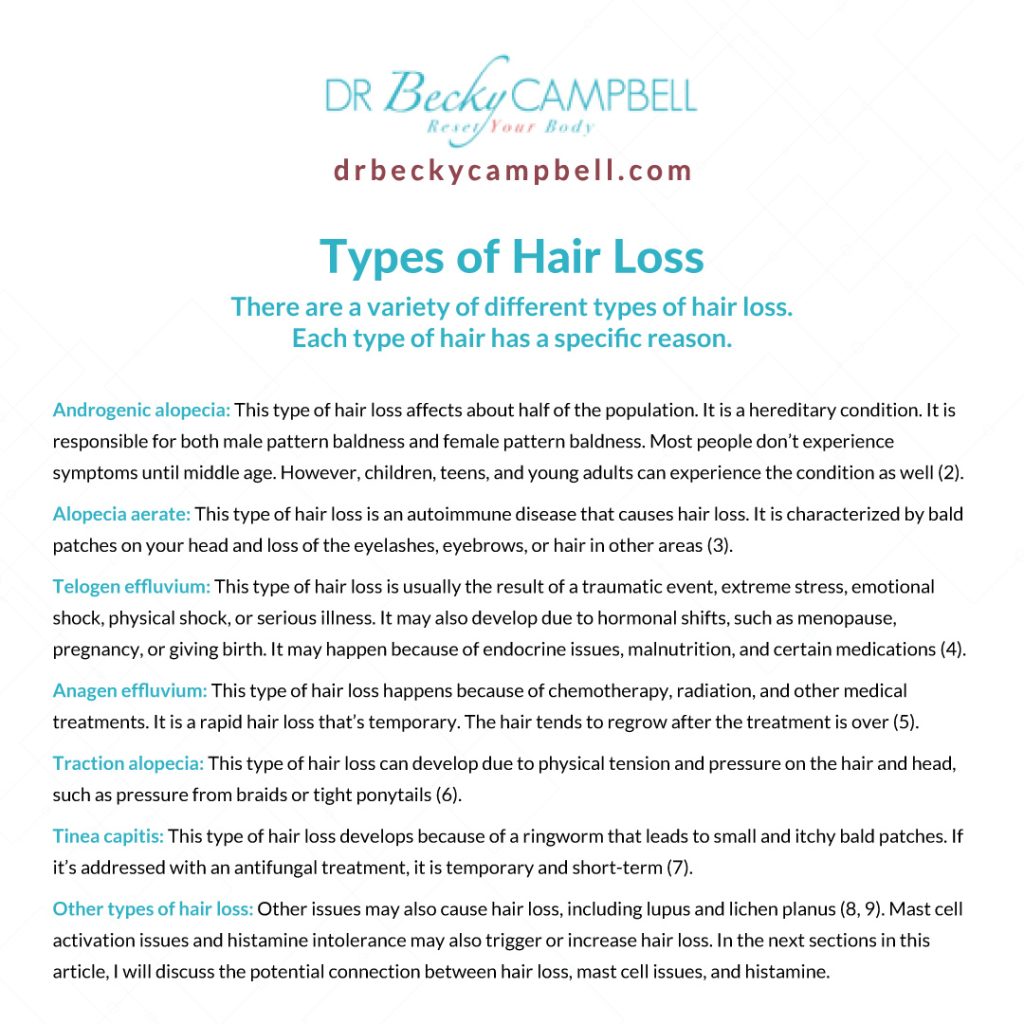
Hair Loss, Mast Cells, and Histamine
Mast cell activation issues and histamine intolerance may trigger or increase hair loss. Before I get into this connection, I want to go over what are your mast cells, what histamine is, why you need them, and potential problems.
What Is Mast Cell Activation Syndrome
Your mast cells are essential for your immune and overall health. They are white blood cells that store histamine and other inflammatory mediators. They are located in your digestive tract, respiratory tract, urinary tract, skin, and blood.
When your body is attacked by an allergen, toxin, or other triggers, it will lead to mast cell activations. Your mast cells will cause an allergic response and release histamine along with other chemicals. This protective mechanism is essential for your immune health.
However, if your mast cells become dysregulated or overactive, it can turn into a serious issue. Mast cell activation syndrome (MCAS) means that your mast cells release too much histamine and other chemicals. This can lead to a variety of symptoms and affect your entire body. You may develop MCAS due to a variety of triggers, including mold, chemicals, toxins, heavy metals, allergens, medications, infections, viruses, food, and alcohol.
Symptoms of MCAS may include the following:
- Rashes
- Hives
- Itching
- Heart palpitations
- Low blood pressure
- Headaches
- Chest pain
- Weight changes, including rapid weight loss or weight gain
- Digestive trouble, including diarrhea, nausea, and vomiting
- Loss of appetite or low appetite
- Anxiety
- Fatigue
- Vision changes
- Weakness
- Dizziness
As you will learn later, MCAS may also lead to hair loss.
What Is Histamine Intolerance
Histamine gets a bad rap because of antihistamine medications. The ‘anti’ part of antihistamine, may make you believe that histamine is bad. It’s the opposite. Histamine is absolutely necessary for your health.
It is a chemical that supports your body in getting rid of allergens. It also supports your digestion by releasing hydrochloric acid to break down food and your brain health by serving as a chemical messenger. Too much of a good thing is rarely good, though.
If your body is releasing too much histamine and your body is unable to keep up and break down all the excess histamine, it will lead to histamine buildup. Histamine intolerance means that there is too much histamine in your body.
Under normal circumstances, your body sends enzymes to break down excess histamine and prevent build-up. If you have too much histamine or you don’t have enough of these enzymes, it won’t be able to break everything down, which can lead to histamine intolerance. Histamine intolerance can affect your entire body and lead to widespread symptoms.
Symptoms of histamine intolerance include the following:
- Itchy skin, eyes, ears, and nose
- Eczema or other types of dermatitis
- Hives
- Red eyes
- Facial swelling
- Crawling sensation on the skin or the scalp
- Tightness in the throat
- Difficulty regulating body temperature
- Sudden drop in blood pressure when standing up
- Low blood pressure
- Fast heart rate
- Heart palpitations
- Dizziness or vertigo
- Difficulty falling asleep or sleep issues
- Fatigue
- Confusion
- Brain fog
- Irritability
- Anxiety or panic attacks
- Congestion or runny nose
- Seasonal allergies
- Asthma
- Migraines and headaches
- Hair loss
- Acid reflux
- Diarrhea
- Abnormal menstrual cycle
- Premenstrual syndrome (PMS)
Mast Cell Activation Syndrome vs Histamine Intolerance
I believe that MCAS is the primary cause of histamine intolerance, but it may not be the cause for everyone. But considering the similarities between the symptoms of MCAS and histamine intolerance, you may feel confused.
Are these two conditions the same? No, they are not the same. Though symptoms of MCAS and histamine intolerance can be similar and are both caused by high levels of histamine, MCAS and histamine intolerance are not the same.
If your body has too much histamine and it can’t handle it, you may develop histamine intolerance. This usually happens due to a high-histamine diet. However, stress, poor sleep, environmental toxins, certain medications, and other factors may add to your histamine bucket as well. If your body has trouble breaking down the extra histamine, it will lead to histamine build-up and histamine intolerance.
While histamine intolerance simply means you have too much histamine in your body, you develop MCAS if your mast cells get triggered all the time. If you have MCAS, your mast cells get triggered by mold, allergens, or other triggers, they will release histamine and other chemicals into your body. Increased histamine release from mast cell activation can lead to too much histamine in your body. This can lead to a wide range of symptoms that are very similar to the symptoms of histamine intolerance.
As I mentioned before, MCAS is one of the primary causes of histamine intolerance. However, it is not the cause for everyone. You can have histamine intolerance without MCAS. You can also have MCAS without histamine intolerance. But you may have both MCAS and histamine intolerance. I see patients who have both conditions regularly (1, 2, 3).
If you have both conditions, your body will have increased difficulty breaking down the excess histamine. This can lead to widespread symptoms of MCAS and histamine intolerance. To figure out, whether you are dealing with symptoms of MCAS, histamine intolerance, or both. I recommend working with a functional medicine doctor who is well-versed in both conditions. (Tips: My team and I would love to help you with your diagnosis and treatment. Schedule your consultation here.)
To learn more about MCAS and histamine intolerance, I recommend reading my book, The 4-Phase Histamine Reset Plan: Getting to the Root of Migraines, Eczema, Vertigo, Allergies and More.
The Link Between Hair Loss, Mast Cell Activation, and Histamine
Your mast cells and mast cell activation issues may play a role in hair loss in a variety of different ways.
Male and Female Pattern Hair Loss Due to Inflammation
According to a 2010 review published in the Journal of Inflammatory Research, inflammation may be an underlying factor behind the male pattern and female pattern hair loss (11). Furthermore, according to the review, high levels of inflammation and mast cell infiltration have been found in about one-third of tissue samples in male pattern hair loss.
According to one of the studies, perifollicular inflammation may be present in almost three-fourths of all male pattern and female pattern hair loss samples. Based on these results, researchers believe that addressing underlying inflammation and mast cell activation may help to reduce male pattern and female pattern hair loss.
Autoimmune Hair Loss due to Stress and Immune Dysfunction
According to a 2018 review published in Skin Appendage Disorders, immune dysfunction and high stress, can increase the risk of autoimmune hair loss issues, such as lichen planopilaris and alopecia areata (12). Immune dysfunction and immune-mediated inflammation can increase mast cell degranulation, perifollicular inflammation, pro-inflammatory cytokine release, and related hair loss.
Stress itself may lead to temporary hair loss. However, researchers found that chronic stress is often the trigger of mast cell degranulation and inflammation. This may lead to an autoimmune reaction and autoimmune hair loss.

Hair Loss Due to Mast Cell Degranulation
According to a 2017 study published in the International Journal of Trichology, mast cell degranulation may increase the risk of telogen effluvium (13). In this study, researchers compared the scalp biopsies of patients with various different hair loss. They found higher levels of mast cells in telogen effluvium than in other types of hair loss they examined.
Other studies, including a 2014 study published in PLoS One and a 2003 study published in the Journal of Cutaneous Pathology, have found increased mast cell degranulation and inflammation in alopecia areata and scarring alopecia as well (14, 15). According to a 2020 review published in the Journal of Biomedical Science, mast cell activation may also increase androgenic alopecia, cicatricial alopecia, and other hair loss disorders (16).
Hair Loss and Skin Microbiome
According to a 2019 study published in the Journal of Allergy and Clinical Immunology, your skin microbiome may also play a role in mast cell-related hair loss (17). The study found that the scalp microbiome may activate toll-like receptors and trigger progenitor cells from a type of skin cell called keratinocytes to become mast cells.
They also noticed a change and an increase in mast cell behavior, immune inhibition, and increased inflammation. They found that in alopecia areata, a change in the skin microbiome of the scalp can interfere with immune cells, leading to hair loss. On the other hand, they found that in androgenic alopecia, the skin microbiome interferes with how mast cells behave, leading to symptoms and disease.

Hair Loss and Histamine Intolerance
A 2022 study published in Experimental Dermatology has linked high histamine levels to scalp inflammation and scalp or hair issues (18). A 2021 review published in Dermatology and Therapy has found that using antihistamines may help to reduce symptoms and improve hair growth in certain hair loss, such as androgenic alopecia (19).
These results indicate that histamine intolerance can increase the risk of hair loss. This, however, doesn’t mean that antihistamines are the answer. In the next sections, I will discuss potential problems with antihistamines and what to do instead.
Hair Loss, Estrogen Dominance, and Histamine
Estrogen Dominance may also play a role in hair loss. According to a 2012 study published in PLoS One, estrogen can lead to hair cycle retardation (19). According to a 2012 study published in the British Journal of Dermatology, excess estrogen may increase hair loss due to an ESR2 gene variation (20).
Noting the potential role of estrogen dominance here is important because estrogen dominance and histamine intolerance are often linked. I’ve written about the histamine-estrogen connection in this article. Histamine, estrogen, and progesterone are closely linked in your body. They need to be in balance for ideal health and function.
Estrogen plays many roles in your body, including stimulating mast cells to make more histamine. By stimulating your mast cells, estrogen can increase the chances of a histamine response and histamine intolerance. Though men can also develop estrogen dominance and histamine intolerance, women are at a higher risk. This is not surprising since women tend to have more estrogen than men, which can increase the risk of histamine intolerance as well.
A 2012 study published in Frontiers in Immunology has found that estradiol, a form of estrogen, can affect mast cells and trigger asthma (21). According to a 2013 study published in Current Opinions in Allergy and Clinical Immunology, estrogen may increase the risk of histamine-triggered allergies and asthma (22).
If your estrogen levels are normal and you are leading a healthy lifestyle, keeping your histamine levels at bay should not be an issue. However, if you are dealing with estrogen dominance and/or histamine intolerance, this can turn into a vicious cycle.
Estrogen will trigger your mast cells to release histamine. Increased histamine levels will lead to higher estrogen levels. As a response, all that excess estrogen will prompt your mast cells to create even more histamine, which will lead to even more estrogen in your body. As this cycle continues, it will lead to more and more symptoms of histamine intolerance and estrogen dominance. The connection between estrogen dominance and histamine intolerance may explain increased hair loss.

What About Antihistamine for Hair Loss?
As I mentioned, according to a 2021 review published in Dermatology and Therapy, that using antihistamines may help to reduce symptoms and improve hair growth in certain hair loss, such as androgenic alopecia (23). According to a 2021 study published in the Journal of the American Academy of Nutrition, antihistamines, corticosteroids, and cryotherapy combined may be effective for hair loss (24). According to a 2021 study published in the Journal of the American Academy of Nutrition has a 2018 review published in the Journal of Investigative Dermatology Symposium Proceedings, antihistamines may help to reduce hair loss by targeting mast cell-related histamine release (25).
However, using antihistamines may not be a smart idea. Antihistamines are simply a bandaid that may offer a temporary solution but may also lead to further issues down the line. Antihistamines can interfere with your body’s ability to create enzymes that break down histamine. They may decrease your body’s ability to handle histamine and histamine intolerance by itself.
Moreover, like many medications, antihistamines can cause uncomfortable side effects. Supporting your body’s ability to decrease mast cell activation and lower histamine intolerance naturally is a much better and safer idea. In the next section, I will share how to support your body in reducing mast cell activation and histamine intolerance through diet, supplementation, and lifestyle. This way, you may reduce hair loss naturally.
Natural Strategies for Hair Loss, Mast Cell Activation, and Histamine Intolerance
Reducing histamine intolerance and addressing mast cell activation issues may help to reduce hair loss and improve your hair health. Here is what I recommend:
Eat an Anti-Inflammatory & Low-Histamine Diet
I recommend following a low-histamine, anti-inflammatory, nutrient-dense, whole foods diet. Remove inflammatory foods, including refined sugar, refined oils, canned and processed meat, artificial ingredients, junk food, and highly processed foods. Remove high-histamine foods. Follow a nutrient-dense, anti-inflammatory, and low-histamine diet rich in greens, vegetables, herbs, spices, fruits, healthy fats, and organic meat. Try new recipes. I recommend all the low-histamine recipes in The 4-Phase Histamine Reset Plan: Getting to the Root of Migraines, Eczema, Vertigo, Allergies and More and my recipe books, Fifty One Low Histamine Air Fryer Recipes and Low Histamine Cooking in Your Instant Pot.
Remove Certain Histamine-Increasing Foods
I recommend certain foods from your diet that can increase your histamine load. High-histamine foods that you should avoid include age cheese (e.g., goat cheese), citrus fruits, canned and cured meat (e.g., pepperoni, salami, bacon, lunch meat, hot dogs, and canned meat), dried fruits (e.g. apricots, dates, raisins, figs, and prunes), fermented foods (e.g., kefir, sauerkraut, soy sauce, and vinegar), fermented alcohol (e.g., beer, wine, and champagne), legumes (e.g., beans, lentils, soy, and peanut), certain nuts (e.g., cashew and walnuts), soured foods (e.g., buttermilk, sour milk, sour cream), smoked fish and certain types of fish (e.g., mackerel, mahi-mahi, anchovies, sardines, tuna, and fish sauce), certain vegetables (e.g., avocados, tomatoes, eggplant, and spinach), vinegar-containing foods (e.g., pickles and olives), and all overly processed foods because of the high histamine load from preservatives.
Avoid histamine-liberating foods that are low in histamine but trigger histamine release in your body, including alcohol, nuts, bananas, papaya, pineapple, strawberries, tomatoes, chocolates, wheat germ, cow’s milk, shellfish, and many artificial preservatives and dyes. Avoid DAO enzyme-blocking foods and drinks, such as alcohol, black tea, green tea, mate tea, and energy drinks.
Try Some Mast Cell-Stabilizing and Histamine-Reducing Foods and Supplements
I recommend adding some specific foods to your diet to reduce histamine and stabilize your mast cells. Quercetin helps to reduce histamine. Add quercetin-rich foods to your diet, such as grapes, apples, cranberries, black plums, cherries, black currants, chokeberries, blueberries, olive oil, cruciferous vegetables, kale, romaine lettuce, chicory greens, red leaf lettuce, cabbage, sprouts, asparagus, snap peas, peppers, and red onion. Furthermore, you may also try a quercetin supplement.
You may try some foods that help to stabilize your mast cells, including onion, peaches, nettle, apples, chamomile, moringa, watercress, Thai ginger, and fiber-rich foods. You may also try a DAO enzyme supplement to support histamine breakdown and HistoRelief. HistoRelief is a synergistic blend of nutrients that provides natural support to balance your immune response. This blend features Tinofend®, a patented and clinically researched extract derived from the plant Tinospora cordifolia, which has a powerful ability to support immune regulation and immune response. As a result, it boosts your body’s ability to fight interstitial cystitis symptoms. It includes quercetin, nettle leaf, vitamin C, and bicarbonate salt to help inhibit histamine release, support normal histamine metabolism, and improve immune health.
Move Your Body
A lack of movement can also increase the risk of histamine intolerance. Moving your body is a great way to reduce stress, improve detoxification, boost your mood, and support your overall health. Stay active throughout the day by dancing to your favorite songs, taking a stroll in the park, stretching regularly, and playing with your kids or pets. Exercise at least 20 to 30 minutes five days a week and move your body regularly. I recommend getting 10 to 15K steps in a day if you can. Add resistance and strength training to your routine.
Reduce Stress and Improve Sleep
Stress and poor sleep are major contributing factors to histamine intolerance and can trigger MCAS as well. Stress may also contribute to hair loss, telogen effluvium specifically. To reduce stress and improve sleep, I recommend practicing breathwork, meditation, positive affirmation, journaling, yoga, grounding, and time in nature for stress and anxiety reduction. Taking an Epsom salt bath is another great way to relax your muscles, calm your mind, and detoxify your body. Make sure to sleep at least 7 to 9 hours a night.
Improve Your Gut Health
Your gut health affects your entire body. Poor gut flora can increase your risk of histamine intolerance and related health issues, including hair loss. Poor gut health can also increase hormonal imbalance and estrogen dominance-related hair loss. Along with a gut-friendly anti-inflammatory diet, I recommend that you take a high-quality probiotics supplement to support your gut microbiome balance.
Remove Toxins
Toxin overload can increase chronic inflammation, mast cell activation, histamine release, and histamine intolerance. I recommend reducing your toxin load. Drink purified water to avoid toxins from your tap water. Use a high-quality air filtration system for better indoor air. Reduce the use of plastic and avoid BPA completely. Choose glass, bamboo, wood, organic cotton, silicon, and other natural alternatives instead of plastic. Avoid conventional cleaning, hygiene, body, and beauty products as they are loaded with chemicals. Choose natural, organic, and homemade options instead. Avoid overly processed food products that can contain artificial ingredients.
Remove Xenoestrogens
Xenoestrogens are artificial hormone-mimicking compounds that mimic the effects of estrogen and contribute to estrogen excess or prevent the beneficial effects of natural estrogen in your body. Xenoestrogens can increase estrogen dominance and related issues, including histamine intolerance and related hair loss. I recommend that you remove xenoestrogen-containing products, including conventional cleaning, body, and beauty products, and choose natural and organic alternatives.
Try Some Topicals and Supplements for Hair Health and Hair Loss
There are a number of topicals and supplements you may try to reduce hair loss and improve hair and scalp health. Research, including a 2021 study published in Scientific Reports and a 2015 study published in Skinmed, has shown that massaging coconut oil or geranium on your scalp may help to improve hair growth, hair health, scalp health, and scalp microbiome health (26, 27). A 2012 study published in The Journal of Dermatology has found that using onion juice may support circulation in the scalp and boost hair growth (28). According to a 2017 study published in BMC Complementary Medicine and Therapies, geranium oil may also be great against hair loss (29).
According to a 2012 study published in the Journal of Clinical Aesthetic Dermatology, biotin supplementation may help to reduce hair loss (30). A 2021 review published in the Journal of Cosmetic Dermatology has found that vitamin D may also help to reduce hair loss (31). According to a 2015 study published in the Journal of Cosmetic Dermatology, supplementing with antioxidants and omega-3 fatty acids for 6 months may decrease hair loss in women (32).
A 2009 study published in the Annals of Dermatology has found that zinc supplementation may be helpful for hair loss (33). According to a 2015 study published in the Journal of Medicinal Food, red ginseng extract may also improve hair growth and hair health (34).
According to a 2019 review published in Dermatology and Therapy, deficiencies in vitamin B, C, D, and E, iron, zinc, and selenium may all increase the risk of hair loss (35). Thus it may be a good idea to check for deficiencies in any of these vitamins and minerals and adjust your diet and supplementation protocol accordingly.
Final Thoughts
Hair loss is a fairly common problem, especially in older people and men. However, hair loss can occur at any age due to a variety of issues, including stress, hormonal changes, medications, and health issues. Mast cell issues and histamine intolerance can both play a role in hair loss. If you are dealing with hair loss, I recommend looking into potential underlying mast cells and histamine-related issues.
If you are dealing with symptoms of MCAS or histamine intolerance, I invite you to schedule a consultation with us. We can help identify the root cause of your condition and recommend a personalized treatment plan to repair your body and regain your health and well-being. Schedule your consultation here. You can also get started on your own with my Histamine Online Program.
Sources:
- Do you have hair loss of hair shedding. AAD. Link Here
- Ho CH, Sood T, Zito PM. Androgenetic Alopecia. [Updated 2022 Aug 25]. In: StatPearls [Internet]. Treasure Island (FL): StatPearls Publishing; 2022 Link Here
- Darwin E, Hirt PA, Fertig R, Doliner B, Delcanto G, Jimenez JJ. Alopecia Areata: Review of Epidemiology, Clinical Features, Pathogenesis, and New Treatment Options. Int J Trichology. 2018 Mar-Apr;10(2):51-60. doi: 10.4103/ijt.ijt_99_17. PMID: 29769777
- Asghar F, Shamim N, Farooque U, Sheikh H, Aqeel R. Telogen Effluvium: A Review of the Literature. Cureus. 2020 May 27;12(5):e8320. doi: 10.7759/cureus.8320. PMID: 32607303
- Saleh D, Nassereddin A, Cook C. Anagen Effluvium. [Updated 2022 Aug 8]. In: StatPearls [Internet]. Treasure Island (FL): StatPearls Publishing; 2022 Link Here
- Pulickal JK, Kaliyadan F. Traction Alopecia. [Updated 2022 Aug 8]. In: StatPearls [Internet]. Treasure Island (FL): StatPearls Publishing; 2022 Jan-. Link Here
- Al Aboud AM, Crane JS. Tinea Capitis. [Updated 2022 Aug 8]. In: StatPearls [Internet]. Treasure Island (FL): StatPearls Publishing; 2022 Jan-. Link Here
- Batra P. Skin Appendage Disord 2020;6:125–129 Link Here
- Concha JSS, Werth VP. Alopecias in lupus erythematosus. Lupus Sci Med. 2018 Oct 25;5(1):e000291. doi: 10.1136/lupus-2018-000291. PMID: 30397497
- Nadia Peyravian The Inflammatory Aspect of Male and Female Pattern Hair Loss. 2020. Link Here
- Azzawi S, Penzi LR, Senna MM. Immune Privilege Collapse and Alopecia Development: Is Stress a Factor. Skin Appendage Disord. 2018 Oct;4(4):236-244. doi: 10.1159/000485080. Epub 2017 Dec 20. PMID: 30410890
- Grace SA, Sutton AM, Abraham N, Armbrecht ES, Vidal CI. Presence of Mast Cells and Mast Cell Degranulation in Scalp Biopsies of Telogen Effluvium. Int J Trichology. 2017 Jan-Mar;9(1):25-29. doi: 10.4103/ijt.ijt_43_16. PMID: 28761261
- Bertolini M, Zilio F, Rossi A, Kleditzsch P, Emelianov VE, Gilhar A, Keren A, Meyer KC, Wang E, Funk W, McElwee K, Paus R. Abnormal interactions between perifollicular mast cells and CD8+ T-cells may contribute to the pathogenesis of alopecia areata. PLoS One. 2014 May 15;9(5):e94260. doi: 10.1371/journal.pone.0094260. PMID: 24832234
- Xu X, Solky B, Elenitsas R, Cotsarelis G. Scarring alopecia associated with mastocytosis. J Cutan Pathol. 2003 Oct;30(9):561-5. doi: 10.1034/j.1600-0560.2003.00093.x. PMID: 14507404
- Chen, CL., Huang, WY., Wang, E.H.C. et al. Functional complexity of hair follicle stem cell niche and therapeutic targeting of niche dysfunction for hair regeneration. J Biomed Sci 27, 43 (2020). Link Here
- Wu CC, Kim JN, Wang Z, Chang YL, Zengler K, Di Nardo A. Mast cell recruitment is modulated by the hairless skin microbiome. J Allergy Clin Immunol. 2019 Jul;144(1):330-333.e6. doi: 10.1016/j.jaci.2019.02.033. Epub 2019 Mar 27. PMID: 30928651
- Suhahar V. Relationship between scalp histamine levels and dandruff within an Indian population: A confirmation study using LC/MS/MS method. 2022. Link Here
- Hu HM, Zhang SB, Lei XH, Deng ZL, Guo WX, Qiu ZF, Liu S, Wang XY, Zhang H, Duan EK. Estrogen leads to reversible hair cycle retardation through inducing premature catagen and maintaining telogen. PLoS One. 2012;7(7):e40124. doi: 10.1371/journal.pone.0040124. Epub 2012 Jul 5. PMID: 22792225
- Yip L, Zaloumis S, Irwin D, Severi G, Hopper J, Giles G, Harrap S, Sinclair R, Ellis J. Association analysis of oestrogen receptor beta gene (ESR2) polymorphisms with female pattern hair loss. Br J Dermatol. 2012 May;166(5):1131-4. doi: 10.1111/j.1365-2133.2011.10702.x. Epub 2012 Mar 5. PMID: 22014031
- Zierau O, Zenclussen AC, Jensen F. Role of female sex hormones, estradiol and progesterone, in mast cell behavior. Front Immunol. 2012 Jun 19;3:169. doi: 10.3389/fimmu.2012.00169. PMID: 22723800
- Bonds RS, Midoro-Horiuti T. Estrogen effects in allergy and asthma. Curr Opin Allergy Clin Immunol. 2013 Feb;13(1):92-9. doi: 10.1097/ACI.0b013e32835a6dd6. PMID: 23090385
- Hsieh, CY., Tsai, TF. Use of H-1 Antihistamine in Dermatology: More than Itch and Urticaria Control: A Systematic Review. Dermatol Ther (Heidelb) 11, 719–732 (2021). Link Here
- Lee YB, Lee WS. Efficacy of antihistamines in combination with topical corticosteroid and superficial cryotherapy for treatment of alopecia areata: A retrospective cohort study. J Am Acad Dermatol. 2021 Apr;84(4):1152-1154. doi: 10.1016/j.jaad.2020.06.1026. Epub 2020 Jul 15. PMID: 32682023
- Natasha Atanaskova Mesinkovska, Emerging Unconventional Therapies for Alopecia Areata, Journal of Investigative Dermatology Symposium Proceedings. 2018. Link Here
- Saxena, R., Mittal, P., Clavaud, C. et al. Longitudinal study of the scalp microbiome suggests coconut oil to enrich healthy scalp commensals. Sci Rep 11, 7220 (2021). Link Here
- Panahi Y, Taghizadeh M, Marzony ET, Sahebkar A. Rosemary oil vs minoxidil 2% for the treatment of androgenetic alopecia: a randomized comparative trial. Skinmed. 2015 Jan-Feb;13(1):15-21. PMID: 25842469
- Boisvert WA, Yu M, Choi Y, Jeong GH, Zhang YL, Cho S, Choi C, Lee S, Lee BH. Hair growth-promoting effect of Geranium sibiricum extract in human dermal papilla cells and C57BL/6 mice. BMC Complement Altern Med. 2017 Feb 13;17(1):109. doi: 10.1186/s12906-017-1624-4. PMID: 28193226
- Onion Juice (Allium cepa L.), A New Topical Treatment for Alopecia Areata. 2014. Link Here
- Glynis A. A Double-blind, Placebo-controlled Study Evaluating the Efficacy of an Oral Supplement in Women with Self-perceived Thinning Hair. J Clin Aesthet Dermatol. 2012 Nov;5(11):28-34. PMID: 23198010
- Saini K, Mysore V. Role of vitamin D in hair loss: A short review. J Cosmet Dermatol. 2021 Nov;20(11):3407-3414. doi: 10.1111/jocd.14421. Epub 2021 Sep 22. PMID: 34553483
- Le Floc'h C, Cheniti A, Connétable S, Piccardi N, Vincenzi C, Tosti A. Effect of a nutritional supplement on hair loss in women. J Cosmet Dermatol. 2015 Mar;14(1):76-82. doi: 10.1111/jocd.12127. Epub 2015 Jan 8. PMID: 2557327
- Park H, Kim CW, Kim SS, Park CW. The therapeutic effect and the changed serum zinc level after zinc supplementation in alopecia areata patients who had a low serum zinc level. Ann Dermatol. 2009 May;21(2):142-6. doi: 10.5021/ad.2009.21.2.142. Epub 2009 May 31. PMID: 20523772
- Park GH, Park KY, Cho HI, Lee SM, Han JS, Won CH, Chang SE, Lee MW, Choi JH, Moon KC, Shin H, Kang YJ, Lee DH. Red ginseng extract promotes the hair growth in cultured human hair follicles. J Med Food. 2015 Mar;18(3):354-62. doi: 10.1089/jmf.2013.3031. Epub 2014 Nov 14. PMID: 25396716
- Almohanna HM, Ahmed AA, Tsatalis JP, Tosti A. The Role of Vitamins and Minerals in Hair Loss: A Review. Dermatol Ther (Heidelb). 2019 Mar;9(1):51-70. doi: 10.1007/s13555-018-0278-6. Epub 2018 Dec 13. PMID: 30547302

Chemical Intolerance, Mast Cells, and Histamine: What’s the Connection?
Are you experiencing eczema, congestion, sinus issues, coughing, frequent headaches and migraines, fatigue, brain fog, joint and muscle pain, digestive issues, or mood changes? Are you still using conventional products filled with chemicals and toxins? You may have chemical intolerance.
Chemical intolerance (CI) or multiple chemical sensitivity (MCS) is a chronic and complex health condition characterized by widespread symptoms related to chemical exposure, often at a level that is seemingly not problematic for most people. Chemical intolerance can lead to physical, psychological, emotional, social, and economic consequences. It can disrupt and limit your daily life, job performance, school work, family life, social activities, and mental health. It may even lead to disability.
So I just have to remove all chemicals from my life, right?! It’s not that simple. You have to look at the root cause of your issues. While chemicals trigger your symptoms, you have to understand the mechanism behind chemical intolerance to address the real problem. New research has found that your mast cells may play a role in chemical intolerance. Today, I want to talk about the connection between chemical intolerance and mast cell activation, and how to address them.
In this article, you will learn about chemical intolerance. You will learn what chemical intolerance is, what are the symptoms of chemical intolerance, and what triggers it. You will learn about mast cell activation syndrome (MCAS) and histamine intolerance. You will understand their symptoms and what’s the difference between the two. Then I will discuss the connection between chemical intolerance, mast cells, and histamine. Finally, I will offer some strategies to address chemical intolerance and MCAS and regain your health and well-being naturally.
What Is Chemical Intolerance?
Our world is full of chemicals and toxins. And they are not good for us. Coming in contact with chemicals through touch, air, food, or water, can have detrimental health effects. Though you may not notice any issues right away, long-term or high exposure to certain chemicals and toxins can lead to a variety of health issues, including allergies, asthma, birth defects, infant brain development issues, reproductive issues, obesity, cardiovascular disease, cancer, diabetes, and behavioral health issues (1).
These are serious enough issues to make you feel concerned. But what if, on top of these long-term health risks, chemical exposure makes your day-to-day life intolerable?
Most of us don’t experience serious immediate reactions to chemicals. Some of us are allergic or sensitive to a few things. But some people have a serious issue with chemical exposure due to chemical intolerance.
Chemical intolerance (CI) is often referred to as multiple chemical sensitivity (MCS). It is a chronic health condition characterized by a long list of complex chronic, recurring, and possibly severe symptoms due to low-level chemical exposure. When I say low-level exposure, I mean a level that is seemingly unproblematic for most of the population (at least in the short run) (2, 3, 4).
Symptoms of chemical intolerance can affect various tissues and multiple organs across your body. This also means that symptoms of chemical intolerance can be widespread. You may experience symptoms that are seemingly unrelated or that you can’t explain.
Chemical intolerance can lead to physical, psychological, emotional, social, and economic consequences. It’s not unusual for symptoms of chemical intolerance to become so problematic to seriously affect or limit your daily life, school work, job performance, family life, social life, and mental health. In the most severe cases, chemical intolerance may lead to disability and other serious health issues.
Symptoms of Chemical Intolerance
Chemical intolerance can affect multiple organs across your body and can lead to widespread symptoms. You may notice that symptoms of chemical intolerance can resemble or overlap with symptoms of histamine intolerance or mast cell activation syndrome (MCAS). I will get into the connection between chemical intolerance, mast cells, and histamine later. But first, let’s look at the symptoms of chemical intolerance.
If you have chemical intolerance, you may experience any or all of the following symptoms:
- Headaches or migraines
- Rashes, eczema, or other skin problems
- Congestion, runny nose, sore throat, coughing, sinus pain, or other respiratory symptoms
- Dry, sore, or watery eyes
- Ear aches
- Symptoms of asthma
- Breathing problems, including chest pain and coughing
- Brain fog
- Confusion, memory problems, trouble concentrating
- Fatigue and sleep issues
- Muscle aches and pain
- Joint pain or stiffness
- Bloating, gas, diarrhea, constipation, abdominal pain, or other digestive issues
- Changes in heart rhythm
- Mood changes
- Mental health symptoms, including anxiety, depression, and hyperactivity
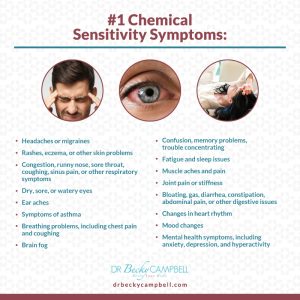
Triggers of Chemical Intolerance
There are so many chemicals in our world. You may not be surprised that a long list of chemicals can trigger chemical intolerance.
Potential triggers of chemical intolerance may include but are not limited to the following:
- Auto fuel and exhaust
- Tobacco smoke
- Smoke from a wood-burning stove
- Forrest fire and volcano ash
- Asphalt pavement
- Chlorine
- Body wash
- Shampoo
- Soaps
- Perfumes or cologne
- Aftershave
- Deodorant
- Hair spray
- Nail polish and nail polish remover
- Makeup
- Other conventional personal hygiene, body, and beauty products
- Varnish
- Tile cleaner
- Window cleaner
- Toilet cleaner
- Bleach
- Drain cleaners
- Other conventional cleaning products
- Paint
- Plastics
- New carpet
- Air fresheners
- Restroom deodorizers
- Insecticide
- Pesticides
- Herbicides
- Food additives
- Plastics
- Markers
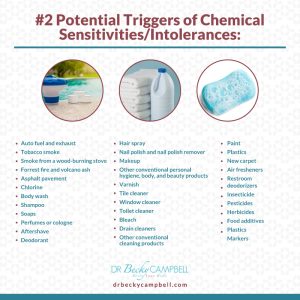
Mast Cells and Histamine
As you’ve noticed, symptoms of chemical intolerance can be similar to symptoms of MCAS and/or histamine intolerance. There is a good reason for that. Your mast cells play a role in chemical intolerance. I see many patients with histamine intolerance and MCAS who also struggle with chemical intolerance. But before I get into the connection between chemical intolerance and your mast cells, I want you to understand some terms around mast cells and histamine.
What Is Mast Cell Activation Syndrome
Your mast cells are white blood cells found in your digestive tract, respiratory tracts, skin, reproductive organs, surrounding nerves, and blood. They store inflammatory mediators, including histamine, which means that they play an essential role in your immune health and immune response. When your body encounters allergens, toxins, or other foreign invaders, your mast cells will trigger an allergic response. This allergic response triggers the release of histamine and other chemicals to protect your body.
This mast cell activation is there as a protective mechanism to help fight allergens and foreign invaders. However, overactivation of your mast cells and other mast cell activation issues can become a problem.
Mast cell activation syndrome (MCAS) is a complex health issue. It involves and affects a number of different systems in your body. By affecting so many parts of your body, it can lead to a variety of widespread symptoms (5, 6, 7, 8).
Symptoms of MCAS
Symptoms of MCAS will impact more than one part or system of your body. Symptoms may vary from person to person. They may be anywhere from mild to severe. Symptoms of MCAS may include:
- Rashes
- Hives
- Itching
- Heart palpitations
- Low blood pressure
- Headaches
- Chest pain
- Weight changes, including rapid weight loss or weight gain
- Digestive trouble, including diarrhea, nausea, and vomiting
- Loss of appetite or low appetite
- Anxiety
- Fatigue
- Vision changes
- Weakness
- Dizziness
Triggers of MCAS
Triggers of mast cell activation may include:
- Allergens
- Mold
- Toxins
- Heavy metals
- Chemicals
- Medications
- Infections
- Viruses
- Food
- Alcohol
- Physical and psychological stress
Common Causes of MCAS
There are 3 types of MCAS (12, 13):
- Primary MCAS: Primary MCAS may develop due to a genetic mutation called the KIT D816V mutation. People with this type of MCAS often have mastocytosis, which means that your body is making too many mast cells. Mastocytosis is a very rare condition.
- Secondary MCAS: Secondary MCAS may develop because of an IgE-mediated food or environmental allergen, another immunologic problem, or hypersensitivity to a trigger.
- Idiopathic MCAS: Idiopathic MCAS is a term used when the exact cause of MCAS is unclear or cannot be determined.
What Is Histamine Intolerance
Histamine is a chemical produced by your body, which plays an essential role in your immune health and other areas of your body. Most people have only heard about histamine from taking antihistamines for allergies. The anti part of antihistamines can be confusing. Many people think that histamine is bad when in fact, histamine is critical for your health and well-being.
Histamine helps your body to get rid of allergens. It also supports your digestion by releasing hydrochloric acid to break down food and bacteria. It serves an essential role in your brain health by serving as a chemical messenger between your brain and the rest of your body.
Even though histamine is necessary for your health, you don’t want too much of it. Too much histamine can turn into a serious problem. f your body is releasing too much histamine, but it’s unable to break down all the excess histamine, histamine build-up occurs.
Histamine intolerance means that there is too much histamine in your body. In a healthy body, there are enzymes, including the DAO enzyme, to break down excess histamine and prevent build-up. But if you have too much histamine due to high-histamine foods, mast cell activation issues, the lack of DAO enzyme, stress, or other reasons, your body won’t be able to break everything down. This can lead to histamine intolerance.
Histamine intolerance means that your body has too much histamine. Histamine intolerance can affect your entire body, including your gut, brain, lungs, and cardiovascular system. Because histamine intolerance can affect your entire body, it can cause widespread symptoms that don’t seem to connect at first glance (9).
Symptoms of Histamine Intolerance
Symptoms of histamine intolerance may include:
- Headaches and migraines
- Fatigue
- Congestion and runny nose
- Hives
- Rashes, eczema, psoriasis, and other skin symptoms
- Asthma attacks
- Crawling skin sensation on skin or scalp
- Flushing
- Diarrhea and other digestive issues
- Low blood pressure
- Hypertension
- Racing heart rate
- Dizziness or vertigo
- Abnormal menstrual cycle and premenstrual syndrome (PMS)
- Sleep issues
- Brain fog and forgetfulness
- Irritability and mood imbalances
- Anxiety or panic attacks
Are MCAS and Histamine Intolerance the Same?
Though the symptoms of MCAS and histamine intolerance can be similar and may overlap, they are not the same. Having histamine intolerance means that your body has a histamine build-up from high-histamine foods, environmental toxins, stress, and other histamine-promoting factors that your body is unable to handle and break down effectively. Having MCAS means that your mast cells get triggered and activated by allergens, mold, toxins, chemicals, medications, infections, stress, pain, or other triggers leading to an immune response and histamine release.
MCAS and histamine intolerance can co-occur. MCAS can also cause histamine intolerance. In fact, I’ve found that MCAS is one of the most common driving factors for histamine intolerance. I personally have MCAS and had histamine intolerance as a result. I see patients all the time with both MCAS and histamine intolerance.
However, you can develop histamine intolerance without MCAS. You may also have MCAS without symptoms of histamine intolerance. Though you may have both conditions, it is absolutely possible only to have one.
The Link Between Mast Cells and Chemical Intolerance
Now that you understand how your mast cells and histamine work, it’s time to discuss the connection between chemical intolerance and your mast cells. A 1996 research paper published in Toxicology has discussed how chemical intolerance develops (10). Claudia Miller, MD, a tenured professor at the Occupational and Family Medicine department at the University of Texas and author of this paper, has explained that chemical intolerance is a two-stage disease process. This two-stage process is called toxicant-induced loss of tolerance (TILT).
Chemical intolerance first begins with exposure to chemicals. This can be one acute serious exposure or a series of lower-level exposure. A series of low-level is a more common experience for most people. This chemical exposure can cause a loss of tolerance to the chemicals and result in the multi-system symptoms of chemical intolerance.
You may develop chemical intolerance if you have never had a reaction to chemicals or toxins before. In fact, chemical intolerance most commonly develops after repeated low-level chemical exposure or one specific, acute, serious chemical exposure in people who never had an issue with chemicals before.
Practitioners and researchers have connected chemical intolerance to allergies and chemical toxicities. However, until a more recent study, we didn’t have a good understanding of the mechanism of chemical intolerance. A 2021 study published in Environmental Sciences Europe has found that there may be a link between chemical intolerance and mast cell activation, explaining the potential problem behind your symptoms.
Researchers used the Quick Environmental Exposure and Sensitivity Inventory (QEESI). This is a 50-question validated questionnaire and international reference standard used for chemical intolerance screening and diagnosis by both researchers and clinicians. It may also be useful as a self-assessment tool. For this study, researchers use the QUEESI to uncover the connection between chemical intolerance and mast cell activation.
In the study, they looked at 345 patients with reported chemical intolerance, 147 subjects with MCAS, and 76 healthy control participants. Considering how chemicals are one of the main triggers behind MCAS, the results may not be surprising. They found that 59 percent of the patients with MCAS also met the diagnosis criteria for chemical intolerance. Researchers also found that MCAS may increase the likelihood of having chemical intolerance and the risk of developing chemical intolerance in the future. They also noted that the symptoms and characteristics of chemical intolerance and MCAS overlap to a great extent.
Exposure to chemicals can activate but also play havoc with your mast cells. This may lead to mast cell activation problems, chemical intolerance, or both. Since MCAS is a common driving factor of histamine intolerance, MCAS and MCAS-related chemical intolerance can lead to histamine intolerance as well.
This research is a really important step in the right direction allowing healthcare practitioners to uncover the root issues behind chemical intolerance and MCAS and offer effective solutions for complex health issues and multisystem symptoms. Moreover, it helps to understand the potentially dangerous health effects of environmental toxins and chemicals better.

My Recommendations for Chemical Intolerance, Histamine Intolerance, and MCAS
If you are experiencing symptoms of chemical intolerance, MCAS, and histamine intolerance, I have a few recommendations to improve your health naturally.
Reduce Your Triggers
Avoiding exposure to chemicals is the first step if you have chemical intolerance. Avoiding chemicals, heavy metals, and other environmental toxins is also critical for reducing the risk and symptoms of MCAS. Stop using conventional, chemical-filled cleaning, personal hygiene, body, and beauty products, and any products that you find triggering. Choose organic, natural, and homemade alternatives instead. Reduce the use of plastics as much as possible and choose glass, wood, bamboo, silicone, and organic cotton alternatives instead, depending on the product. Drink purified water instead of tap. Buy a high-quality air filtration system to avoid indoor air toxins. Choose organic food or grow your own organic food to avoid exposure to pesticides, herbicides, hormones, and antibiotics.
Detoxify Your Body and Support Your Liver
Supporting your body to cleanse itself from chemicals, toxins, heavy metals, mold, and other triggers is an important step for recovering from MCAS. Drink plenty of purified water, move your body and use an infrared sauna to support detoxification through sweating. Try dry skin brushing and rebounding to support lymphatic cleaning. Support your gut health through an anti-inflammatory, gut-friendly diet and probiotics to support the digestion and absorption of nutrients and elimination through bowel movements.
Support your liver. Your liver is an important detoxifying organ. However, having too much histamine can cause liver enzyme changes and liver dysfunction compromising your entire health. This is why I recommend you support your liver with a variety of strategies, including castor oil packs, that I go over in my book, The 4-Phase Histamine Reset Plan: Getting to the Root of Migraines, Eczema, Vertigo, Allergies and More. I also recommend a liver-supporting supplement, such as Optimal Reset Liver Love.
Try a Low-Histamine Diet and Reduce Your Histamine Bucket
To improve your health by addressing histamine intolerance, I recommend that you follow a nutrient-dense and low-histamine diet. Remove all histamine foods for one to three months, then slowly re-introduce them one by one following The 4-Phase Histamine Reset Plan. If you want to go a step further, you should join my Histamine Reset Online Program.
Remove inflammatory foods, including refined sugar, refined oils, canned and processed meat, artificial ingredients, junk food, and highly processed foods. Avoid high-histamine foods, such as fermented food (eg. sauerkraut, kimchi, fermented vegetables, kombucha, etc), aged food (eg. aged cheese, processed meat, canned fish, etc), over-ripe fruits and vegetables, leftovers, and foods that are naturally high in histamine (eg. avocadoes, eggplant, spinach, dried fruits, etc). Avoid foods that may trigger histamine releases, such as tomatoes, most citrus, bananas, most nuts, and dairy. Avoid foods that may block the DAO-enzyme, including black tea, green tea, alcohol, and energy drinks.
Eat a nutrient-dense, anti-inflammatory, and low-histamine diet rich in greens, vegetables, herbs, spices, fruits, healthy fats, and organic meat. Low-histamine foods include most fresh leafy greens and vegetables, non-citrus fruits, such apples, pear, papaya, and grapes, fresh grass-fed meat, pasture-raised poultry and eggs, and wild-caught fish, olives, extra-virgin olive oil, ghee, coconut oil, leafy herbs, and herbal tea. My book, The 4-Phase Histamine Reset Plan includes an extensive list of foods that you can eat and should avoid on a low-histamine diet.
In addition to these recipes, I recommend all the low-histamine recipes in my other two low histamine cookbooks, Low Histamine Cooking in Your Instant Pot and Fifty One Low Histamine Air Fryer Recipes. They are all simple, easy to make, low-histamine, gluten-free, Paleo-friendly, and super healthy. The instant pot and air fryer are amazing tools to help cook food quickly so that it does not release a lot of histamine. The longer you cook food, the more histamine it releases.
Additionally, improve your lifestyle to reduce your histamine bucket. Stress, poor sleep, environmental toxins, and other poor lifestyle habits can increase histamine intolerance. I’ve already covered the importance of reducing your toxin load. Additionally, I recommend that you reduce your stress levels, improve your sleep, and move your body regularly.
To reduce stress, I recommend meditation and breathwork. Get 7 to 9 hours of sleep each night. Move your body and stretch regularly, and exercise at least 5 days a week. I highly recommend resistance training if possible and aiming for about 10K steps in each day.
Try Neural Retraining
You may develop chemical intolerance due to an imbalance in your limbic system. Your limbic system refers to a part of your brain that affects your behavioral and emotional responses. It plays a role in feeding, reproduction, caring for our children, and the fight-or-flight response. Toxins, infections, physical or psychological trauma, stress, inflammation, and other issues can create a limbic imbalance and related health issues, including chemical intolerance. Repeated low-level chemical exposure or acute high-level chemical exposure can create condition trauma in your amygdala, insula, and your limbic system leading to a conditioned limbic system response causing your symptoms.
Fortunately, you can retrain your limbic system using the principle of neuroplasticity. Neuroplasticity helps to change your brain and create new neural networks to recreate homeostasis, safety, health, and well-being. Though this is a relatively new field without enough research evidence, plenty of anecdotal evidence suggests that it works. If you are interested in limbic retraining, I highly recommend the Gupta Program™ Brain Training. We also interviewed Ashok Gupta, the creator of this program, on our Health Babes podcast. You can watch it here or listen to it here to learn more about your limbic system and retraining your brain.
Final Thoughts
Chemical intolerance is a chronic and complex health condition characterized by widespread symptoms, including eczema, congestion, sinus issues, coughing, frequent headaches and migraines, fatigue, brain fog, joint and muscle pain, digestive issues, or mood changes, related to chemical exposure, often at a level that is seemingly not problematic for most people. Chemical intolerance can seriously disrupt your physical, psychological, emotional, social, and economic well-being and may even lead to disability.
Research suggests that your mast cells may play a role in chemical intolerance. This means that you have to address underlying mast cell activation issues and histamine intolerance to address and recover from chemical intolerance and its symptoms effectively. I recommend that you follow my tips to repair your body from chemical intolerance and MCAS. Since chemical intolerance, MCAS, and histamine intolerance are complex health issues with a list of potential underlying issues, you may benefit from scheduling a consultation with a functional medicine practitioner (hint: us!).
If you are dealing with chemical intolerance, MCAS, or histamine intolerance, I invite you to schedule a consultation with us. We can help identify the root cause of your condition and recommend a personalized treatment plan to repair your body and regain your health and well-being. Schedule your consultation here. I also recommend that you check out my Histamine Online Program.
Sources:
1. Health effects of chemical exposure. CDC. Link Here
2. Dantoft TM, Andersson L, Nordin S, Skovbjerg S. Chemical intolerance. Curr Rheumatol Rev. 2015;11(2):167-84. doi: 10.2174/157339711102150702111101. PMID: 26088215
3. Multiple chemical sensitivity syndrome. American Family Physician. 1998. Link Here
4. Azuma, K., Uchiyama, I., Tanigawa, M. et al. Chemical intolerance: involvement of brain function and networks after exposure to extrinsic stimuli perceived as hazardous. Environ Health Prev Med 24, 61 (2019). Link Here
5. Afrin LB, Self S, Menk J, Lazarchick J. Characterization of Mast Cell Activation Syndrome. Am J Med Sci. 2017;353(3):207-215. Link Here
6. Frieri M, Patel R, Celestin J. Mast cell activation syndrome: a review. Curr Allergy Asthma Rep. 2013;13(1):27-32. Link Here
7. Akin C, Valent P, Metcalfe DD. Mast cell activation syndrome: Proposed diagnostic criteria. J Allergy Clin Immunol. 2010 Dec;126(6):1099-104.e4. doi: 10.1016/j.jaci.2010.08.035. Epub 2010 Oct 28. PMID: 21035176
8. Petra AI, Panagiotidou S, Stewart JM, Conti P, Theoharides TC. Spectrum of mast cell activation disorders. Expert Rev Clin Immunol. 2014;10(6):729-739. Link Here
9. Comas-Basté O, Sánchez-Pérez S, Veciana-Nogués MT, Latorre-Moratalla M, Vidal-Carou MDC. Histamine Intolerance: The Current State of the Art. Biomolecules. 2020 Aug 14;10(8):1181. doi: 10.3390/biom10081181. PMID: 32824107
10. Claudia S. Miller, Chemical sensitivity: symptom, syndrome or mechanism for disease?, Toxicology, Volume 111, Issues 1–3, 1996. Link Here
11. Miller, C.S., Palmer, R.F., Dempsey, T.T. et al. Mast cell activation may explain many cases of chemical intolerance. Environ Sci Eur 33, 129 (2021). Link Here
12. Valent P, Akin C, Bonadonna P, Hartmann K, Brockow K, Niedoszytko M, Nedoszytko B, Siebenhaar F, Sperr WR, Oude Elberink JNG, Butterfield JH, Alvarez-Twose I, Sotlar K, Reiter A, Kluin-Nelemans HC, Hermine O, Gotlib J, Broesby-Olsen S, Orfao A, Horny HP, Triggiani M, Arock M, Schwartz LB, Metcalfe DD. Proposed Diagnostic Algorithm for Patients with Suspected Mast Cell Activation Syndrome. J Allergy Clin Immunol Pract. 2019 Apr;7(4):1125-1133.e1. doi: 10.1016/j.jaip.2019.01.006. Epub 2019 Feb 5. PMID: 30737190
13. Final diagnosis, Mast cell activation syndrome. Link Here

Mast Cell Activation Syndrome (MCAS): Symptoms, Causes, and Solutions
Did you know that fatigue, headaches, hives, rashes, digestive symptoms, and anxiety are all common symptoms of mast cell activation syndrome (MCAS)? Mast cell activation syndrome is a complex health issue that can affect a number of different systems in your body leading to a list of symptoms. The good news is that once you receive the correct diagnosis, you can take some empowered steps, support your body naturally, and regain your health.
In this article, you will learn everything you need to know about mast cell activation syndrome. You will understand what mast cell activation syndrome is and what symptoms, causes, and risk factors it has. I will explain the difference between MCAS and histamine intolerance. You will learn about diagnosis and most importantly, I will share my top natural solutions to help your recovery from mast cell activation syndrome.
What Is Mast Cell Activation Syndrome (MCAS)
Your mast cells play a very important role in your immune system. They are white blood cells found in tissues throughout your body, including your skin, digestive tracts, urinary tract, respiratory tract, reproductive organs, and surrounding nerve. They may be found in your blood as well due to certain infections and diseases that your mast cells may try to repair once the health threat is gone. Your mast cells store inflammatory mediators, including histamine inside granules. When you have an allergic reaction, it will activate your mast cells triggering an allergic response that will lead to the release of histamine and other chemicals.
Mast cell activation syndrome (MCAS) is a complex health issue that involves a number of different systems in your body leading to an array of symptoms. MCAS may develop due to a variety of triggers, including mold, chemicals, toxins, heavy metals, allergens, medications, infections, viruses, food, and alcohol. If you have MCAS, some or all of these triggers can cause your mast cells to release inflammatory mediators, including histamine resulting in unwanted symptoms (1, 2, 3, 4).
Symptoms of Mast Cell Activation Syndrome (MCAS)
Symptoms of MCAS will impact more than one part or system of your body. Symptoms may vary from person to person. Symptoms of MCAS may include:
- Rashes
- Hives
- Itching
- Heart palpitations
- Low blood pressure
- Headaches
- Chest pain
- Weight changes, including rapid weight loss or weight gain
- Digestive trouble, including diarrhea, nausea, and vomiting
- Loss of appetite or low appetite
- Anxiety
- Fatigue
- Vision changes
- Weakness
- Dizziness

Mast Cell Activation Syndrome vs Histamine Intolerance
You may notice the similarity between the symptoms of MCAS and histamine intolerance. While the effects of the two can be very similar due to increased histamine in your body, MCAS and histamine intolerance are not the same.
So what is the difference? Let me break it down for you. Histamine intolerance happens due to adding more histamine to your body than it can handle, usually through a high-histamine diet. Because your body has trouble breaking down the extra histamine, it causes histamine build-up leading to histamine intolerance, which simply means that you have too much histamine in your body.
If you have MCAS, your mast cells get triggers from mold, allergens, viruses, chemicals, toxins, heavy metals, or other triggers, and spill chemicals into your body. One of these chemicals is histamine. This leads to too much histamine in your body resulting in a wide range of symptoms that are very similar to the symptoms of histamine intolerance.
While MCAS is often the primary cause of histamine intolerance, it is not the cause for everyone. Not everyone with histamine intolerance has MCAS, however, I see patients who have both conditions regularly. If you have both conditions, your body will not be able to properly break down the excess histamine, leading to histamine build-up and increased symptoms. If you have histamine intolerance or MCAS symptoms, it is critical that you work with a healthcare professional who can help you with testing, diagnosis, and treatment.
Causes and Risk Factors of Mast Cell Activation Syndrome (MCAS)
Scientists are not fully clear on what causes MCAS. However, a 2013 study has found that about 74 percent of those with MCAS have a first-degree relative with the same condition suggesting that genetics may play a role in developing MCAS (5).
There are also a variety of conditions that go hand in hand with MCAS meaning that if you have one, you may be more likely to develop another. Allergies, asthma, autoimmune conditions, anxiety, irritable bowel syndrome (IBS), Celiac disease, chronic fatigue syndrome, eosinophilic esophagitis, and gastroesophageal reflux disease (GERD) are some conditions that are commonly linked to mast cells activation and MCAS.
MCAS symptoms and episodes are always triggered by something. Common MCAS triggers include:
- Mold
- Allergens, including insect bites and certain foods
- Viruses and infections
- Medications, including antibiotics, ibuprofen, and opiate pain relievers
- Chemicals and other toxins, including conventional beauty, body, and cleaning products
- Heavy metals, including mercury from dental work
- Smells, such as perfumes and other conventional beauty products
- Stress-related triggered, including anxiety, pain, exercise, lack of sleep, and rapid temperature changes
- Hormonal changes, including those related to your menstrual cycle
- Mast cell hyperplasia, a rare condition that may occur with certain chronic infections or cancers

Diagnosis of Mast Cell Activation Syndrome (MCAS)
Because MCAS has so many symptoms that overlap with other conditions, diagnosis can be difficult. It is important that you work with a healthcare practitioner that’s well-versed in MCAS and histamine intolerance. Functional medicine practitioners, such as myself are usually a great choice when dealing with MCAS, histamine intolerance, or any chronic condition or symptoms.
Your healthcare practitioner will go over your health history and perform a physical exam. They may order diagnostic lab tests that help to diagnose MCAS, including serum tryptase, plasma histamine, PGF2a, and N-methylhistamine. A 24-hour urine test can check for higher levels of markers for mediators during symptomatic episodes. This may be challenging as predicting the future and setting up a doctor’s visit during episodes can be difficult. Some doctors may use medications that block off the effects of mast cell mediators to see how they affect your symptoms.
You can also expect other blood and urine tests to help to rule out other causes of your symptoms or to identify other health issues. They may recommend avoiding high-histamine foods and trying an elimination diet to watch your body’s reactions and narrow down your triggers. I must emphasize that since diagnosing MCAS can be tricky, it is important that you work with a highly-qualified healthcare practitioner with expertise in MCAS (6, 7).
Solutions for Mast Cell Activation Syndrome (MCAS)
Traditional treatment for MCAS usually includes medications, such as H1 or H2 antihistamines to block histamines, mast cell stabilizers that prevent the release of mediators from mast cells, antileukotrienes to block a certain mediator called leukotriene, and corticosteroids in case of serious edema or wheezing. While medications may help, they don’t consider the entire picture and don’t address potential underlying causes of your condition.
I offer a natural solution for MCAS through dietary strategies, lifestyle changes, and supplementations to help eliminate your symptoms, allow your body to recover, and regain your full health. Here is what I recommend:
Eat a Low-Histamine Diet
If you have MCAS, I recommend that you follow a low-histamine diet high in nutrients. Begin by eliminating all histamine foods for one to three months. After this Elimination phase, slowly re-introduce them one by one following The 4-Phase Histamine Reset Plan. To understand each step of this simple yet refined system, I recommend that you read my book, The 4-Phase Histamine Reset Plan: Getting to the Root of Migraines, Eczema, Vertigo, Allergies and More where I explain everything about histamine intolerance and MCAS and each phase of the plan in detail and offer my favorite low-histamine recipes to nourish your body.
Gently Support Detox Pathways
MCAS is often triggered by mold, heavy metals, chemicals, and viruses. Remove toxic chemicals from your life and choose natural, organic, or DIY beauty, body, and cleaning products. Make sure that your home is free of mold and invest in a high-quality air-filtration system like this. Support detoxification by sweating through exercise and infrared sauna sessions. Hydrate well to support detoxification through urine.
Support Your Gut
Addressing potential underlying gut health issues including yeast overgrowth and microbiome imbalance is critical to support your recovery and set your body up for success. If you are dealing with both mast cell activation syndrome (MCAS) and gut health issues, I recommend working with a functional medicine practitioner (like me) to test your gut and see if opportunistic bacteria, yeast overgrowth, parasites, H. pylori and/or leaky gut can be what is driving your histamine issue.
Support Your Liver
Support your liver which is a major detoxifying organ that’s critical for your recovery from both MCAS and histamine intolerance. I recommend Optimal Reset Liver Love, a powerful blend of botanical and mushroom extracts and N-Acetyl-L-Cysteine (NAC) for optimal liver function, detoxification, hormonal health, and brain function (10).
Take HistoRelief
To support your body and reduce symptoms of MCAS or histamine intolerance, I recommend HistoRelief. This mast stabilizing supplement is a synergistic blend of nutrients including Tinofend®, quercetin, nettle leaf, vitamin C, and bicarbonate salts, that provides natural support to balance your immune response, inflammation reduction, and histamine release (11).

Final Thoughts
Mast cell activation syndrome can affect a number of different systems in your body leading to a list of symptoms, including hives, rashes, headaches, weight changes, digestive issues, weakness, fatigue, and anxiety. Working with a well-informed functional health practitioner and receiving the correct diagnosis is key to recovery. By following the steps I outlined you can take back the control and regain your health and happiness without symptoms of MCAS.
If you are dealing with symptoms of mast cell activation syndrome, I invite you to schedule a consultation with us. I can help to identify the root cause of your problems and recommend a personalized treatment plan to repair your body and regain your health and well-being. Schedule your consultation here. You can also get started on your own with my Histamine Online Program.
Sources:
1. Afrin LB, Self S, Menk J, Lazarchick J. Characterization of Mast Cell Activation Syndrome. Am J Med Sci. 2017;353(3):207-215. Link Here
2. Frieri M, Patel R, Celestin J. Mast cell activation syndrome: a review. Curr Allergy Asthma Rep. 2013;13(1):27-32. Link Here
3. Akin C, Valent P, Metcalfe DD. Mast cell activation syndrome: Proposed diagnostic criteria. J Allergy Clin Immunol. 2010 Dec;126(6):1099-104.e4. doi: 10.1016/j.jaci.2010.08.035. Epub 2010 Oct 28. PMID: 21035176
4. Petra AI, Panagiotidou S, Stewart JM, Conti P, Theoharides TC. Spectrum of mast cell activation disorders. Expert Rev Clin Immunol. 2014;10(6):729-739. Link Here
5. Molderings GJ, Haenish B, Bogdanow N, Fimmers R, Northern MM. Familial Occurrence of Systemic Mast Cell Activation Disease. PLOS. September 30, 2013 Link Here
6. Molderings, G.J., Brettner, S., Homann, J. et al. Mast cell activation disease: a concise practical guide for diagnostic workup and therapeutic options. J Hematol Oncol 4, 10 (2011). Link Here
7. Lisa Klimas (2015). Initial diagnosis and treatment of mast cell activation disease: General notes for guidance.
8. Marí M, Morales A, Colell A, García-Ruiz C, Fernández-Checa JC. Mitochondrial glutathione, a key survival antioxidant. Antioxid Redox Signal. 2009 Nov;11(11):2685-700. doi: 10.1089/ARS.2009.2695. PMID: 19558212
9. Hope J. A review of the mechanism of injury and treatment approaches for illness resulting from exposure to water-damaged buildings, mold, and mycotoxins. ScientificWorldJournal. 2013 Apr 18;2013:767482. doi: 10.1155/2013/767482. PMID: 23710148
10. Rodriguez RR. Headache and liver disease: is their relationship more apparent than real? Dig Dis Sci. 2004 Jun;49(6):1016-8. PMID: 15309894
11. Histamine intolerance. Vickerstaff Health Services. Link Here

Mast Cell Stabilizing Foods
Mast Cell Stabilizing Foods
Rashes, hives, itching, headaches, fatigue, dizziness, heart palpitation, and digestive issues. If you are experiencing these issues after encountering an allergen, chemical, toxin, mold, heavy metal, infections, or stress, you may be dealing with mast cell activation syndrome (MCAS).
Your mast cells are white blood cells found in various tissues across your body. Though they are essential for your immune health, when your mast cells become dysregulated and overactive it can become a problem. Fortunately, with the help of some mast cell stabilizing foods and natural strategies, you can calm your mast cells and reduce mast cell-related symptoms.
In this article, I want to talk about your mast cells and mast cell activation syndrome. You will learn about the symptoms, triggers, and common causes of MCAS. I will share the top mast cell stabilizing foods that can help to reduce mast cell activation and the risk of symptoms. I will also share some other natural strategies to reduce mast cell activation.
What Are Mast Cells
Your mast cells are white blood cells found in various tissues, including your digestive tract, urinary tract, respiratory tract, and skin, as well as, your blood. They play a critical role in your immune health. They help to store inflammatory mediators, including histamine. If you encounter an allergen or other trigger, it will activate your mast cells causing an allergic response and the release of histamine along with other chemicals (1, 2).
What Is Mast Cell Activation Syndrome
Your mast cells and mast cell activation are essential for your immune health, when your mast cells become dysregulated and overactive it can become a problem. Mast cell activation syndrome (MCAS) is a health condition in which your mast cells release too many chemicals into your body leading to a variety of symptoms. MCAS may develop due to a variety of triggers, including mold, chemicals, toxins, heavy metals, allergens, medications, infections, viruses, food, and alcohol. These triggers can cause your mast cells to release inflammatory mediators, including histamine resulting in unwanted symptoms. It is a complex health issue that involves many different systems in your body causing an array of symptoms (1, 2).
Symptoms of MCAS
Symptoms of MCAS will impact more than one part or system of your body. Symptoms may vary from person to person. Symptoms of MCAS may include:
- Rashes
- Hives
- Itching
- Heart palpitations
- Low blood pressure
- Headaches
- Chest pain
- Weight changes, including rapid weight loss or weight gain
- Digestive trouble, including diarrhea, nausea, and vomiting
- Loss of appetite or low appetite
- Anxiety
- Fatigue
- Vision changes
- Weakness
- Dizziness
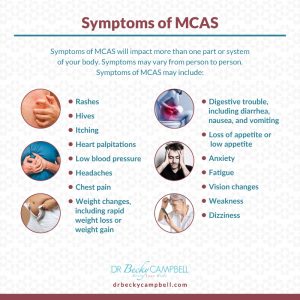
Triggers of MCAS
MCAS symptoms and episodes are always triggered by something. Common MCAS triggers include:
- Mold
- Allergens, including insect bites and certain foods
- Viruses and infections
- Medications, including antibiotics, ibuprofen, and opiate pain relievers
- Chemicals and other toxins, including conventional beauty, body, and cleaning products
- Heavy metals, including mercury from dental work
- Smells, such as perfumes and other conventional beauty products
- Stress-related triggers, including anxiety, pain, exercise, lack of sleep, and rapid temperature changes
- Hormonal changes, including those related to your menstrual cycle
- Mast cell hyperplasia, a rare condition that may occur with certain chronic infections or cancers

Common Causes of MCAS
There are 3 types of MCAS (26, 27):
- Primary MCAS: Primary MCAS may develop due to a genetic mutation called the KIT D816V mutation. People with this type of MCAS often have mastocytosis, which means that your body is making too many mast cells. Mastocytosis is a very rare condition.
- Secondary MCAS: Secondary MCAS may develop because of an IgE-mediated food or environmental allergen, another immunologic problem, or hypersensitivity to a trigger.
- Idiopathic MCAS: Idiopathic MCAS is a term used when the exact cause of MCAS is unclear or cannot be determined.
To learn more about the triggers and causes of MCAS, I recommend reading my book, The 4-Phase Histamine Reset Plan: Getting to the Root of Migraines, Eczema, Vertigo, Allergies and More.
Mast Cell Activation Syndrome vs Histamine Intolerance
I believe that MCAS is the primary cause of histamine intolerance, but it may not be the cause for everyone. But considering the similarities between the symptoms of MCAS and histamine intolerance, you may feel confused.
Are these two conditions the same? No, they are not the same. Though symptoms of MCAS and histamine intolerance can be similar and are both caused by high levels of histamine, MCAS and histamine intolerance are not the same.
If your body has too much histamine and it can’t handle it, you may develop histamine intolerance. This usually happens due to a high-histamine diet. However, stress, poor sleep, environmental toxins, certain medications, and other factors may add to your histamine bucket as well. If your body has trouble breaking down the extra histamine, it will lead to histamine build-up and histamine intolerance.
While histamine intolerance simply means you have too much histamine in your body, you develop MCAS if your mast cells get triggered all the time. If you have MCAS, your mast cells get triggered by mold, allergens, or other triggers, they will release histamine and other chemicals into your body. Increased histamine release from mast cell activation can lead to too much histamine in your body. This can lead to a wide range of symptoms that are very similar to the symptoms of histamine intolerance.
As I mentioned before, MCAS is one of the primary causes of histamine intolerance. However, it is not the cause for everyone. You can have histamine intolerance without MCAS. You can also have MCAS without histamine intolerance. But you may have both MCAS and histamine intolerance. I see patients who have both conditions regularly (1, 2, 3).
If you have both conditions, your body will have increased difficulty breaking down the excess histamine. This can lead to widespread symptoms of MCAS and histamine intolerance. To figure out, whether you are dealing with symptoms of MCAS, histamine intolerance, or both. I recommend working with a functional medicine doctor who is well-versed in both conditions. (Tips: My team and I would love to help you with your diagnosis and treatment. Schedule your consultation here.)
Top Mast Cell Stabilizing Foods
Fortunately, you can stabilize your mast cells naturally and reduce the risk of symptoms of MCAS and MCAS-related histamine intolerance. You may not be surprised to hear that the first step is nutrition. Here are the top mast cell stabilizing foods I recommend:
Quercetin-Rich Foods
Quercetin is a plant flavonol that helps to reduce histamine and allergic response while also supporting your immune system. A 2012 study published in PLoS One, quercetin can effectively block mast cell activation (4). It may be more effective for mast cell-related dermatitis and photosynthesis than Cromolyn, a medication for mastocytosis. Quercetin-rich foods include blueberries, black plums, cherries, black currants, cranberries, grapes, apples, broccoli, other cruciferous vegetables, peppers, red leaf lettuce, romaine lettuce, chicory greens, raw kale, cabbage, raw asparagus, raw red onion, snap peas, sprouts, and many herbs. Since quercetin-rich foods are so diverse, you can easily use them in any of your salads, smoothies, green juices, and cooked dishes.
Onions
Raw red onions are high in quercetin. But onions have more benefits. They are known for their anti-inflammatory and antioxidant effects that may reduce the risk of inflammation and symptoms. According to a 2009 study published in the Journal of Medicinal Food, onions may offer anti-allergic, anti-histamine, anti-inflammatory, and antioxidant properties (5). I recommend adding raw onion to your salads, wraps, and sandwiches, and cooked onion to your frittatas, scrambled eggs, stir-fries, baked vegetables, and other dishes.
Turmeric
Turmeric is an Indian spice that is now used all over the world. The benefits of turmeric come from its active ingredient, curcumin. It’s well-known and well-researched for its anti-inflammatory, antioxidant, and pain-relieving properties. According to a 2003 study published in Clinica Chimica Acta, curcumin may help to reduce mast cell activation (6). I recommend using turmeric in your kitchen regularly. You can add it to your soups, curries, vegetable dishes, dressings, salads, and smoothies. You may also make turmeric golden tea or turmeric-ginger tea to reduce inflammation, mast cell activation, and pain. You may also add curcumin supplements to your daily regimen.
Apples
An apple a day keeps the doctor away. There is something to this. Apples are rich in quercetin which help to reduce histamine. They are also rich in prebiotics, which are fibers that feed probiotics, or good bacteria, in your gut. By helping to balance your gut flora, apples may help to reduce the risk of inflammation and chronic health issues. According to a 2006 randomized, double-blind, placebo-controlled study published in the Journal of Investigational Allergology and Clinical Immunology, apple polyphenols may act on mast cells, reduce histamine response, and lower the symptoms of persistent allergic rhinitis (7). Apples are a great snack. You can also add them to your green juices, smoothies, or salads. My book, The 4-Phase Histamine Reset Plan has a great apple crisp recipe. You may also add it to any low-histamine sweet bread you are baking.
Brazil Nuts
Brazil nuts are mainly known for their selenium content. Did you know that only two pieces of Brazil nuts a day can help you meet your day's selenium needs? According to a 2013 study published in Biological Trace Elements Research, selenium may reduce mast cells mediator release and degranulation (8). Brazil nuts serve as a great snack, but you may also add them to your salads, breakfast bowls, or smoothies.
Chamomile
You’ve probably heard about chamomile before. Chamomile tea is well-known for its sleep-promoting benefits. But chamomile is more than just a stress-relieving natural sleep aid. It may be a great option if you have MCAS and histamine intolerance. According to a 2011 study published in the Journal of Ethnopharmacology, chamomile may reduce mast cell-mediated allergic reactions (9). The best way to use chamomile is by drinking chamomile tea regularly, ideally closer to bedtime. However, you can also find chamomile essential oils to mix things up.
Nettle
Nettle is a medical plant with white to yellowish flowers and pointed leaves. It has been used as a remedy for joint pain, muscle pain, gout, anemia, eczema, and urinary issues. It may also offer some great properties for mast cell activation and histamine reactions. According to a 2009 study published in Phytotherapy Research, nettle extract may help to reduce allergic rhinitis (10). One of the best ways to use nettle is by making nettle tea. But you can also find it in a supplement form.
Ginger
Ginger is similar to turmeric and offers similar properties. It is well known for its anti-inflammatory and pain-relieving benefits. It may also relieve digestive issues and morning sickness. Ginger may also help to reduce mast cell activation and histamine reactions. According to a 2020 randomized controlled trial published in BMC Complementary Medicine and Therapies, ginger may help to reduce mast cell reaction and allergic rhinitis (11). I recommend adding ginger to your soups, green juices, green smoothies, dressings, salads, stir-fries, and vegetable dishes. You may also make ginger tea or try some ginger supplements.
Peaches
Peachers are delicious, sweet, fiber-rich, hydrating fruits. They may help to support your immune health, digestion, skin, and heart health. They may also help to reduce mast cell activation and histamine reactions. According to a 2010 study published in Food and Chemical Toxicology, peaches may help to reduce mast cell-mediated allergic reactions and inflammation (12). You may eat peaches as a snack or add them to your breakfast bowls or smoothies.
Watercress
Watercress is an anti-inflammatory, fiber-rich leafy green. It may help to calm your mast cells and reduce histamine release and reactions. According to a 1999 study published in the Biological and Pharmaceutical Bulletin, watercress may help to reduce histamine release and related symptoms (13). You may add watercress to your salads, juices, and smoothies.
Pomegranates
Pomegranates are very high in antioxidants and help to fight inflammation. They may also help to reduce mast cell activation and histamine reactions. According to a 2009 study published in the Journal of Inflammation, pomegranates may also help to reduce mast cell activation (14). I recommend adding pomegranate to your salads, fruit salads, and smoothies. Pomegranate juice is also delicious and great for your health.
Peppermint
Peppermint is a well-known herb. Among its many benefits, it may be helpful during allergy season. According to a 2001 study published in the Biological and Pharmaceutical Bulletin, peppermint may help to reduce histamine release from your mast cells and reduce symptoms of allergic rhinitis (15). Peppermint tea is a fantastic way to enjoy peppermint. You may also add it to your tabbouleh, vegetable dishes, salads, smoothies, or green juices.
Fiber-Rich Foods
Fiber has many benefits to your health, especially for your digestion. Fiber-rich foods may also help to improve your health if you have mast cell activation issues. According to a 2018 review published in Frontiers in Immunology, a fiber-rich diet may help to reduce mast cell activation and lower the risk of mast cell-related health issues (16). I recommend eating plenty of fiber-rich greens, vegetables, fruits, and herbs.
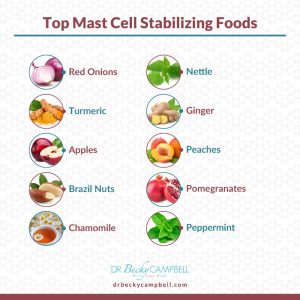
Other Tips for Stabilizing Your Mast Cells
Beyond consuming these mast cell stabilizing foods, you can try some other dietary and lifestyle strategies and supplementation to reduce mast cell activation and histamine intolerance. Here are my top tips for stabilizing your mast cells, reducing histamine intolerance, and improving your symptoms.
Low Histamine Diet
I recommend following a low-histamine, anti-inflammatory, nutrient-dense, whole foods diet. Remove inflammatory foods, including refined sugar, refined oils, canned and processed meat, artificial ingredients, junk food, and highly processed foods. Remove high-histamine foods. Follow a nutrient-dense, anti-inflammatory, and low-histamine diet rich in greens, vegetables, herbs, spices, fruits, healthy fats, and organic meat. If you are dealing with symptoms of histamine intolerance, I recommend that you follow my 4-Phase Histamine Reset Plan outlined in my book, The 4-Phase Histamine Reset Plan: Getting to the Root of Migraines, Eczema, Vertigo, Allergies and More. Try new recipes. I recommend all the low-histamine recipes in The 4-Phase Histamine Reset Plan and my recipe books, Fifty One Low Histamine Air Fryer Recipes and Low Histamine Cooking in Your Instant Pot. If you want to go a step further, you should join my Histamine Reset Online Program.
Remove Your Triggers
Removing your triggers for mast cell activations is, of course, an important way to reduce your symptoms. Remove or reduce your exposure to anything that may be triggering for you, including mold, chemicals, environmental toxins, heavy metals, and viruses. Avoid tap water and drink purified water instead. Remove conventional cleaning, hygiene, body, and beauty products, and choose organic, natural, and DYI options instead. Invest in a high-quality air filtration system for better indoor air quality. Buy organic food instead of conventional ones to reduce exposure to pesticides, herbicides, and hormones. Stop smoking (or don’t start) and avoid second-hand smoke. Reduce your stress levels. Move your body regularly. Get 7 to 9 hours of sleep at night.
Detoxify Your Body
Once you remove your triggers, it’s time for detoxification. Daily detoxification practices can help you remove toxins that you encounter daily. Drink plenty of purified water, move your body and use an infrared sauna to support detoxification through sweating. Follow a gut-friendly, anti-inflammatory, and low-histamine diet and take some probiotics to support digestion and elimination through a bowel movement. You may try gentle binders to absorb and remove toxins from your intestines (17). You may also try glutathione supplements to reduce oxidative stress and support mitochondrial health (18).
Try Some Mast Cell Stabilizing Supplements
You may also try some supplements that help to stabilize your mast cells and reduce your histamine levels naturally. Some of the best natural mast cell-stabilizing and histamine-reducing supplements include quercetin, curcumin, nettle leaf extract, and vitamin C (4, 6, 10, 19, 20). I also recommend using a DAO enzyme supplement (bovine kidney) to improve DAO enzyme activity and support the breakdown of excess histamine (21).
Try Supplements for Histamine Intolerance
I recommend my Optimal Reset HistoRelief to anyone with histamine intolerance. This is a synergistic blend of nutrients, such as quercetin, nettle leaf, and vitamin C, and Tinofend® that provides natural support to help balance the immune response during allergy season. As I discussed earlier, quercetin is a plant flavonol that helps to reduce histamine and allergic response, effectively block mast activation and reduce symptoms related to histamine intolerance and mast cell activation while also supporting your immune system (4).
Nettle is another potent medicinal plant for mast cell activation, histamine intolerance, and histamine reactions. It may be great for joint pain, muscle pain, eczema, urinary issues, allergic rhinitis, gout, and other histamine or mast cell-related issues (10). Though nettle tea is a great way to benefit from the power of nettle, HistoRelief offers a convenient option to receive support from nettle while benefiting from other herbs too.
Vitamin C is an important vitamin that may support healthy histamine signaling and immune health and reduce mast cell activation and histamine intolerance-related symptoms (22). Though eating foods rich in vitamin C is important, supplementing with vitamin C-containing HistoRelief can optimize your vitamin C levels.
Potassium is an electrolyte that may help to support your immune health and keep histamine at bay. Unfortunately, many potassium-rich foods, like bananas, avocados, and tomatoes, are high in histamine. With the help of this supplement, you can keep your potassium levels normal to support your health (23).
Bicarbonate salts may help to reduce histamine and mast cell reactions. According to a 2000 study published by the Fundamental & Clinical Pharmacology, bicarbonates may help to inhibit mast cell histamine release (24).
Tinofend® or standardized Tinospora cordifolia extract contains active polysaccharides. This supplement is clinically shown to reduce histamine reactions, support immune health, offer adaptogenic support, and support your gut and digestive health. According to a 2007 review published in the Annals of Asthma, Allergy, and Immunology, it may offer herbal properties for allergic rhinitis (25). Combined with the other ingredients for HistoRelief, it may help to reduce mast cell activation, histamine reactions, and histamine intolerance.
Final Thoughts
Your mast cells are white blood cells found in various tissues across your body. Though they are essential for your immune health, when your mast cells become dysregulated and overactive it can become a problem. You can calm your mast cells and reduce mast cell-related symptoms with the help of some mast cell stabilizing foods and other natural mast cell stabilizing strategies. Follow my tips to reduce mast cell activation, histamine intolerance, and related symptoms, and reclaim your health and well-being.
If you are dealing with symptoms of MCAS or histamine intolerance, I invite you to schedule a consultation with us. We can help identify the root cause of your condition and recommend a personalized treatment plan to repair your body and regain your health and well-being. Schedule your consultation here. I also recommend that you check out my Histamine Online Program.

Sources:
1. Mast cell activation syndrome. NIH. Link Here
2. Mast cell activation syndrome. AAAAI. Link Here
3. Comas-Basté O, Sánchez-Pérez S, Veciana-Nogués MT, Latorre-Moratalla M, Vidal-Carou MDC. Histamine Intolerance: The Current State of the Art. Biomolecules. 2020 Aug 14;10(8):1181. doi: 10.3390/biom10081181. PMID: 32824107
4. Weng Z. Quercetin Is More Effective than Cromolyn in Blocking Human Mast Cell Cytokine Release and Inhibits Contact Dermatitis and Photosensitivity in Humans. Plos One. 2021. Link Here
5. P. Kaiser, M.S. Youssouf, S.A. Tasduq, S. Singh, S.C. Sharma, G.D. Singh, V.K. Gupta, B.D. Gupta, and R.K. Johri.Journal of Medicinal Food.Apr 2009.374-382.. Link Here
6. Ok-Seon Baek, Ok-Hwa Kang, Yeon-A Choi, Suck-Chei Choi, Tae-Hyun Kim, Yong-Ho Nah, Dong-Yeul Kwon, Yun-Kyung Kim, Young-Ho Kim, Ki-Hwan Bae, Jong-Pil Lim, Young-Mi Lee,
Curcumin inhibits protease-activated receptor-2 and -4-mediated mast cell activation, Clinica Chimica Acta, Volume 338, Issues 1–2, 2003. Link Here
7. Enomoto T, Nagasako-Akazome Y, Kanda T, Ikeda M, Dake Y. Clinical effects of apple polyphenols on persistent allergic rhinitis: A randomized double-blind placebo-controlled parallel arm study. J Investig Allergol Clin Immunol. 2006;16(5):283-9. PMID: 17039666
8. Safaralizadeh, R., Nourizadeh, M., Zare, A. et al. Influence of Selenium on Mast Cell Mediator Release. Biol Trace Elem Res 154, 299–303 (2013). Link Here
9. V.M. Chandrashekhar, K.S. Halagali, R.B. Nidavani, M.H. Shalavadi, B.S. Biradar, D. Biswas, I.S. Muchchandi,
Anti-allergic activity of German chamomile (Matricaria recutita L.) in mast cell mediated allergy model, Journal of Ethnopharmacology, Volume 137, Issue 1, 2011. Link Here
10.. Nettle extract (Urtica dioica) affects key receptors and enzymes associated with allergic rhinitis. 2009. Phytotherapy Research. Link Here
11. Yamprasert R, Chanvimalueng W, Mukkasombut N, Itharat A. Ginger extract versus Loratadine in the treatment of allergic rhinitis: a randomized controlled trial. BMC Complement Med Ther. 2020 Apr 20;20(1):119. doi: 10.1186/s12906-020-2875-z. PMID: 32312261
12. Tae-Yong Shin, Seung-Bin Park, Jin-Su Yoo, In Kyeom Kim, Hyun-Shik Lee, Taeg Kyu Kwon, Moon Kyu Kim, Jung Chul Kim, Sang-Hyun Kim, Anti-allergic inflammatory activity of the fruit of Prunus persica: Role of calcium and NF-κB, Food and Chemical Toxicology, Volume 48, Issue 10, 2010, Link Here
13. Constituents in Watercress : Inhibitors of Histamine Release from RBL-2H3 Cells Induced by Antigen Stimulation. Biological and Pharmaceutical Bulletin 1999. Link Here
14. Rasheed, Z., Akhtar, N., Anbazhagan, A.N. et al. Polyphenol-rich pomegranate fruit extract (POMx) suppresses PMACI-induced expression of pro-inflammatory cytokines by inhibiting the activation of MAP Kinases and NF-κB in human KU812 cells. J Inflamm 6, 1 (2009). Link Here
15. Inoue T, Sugimoto Y, Masuda H, Kamei C. Effects of peppermint (Mentha piperita L.) extracts on experimental allergic rhinitis in rats. Biol Pharm Bull. 2001 Jan;24(1):92-5. doi: 10.1248/bpb.24.92. PMID: 11201253
16. Folkerts Jelle, Stadhouders Ralph, Redegeld Frank A., Tam See-Ying, Hendriks Rudi W., Galli Stephen J., Maurer Marcus. Effect of Dietary Fiber and Metabolites on Mast Cell Activation and Mast Cell-Associated Diseases. Frontiers in Immunology. 2018. Link Here
17. Zellner T, Prasa D, Färber E, Hoffmann-Walbeck P, Genser D, Eyer F. The Use of Activated Charcoal to Treat Intoxications. Dtsch Arztebl Int. 2019 May 3;116(18):311-317. doi: 10.3238/arztebl.2019.0311. PMID: 31219028
18. Marí M, Morales A, Colell A, García-Ruiz C, Fernández-Checa JC. Mitochondrial glutathione, a key survival antioxidant. Antioxid Redox Signal. 2009 Nov;11(11):2685-700. doi: 10.1089/ARS.2009.2695. PMID: 19558212
19. Nakajima, S., Ishimaru, K., Kobayashi, A. et al. Resveratrol inhibits IL-33–mediated mast cell activation by targeting the MK2/3–PI3K/Akt axis. Sci Rep 9, 18423 (2019). Link Here
20. Kakavas S, Karayiannis D, Mastora Z. The Complex Interplay between Immunonutrition, Mast Cells, and Histamine Signaling in COVID-19. Nutrients. 2021 Sep 29;13(10):3458. doi: 10.3390/nu13103458. PMID: 34684460
21. Schnedl, W.J., Schenk, M., Lackner, S. et al. Diamine oxidase supplementation improves symptoms in patients with histamine intolerance. Food Sci Biotechnol 28, 1779–1784 (2019). Link Here
22. Kakavas S, Karayiannis D, Mastora Z. The Complex Interplay between Immunonutrition, Mast Cells, and Histamine Signaling in COVID-19. Nutrients. 2021 Sep 29;13(10):3458. doi: 10.3390/nu13103458. PMID: 34684460
23.Gombart AF, Pierre A, Maggini S. A Review of Micronutrients and the Immune System-Working in Harmony to Reduce the Risk of Infection. Nutrients. 2020 Jan 16;12(1):236. doi: 10.3390/nu12010236. PMID: 31963293
24. Joly F, Galoppin L, Bordat P, Cousse H, Neuzil E. Calcium and bicarbonate ions mediate the inhibition of mast cell histamine release by Avène spa water. Fundam Clin Pharmacol. 2000 Nov-Dec;14(6):611-3. doi: 10.1111/j.1472-8206.2000.tb00447.x. PMID: 11206712
25. Guo R, Pittler MH, Ernst E. Herbal medicines for the treatment of allergic rhinitis: a systematic review. Ann Allergy Asthma Immunol. 2007 Dec;99(6):483-95. doi: 10.1016/S1081-1206(10)60375-4. PMID: 18219828
26. Valent P, Akin C, Bonadonna P, Hartmann K, Brockow K, Niedoszytko M, Nedoszytko B, Siebenhaar F, Sperr WR, Oude Elberink JNG, Butterfield JH, Alvarez-Twose I, Sotlar K, Reiter A, Kluin-Nelemans HC, Hermine O, Gotlib J, Broesby-Olsen S, Orfao A, Horny HP, Triggiani M, Arock M, Schwartz LB, Metcalfe DD. Proposed Diagnostic Algorithm for Patients with Suspected Mast Cell Activation Syndrome. J Allergy Clin Immunol Pract. 2019 Apr;7(4):1125-1133.e1. doi: 10.1016/j.jaip.2019.01.006. Epub 2019 Feb 5. PMID: 30737190
27. Final diagnosis, Mast cell activation syndrome. Link Here

Histamine Intolerance and ADHD: The Connection
Can histamine intolerance make my ADHD worse? Can histamine intolerance cause ADHD? Are histamine intolerance and ADHD connected? You would be surprised to know how often I get these questions. It’s time to address it.
Over the years, I’ve worked with many people who had both histamine intolerance and ADHD. I myself was diagnosed with ADHD. As you know, I also have mast cell activation syndrome (MCAS). In my practice, I’ve often found that addressing histamine intolerance or MCAS helped to improve their symptoms of ADHD and other brain and mental health symptoms.
In this article, you will learn what ADHD is. You will learn about the symptoms of ADHD, the types of ADHD, and the diagnosis of ADHD. I will briefly go over histamine intolerance and its symptoms. Then we will dive deep into the connection between histamine intolerance and ADHD. You will learn about how histamine may play a role in the connection between food allergies and ADHD, food additives and ADHD, neuroinflammation and ADHD, pyrroles and ADHD, antihistamine and ADHD. Finally, I will offer my top natural solutions for histamine intolerance and ADHD.
What Is ADHD?
Attention-deficit/hyperactivity disorder (ADHD) is one of the most common neurodevelopment and mental disorders in childhood. However, ADHD not only affects children but adults as well. ADHD is often first diagnosed during childhood. Symptoms and related challenges can often last well into adulthood as well. ADHD diagnosis during adulthood is also increasingly common (1, 2, 3, 4).
According to the American Psychiatric Association, about 8.4 percent of children and 2.5 percent of adults have ADHD (1). Many children and adults may also experience undiagnosed ADHD or experience several symptoms and challenges of ADHD without meeting the official criteria (2, 3, 4).
Symptoms of ADHD
Symptoms of ADHD are generally characterized by (1, 2, 3, 4):
- Inattention: Being unable to stay focused
- Hyperactivity: Excess movement that is not appropriate in the situation
- Impulsivity: Acting hastily without thinking or self-control
Symptoms of ADHD may include the following (1, 2, 3, 4):
- Overlooking or missing details in school work or work
- Having difficulty sustaining attention on certain tasks, including reading, lectures, or staying on topic during conversations
- Having a difficult time organizing activities or tasks, including time management, meeting deadlines, keeping things in order, or keeping tasks in sequence
- Having a difficult time following instructions, staying on tasks, or finishing school assignments, work, chores, or other tasks
- Getting sidetracked easily
- Forgetting daily activities and commitment, including errands, chores, appointments, and calls
- Daydreaming a lot
- Making seemingly careless mistakes
- Losing things easily, such as glasses, wallets, pencils, tools, paperwork, or cell phones
- Having difficulty listening when spoken to directly
- Not enjoying or avoiding tasks that need sustained mental energy, including homework, filling out forms, and long readings
- Fidgeting and squirming a lot, especially when seated
- Standing up or leaving their seat when remaining seated is required
- Being on the go and moving all the time
- Running around or climbing things when inappropriate (in children)
- Feeling restless
- Talking a lot and very rapidly
- Finishing other people’s sentences or answering questions before the question was completely raised
- Having difficulty in playing or working on hobbies quietly
- Interrupting or intruding on others and having difficulties waiting their turn
- Having a difficult time getting along with others

ADHD can seriously interfere with a child’s schoolwork and outside of school activities and with the professional career of adults. It may impact one's home life, relationships, and social life as well. It may cause distress and interfere with normal or expected functioning (1, 2, 3, 4).
Types of ADHD
Not everyone with ADHD presents all symptoms. Some may be more hyperactive and others may be more inattentive than others. Types of ADHD include (2):
- Predominantly inattentive presentation: Children or adults with this type of ADHD have a difficult time staying on task, following instructions, following conversations, paying attention to details, or finishing tasks. They get distracted easily and are often forgetful. This type used to be called ADD, which is now an outdated term.
- Predominantly hyperactive-impulsive presentation: Children or adults with this type of ADHD are more likely to fidget a lot, talk excessively, feel restless, speak or act at inappropriate times, interrupt or intrude on others, act impulsively, and be always on the go. Children may run, climb, or jump on things constantly and get more injuries than their peers.
- Combined presentation: Children or adults in this type experience both the inattentive and the hyper-impulsive presentation of ADHD equally.
Diagnosis of ADHD
There is no lab test for the diagnosis of ADHD. Diagnosis usually involves a medical evaluation, looking at symptoms, understanding the person’s experiences, and in children, getting information from parents, teachers, and other adults in the child’s life.
Since some symptoms may be signs of anxiety, depression, learning disabilities, sleep problems, or other issues, it’s important to work with a qualified professional, rule out other issues, and make the correct diagnosis. ADHD may also coexist with anxiety, depression, autism, obsessive-compulsive disorder (OCD), learning disabilities, and other issues. The official diagnosis is made by using the American Psychiatric Association’s Diagnostic and Statistical Manual, Fifth Edition (DSM-5) diagnostic standards (4).
Conventional treatment of ADHD usually involves a combination of medication and therapy. Medications for ADHD are created to act on brain chemicals to allow the person to have better control of their impulses and actions. However, ADHD medications can lead to side effects, misuse, addictions, and dependence. Over time, they may also become less effective. It is not surprising that many parents of children with ADHD or adults with ADHD choose to go without medication or actively work on the reduce or getting off ADHD medication (2, 3).
Therapy and other support options are available for children, adults with ADHD, and family members. Therapy and support for those with ADHD may involve behavioral therapy, cognitive-behavioral therapy, behavioral classroom management and accommodation, stress management strategies, and support groups. For parents and family members parenting skills training, family and marital therapy, and support groups may be available as support (2, 3).
Though these therapy methods, strategies, and accommodations may be helpful, by ignoring dietary and lifestyle choices, they may be missing a beat. In the next sections, I will go over how histamine intolerance may affect your symptoms of ADHD. If histamine intolerance or other dietary or health factors are making your ADHD worse, therapy alone won’t be effective.
What Is Histamine Intolerance
Histamine is a chemical produced by your body. It is part of your immune response when getting rid of allergens. Histamine also supports your digestion by releasing hydrochloric acid to break down food and bacteria. It serves an essential role in your brain health by serving as a chemical messenger between your brain and the rest of your body.
Generally speaking, histamine is not a problem but essential for your health. However, histamine can turn into an issue if there is too much of it. If your body is releasing too much histamine, but it’s unable to break down all the excess histamine, histamine build-up occurs.
Histamine intolerance means that there is too much histamine in your body. In a healthy body, there are enzymes to break down excess histamine and prevent build-up. But if you have too much histamine due to mast cell activation issues, the lack of DAO enzyme, high-histamine foods, stress, or other reasons, your body won’t be able to break everything down. This can lead to histamine intolerance. Histamine intolerance can affect your entire body, including your gut, brain, lungs, and cardiovascular system. Because histamine intolerance can affect your entire body and cause widespread symptoms (5).
Symptoms of Histamine Intolerance
Symptoms of histamine intolerance may include:
- Headaches and migraines
- Fatigue
- Congestion and runny nose
- Hives
- Rashes, eczema, psoriasis, and other skin symptoms
- Asthma attacks
- Crawling skin sensation on skin or scalp
- Flushing
- Diarrhea and other digestive issues
- Low blood pressure
- Hypertension
- Racing heart rate
- Dizziness or vertigo
- Abnormal menstrual cycle and premenstrual syndrome (PMS)
- Sleep issues
- Brain fog and forgetfulness
- Irritability and mood imbalances
- Anxiety or panic attacks
The Connection Between Histamine Intolerance and ADHD
As you can see, histamine intolerance may manifest by producing brain and mental health issues, including brain fog, forgetfulness, irritability, mood imbalances, anxiety, or panic attacks. The question is whether histamine intolerance can contribute to or increase symptoms of ADHD.
I get this question all the time. Based on my professional experience and recent studies, my answer is, yes, in some cases, histamine intolerance may worsen ADHD. I personally have MCAS and have been diagnosed with ADHD when I was a child. I have worked with numerous patients with symptoms of histamine intolerance and ADHD. At my practice, I’ve found that addressing histamine intolerance or MCAS can often improve ADHD as well.
The potential connection between histamine intolerance and ADHD is not surprising. Histamine intolerance can seriously impact your brain and mental health.
Our mast cells release inflammatory chemicals, such as histamine. When our body cannot break down these chemicals due to MCAS or histamine intolerance, it can lead to a lot of inflammation in your body. It may specifically lead to neuroinflammation which can affect your brain and mental health.
There can be a big disruption in your glial cells. Your glial cells play a really important role in your brain function and central nervous system. Neuroinflammation can break down the blood-brain barrier (BBB) and aggravate the hypothalamic-pituitary-adrenal or HPA axis.
Let’s look into this further. First, I want to go over the connection between your brain health and histamine and then uncover the possible connection between histamine intolerance and ADHD.
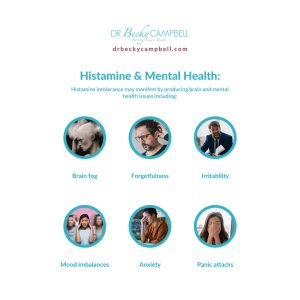
Histamine, Brain Health, and Mental Health
Your brain is incredibly complex yet absolutely fascinating. Histamine in your brain can come from both mast cells and neurons. Your brain doesn’t have many mast cells, which means most of the histamine comes from histamine-releasing neurons in your hypothalamus. From there, these neurons, histamine, can travel to other areas and affect your entire brain. Histamine then can attach to different receptors in a variety of other regions of your brain. This can lead to over-stimulation and histamine intolerance all over your brain (6, 7).
Histamine intolerance happens when there is too much histamine and your body is unable to break it down. In most of your body, the diamine oxidase (DAO) enzyme is responsible for the breakdown of any excess histamine. In your brain, this job of histamine breakdown is done by the histamine N-methyltransferase (HNMT) enzyme.
It first forms t-type methylhistamine, which gets broken down by monoamine oxidase B (MAOB) and aldehyde dehydrogenase. If there isn’t enough HNMT enzyme or there is an issue with this process, your body won’t be able to break down all the histamine properly, which may lead to histamine intolerance and related symptoms (8).
Histamine allows your brain to create homeostasis by helping to regulate stimuli related to various brain-related activities, including (9):
- The sleep-wake cycle
- Stress response
- Pain perception
- Neurotransmitter regulation
- Satiety, taste perception, and feeding behaviors
- Addictive behaviors
- Memory formation
- Motivation and goal-setting behaviors

As you can see, histamine intolerance can have a serious impact on your brain health and mental health. You may learn more about the connection between your brain health and histamine intolerance by reading this article. I’ve also written about how histamine intolerance may trigger or increase the symptoms of mental health issues, such as anxiety, in this article. Does this mean that histamine intolerance can increase symptoms of ADHD as well? Let’s get into it.
Histamine and ADHD
Now that you understand the connection between histamine intolerance and brain health let’s get into the nitty-gritty of the connection between histamine intolerance and ADHD.
Allergies and ADHD
According to a 2018 study published in Science Reports, there may be a connection between allergy symptoms and ADHD. Researchers were looking at how certain biochemical factors and health issues, such as allergies, inflammations, and neurotransmitters, may be linked to ADHD and an increased risk of the disorder (10).
They looked at 216 children with ADHD and 2016 children without ADHD as a control. Researchers used the International Study of Asthma and Allergies in Childhood questionnaire and various blood tests as a measure. They found that allergic symptoms, including rhinitis and eczema, and increased biomarkers of allergic responses were associated with the risk of ADHD.
Additionally, they also found that iron deficiency may be linked to ADHD as it may lead to an insufficient supply of neurotransmitters. They found that low folate, vitamin B6, and vitamin B12 levels, lower 5-HT levels, low serotonin markers, parasitic infections, and inflammation were also common in children with ADHD and should be considered during treatment.
Not only that there is a link between increased histamine release, histamine intolerance, and allergies, but parasitic infections, inflammations, and vitamin deficiencies can increase the risk of mast cell activation issues and histamine intolerance.
Food Additives, HNMT, and ADHD
Following a high-histamine diet or a diet that may cause allergic, histamine reactions can increase the risk of histamine intolerance. It turns out, such a diet may also increase the risk of symptoms of ADHD.
A 2017 randomized, double-blinded, placebo-controlled trial published in Lancet has looked at 153 3-year-old and 144 8-to-9-year-old children to understand the connection between food additives and ADHD symptoms (11). Children were given either a drink with artificial food additives or a placebo. Researchers found that artificial colors or sodium benzoate preservatives or both may increase hyperactivity in children.
To understand the harmful effects of artificial ingredients and food additives, there was a follow-up study in 2010 published in The American Journal of Psychiatry (12). The study has found that ADHD symptoms were in fact, triggered or increased by food additives. They found that these symptoms were moderated by two histamine degradation polymorphisms HNMT T939C and HMT Thr105Ile, in both age groups, and also DAT1 polymorphism in the 8-to-9-year-old group. What does this mean?
As I mentioned earlier, a healthy body and well-functioning HNMT system can clean out histamine and reduce histamine build-up effectively. However, if there isn’t enough HNMT enzyme or there is an issue with this process, your body won’t be able to break down all the histamine properly, which may lead to histamine intolerance and related symptoms (8). If the gene codes and HNMT activities are less efficient, it will increase allergic reactions, other histamine-mediated issues, and histamine intolerance.
According to this particular study, children who had issues with their genes that regulate their histamine system were more likely to experience hyperactivity and ADHD symptoms when given food additives. Their ADHD symptoms were increased by allergic stimulus or in some cases, it may be possible that their symptoms were simply a histamine reaction to a food allergy and not ADHD (12).
These are not the only studies that point out a link between HNMT, histamine, and ADHD. A 2019 study published in the International Journal of Molecular Sciences has also found that polymorphism of the HNMT gene and decreased HNMT activity may contribute to increased symptoms of ADHD, migraines, schizophrenia, and Parkinson’s disease (13).
Neuroinflammation and ADHD
Furthermore, mast cell activation may increase neuroinflammation and ADHD symptoms. A 2020 review published in Experimental and Therapeutic Medicine has found mast cell-mediated neuroinflammation may contribute to ADHD (14). Mast cells release inflammatory factors which interact with your glial cells and neurons.
Increased release of these inflammatory factors may interrupt the BBB and the HPA axis, cause neuroinflammation, and lead to brain function issues. Researchers found that these inflammatory processes may increase symptoms of ADHD. However, further research is needed to clearly understand the potential link between mast cells and symptoms of ADHD.
Histamine, Pyrroles, and ADHD
Histamine levels may be useful as an additional diagnostic measure. A 2015 review published in Clinical Medical Reviews and Case Reports has found that high histamine levels are common in those with ADHD (15). They also found that increased pyrroles levels were more prevalent in those with higher histamine levels than those without. Pyrroles are a chemical compound used as a diagnostic measure for mental disorders by psychiatrists. Improving pyrroles may help to improve symptoms of ADHD and other mental health issues.
The study has found that gut microbiome imbalance, poor zinc, magnesium, vitamin B3, and vitamin C levels, and poor zinc-to-copper ratio were also linked to increased pyrrole levels and symptoms of ADHD. Addressing these markers may help to improve pyrrole levels, histamine intolerance, and ADHD symptoms.
Antihistamines and ADHD
Lastly, some studies suggest that using antihistamine medications in ADHD may help to improve symptoms. A 2004 study published in the Journal of Allergy and Clinical Immunology has found that using cetirizine (Zyrtec), a common antihistamine allergy-medication, has helped to improve hyperactivity and inattention in children with ADHD and allergies (16). A 2016 study published in the Journal of Immunology Research has found that using the combination of cetirizine and methylphenidate, a stimulant, has helped to improve symptoms of both ADHD and allergic rhinitis (17).
These studies suggest that increased histamine levels may play a role in ADHD symptoms and reducing histamine may help. However, using antihistamines has its risks and problems. Antihistamines medications may temporarily put a bandaid on your symptoms, but they will not eliminate the root cause of the issue. This means that symptoms will keep coming back and may become increasingly difficult to address with antihistamines.
Antihistamines may also lower your body’s ability to create enzymes that break down histamine naturally. This decreases your body’s ability to deal with excess histamine. Being on these medications for too long can make it more difficult to support your body’s natural ability to reduce histamine intolerance.
Furthermore, these medications can have side effects and can interrupt your body’s balance in the long run. Antihistamines may cause dizziness, dry mouth, drowsiness, irritability, decreased appetite, or blurry vision. They may not be right or need precautions for people with diabetes, overactive thyroid, epilepsy, asthma, other breathing issues, glaucoma, high blood pressure, or heart disease (18, 19).
Moreover, using antihistamines for ADHD is a controversial subject even in the medical and science community. According to a 2017 study published in the European Journal of Allergy and Clinical Immunology, using antihistamines may actually increase symptoms of ADHD (20). Unless you are someone with a very serious case of MCAS that does need to stay on medications, finding natural solutions to support your body through diet, lifestyle, and supplementation, and reducing histamine intolerance and related symptoms naturally without risks and side effects is a safer idea.
Natural Solutions for ADHD and Histamine Intolerance
To improve histamine intolerance and reduce histamine-related ADHD symptoms, I recommend the following natural solutions:
Low-Histamine, Anti-Inflammatory, and Nutrient-Dense Diet
To improve your brain health by addressing histamine intolerance, I recommend that you follow a nutrient-dense and low-histamine diet. Remove all histamine foods for one to three months, then slowly re-introduce them one by one following The 4-Phase Histamine Reset Plan. If you want to go a step further, you should join my Histamine Reset Online Program.
Remove inflammatory foods, including refined sugar, refined oils, canned and processed meat, artificial ingredients, junk food, and highly processed foods. Avoid high-histamine foods, such as fermented food (eg. sauerkraut, kimchi, fermented vegetables, kombucha, etc), aged food (eg. aged cheese, processed meat, canned fish, etc), over-ripe fruits and vegetables, leftovers, and foods that are naturally high in histamine (eg. avocadoes, eggplant, spinach, dried fruits, etc). Avoid foods that may trigger histamine releases, such as tomatoes, most citrus, bananas, most nuts, and dairy. Avoid foods that may block the DAO-enzyme, including black tea, green tea, alcohol, and energy drinks.
Eat a nutrient-dense, anti-inflammatory, and low-histamine diet rich in greens, vegetables, herbs, spices, fruits, healthy fats, and organic meat. Low-histamine foods include most fresh leafy greens and vegetables, non-citrus fruits, such apples, pear, papaya, and grapes, fresh grass-fed meat, pasture-raised poultry and eggs, and wild-caught fish, olives, extra-virgin olive oil, ghee, coconut oil, leafy herbs, and herbal tea. In addition to these recipes, I recommend all the low-histamine recipes in my other two low histamine cookbooks, Low Histamine Cooking in Your Instant Pot and Fifty One Low Histamine Air Fryer Recipes. They are all simple, easy to make, low-histamine, gluten-free, Paleo-friendly, and super healthy. The instant pot and air fryer are amazing tools to help cook food quickly so that it does not release a lot of histamine. The longer you cook food, the more histamine it releases.
Support Your Gut
Since gut microbiome imbalance and parasitic infections may increase chronic inflammation, histamine intolerance, brain imbalances, and ADHD symptoms, I recommend supporting your gut beyond diet (5, 10, 15). Along with a gut-friendly anti-inflammatory diet, I recommend working with a functional medicine practitioner (like me) to test your gut and see if opportunistic bacteria, yeast overgrowth, parasites, H. pylori and/or leaky gut can be what is driving your histamine issue.
Try Some Supplements for Histamine Intolerance
I recommend HistoRelief. It is a synergistic blend of nutrients that provides natural support to balance your immune response. This blend features Tinofend®, a patented and clinically researched extract derived from the plant Tinospora cordifolia, which has a powerful ability to support immune regulation and immune response. As a result, it boosts your body’s ability to fight histamine-related symptoms. It includes quercetin, nettle leaf, vitamin C, and bicarbonate salt to help inhibit histamine release, support normal histamine metabolism, and improve immune health.
Reduce Your Histamine Bucket and Improve Your Lifestyle
It’s not only your diet that can add to your histamine bucket but lifestyle and environmental factors as well.
Low Stress and Improve Sleep
Stress, poor sleep, a lack of exercise, and environmental toxin exposure are all things to address. These issues can all increase the risk of histamine intolerance, chronic inflammation, and symptoms. Some of these factors may also contribute to ADHD specifically.
A 2003 study published in the Journal of Physiology has found that stress may increase histamine release in your gastrointestinal mast cells (21). Stress may also directly contribute to ADHD symptoms. A 2015 study published in the International Journal of Neuropsychopharmacology has found that adults with ADHD have an increased cortisol response to stress (22). Stress and poor sleep can increase the risk of histamine intolerance, chronic inflammation, and health issues. Reducing your stress levels is critical. I recommend practicing meditation, journaling, breathwork, guided visualizations, and gratitude. Get 7 to 9 hours of restful sleep every night.
Move Your Body
A 2014 review study published in Frontiers in Physiology has found that exercise may help to improve stress (23). On the other hand, a lack of exercise may contribute to chronic inflammation, increased stress, histamine intolerance, and chronic symptoms. A 2009 review published in Trends in Neuroscience has found that exercise may affect your brain health (24). A 2017 review published in the Journal of Neural Transmission has found that both cardiovascular and non-cardiovascular exercise may benefit those with ADHD (25). Move your body regularly without over exercising. I recommend getting 10K -15K steps per day along with resistance and strength training to a level that makes you feel good after, not exhausted.
Reduce Environmental Toxin Exposure
Beyond addressing stress, sleep, and exercise, you need to reduce the environmental toxins that you encounter every day. A 2021 research published in Environmental Sciences Europe has found that toxin exposure may contribute to chemical intolerance, mast cell activation, and histamine intolerance (26). Remove conventional cleaning, hygiene, and beauty products, and use organic, natural, and homemade alternatives instead. Avoid fabric that may irritate your skin. If you are allergic to any metals, avoid wearing them, and choose surgical steel, silver, or gold instead. Make sure that your house is free from mold and use a high-quality air filtration system to reduce toxins in your indoor air.
Try Supplements to Support Your Mental Health
Certain vitamin and mineral deficiencies, including low folate, vitamin B3, vitamin B6, vitamin B12, vitamin C, magnesium, and zinc levels, and a poor zinc-to-copper ratio have been linked to ADHD (10, 15). You may benefit from eating more foods rich in vitamin B, such as leafy greens, eggs, fresh seafood, liver, beef, pork, and poultry, foods rich in vitamin C, such as guavas, kiwi, broccoli, and bell pepper, foods rich in magnesium, such as spinach, hemp seeds, chia seeds, pumpkin seeds, Brazil nuts, and beet greens, and foods rich in zinc, such as spinach, sesame seeds, pumpkin seeds, and meat. You may also benefit from supplementing with vitamin B12, a vitamin B complex, vitamin C, magnesium, and zinc.
A 2015 study published in Mental Illness has found that omega-3 supplements may help to improve mental health (27). According to a 2006 review published in the International Reviews in Psychiatry, omega-3 fatty acids may help to improve the symptoms of ADHD (28). A 2017 study published in the Journal of Lipids has also found that omega 3 fatty acids may offer therapeutic benefits for children and young individuals with ADHD (29). You may benefit from eating foods rich in omega-3 fatty acids, such as fresh fish, hemp seeds, chia seeds, and flax seeds, as well as, from taking a daily omega-3 fish oil supplement.
A 2007 study published in the Journal of Child and Adolescent Pharmacology has found that acetyl-l-carnitine (ALC) may benefit those with ADHD (30). According to a 2015 review published in Adolescent Psychiatry (Hilversum), rhodiola rosea and ginkgo biloba may help to improve symptoms of ADHD as a non-pharmacological treatment option (31). The same review has found that melatonin may also be beneficial for those with ADHD, especially if they are struggling with sleep issues. You may benefit from supplementing with ALC, rhodiola, ginkgo biloba, or melatonin.
Before starting with a supplement protocol, however, I recommend that you consult with your healthcare provider to see what supplements are right for you. I highly recommend working with a functional medicine practitioner who is knowledgeable in non-pharmaceutical approaches to guide your journey. Hint: Our team is always happy to guide you, just reach out here.
Mind-Body Practices and Therapy
A 2015 review published in Adolescent Psychiatry (Hilversum) has found that mind-body practices may be highly beneficial for those with ADHD (31). Meditation, mindfulness, paced breathing, yoga, tai chi, gi gong, neurofeedback, and other approaches have been shown to help with impulsivity, hyperactivity, emotional reactivity, and aggressiveness. They help with self-regulation, staying in the present moment, staying focused, and neuronal activity. For some individuals, working with a therapist can be highly beneficial in achieving cognitive shifts, behavioral changes, overall function, and general mental well-being.
Look at ADHD as a Superpower
Improving and supporting your health on a physical, mental, emotional, and spiritual level is critical. Nothing can outsmart healthy nutrition, good sleep, movement, low-stress levels, and a healthy mindset. However, you don’t have to fight and wish away all your ADHD characteristics. It’s time for a mindset shift. It’s time to embrace ADHD as your superpower.
People with ADHD are generally very empathetic, full of energy, imagination, and creativity, are very spontaneous, have a great sense of humor, have great problem-solving skills, are great at hyper-focusing, are able to think outside the box, and very resilient. These are fantastic skills and characteristics that you need to embrace. Show yourself some love and let your superpowers shine.
Final Thoughts
ADHD is one of the most common neurodevelopment and mental disorders in childhood and is an increasingly common diagnosis in adults as well. Symptoms of ADHD can seriously impact one’s school, work, home, and social life. Medications for ADHD can often cause side effects, lead to misuse, abuse, or dependence, and often become ineffective in the long term. Therapy may be beneficial, however, it’s not always enough.
To successfully address ADHD, we need to look at nutritional and lifestyle factors and potential underlying health issues. For some people, addressing histamine intolerance may be the missing link to improve symptoms of ADHD. If you are dealing with histamine intolerance and ADHD, I recommend following my tips outlined in this article to improve your symptoms naturally.
If you are dealing with histamine intolerance, MCAS, or ADHD, I invite you to schedule a consultation with us. We can help identify the root cause of your condition and recommend a personalized treatment plan to repair your body and regain your health and well-being. Schedule your consultation here. You can also get started on your own with my Histamine Online Program.
Sources:
1. What is ADHD? APA. Link Here
2. Attention-deficit/hyperactivity disorder. NIH. Link Here
3. What is ADHD? CDC. Link Here
4. Symptoms and diagnosis of ADHD. CDC. Link Here
5. Maintz L, Novak N, Histamine and histamine intolerance, The American Journal of Clinical Nutrition, Volume 85, Issue 5, May 2007, Pages 1185–1196. Link Here
6. Shan L, et al. Interactions of the histamine and hypocretin systems in CNS disorders. Nat Rev Neurol . 2015;11(7):401–413. Link Here
7. Bolam, P., & Ellender, T. Histamine and the striatum. Neuropharmacology. Volume 106, July 2016, Pages 74-84. Link Here
8. Haas HL, et al. Histamine in the nervous system. Physiol Rev . 2008;88(3):1183–1241. Link Here
9. Brown, R. E., Stevens, D. R., & Haas, H. L. (2001). The physiology of brain histamine. Progress in Neurobiology, 63(6), 637–672. Link Here
10. Wang, LJ., Yu, YH., Fu, ML. et al. Attention deficit–hyperactivity disorder is associated with allergic symptoms and low levels of hemoglobin and serotonin. Sci Rep 8, 10229 (2018). Link Here
11. McCann D, Barrett A, Cooper A, Crumpler D, Dalen L, Grimshaw K, Kitchin E, Lok K, Porteous L, Prince E, Sonuga-Barke E, Warner JO, Stevenson J. Food additives and hyperactive behaviour in 3-year-old and 8/9-year-old children in the community: a randomised, double-blinded, placebo-controlled trial. Lancet. 2007 Nov 3;370(9598):1560-7. doi: 10.1016/S0140-6736(07)61306-3. Erratum in: Lancet. 2007 Nov 3;370(9598):1542. PMID: 17825405
12. Stevenson J. The Role of Histamine Degradation Gene Polymorphisms in Moderating the Effects of Food Additives on Children's ADHD Symptoms. 2010. The American Journal of Psychiatry. Link Here
13. Yoshikawa T, Nakamura T, Yanai K. Histamine N-Methyltransferase in the Brain. Int J Mol Sci. 2019 Feb 10;20(3):737. doi: 10.3390/ijms20030737. PMID: 30744146
14. Song Y, Lu M, Yuan H, Chen T, Han X. Mast cell-mediated neuroinflammation may have a role in attention deficit hyperactivity disorder (Review). Exp Ther Med. 2020 Aug;20(2):714-726. doi: 10.3892/etm.2020.8789. Epub 2020 May 25. PMID: 32742317
15. Mirokova N. Clinical Test of Pyrroles: Usefulness and Association with Other Biochemical Markers. 2015. Link Here
16. I. Melamed, B.G. Bender, M.Z. Wamboldt, The benefit of using ceterizine (Zyrtec) with stimulant in children with comorbid allergy and ADHD, Journal of Allergy and Clinical Immunology, Volume 113, Issue 2, Supplement, 2004, Link Here
17. Melamed I, Heffron M. Attention Deficit Disorder and Allergic Rhinitis: Are They Related? J Immunol Res. 2016;2016:1596828. doi: 10.1155/2016/1596828. Epub 2016 Oct 31. PMID: 27872863
18. Antihistamines for Allergies. Medline Plus. Link Here
19. Antihistamines.NHS. Link Here
20. Increased attention-deficit/hyperactivity symptoms in atopic dermatitis are associated with history of antihistamine use. Allergy. 2017. Link Here
21. Eutamene H, Theodorou V, Fioramonti J, Bueno L. Acute stress modulates the histamine content of mast cells in the gastrointestinal tract through interleukin-1 and corticotropin-releasing factor release in rats. J Physiol. 2003 Dec 15;553(Pt 3):959-66. doi: 10.1113/jphysiol.2003.052274. Epub 2003 Oct 10. PMID: 14555722
22. Margarida Corominas-Roso, PhD, Gloria Palomar, MD, Roser Ferrer, Alberto Real, MD, Mariana Nogueira, PhD, Montserrat Corrales, Miguel Casas, MD, PhD, Josep Antoni Ramos-Quiroga, MD, PhD, Cortisol Response to Stress in Adults with Attention Deficit Hyperactivity Disorder, International Journal of Neuropsychopharmacology, Volume 18, Issue 9, July 2015, pyv027, Link Here
23. Childs E, de Wit H. Regular exercise is associated with emotional resilience to acute stress in healthy adults. Front Physiol. 2014 May 1;5:161. doi: 10.3389/fphys.2014.00161. PMID: 24822048
24. van Praag H. Exercise and the brain: something to chew on. Trends Neurosci. 2009 May;32(5):283-90. doi: 10.1016/j.tins.2008.12.007. Epub 2009 Apr 6. PMID: 19349082
25. Den Heijer AE, Groen Y, Tucha L, Fuermaier AB, Koerts J, Lange KW, Thome J, Tucha O. Sweat it out? The effects of physical exercise on cognition and behavior in children and adults with ADHD: a systematic literature review. J Neural Transm (Vienna). 2017 Feb;124(Suppl 1):3-26. doi: 10.1007/s00702-016-1593-7. Epub 2016 Jul 11. PMID: 27400928
26. Miller, C.S., Palmer, R.F., Dempsey, T.T. et al. Mast cell activation may explain many cases of chemical intolerance. Environ Sci Eur 33, 129 (2021).LInk Here
27. Komori T. The Effects of Phosphatidylserine and Omega-3 Fatty Acid-Containing Supplement on Late Life Depression. Ment Illn. 2015 Apr 1;7(1):5647. doi: 10.4081/mi.2015.5647. PMID: 26266022
28. Richardson AJ. Omega-3 fatty acids in ADHD and related neurodevelopmental disorders. Int Rev Psychiatry. 2006 Apr;18(2):155-72. doi: 10.1080/09540260600583031. PMID: 16777670
29. Derbyshire E. Do Omega-3/6 Fatty Acids Have a Therapeutic Role in Children and Young People with ADHD? J Lipids. 2017;2017:6285218. doi: 10.1155/2017/6285218. Epub 2017 Aug 30. PMID: 28951787
30. Arnold LE, Amato A, Bozzolo H, Hollway J, Cook A, Ramadan Y, Crowl L, Zhang D, Thompson S, Testa G, Kliewer V, Wigal T, McBurnett K, Manos M. Acetyl-L-carnitine (ALC) in attention-deficit/hyperactivity disorder: a multi-site, placebo-controlled pilot trial. J Child Adolesc Psychopharmacol. 2007 Dec;17(6):791-802. doi: 10.1089/cap.2007.018. PMID: 18315451
31. Sharma A, Gerbarg PL, Brown RP. Non-Pharmacological Treatments for ADHD in Youth. Adolesc Psychiatry (Hilversum). 2015;5(2):84-95. doi: 10.2174/221067660502150430154937. PMID: 27489754

Menstruation, PMS, PMDD, and Histamine
Menstruation, PMS, PMDD, and Histamine
Cramps, bloating, fatigue, headaches, irritability, and mood swings. Yeap, your period is coming. Most women are familiar with these common symptoms of premenstrual syndrome (PMS). While for some, these symptoms are mild, for others, they are more severe. Some women also experience premenstrual dysphoric disorder (PMDD), characterized by very severe symptoms the weeks before their period.
You may be familiar with PMS symptoms, but did you know that they may be triggered by histamine intolerance? Since your hormonal health, estrogen levels, and histamine levels can be connected, it is not surprising that histamine intolerance can trigger PMS symptoms and other menstruation issues.
In this article, you will learn about the menstrual cycle. I will discuss what PMS and PMDD are and their symptoms. You will understand the connection between histamine intolerance, PMS, and PMDD. You will learn about histamine and histamine intolerance. I will also discuss the connection between estrogen dominance and histamine intolerance and how this link may increase PMS and PMDD symptoms. Finally, I will recommend some natural solutions for histamine intolerance, estrogen dominance, PMS, and PMDD.
What Is The Menstrual Cycle
The menstrual cycle is a natural hormonal process that the female body goes through every month. It starts at puberty, around age 12 on average, and ends with menopause around age 50 to 55. The goal of the menstrual cycle is to prepare your body for a possible pregnancy and shed unnecessary tissue if pregnancy doesn’t happen. The menstrual cycle is about 28 days on average, but for some women, it is longer or shorter than that. Tracking your cycle can help to notice any changes in the length of your normal cycle. Changes may mean hormonal or other health issues (1, 2).
Before we talk about menstruation and histamine, I want to go over the four phases of the menstrual cycle. I know we’ve all learned about this in health class, but it’s always good to have a reminder.
Follicular Phase
The follicular phase starts on the first day of your period and ends at the start of ovulation. Early in this phase, your hypothalamus sends a message to your pituitary gland to release the follicle-stimulating hormone (FSH). The FSH’s job is to trigger your ovaries to produce 5 to 20 small follicles with immature eggs. Usually, only one egg matures; however, sometimes, two eggs can mature during the same cycle. Any extra follicles get reabsorbed into your body. During the follicular phase, there is an increase in estrogen, and your uterine lining also thickens to prepare your body for a potential pregnancy. The follicular phase lasts for 16 days on average. However, it may depend on the person. It may go anywhere from 11 to 27 days.
Ovulation
Ovulation means that it is the end of the follicular phase. Increased estrogen levels lead to the release of luteinizing hormones (LH) that cause ovulation. Remember that egg maturing during the last phase? During ovulation, your ovary sends this mature egg down your fallopian tube to your uterus. This egg is ready to be fertilized by sperm at this time. Ovulation is critical for pregnancy so tracking your cycle and knowing when ovulation occurs is important if you are trying to get pregnant. During ovulation, your basal body temperature rises, and your discharge thickens. Ovulation tends to happen around day 14 if you have a 28-day cycle. However, it may be different if you have a long or short cycle, which makes understanding your cycle important. Ovulation lasts for 12 to 48 hours. Unfertilized eggs die and dissolve after.
Luteal Phase
After ovulation, the luteal phase is next. After the follicle phase, the egg follicle turns into a corpus luteum, which releases a lot of progesterone and some estrogen to help a fertilized egg implant. If you get pregnant during ovulation, your body will start producing human chorionic gonadotropin (hCG) to allow the corpus luteum to stay healthy and your uterine lining thick to support a healthy early pregnancy. HCG is also a hormone that pregnancy tests look for. However, if you don’t get pregnant and the egg doesn’t get fertilized during ovulation, the corpus luteum shrinks and reabsorbs, which will lead to a decrease in estrogen and progesterone. At this time, your body is getting ready for menstruation (your period), and you may experience symptoms of premenstrual syndrome (PMS), including bloating, breast tenderness, headaches, cravings, weight gain, and mood changes.
Menstruation
Though most women are preoccupied with this phase, menstruation is only one stage of your menstrual cycle. This is when you get your period. If you are not pregnant, estrogen and progesterone levels will drop. The thickened uterine lining will start shedding along with other unwanted tissues, blood, and mucus. Depending on the person, a normal period may last anywhere from 3 to 7 days. Everyone is different, however, if you are experiencing anything unusual, including unusually long, short, light, heavy, or painful periods, it is important that you visit your doctor. Cramps, bloating, breast tenderness, mood swings, and headaches may also occur during this time, especially during the first couple of days of your period. Again, while some discomfort is normal, if you notice anything unusual, it is important to look into it. Addressing underlying histamine intolerance can also help to reduce both PMS and menstrual symptoms and other abnormalities.

What Is PMS?
I probably don’t have to introduce you to premenstrual syndrome (PMS). About 3 in every 4 menstruating women experience some symptoms associated with PMS before their periods. Symptoms are usually predictable and can vary from physical to emotional issues. For some women, they are mild, while for others, it can be intense and greatly interfere with their life (3).
Emotional Symptoms of PMS
Emotional and behavioral symptoms of PMS may include
- Irritability
- Mood swings
- Anger
- Crying spells
- Tension
- Anxiety
- Depression
- Insomnia or sleep issues
- Appetite changes
- Cravings, especially for sugar
- Poor concentration
- Social withdrawal
- Changes in libido
Physical Symptoms of PMS
Physical signs and symptoms of PMS may include:
- Bloating
- Breast tenderness
- Migraines or headaches
- Weight gain from fluid retention
- Fatigue
- Joint or muscle pain
- Diarrhea or constipation
- Acne or skin issues
- Alcohol intolerance
- Headaches or migraines
Symptoms of PMS can last into the first few days of your period along with abdominal cramping and pain.

What Is PMDD?
Premenstrual dysphoric disorder (PMDD) is similar but much more severe and more rare than PMS. It affects about 5 percent of menstruating women. Symptoms can be very severe and downright debilitation for a week or to a week before your period.
PMDD is a condition similar to PMS that also happens a week or two before your period starts as hormone levels begin to fall after ovulation. PMDD causes more severe symptoms than PMS, including severe depression, irritability, and tension (4).
Symptoms of PMDD
Symptoms of PMDD may be similar to symptoms of PMS but are much more debilitating. They may include:
- Mood swings
- Crying often
- Tension
- Anxiety
- Panic attacks
- Depression
- Feelings of sadness and despair, even suicide in some
- Irritability
- Anger
- Low energy and fatigue
- Problems focusing
- Insomnia and sleep issues
- Feeling out of control
- Food cravings
- Binge eating
- Cramps and bloating
- Breast tenderness
- Muscle and joint pain
- Migraines and headaches

What Is Histamine
You probably know about histamine from anti-histamine medications for allergies and histamine intolerance. Looking at the ‘anti’ part of anti-histamine, you may think that histamine is a bad thing. But histamine is not bad at all. It is very much necessary for your body’s healthy functioning.
Histamine is a chemical that supports your body to get rid of allergens as part of your immune response. Histamine also releases hydrochloric acid to break down food and bacteria and helps your digestion. It also serves as a chemical messenger between your brain and the rest of your body and supports your brain and mental health.
What Is Histamine Intolerance?
Healthy levels of histamine and a healthy histamine response are important. Having too much histamine can become a serious problem, though. If your body is releasing too much histamine and your body is unable to keep up and break down all the excess histamine, it will lead to histamine buildup.
Histamine intolerance means that there is too much histamine in your body. In a healthy body, your body sends enzymes to break down excess histamine and prevent build-up. If you have too much histamine or you don’t have enough of these enzymes, it won’t be able to break everything down, which can lead to histamine intolerance. Histamine intolerance can affect your entire body, including your gut, brain, lungs, and cardiovascular system (5).
Symptoms of Histamine Intolerance
Since histamine intolerance may affect your entire body and symptoms can be widespread. Symptoms may differ from person to person. You may only experience a few symptoms, or you may experience most or all symptoms of histamine intolerance. Your symptoms may only cause mild discomfort or annoyance but may also be severe, interrupting your everyday life.
Some symptoms, including headaches, migraines, skin issues, brain fog, fatigue, and sleep issues, may be similar to symptoms of PMS and PMDD. Having histamine intolerance and symptoms of histamine intolerance may trigger or amplify symptoms of PMS or PMDD. I will get into the connection between histamine intolerance, menstruation, PMS, and PMDD in the next section. But first, let’s look at the symptoms of histamine intolerance.
Symptoms of histamine intolerance include the following:
- Itchy skin, eyes, ears, and nose
- Eczema or other types of dermatitis
- Hives
- Red eyes
- Facial swelling
- Crawling sensation on the skin or the scalp
- Tightness in the throat
- Difficulty regulating body temperature
- Sudden drop in blood pressure when standing up
- Low blood pressure
- Fast heart rate
- Heart palpitations
- Dizziness or vertigo
- Difficulty falling asleep or sleep issues
- Fatigue
- Confusion
- Brain fog
- Irritability
- Anxiety or panic attacks
- Congestion or runny nose
- Seasonal allergies
- Asthma
- Migraines and headaches
- Acid reflux
- Diarrhea
- Abnormal menstrual cycle
- Premenstrual syndrome (PMS)
Menstruation, PMS, PMDD, and Histamine
It’s important to note that histamine and histamine intolerance may not be the only culprit behind PMS and PMDD. Estrogen imbalance, abnormal response to progesterone, high prolactin, iodine deficiency, chronic inflammation, and neurosteroid change sensitivity, and other factors may play a role. If histamine intolerance is the issue behind your symptoms, you will likely experience at least some symptoms typically connected to histamine that may be relieved with the help of antihistamines, including migraines or headaches, anxiety, or mood swings outside of PMS, breast tenderness, skin issues, or painful periods.
Histamine and histamine intolerance may play a role in PMS, PMDD, and menstrual pain in various ways. Estrogen dominance and hormonal imbalance can cause histamine intolerance and disrupt your menstrual cycle. I will discuss that connection the next section. But first, let’s understand how histamine intolerance itself can affect your menstrual cycle even if you are not dealing with estrogen dominance or hormonal imbalance.
A 2002 study published in Ginekol Poland has found that to allow your uterine muscles to contract during menstruation, histamines are being released before and during your period. If you already have histamine intolerance, this increased histamine may be too much for your body and can increase cramps and other PMS, PMDD, and menstrual symptoms (6).
Another study published in the European Journal 01 Obstetrics & Gynecology and Reproductive Biology has found that your mast cells and histamine release can be linked to excessive uterine bleeding. This may explain heavy periods and increased cramps and pain before and during your period (7).
According to a 1987 study published in Medical Hypotheses, histamine intolerance can also result in benign fibrocystic changes in the breast, which may result in breast tenderness and pain associated with PMS, PMDD, and menstruation. Histamine intolerance can generally increase pain, fatigue, anxiety, mood swings, and poor concentration, which may be amplified before or during menstruation (8).
Histamine Intolerance and Estrogen Dominance
Estrogen dominance is another common underlying factor that can contribute to increased symptoms of PMS and PMDD. I’ve written about the histamine-estrogen connection in this article. Histamine, estrogen, and progesterone are closely linked in your body. They need to be in balance for ideal health and function.
Estrogen plays many roles in your body, including stimulating mast cells to make more histamine. By stimulating your mast cells, estrogen can increase the chances of a histamine response and histamine intolerance. Though men can also develop estrogen dominance and histamine intolerance, women are at a higher risk. This is not surprising since women tend to have more estrogen than men, which can increase the risk of histamine intolerance as well.
According to a 2012 study published in Frontiers in Immunology, estradiol, a form of estrogen, can affect mast cells and trigger asthma (9). A 2013 study published in Current Opinions in Allergy and Clinical Immunology has found that estrogen may increase the risk of histamine-triggered allergies and asthma (10).
If your estrogen levels are normal and you are leading a healthy lifestyle, keeping your histamine levels at bay may not be an issue. However, if you are dealing with estrogen dominance and/or histamine intolerance, this can turn into a vicious cycle.
Estrogen will trigger your mast cells to release histamine. Increased histamine levels will lead to higher estrogen levels. As a response, all that excess estrogen will prompt your mast cells to create even more histamine, which will lead to even more estrogen in your body. As this cycle continues, it will lead to more and more symptoms of histamine intolerance and estrogen dominance.
The connection between estrogen dominance and histamine intolerance may explain why you are experiencing more histamine-related symptoms during specific times of your cycle. When your estrogen levels are higher right before your period, you will be more likely to experience symptoms of histamine intolerance. Estrogen dominance can also trigger histamine intolerance and symptoms before or during your period.
Recommendations for Menstrual Symptoms, PMS, PMDD, and Histamine Intolerance
Menstruation is a natural part of a woman’s life. It doesn’t mean that you have to deal with severe PMS or PMDD symptoms. If you address underlying estrogen dominance and histamine intolerance, you don’t have to deal with uncomfortable symptoms anymore. You can take control of your health through simple natural methods. Here is what I recommend:
Remove Xenoestrogens
Xenoestrogens are artificial hormone-mimicking compounds that mimic the effects of estrogen and contribute to estrogen excess or prevent the beneficial effects of natural estrogen in your body. Xenoestrogens can increase estrogen dominance and related issues, including histamine intolerance and symptoms of PMS or PMDD. I recommend that you remove xenoestrogen-containing products, including conventional cleaning, body, and beauty products, and choose natural and organic alternatives.
Avoid Birth Control Pills and Hormone Replacement Therapy
Hormonal contraceptives with estrogen, hormone replacement therapy, and some other hormonal medications with estrogen can increase estrogen dominance, histamine intolerance, and related symptoms. Consult your doctor about getting off or reducing hormonal contraceptives, hormone replacement therapy, and other hormone-based prescription medications to reduce your symptoms of PMS, PMDD, estrogen dominance, and histamine intolerance.
Lower Your Histamine
Estrogen dominance and estrogen imbalance can result in histamine intolerance, which may increase your risk or severity of PMS or PMDD. I recommend that you work with a functional health practitioner (hint: my team and I) to check for histamine intolerance. If you are dealing with symptoms of histamine intolerance, I recommend that you follow my Histamine Reset Plan outlined in my Histamine Online Program.
Eat an Anti-Inflammatory & Low-Histamine Diet
I recommend following a low-histamine, anti-inflammatory, nutrient-dense, whole foods diet. Remove inflammatory foods, including refined sugar, refined oils, canned and processed meat, artificial ingredients, junk food, and highly processed foods. Remove high-histamine foods. Follow a nutrient-dense, anti-inflammatory, and low-histamine diet rich in greens, vegetables, herbs, spices, fruits, healthy fats, and organic meat. Try new recipes. I recommend all the low-histamine recipes in The 4-Phase Histamine Reset Plan and Low Histamine Cooking in Your Instant Pot.
Move Your Body
A lack of movement can also increase the risk of hormonal imbalance and histamine intolerance. Moving your body is a great way to reduce stress, improve detoxification, boost your mood, and support your overall health. Stay active throughout the day by dancing to your favorite songs, taking a stroll in the park, stretching regularly, and playing with your kids or pets. Exercise at least 20 to 30 minutes five days a week and move your body regularly. I recommend getting 10 to 15K steps in a day if you can. Add resistance and strength training to your routine. If you follow cycle syncing, I recommend moderate-intensity workouts, such as pilates, power yoga, and strength training the week before your period, and light movements, including Kundalini yoga, Tai Chi, pilates, and walks in nature during your period.
Reduce Stress and Improve Sleep
Stress and poor sleep are major contributing factors to hormonal imbalance and histamine intolerance. To reduce stress and improve sleep, I recommend practicing breathwork, meditation, positive affirmation, journaling, yoga, grounding, and time in nature for stress and anxiety reduction. Taking an Epsom salt bath is another great way to relax your muscles, calm your mind, and detoxify your body. Make sure to sleep at least 7 to 9 hours a night.
Improve Your Gut Health
Your gut health affects your entire body. Poor gut flora can increase your risk of histamine intolerance and hormonal imbalance, and related symptoms. Poor gut health may increase digestive symptoms before and during your period, including ‘period poop’. Along with a gut-friendly anti-inflammatory diet, I recommend working with a functional medicine practitioner (like me) to test your gut and see if opportunistic bacteria, yeast overgrowth, parasites, H. pylori and/or leaky gut can be what is driving your histamine issue.
Try Cycle Syncing
Cycle syncing means that you are using the hormonal fluctuations during each phase of your menstrual cycle to your advantage by eating different foods and engaging in different activities depending on where you are within your cycle. Cycling syncing may be a great option if you are experiencing symptoms of PMS or PMDD. It may be right for you if you are experiencing fatigue, depression, anxiety, or cravings, or are generally not feeling yourself around your period or during other parts of your cycle. It may be helpful if you have polycystic ovarian syndrome (PCOS), low libido, estrogen dominance, or low energy, are overweight or obese, or are trying to conceive.
Though there is not much scientific evidence to back this, there is no shortage of anecdotal evidence. Millions of women have tried, and used cycle syncing and claim that it has changed their life. Cycle syncing is entirely safe and natural. You have nothing to lose by trying it and so much to gain if it works for you. Considering your cycle when choosing your meals, workouts, and other activities helps you stay mindful and in tune with your body’s needs every single day. To learn more about how to practice cycle syncing and what to eat, how to move, and what to try during each phase of your menstrual cycle, I recommend reading this article on cycle syncing with detailed tips.
Use Di-Indole Methane (DIM), Sulforaphane, or Calcium-D-Glucarate
If you are experiencing estrogen dominance but your estrogen metabolism pathways are out, such as having a high 4-OH pathway), I recommend DIM-Evail, a Di-Indole methane (DI) supplement to improve your estrogen levels and estrogen metabolism. DIM is an extract derived from broccoli. It helps your body to neutralize reactive estrogen metabolites, such as estrone and estradiol. It also helps the production of non-reactive estrogen and improves your estrogen balance. However, DIM is not always right if you are in menopause or your estrogen levels are low for any other reasons. If your estrogen levels are low, using DIM can be problematic. DIM can also be problematic if they have a slow COMT gene activity.
If your estrogen levels are low, I recommend sulforaphane instead. Sulforaphane comes from broccoli sprouts. It helps to support estrogen metabolism. It helps to redirect 4-OH estrogen from going down the wrong pathway and reduce the risk of oxidative damage. I recommend BroccoBlend for sulforaphane. The bioavailability of this supplement is not dependent on myrosinase produced by intestinal bacteria, making BroccoBlend especially effective for individuals with GI flora that produce negligible amounts of this enzyme.
If you have trouble metabolizing estrogen in the gut, I recommend Calcium-D-Glucarate. Calcium D-Glucarate is calcium bound tod-glucaric acid, which is a natural compound produced in small amounts by the human body and is abundantly found in various plant foods such as broccoli, cabbage, kale, apples, oranges, and grapefruit. It helps to support the body's natural elimination of excess steroid hormones and toxins. Calcium-d-glucarate assists in the detoxification process as it forms conjugates with unwanted estrogenic hormones and environmental toxins, which are then eliminated from the body instead of being reabsorbed.
If you want to find out what is going on specifically with your estrogen metabolism, I recommend getting a Dutch test we offer at our office. If you are not sure where your issue lies, working with a practitioner is the best way to determine which one of these supplements may work the best for your body. We are always happy to help at our practice.
Check Out the Health Babes’ Guide to Balancing Your Hormones
To learn more about your hormones and learn how to improve your hormonal health naturally, I recommend our book (co-authored by Dr. Krystal Hohn and myself) The Health Babes’ Guide to Balancing Your Hormones: A Detailed Plan with Recipes to Support Mood, Energy Levels, Libido, and More. This book is not only full of information but with an easy-to-follow plan and easy-to-make, delicious hormone-friendly recipes.

If you are not sure where your issue lies, working with a practitioner is the best way to determine which one of these supplements may work the best for your body. We are always happy to help at our practice.
Final Thoughts
Most menstruating women are familiar with the symptoms of PMS. Yet most of them don’t know that histamine intolerance can make their symptoms worse. Since your hormonal health, estrogen levels, and histamine levels can be connected, it is not surprising that histamine intolerance can trigger PMS symptoms and other menstruation issues. I recommend that you try my natural solutions for histamine intolerance, estrogen dominance, PMS, and PMDD to improve your symptoms and overall well-being.
If you are dealing with symptoms of PMS, PMDD, menstrual problems, histamine intolerance, or estrogen dominance, I invite you to schedule a consultation with us. We can help identify the root cause of your condition and recommend a personalized treatment plan to repair your body and regain your health and well-being. Schedule your consultation here. I also recommend that you check out my Histamine Online Program.