

Asthma and Histamine: The Connection
Asthma and Histamine: The Connection
Asthma is a chronic condition that affects the airways in your lungs and your breathing. Nearly 1 in every 10 individuals in the United States is dealing with asthma. Conventional treatment strategies focus on removing triggers and medication to reduce asthma attacks. There may be a missing link though.
Histamine intolerance may be making your asthma symptoms worse. I have worked with hundreds of patients over the years with histamine intolerance and asthma. I found that addressing underlying histamine intolerance and reducing their histamine bucket has helped them to reduce their symptoms of asthma as well.
In this article, I will discuss the connection between asthma and histamine. You will learn what asthma is. I will discuss the symptoms, types, triggers, and risk factors of asthma. You will learn about diagnosis and conventional treatment options. I will go over everything you need to know about histamine, histamine intolerance, and symptoms of histamine intolerance. I will discuss the connection between histamine intolerance and asthma. Finally, I share my top natural strategies for histamine intolerance and asthma.
What Is Asthma
According to the Centers for Disease Control and Prevention (CDC), about 7.8 percent of people (8.4 percent of adults and 5.8 percent of children) in the United States have asthma (1). Clearly, it’s not a rare issue and we need to talk about it.
Asthma is a chronic or long-term lung condition. The airways in your lungs are the tubes that transport air in and out of your lungs as you breathe. Asthma affects these airways and makes them become inflamed and narrowed at times. If your airways become inflamed and narrowed due to asthma, it will become more difficult for the air to move out when you are breathing out. This can lead to difficulty breathing and asthma attacks (2).
Asthma may be triggered by or worsened by viral infections, pollen, exercise, cold air, and other factors. Histamine intolerance may also play a role in your asthma attacks. Though there is no known cure for asthma, an effective asthma action plan, including monitoring symptoms, avoiding triggers, and sometimes, using a short-term or long-term medication can help you manage the condition and reduce your symptoms. If histamine intolerance is among the underlying factors behind your asthma, reducing your histamine levels may also help. I will discuss the role of histamine in asthma later in this article (2).
Symptoms of Asthma
Asthma causes inflammation and swelling inside your airways. At the same time, the muscles around your airways tighten and squeeze. Mucus buildup may also block airflow in your airways. This may lead to various symptoms of asthma. Symptoms of asthma are also known as asthma attacks, asthma episodes, or asthma flare-ups.
Symptoms of asthma may vary from person to person. They may be mild only lasting for a few minutes. They may be more severe and may last for hours or days causing serious breathing issues. You may experience all symptoms of asthma during an asthma attack, but you may only experience a few (4, 5).
Symptoms of asthma may include:
- Feeling like you are breathing through a straw-stuffed with cotton
- Wheezing
- Shortness of breath
- Coughing, especially at night or early in the morning
- Tightness in your chest
- Waking up at night because of your symptoms
- A drop in peak flow meter reading

Types and Triggers of Asthma
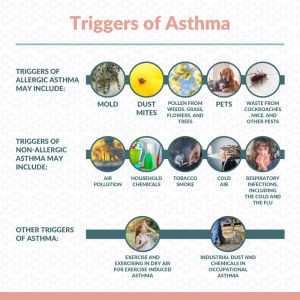
There are two main types of asthma, allergic and non-allergic asthma. Allergic asthma is triggered by allergens and non-allergic asthma is triggered by other, non-allergen factors (4).
Triggers of allergic asthma may include:
- Mold
- Dust mites
- Pollen from weeds, grass, flowers, and trees
- Pets
- Waste from cockroaches, mice, and other pests
Triggers of non-allergic asthma may include:
- Air pollution
- Household chemicals
- Tobacco smoke
- Cold air
- Certain medications
- Respiratory infections, including the cold and the flu
You may also experience exercise-induced asthma triggered by exercise, especially exercising in dry air, or occupation asthma triggered by industrial dust or chemicals.
Risk of Asthma
Asthma can affect anyone regardless of age, sex, race, or ethnicity. However, certain factors may increase your risk for asthma (4, 5).
Risk factors for asthma may include:
- Secondhand smoke exposure before birth or during early childhood years
- Genetics or family history, especially if you have a parent or parents with asthma
- Exposure to dust and chemical irritants at work
- Being black or Puerto Rican
- Obesity, allergies, lung issues, and other health conditions
- Frequent viral respiratory infections as a child
- In children, asthma is more common in males, but in adolescents and adults, it is more common in females.
Diagnosis and Treatment of Asthma
Diagnosis of asthma requires a visit to your doctor. They will go over your symptoms, health and family history, and perform a physical exam. They will likely do some lung function tests, including spirometry to check for lung function. Certain tests will measure how your airways respond to exposure to allergens, medicines, and other substances. A peak expiratory flow (PEF) will check how fast you are able to blow air with maximum effort and a fraction exhaled nitric oxide (FeNO) test will check for inflammation. FeNO looks at the nitric oxide level in your exhaled breath. High levels of nitric oxide suggest inflammation in your lungs. Your doctor may also order some allergy blood or skin tests to look at allergies and immune reactions (4, 6).
A conventional asthma care plan usually involves avoiding your asthma triggers and medication. Short-term relief medications offer quick relief. You can use them to prevent symptoms or reduce them at the first sign of asthma attacks. Short-term relief medication usually come in form of an inhaler you can carry with you in case you need it. Control medications are for everyday use for prevention. They help to decrease inflammation, reduce the narrowing of the airways, and help to reduce the risk of symptoms (4, 6).
There is one important factor conventional doctors often miss: histamine intolerance. Histamine intolerance can trigger or worsen your asthma symptoms. Reducing histamine intolerance through dietary changes, lifestyle strategies, and supplementation may help to decrease your symptoms and even reduce or eliminate your reliance on asthma medication. Let’s discuss the role of histamine intolerance in asthma.
What Is Histamine
Histamine often gets a bad rap. When you think about histamine, chances are that anti-histamines for allergies come to mind. Because of the ‘anti’ part of anti-histamine, histamine often gets a bad rap. You may think histamine is a problem. But histamine is not bad, it’s rather the opposite. Histamine plays a critical role in your immune health and body’s healthy functioning.
Histamine is a chemical in your body. It helps to remove allergens as part of your immune response. Histamine helps your digestion by releasing hydrochloric acid to break down food and bacteria. It also supports your brain and mental health by serving as a chemical messenger between your brain and the rest of your body.
What Is Histamine Intolerance?
Healthy levels of histamine and a healthy histamine response are necessary for your overall health and wellness. Having too much histamine, however, can turn into a serious health issue. If your body is releasing too much histamine that your body can breakdown, it will cause a histamine buildup.
Histamine intolerance is not a sensitivity to histamine. It means that there is too much histamine in your body. Under normal circumstances, your body sends DAO and other enzymes to break down excess histamine and prevent build-up. However, if your body is making too much histamine, these enzymes won’t be able to keep up and break everything down. This will lead to histamine intolerance. If your body is struggling to make enough enzymes, it can also lead to histamine intolerance. Histamine intolerance can affect your entire body, including your gut, brain, lungs, and cardiovascular system causing widespread symptoms (7).
Symptoms of Histamine Intolerance
Histamine intolerance can affect your entire body. This means that your symptoms can be widespread affecting multiple areas of your body. Symptoms may differ from person to person. You may only experience a few symptoms, or you may experience most or all symptoms of histamine intolerance. Your symptoms may only cause mild discomfort or annoyance but may also be severe, interrupting your everyday life.
As you will notice, asthma is one of the possible symptoms of histamine intolerance. Allergies and allergic reactions, which may trigger your asthma, are also on the list. If you have histamine intolerance, you will most likely notice other symptoms from this list beyond asthma and allergies.
Symptoms of histamine intolerance include the following:
- Itchy skin, eyes, ears, and nose
- Eczema or other types of dermatitis
- Hives
- Red eyes
- Facial swelling
- Crawling sensation on the skin or the scalp
- Tightness in the throat
- Difficulty regulating body temperature
- Sudden drop in blood pressure when standing up
- Low blood pressure
- Fast heart rate
- Heart palpitations
- Dizziness or vertigo
- Difficulty falling asleep or sleep issues
- Fatigue
- Confusion
- Brain fog
- Irritability
- Anxiety or panic attacks
- Congestion or runny nose
- Seasonal allergies
- Asthma
- Migraines and headaches
- Acid reflux
- Diarrhea
- Abnormal menstrual cycle
- Premenstrual syndrome (PMS)
Asthma and Histamine
The connection between asthma and histamine intolerance is not a new concept. A 1977 study published in The Journal of Allergy and Clinical Immunology discussed the mechanism of histamine-induced bronchoconstriction and asthmatic reactions (8). They found that using an H1 receptor antagonist before a histamine challenge reduced the bronchial response and asthma attacks to histamine. This suggests that targeting histamine may reduce asthma attacks.
A 1989 study published in The Journal of Allergy and Clinical Immunology also discussed the use of antihistamines in asthma (9). Researchers explained that histamine is a vasoactive and bronchoactive mediator that can naturally cause asthma attacks when encountering allergens. Allergens can activate your mast cells, cause histamine release, and trigger a histamine response. Researchers found that using antihistamine therapy targeting the H1 receptors may reduce asthmatic response and asthma attacks. They may also help to reduce chronic cellular events related to asthma.
A 1987 study published in Chest Journal suggests that mast cells, mast cell mediators, and histamine may play a role not only in allergic asthma but also in non-allergic forms of asthma, including exercise-induced and nocturnal asthma (10). This is not surprising, since mast cells (the cells that release histamine) and histamine play a vital role in your immune health. Encountering an allergen, such as pollen, mold, or dust mites can trigger a mast cell reaction and a histamine response. However, common triggers of non-allergic asthma, including tobacco smoke, air pollution, household chemicals, and certain medications, can also trigger mast cell activation and inflammation.
Since these early studies from the 1970s and ‘80s, we have increased scientific evidence suggesting that mast cells and histamine play a role in asthma. A 2005 comparative study published in Allergy has found that mast cell activation can cause structural alterations in smooth muscle thickness of the airways in allergic asthma (11). They didn’t find the same effect in non-allergic asthma participants. A 2007 study published in Thorax and a 2008 review published in Allergy, Asthma, and Clinical Immunology have both found that mast cell activation may play a role in abnormalities in submucosal glands and asthmatic airway smooth muscle function (12, 13).
A 2010 review published in the Yonsei Medical Journal has explained that mast cells play a critical role in adaptive immune responses, thus mast cells and mast cell-produced mediators may play a role in allergic airway diseases, including allergic asthma (14). According to a 2012 review published in Respiratory Medicine, mast cells help to protect you from pathogens and as a result, they may play a role in the development of allergic inflammation and related conditions, including asthma (15).
Since mast cells and histamine may play a role in the development or increase symptoms of asthma, it makes sense to look at targeting mast cells and histamine in therapeutics for asthma. A 2002 study published in The American Journal of Medicine has found that using H1 receptor antagonists may have therapeutic potential for asthma (16). A 2018 review published in Frontiers in Immunology has discussed that some H1 receptor antagonists show promise in reducing asthma, though some studies found that they are not always clinically effective (17). They noted that H4 receptor antagonists may work in a similar way and may offer similar benefits but studies are still ongoing and reports on clinical efficiency haven’t been published yet.
A 2019 review published in the International Journal of Molecular Sciences has found that some antihistamines may show potential in asthma therapy (18). A 2019 study published in the International Journal of Molecular Sciences, H1 receptor antagonists may be effective for certain subtypes of asthma, but not all types (19).
Problems Using Antihistamines for Asthma
Though anti-histamines show some promise for some types of asthma, there are some problems with this approach. Though anti-histamines may reduce histamine and offer temporary relief, they will not eliminate the root cause of your issue. If you are dealing with histamine intolerance or mast cell activation syndrome (MCAS) and these issues are triggering your syndromes, anti-histamines offer a temporary bandaid solution at best. Because they don’t eliminate the root cause of your issues – histamine intolerance or MCAS –, your symptoms will keep coming back. Over time, they may become less effective and won’t offer even temporary relief. It may become increasingly difficult to fight your symptoms with anti-histamines or other pharmaceuticals.
Not to mention that these anti-histamine medications may have side effects and can interrupt your body’s balance and cause issues in the long run. Anti-histamines may cause dizziness, dry mouth, drowsiness, irritability, decreased appetite, or blurry vision. They may not be right or need precautions for people with diabetes, overactive thyroid, epilepsy, asthma, other breathing issues, glaucoma, high blood pressure, or heart disease (20, 21). Finding a solution without these risks and side effects is a safer idea.
If histamine intolerance or MCAS is triggering your symptoms of asthma, you have to start thinking about addressing the root cause of your symptoms instead of only relying on antihistamines. This means that you have to address your diet, environmental and lifestyle causes of histamine intolerance, the triggers of your asthma, and underlying gut microbiome imbalances. According to a 2020 study published in Nutrients, following a low-histamine diet may help to improve airflow and reduce symptoms in mild intermittent asthma (22). Instead of reaching for anti-histamine medication, you can reduce your histamine load and histamine reactions through diet, lifestyle, and supplementation.
Natural Solutions for Histamine Intolerance and Asthma
Reducing histamine intolerance may help you to reduce your risks and symptoms of asthma. Fortunately, these are some dietary modifications, lifestyle strategies, and supplements you can try to reduce histamine intolerance and lower your risk of asthma attacks naturally. Here is what I recommend:
Remove Your Triggers
Removing your triggers is the first step to reducing your risk of asthma attacks. Completely removing triggers may be difficult. For example, all of us are exposed to pollen during the spring and summer. But you should still reduce your exposure as much as possible. Your asthma triggers may include pollen, mold, dust mites, pets, waste from pests, tobacco smoke, household chemicals, air pollution, certain medications, and cold air. Most of these factors are also triggers of MCAS making it even more important to reduce your exposure.
Eat an Anti-Inflammatory & Low-Histamine Diet
I recommend following a low-histamine, anti-inflammatory, nutrient-dense, whole foods diet. Remove inflammatory foods, including refined sugar, refined oils, canned and processed meat, artificial ingredients, junk food, and highly processed foods. Remove high-histamine foods. Follow a nutrient-dense, anti-inflammatory, and low-histamine diet rich in greens, vegetables, herbs, spices, fruits, healthy fats, and organic meat. If you are dealing with symptoms of histamine intolerance, I recommend that you follow my 4-Phase Histamine Reset Plan outlined in my book, The 4-Phase Histamine Reset Plan: Getting to the Root of Migraines, Eczema, Vertigo, Allergies and More. Try new recipes. I recommend all the low-histamine recipes in The 4-Phase Histamine Reset Plan and my recipe books, Fifty One Low Histamine Air Fryer Recipes and Low Histamine Cooking in Your Instant Pot.
Reduce Your Histamine Bucket
Diet is the first step toward reducing your histamine levels. However, your histamine bucket can fill up in many other ways. A lack of exercise, stress, sleep and toxin exposure can increase your histamine bucket as well.
Move Your Body
Moving your body is a great way to reduce stress, improve detoxification, boost your mood, and support your overall health. Stay active throughout the day by dancing to your favorite songs, taking a stroll in the park, stretching regularly, and playing with your kids or pets. Exercise at least 20 to 30 minutes five days a week and move your body regularly. I recommend getting 10 to 15K steps in a day if you can. Add resistance and strength training to your routine. If you are new to exercise, I recommend the MAPS program from MindPump Media. According to a 2017 study published in the Asian Journal of Pharmaceutical and Health Sciences, yoga may provide relief from symptoms of asthma (23). If you are experiencing exercise-induced asthma, talk to your doctor to introduce strategies to reduce your risk of asthma attacks while exercising.
Reduce Stress and Improve Sleep
To reduce stress and improve sleep, I recommend practicing breathwork, meditation, positive affirmation, journaling, yoga, grounding, and time in nature for stress and anxiety reduction. I really love this breathwork course and use it frequently to reduce anxiety, stress and help clear my body of any built up tension. Taking an Epsom salt bath is another great way to relax your muscles, calm your mind, and detoxify your body. Make sure to sleep at least 7 to 9 hours a night.
Reduce Environmental Toxins
Environmental toxins can not only increase histamine intolerance but can also trigger MCAS and asthma. Reduce your exposure to environmental toxins. Use a HEPA indoor air filtration system to improve your indoor air. Avoid unpurified tap water and use a water purifier instead to improve your water quality. Avoid conventional cleaning, hygiene, body, and beauty products, and choose natural, organic, and homemade options instead. Avoid plastics, especially BPA, and choose glass, bamboo, ceramic, stainless steel, organic cotton, and silicone products and tools instead. Choose organic foods to reduce exposure to pesticides, herbicides, hormones, and artificial ingredients in your diet.
Improve Your Gut Health
Your gut health affects your entire body. Poor gut flora can increase your risk of histamine intolerance, inflammation, and related symptoms. Along with a gut-friendly anti-inflammatory diet, I recommend that you take a high-quality probiotics supplement to support your gut microbiome balance. To take it a step further, I recommend working with a functional medicine practitioner (like me) to test your gut and see if opportunistic bacteria, yeast overgrowth, parasites, H. pylori and/or leaky gut can be what is driving your histamine issue.
Try Omega-3 Fatty Acids
Omega-3 fatty acids are anti-inflammatory fatty acids that help to reduce inflammation. According to a 2004 review published in the Journal of Alternative and Complementary Medicine, omega-3 fatty acids may help to improve airflow and reduce inflammation in asthma (24). To improve your omega-3 levels, I recommend eating wild-caught fresh fish and seafood (make sure it’s fresh! Fish that isn't extremely fresh can trigger histamine intolerance) and flaxseeds, hemp seeds, and chia seeds.
Improve Your Vitamin D
Low vitamin D levels can increase the risk of inflammation and various health issues. Unfortunately, since we spend so much time indoors and many of us live in a colder climate with long months of cloudy and gloomy weather, vitamin D deficiency is quite common. According to a 2004 review published in Cureus, improving vitamin D levels through supplementation may help to reduce asthma (25). Besides spending time outside in the sun, I recommend daily supplementation with vitamin D.
Try Supplements for Histamine Intolerance
I recommend HistoRelief. It is a synergistic blend of nutrients that provides natural support to balance your immune response. This blend features Tinofend®, a patented and clinically researched extract derived from the plant Tinospora cordifolia, which has a powerful ability to support immune regulation and immune response. As a result, it boosts your body’s ability to fight histamine-related symptoms. It includes quercetin, nettle leaf, vitamin C, and bicarbonate salt to help inhibit histamine release, support normal histamine metabolism, and improve immune health.

Final Thoughts
Asthma is a chronic lung condition that affects your airways and your lung. Histamine intolerance is a common underlying factor that may trigger or worsen your symptoms. Addressing underlying histamine intolerance, on the other hand, can reduce your risks and symptoms of asthma. I recommend following my natural strategies for histamine intolerance and asthma to improve your health and well-being. This should not replace the plan you and your pulmonologist/primary doctor have in place, but compliment it.
If you are dealing with symptoms of asthma, allergies, histamine intolerance, or MCAS, I invite you to schedule a consultation with us. We can help identify the root cause of your condition and recommend a personalized treatment plan to repair your body and regain your health and well-being. Schedule your consultation here. I also recommend that you check out my Histamine Online Program.

Sources:
1. Most Recent National Asthma Data. CDC. Link Here
2. What Is Asthma. NIH. Link Here
3. Asthma. CDC. Link Here
4. Asthma. Medline Plus. Link Here
5. Asthma, Symptoms, Causes, and Risk Factors. American Lung Association. Link Here
6. Diagnosing and Treating Asthma. American Lung Association. Link Here
7. Maintz L, Novak N. Histamine and histamine intolerance. Am J Clin Nutr. 2007 May;85(5):1185-96. doi: 10.1093/ajcn/85.5.1185. PMID: 17490952
8. Casterline CL. Further studies on the mechanism of human histamine-induced asthma. 1977. Link Here
9. Stephen T. Holgate, Jim P. Finnerty, Antihistamines in asthma, Journal of Allergy and Clinical Immunology, Volume 83, Issue 2, Part 2, 1989. Link here
10. Mast Cell mediator and asthma. Chest Journal. 1987. Link Here
11. Amin K, Janson C, Boman G, Venge P. The extracellular deposition of mast cell products is increased in hypertrophic airways smooth muscles in allergic asthma but not in nonallergic asthma. Allergy. 2005 Oct;60(10):1241-7. doi: 10.1111/j.1398-9995.2005.00823.x. PMID: 16134989
12. Begueret H, Berger P, Vernejoux JM, Dubuisson L, Marthan R, Tunon-de-Lara JM. Inflammation of bronchial smooth muscle in allergic asthma. Thorax. 2007 Jan;62(1):8-15. doi: 10.1136/thx.2006.062141. PMID: 17189531
13. Bradding, P. Asthma: Eosinophil Disease, Mast Cell Disease, or Both?. All Asth Clin Immun 4, 84 (2008). Link Here
14. Reuter S, Stassen M, Taube C. Mast cells in allergic asthma and beyond. Yonsei Med J. 2010 Nov;51(6):797-807. doi: 10.3349/ymj.2010.51.6.797. PMID: 20879044
15. Kawa Amin, The role of mast cells in allergic inflammation, Respiratory Medicine, Volume 106, Issue 1, 2012, Pages 9-14. Link Here
16. Gelfand EW, Role of histamine in the pathophysiology of asthma: immunomodulatory and anti-inflammatory activities of H1-receptor antagonists. 2002. The American Journal of Medicine. LInk Here
17. Thangam Elden Berla, Jemima Ebenezer Angel, Singh Himadri, Baig Mirza Saqib, Khan Mahejibin, Mathias Clinton B., Church Martin K., Saluja Rohit.The Role of Histamine and Histamine Receptors in Mast Cell-Mediated Allergy and Inflammation: The Hunt for New Therapeutic Targets. Frontiers in Immunology. 2018. Link Here
18. Yamauchi K, Ogasawara M. The Role of Histamine in the Pathophysiology of Asthma and the Clinical Efficacy of Antihistamines in Asthma Therapy. Int J Mol Sci. 2019 Apr 8;20(7):1733. doi: 10.3390/ijms20071733. PMID: 30965592
19. Yamauchi K. The Role of Histamine in the Pathophysiology of Asthma and the Clinical Efficacy of Antihistamines in Asthma Therapy. Int. J. Mol. Sci. 2019, 20(7), 1733;Link Here
20. Antihistamines for Allergies. Medline Plus. Link Here
21. Antihistamines.NHS. Link Here
22. Vassilopoulou E, Konstantinou GN, Dimitriou A, Manios Y, Koumbi L, Papadopoulos NG. The Impact of Food Histamine Intake on Asthma Activity: A Pilot Study. Nutrients. 2020 Nov 5;12(11):3402. doi: 10.3390/nu12113402. PMID: 33167542
23. Impact of Yoga in Asthma TReatment. Asian Journal of Pharmacutical and Health Sciences. 2017. Link Here
24. Mickleborough TD, Ionescu AA, Rundell KW. Omega-3 Fatty acids and airway hyperresponsiveness in asthma. J Altern Complement Med. 2004 Dec;10(6):1067-75. doi: 10.1089/acm.2004.10.1067. PMID: 15674003
25. Ali NS, Nanji K. A Review on the Role of Vitamin D in Asthma. Cureus. 2017 May 29;9(5):e1288. doi: 10.7759/cureus.1288. PMID: 28680776

Eczema, Dermatitis, and Histamine: The Connection
Itchy, inflamed, and flaky skin? Unfortunately, you probably have eczema, but you are not alone. Millions have experienced eczema in their lives. Like you, many of them struggle with re-occurring eczema.
Chances are, you’ve tried topicals and medication to get rid of the problems. Your symptoms may subside, but soon enough, you have another flare. If you are frustrated with this seemingly never-ending cycle of flares, I understand. I see this all the time in my patients.
The problem is that most conventional treatment methods only address the symptoms of eczema, not the underlying problem. In many of my patients, we find that histamine intolerance, chronic inflammation, and gut microbiome imbalance are the true culprits behind their issues. Once you address the underlying causes of your eczema or dermatitis, you may find your symptoms greatly reduced or disappear.
In this article, you will learn what eczema and dermatitis are. You will learn about histamine and histamine intolerance. I will explain how eczema, dermatitis, and histamine may be connected. I will offer some natural strategies for eczema and dermatitis to improve your health and well-being.
What Are Eczema and Dermatitis
Eczema is a term used for a group of skin conditions that make your skin inflamed and itchy or cause a rash. Eczema is very common, and most people experience it at one point in their life. Many people struggle with chronic eczema that comes in flairs.
So dermatitis is the same as eczema? Not exactly. The terms eczema and dermatitis can overlap, and many use them interchangeably, but they are not exactly the same. Atopic dermatitis is a form of eczema that is often used instead of eczema.
The term dermatitis refers to inflammation of the skin. It is a broader term that includes more conditions besides eczema. Eczema is a condition characterized by inflamed skin but also other symptoms, such as itching, flakiness, or dry skin. Eczema is generally chronic, while dermatitis may be chronic or acute.
Types of Eczema and Dermatitis
Some of the main types of dermatitis and eczema include atopic dermatitis, contact dermatitis, seborrheic dermatitis, status dermatitis, neurodermatitis, dyshidrotic eczema, nummular eczema, follicular eczema, and asteatotic eczema.
Atopic dermatitis is one of the most common types, and it’s often referred to as eczema. It is a chronic skin condition that usually comes in bouts of flare-ups. It’s characterized by itching, dry skin, and flaky or scaly patches, and it often appears on the knees, elbow, neck, and other joint areas but may occur elsewhere on your body. If you have chronic eczema, chances are you have atopic dermatitis.
Contact dermatitis is another common form that develops when your skin reacts to something it’s come in contact with, such as poison ivy, metals, soap, or other irritants. It may cause itching, burning, stinging, rashes, or blisters. Seborrheic dermatitis generally develops in areas where sebum) oil is produced and secreted or where hair grows. It can cause a dry, scaly appearance, red skin, dandruff, and rashes.
Statis dermatitis develops when fluid leaks out of your weakened veins into your skin and causes pain, redness, itching, swelling, and inflammation. Neurodermatitis is very similar to atopic dermatitis and may cause scaly patches and itchiness. Dyshidrotic eczema can cause blisters on your skin. Nummular eczema can cause coin-shaped round spots on your skin that may be itchy or scaly. Follicular eczema occurs around the hair follicles and may cause itchy, scaly, cracked, and crusty skin and rashes. Asteatotic eczema can develop on extremely dry skin, causing red, inflamed, cracked, and scaly skin.

Symptoms of Eczema and Dermatitis
Your symptoms may vary depending on the type of dermatitis or eczema you have. You may experience mild, moderate, or severe symptoms. They may last for a week or so or much longer. Since symptoms of eczema may be similar to other skin conditions, such as psoriasis or rosacea, it’s important that you get the right diagnosis to address the problem.
Symptoms of eczema and dermatitis may include:
- Itchy skin
- Dry and sensitive skin
- Inflamed skin
- Discolored skin
- Rough, leathery, or scaly patches on your skin
- Crusty skin
- Oozing of the skin
- Swelling of the skin
- Bleeding from scratching too much
Triggers of Eczema and Dermatitis
Eczema and dermatitis are not contagious conditions. Their exact cause is unknown, however, a variety of dietary, lifestyle, environmental, and biological factors can play a role in developing eczema or dermatitis. When your body encounters an allergen or irritant, it can turn on your immune system, create inflammation, and cause symptoms of eczema to fight off the trigger.
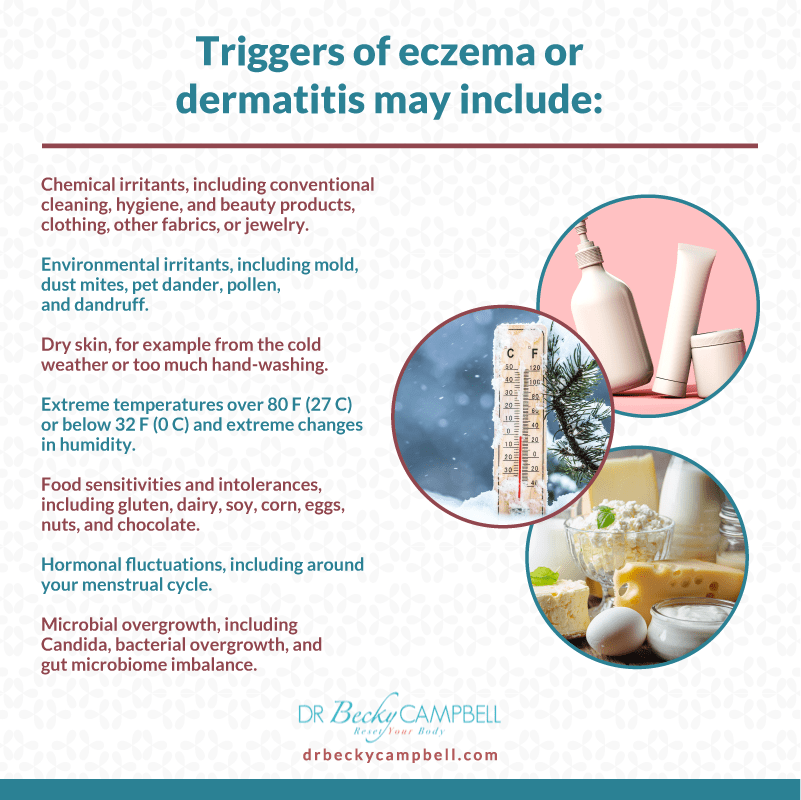
Triggers of eczema or dermatitis may include:
- Chemical irritants, including conventional cleaning, hygiene, and beauty products, clothing, other fabrics, or jewelry.
- Environmental irritants, including mold, dust mites, pet dander, pollen, and dandruff.
- Dry skin, for example, from the cold weather or too much hand-washing.
- Extreme temperatures over 80 F (27 C) or below 32 F (0 C) and extreme changes in humidity.
- Food sensitivities and intolerances, including gluten, dairy, soy, corn, eggs, nuts, and chocolate.
- Hormonal fluctuations, including around your menstrual cycle.
- Microbial overgrowth, including Candida, bacterial overgrowth, and gut microbiome imbalance.
What Is Histamine
Histamine is an important chemical that helps your body get rid of allergens as part of your immune response. It supports your digestion by releasing hydrochloric acid to break down food and bacteria. It also supports your brain health by serving as a chemical messenger between your brain and the rest of your body.
Histamine only becomes a problem if there is too much of it. If your body is releasing too much histamine and your body is unable to break down all the excess histamine, histamine build-up occurs.
Histamine intolerance means that there is too much histamine in your body. Under normal circumstances, your body sends enzymes to break down excess histamine and prevent build-up. However, if you have too much histamine, it won’t be able to break everything down, which can lead to histamine intolerance. Histamine intolerance can affect your entire body, including your gut, brain, lungs, and cardiovascular system.
Since histamine intolerance can affect your entire body, symptoms can be widespread. Many of the main symptoms of histamine intolerance affect your skin. Eczema and dermatitis are common problems among those with histamine intolerance, so are hives, acne, itchy skin, psoriasis, crawling sensation on the skin or the scalp, and facial swelling. Other non-skin-related symptoms may include fast heart rate, heart palpitations, dizziness, vertigo, sudden drop in blood pressure when standing up, red eyes, headaches, migraines, fatigue, sleep issues, brain fog, irritability, anxiety, panic attacks, congestion, runny nose, seasonal allergies, asthma, acid reflux, diarrhea, other digestive issues, abnormal menstrual cycle, and premenstrual syndrome (PMS).
Eczema, Dermatitis, and Histamine
Let’s look at the connection between eczema, dermatitis, and histamine.
Eczema, Dermatitis, Gut Health, and Histamine Intolerance
Your skin serves as a barrier between the inside of your body and physical, chemical, and microbial stressors from the outside. Unfortunately, gut microbiome imbalance and gut health troubles can affect skin health and its effectiveness as a barrier. Gut microbiome imbalance may not only cause intestinal inflammation, but may lead to skin microbiome imbalance, skin inflammation, and the risk of infections. Gut microbiome imbalance may also affect your skin’s oil production and its ability to regenerate effectively. It may also increase food sensitivities, disrupt immune function, and increase chronic inflammation. These factors may all increase the risk of eczema.
For people without histamine intolerance, eating fermented foods and taking probiotics can often help to improve the gut flora, reduce inflammation, and improve eczema. Unfortunately, if you have histamine intolerance, these things only add fuel to the fire. Fermented foods are high in histamine and are very triggering for those with histamine intolerance. Instead of helping, they can actually trigger your eczema further. On top of that. Many probiotics on the market are not right for those with histamine intolerance. Later in this article, I will recommend some gut support strategies and a probiotic that’s right for people like you with histamine intolerance.
Eczema, Dermatitis, and Histamine Intolerance
Gut microbiome imbalance can lead to an inflammatory response and histamine release, which can lead to histamine intolerance and related symptoms. When your skin is irritated by a toxin or allergen, it will activate your mast cells. Your mast cells will release histamine and cause an inflammatory response.
A 2014 study published in Allergology International has found that histamine plays a role in allergic inflammation and related atopic dermatitis by activating your mast cells, basophils (a type of white blood cell), eosinophils (specialized cells in your immune system), and Th2 cells, which stimulate a humoral immune response (3). A 2018 study published in the British Journal of Pharmacology has found that adding the H4 histamine receptor may play a role in atopic dermatitis and psoriasis and H4 antagonists may help to reduce inflammation (4).
On-going inflammation can further disrupt your skin health and feed the cycle of inflammation, histamine release, and further eczema. If you are already dealing with histamine intolerance, any additional histamine release will aggravate the problem creating an ongoing issue.
Using Anti-Histamines for Eczema and Dermatitis
If histamine intolerance is one of the underlying issues behind eczema and dermatitis, prescribing anti-histamines may sound like a logical idea. According to the American Academy of Dermatology Association, between 16 to 44 percent of atopic dermatitis visits end up with an antihistamine prescription (5). Dermatologists and pediatricians generally prescribe sedatives, while general practitioners tend to prescribe non-sedative antihistamine pharmaceuticals. These drugs may offer symptoms relief and may support sleep that may be interrupted by the condition.
Studies have shown that anti-histamine medications may be effective for eczema and dermatitis. For example, a 1990 review published in Clinical ad Experimental Allergy has found that antihistamines may help atopic eczema (6). A 2014 study published in Allergology International has found that H1R and H4R antagonists may help to reduce the itch response and inflammation in atopic dermatitis (3). A 2018 study published in the British Journal of Pharmacology has found that H4 antagonists may help to reduce inflammation in atopic dermatitis (4).
There are a few problems with this approach though.
Anti-histamine drugs and topicals only address the symptoms of your problem. They may offer temporary relief but will not eliminate the root cause of the issue. This means that your skin issues will keep coming back. It may become increasingly difficult to fight your symptoms with anti-histamines or other pharmaceuticals.
Another problem with antihistamines is that they reduce your body’s ability to create the enzyme breaking down histamine. This decreases your body’s ability to deal with excess histamine. Being on these medications for too long can make it more difficult to support your body’s natural ability to reduce histamine intolerance. Now, there are some people with serious mast cell activation syndrome (MCAS) that do need to stay on these medications. However, most people with histamine intolerance and milder MCAS, do not. Most people can support their body through diet, lifestyle, and supplementation, and reduce histamine intolerance and related symptoms naturally.
Not to mention that these medications can have side effects and can interrupt your body’s balance in the long run. Anti-histamines may cause dizziness, dry mouth, drowsiness, irritability, decreased appetite, or blurry vision. They may not be right or need precautions for people with diabetes, overactive thyroid, epilepsy, asthma, other breathing issues, glaucoma, high blood pressure, or heart disease (7, 8). Finding a solution without these risks and side effects is a safer idea.
To truly address eczema, you have to think about the root causes of your symptoms. This means that you have to address your diet, environmental and lifestyle causes of histamine intolerance, the triggers of your eczema, and underlying gut microbiome imbalances. Instead of reaching for anti-histamine medication, you can reduce your histamine load and histamine reactions through diet, lifestyle, and supplementation.
Natural Solutions for Eczema, Dermatitis, and Histamine Intolerance
If you are dealing with eczema, dermatitis, and histamine intolerance, I recommend the following natural strategies to improve your health.
Follow Anti-Inflammatory and Low-Histamine Diet
Following an anti-inflammatory, antioxidant-rich, and nutrient-dense diet is important for your skin health. Reducing inflammation through an anti-inflammatory diet can reduce skin inflammation and skin symptoms. Following a low-histamine diet can help you reduce histamine intolerance and lower the risk of histamine-related eczema and skin issues.
Remove inflammatory foods, including refined sugar, refined oils, canned and processed meat, artificial ingredients, junk food, and highly processed foods. Avoid high-histamine foods, such as fermented food (e.g., sauerkraut, kimchi, fermented vegetables, kombucha, etc.), aged food (e.g., aged cheese, processed meat, canned fish, etc.), over-ripe fruits and vegetables, leftovers, and foods that are naturally high in histamine (e.g., avocadoes, eggplant, spinach, dried fruits, etc.). Avoid foods that may trigger histamine releases, such as tomatoes, most citrus, bananas, most nuts, and dairy. Avoid foods that may block the DAO enzyme, including black tea, green tea, alcohol, and energy drinks.
Eat a nutrient-dense, anti-inflammatory, and low-histamine diet rich in greens, vegetables, herbs, spices, fruits, healthy fats, and organic meat. Low-histamine foods include most fresh leafy greens and vegetables, non-citrus fruits, such as apples, pear, papaya, and grapes, fresh grass-fed meat, pasture-raised poultry and eggs, and wild-caught fish, olives, extra-virgin olive oil, ghee, coconut oil, leafy herbs, and herbal tea. My book, The 4-Phase Histamine Reset Plan includes an extensive list of foods that you can eat and should avoid on a low-histamine diet.
If you are new to a low-histamine diet, remember to have fun experimenting with new foods and recipes. I promise low-histamine meals can be delicious. I recommend all the low-histamine recipes in The 4-Phase Histamine Reset Plan and my new recipe book, Fifty One Low Histamine Air Fryer Recipes. They are all simple, easy to make, low-histamine, gluten-free, Paleo-friendly, and super healthy. Not to mention how delicious they are — your family will love them too.
Avoid Irritants and Lower Your Histamine Bucket
Avoid allergens and irritants that may trigger your eczema. Remove conventional cleaning, hygiene, and beauty products, and use organic, natural, and homemade alternatives instead. Avoid fabric that may irritate your skin. If you are allergic to any metals, avoid wearing them, and choose surgical steel, silver, or gold instead. Make sure that your house is free from mold and use a high-quality air filtration system to reduce toxins in your indoor air. Beyond reducing exposure to environmental toxins, lower your histamine bucket by reducing stress, getting restful sleep, and moving your body regularly.
Support Your Gut
Your gut health affects your entire body. Gut flora imbalance can trigger both histamine intolerance and eczema. Supporting your gut health is critical for your recovery. Along with a gut-friendly, low-histamine, anti-inflammatory diet, I recommend that you take a high-quality probiotics supplement to support your gut microbiome balance.
Try Some Supplements
I recommend HistoRelief. It is a synergistic blend of nutrients that provides natural support to balance your immune response. This blend features Tinofend®, a patented and clinically researched extract derived from the plant Tinospora cordifolia, which has a powerful ability to support immune regulation and immune response. As a result, it boosts your body’s ability to fight interstitial cystitis symptoms. It includes quercetin, nettle leaf, vitamin C, and bicarbonate salt to help inhibit histamine release, support normal histamine metabolism, and improve immune health.
Protect Your Skin and Use Natural Skincare
I have already covered that avoiding your triggers, such as chemicals, fabrics, and metals that may cause a problem, is important. There are others ways to protect your skin, though. If you live in a cold climate and are sensitive to cold weather, make sure to protect your skin with warm gloves and layers in sensitive areas.
Though proper hygiene, such as hand-washing, are critical for keeping infections, including skin infections, away, washing your hands too much can cause dry skin and trigger skin issues. You may want to use gloves when washing dishes. As I explained earlier, avoid conventional cleaning and personal hygiene products, such as chemical-filled soap, dish soap, body wash, or shampoo. Choose organic, natural, and homemade alternatives instead. You may learn more about my skincare routine in this article.
Though addressing underlying problems behind your eczema and dermatitis is key to recovery, it can take several months to improve those issues. In the meantime, you can reduce your symptoms naturally. Moisturizing and other topicals may help to reduce symptoms during flares. However, conventional topicals are filled with chemicals and can cause side effects and further skin issues. Instead, I recommend natural alternatives. The following options may help soothe your symptoms until you completely address your underlying problems.
A 2019 study published in the Journal of Traditional and Complementary Medicine, coconut oil is a fantastic natural option to reduce inflammation, protect the skin barrier, and reduce symptoms (9). Apply cold-press coconut oil several times a day as needed. According to a 2015 study published in the Journal of Drugs in Dermatology, colloidal oatmeal lotion and baths may help to reduce inflammation, scaling, dryness, and itching (10).
A 2017 study published in the Journal of Pre-Clinical and Clinical Research has found that aloe vera may help to reduce skin inflammation and offer antimicrobial benefits (11). A 2017 study published in Pharmacognosy Research has found that applying honey to the skin may help to reduce inflammation and infections and improve eczema and other conditions (12).
Final Thoughts
Eczema and dermatitis are uncomfortable skin conditions characterized by inflamed, itchy, dry, scaly, and flaky skin. Millions of people are struggling with chronic eczema and dermatitis without experiencing success using conventional treatment methods. These strategies only tend to address the symptoms and may come without risks and side effects. Without addressing the root cause of your eczema and dermatitis, you may experience flares again and again. I recommend following my strategies for underlying histamine intolerance, gut health issues, and chronic inflammation for improving your eczema and dermatitis naturally.
If you are dealing with eczema, dermatitis, other skin problems, or other symptoms of histamine intolerance, I invite you to schedule a consultation with us. We can help identify the root cause of your condition and recommend a personalized treatment plan to repair your body and regain your health and well-being. Schedule your consultation here. I also recommend that you check out my Histamine Online Program.
Sources:
- Slominski A. A nervous breakdown in the skin: stress and the epidermal barrier. J Clin Invest. 2007 Nov;117(11):3166-9. doi: 10.1172/JCI33508. PMID: 17975659
- InformedHealth.org [Internet]. Cologne, Germany: Institute for Quality and Efficiency in Health Care (IQWiG); 2006-. Skin care for eczema. 2017 Feb 23. Link Here
- Yusuke Ohsawa, Noriyasu Hirasawa, The Role of Histamine H1 and H4 Receptors in Atopic Dermatitis: From Basic Research to Clinical Study, Allergology International, Volume 63, Issue 4, 2014, LinkHere
- Schaper K. The Role of the H4 Receptor in Atopic dermatitis and Psoriasis. British Journal of Pharmacology. 2018. Link Here
- Should dermatologists be anti-histamine fordermatisis? AADA Link Here
- Behrendt H, Ring J. Histamine, antihistamines and atopic eczema. Clin Exp Allergy. 1990 Nov;20 Suppl 4:25-30. doi: 10.1111/j.1365-2222.1990.tb02473.x. PMID: 1980856
- Antihistamines for Allergies. Medline Plus. Link Here
- Antihistamines.NHS. Link Here
- Sandeep R. Varma, Thiyagarajan O. Sivaprakasam, Ilavarasu Arumugam, N. Dilip, M. Raghuraman, K.B. Pavan, Mohammed Rafiq, Rangesh Paramesh, In vitro anti-inflammatory and skin protective properties of Virgin coconut oil, Journal of Traditional and Complementary Medicine, Volume 9, Issue 1, 2019, Link Here
- Reynertson KA. JJD. 2015. Link Here
- Zagórska-Dziok M, Furman-Toczek D, Dudra-Jastrzębska M, Zygo K, Stanisławek A, Kapka-Skrzypczak L. Evaluation of clinical effectiveness of Aloe vera – a review. J Pre Clin Clin Res. 2017;11(1):86-93. Link Here
- Samarghandian S, Farkhondeh T, Samini F. Honey and Health: A Review of Recent Clinical Research. Pharmacognosy Res. 2017 Apr-Jun;9(2):121-127. doi: 10.4103/0974-8490.204647. PMID: 28539734

Metabolism, Weight Gain, and Histamine Intolerance
Metabolism, Weight Gain, and Histamine Intolerance
Are you dealing with unwanted weight gain or have difficulties losing weight? What if I told you that it’s more than just those holiday pounds. Histamine intolerance may be one of the missing culprits behind your weight issues.
Histamine is not inherently bad. Your body needs it for a variety of bodily functions. Histamine plays a critical role in your metabolism, food intake, and energy expenditure. At healthy levels, histamine helps you maintain a healthy weight.
If you have histamine intolerance or too much histamine, however, it can contribute to chronic inflammation, chronic symptoms, and yes, weight gain as well. Histamine intolerance may influence your food intake. Many high-histamine foods are inflammatory and may contribute to weight problems. Histamine intolerance may also be linked to thyroid dysfunction, estrogen dominance, and gut health issues that may also increase the risk of weight gain and make weight loss more difficult.
As you can see, the connection between histamine intolerance, metabolism, and weight gain is complex. In this article, I want to get to the bottom of the connection and uncover potential underlying reasons behind your weight problems. You will learn what histamine and histamine intolerance are. I will discuss the role of histamine in your metabolism and weight. You will learn about the ways histamine intolerance may play a role in weight gain. Finally, I will offer some natural solutions to reach a healthy weight and improve your health.
What Is Histamine Intolerance
Histamine is a chemical in your body that is responsible for a variety of functions. Its main role is to support your immune system by helping your body get rid of allergens. This is why we are commonly recommended by conventional medicine to take antihistamines for allergy-symptom relief. Histamine also communicates with your brain and triggers stomach acid release to aid digestion affecting your entire body.
Histamine can turn into a problem when it builds up in your body. Histamine intolerance means that that your body has too much histamine. As a natural part of your immune response, your body sends enzymes to break down histamine in order to prevent too much build-up. However, when there is too much histamine, it becomes difficult to break it down and metabolize it.
Too much histamine can affect all parts of your body, including your gut, brain, lungs, and cardiovascular system. It may lead to a list of unwanted symptoms, including skin problems, red eyes, low blood pressure, fast heart rate, anxiety, hormonal issues, headaches, seasonal allergies, digestive issues, sleep disturbances, bladder problems, and more. You can learn more about histamine intolerance, its symptoms, causes, and treatment options, in this article.
How Histamine Affects Your Metabolism and Weight
We use the term metabolism daily. We blame our metabolism for those extra pounds. But what is this mysterious metabolism anyway?
Your metabolism is a combination of chemical reactions inside your body that convert food into energy. You need energy to do everything from thinking to digesting your food, from moving your body to sleep. While a healthy metabolism helps you to maintain a healthy weight, it is not the main purpose, energy is. A healthy metabolism helps to create energy for your day-to-day life.
Your brain is the command center of your body. It’s not surprising that your metabolism is controlled by your brain, more specifically by your hypothalamus. Your hypothalamus is a region of your forebrain located right below the thalamus. It coordinates your autonomic nervous system. It also coordinates your pituitary gland which controls your homeostatic systems, including hunger, thirst, temperature, sleep, and even emotional activity.

Histamine and Your Weight
This is where histamine enters the picture. Histamine is released and enters your hypothalamus to switch on certain receptors. Some of these receptors are responsible for regulating body heat or energy output. Others are responsible for hunger and satiety and as a result, your eating habits. According to a 2008 review published in Nutrition, hypothalamic neuronal histamine and its H(1) receptor (H(1)-R) regulate your body weight, food intake, and energy expenditure (1).
Here comes the tricky part. Histamine doesn’t necessarily cause weight problems. In fact, histamine generally promotes weight loss and weight maintenance. The stimulation of the histamine 1 receptors may cause a decrease in food intake. A 2007 review published in Neuroendocrinology has found that histamine plays a role in regulating body weight (2). Some studies have found that low levels of histamine are sometimes linked to obesity. According to a 2016 review published in Neuropharmacology, histamine in the brain control appetite, food intake, and energy expenditure, and as a result may help to prevent obesity and metabolic syndrome (3).
Chronic Inflammation, Histamine Intolerance, and Weight Gain
If histamine generally helps you stay at a healthy weight, how can histamine lead to weight problems? Great question. It depends on a number of factors, including the amount of histamine in your body, genetics, chronic inflammation in the body, other coexisting conditions, and lifestyle factors. Normal levels of histamines do not cause weight gain, but histamine intolerance can. Histamine intolerance can often cause chronic inflammation which may lead to weight gain.
Chronic inflammation can lead to an increase in corticotropin-releasing hormone (CRH), which is a stress hormone. A 2017 review published in Frontiers in Neuroscience, CRH triggers your mast cells which leads to the release of more histamine. More histamine can increase chronic inflammation, stress, and chronic symptoms. This may lead to an increase in CRH, which will lead to mast cell activation and histamine release. As you can see, this can lead to a cycle of inflammation, stress, and histamine intolerance, and consequent weight gain.

Histamine and Your Eating Behavior
Chronic inflammation is not the only way that histamine may play a role in weight gain. A 2010 research published in the Journal of Pharmacology and Experimental Therapeutics has looked at the relationship between the histamine H3 receptor and eating behavior (5). They found that when an animal had to figure out how to get to food located in a closed container or had to perform other tasks, such as pressing a lever, to get to food, their brain released histamine. However, when they had access to food without having to perform tasks or work for it, there was no brain histamine release.
This may be applied to your stress levels, eating behavior, and relationship with food. If you are stressed out about food, perhaps you are dieting, it may cause increased histamine release, inflammation, and symptoms. Not to mention that it may also cause stress-eating, reaching for inflammatory and high-histamine foods, and consequent weight gain. If you are relaxed about food, not dieting, not stressing, and not restricting, it may reduce the risk of excess histamine, inflammation, and weight gain.
High-Histamine Foods and Weight Gain
If you have histamine intolerance, but you don’t know about it, chances are you are eating lots of high-histamine foods. Though many high-histamine foods are healthy for the general population, other high-histamine foods are inflammatory and unhealthy for everybody. Baked goods with gluten and grains, for example, can trigger histamine intolerance and chronic inflammation. Processed foods and junk food are usually also high in histamine and are highly inflammatory. They are low (or empty) in nutrients but are high in calories and often, refined sugar, refined oils, additives, and artificial ingredients, and can increase your risk of weight gain, chronic inflammation, and chronic health issues.
Antihistamines and Weight Gain
If you have frequent allergies or skin reactions due to undiagnosed histamine intolerance, you may be taking antihistamines. That may be an unsuspected culprit behind your weight gain. According to a 2010 study published in Obesity, common prescription H1 antihistamine medications, such as Zyrtec and Allegra, may contribute to weight gain (6).
On the other hand 2011 study published in Diabetes, Metabolism, Research and Reviews has found that mast cell stabilizing medications, such as cromolyn and ketotifen, may reduce the risk of weight gain and obesity. This suggests that mast cells activation syndrome (MCAS) may cause weight gain that can be reversed once the mast cells are stabilized.
Histamine Intolerance, Thyroid, and Weight Gain
Histamine intolerance is often connected to or co-occurs with thyroid dysfunction. According to a 2019 review published in Frontiers in Cellular Neuroscience, thyroid dysfunction may cause mast cell activation and histamine intolerance (1). Research has shown that low thyroid levels may lead to increased histamine production and high levels of thyroid hormones may cause increased histamine response in your body (1, 2).
One of the common symptoms of hypothyroidism, such as Hashimoto’s thyroiditis, is unintentional weight gain. It looks like if you have Hashimoto’s and weight problems, you may have to look into histamine intolerance as a possible factor as well. You may learn about the connection between thyroid dysfunction and histamine intolerance and what to do about them in this article. If you are dealing with thyroid problems, I recommend reading my book, The 30-Day Thyroid Reset Plan.
Histamine Intolerance, Estrogen Dominance, and Weight Gain
Histamine intolerance and estrogen dominance often share similar symptoms. It may not be just a coincidence. Estrogen and histamine actually attach to the same H1 receptors (10). Because of this, estrogen will cause the release of histamine from your mast cells. The more estrogen you have, the more histamine will be released to your bloodstream as well, leading to a vicious cycle of estrogen dominance and histamine intolerance.
How is this related to weight gain though? Weight gain is one of the major symptoms of estrogen dominance which may be further increased by histamine intolerance. You may learn about the connection between estrogen dominance and histamine intolerance and what to do about them in this article.

Histamine Intolerance, Gut Health, and Weight Gain
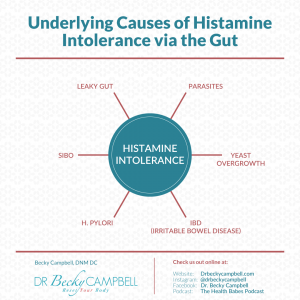
One last connection we have to touch on is the connection between histamine intolerance and your gut health. As I discussed in this article, leaky gut syndrome and various gut infections, including small intestinal bacterial overgrowth (SIBO), H pylori, Candida and fungal overgrowth, and parasites, are some of the top underlying causes of histamine intolerance.
Leaky gut syndrome allows undigested food particles, toxins, and pathogens to pass into your bloodstream. Leaky gut syndrome can also cause low DAO enzyme production. DAO is responsible for breaking down excess histamine in your body. Not having enough increases your risk of histamine intolerance. If you are dealing with a gut infection, it can trigger increased histamine release that your body won’t be able to keep up, which may cause histamine intolerance.
Leaky gut syndrome and gut infections may also play a role in weight gain. According to a 2020 review published in Preventative Nutrition and Food Science, gut microbiome imbalance can poorly affect your metabolism and energy expenditure and increase the risk of obesity (11). Gut microbiome imbalance may also increase cravings for inflammatory foods, increase chronic inflammation, and increase stress. This can quickly turn into a cycle of poor gut health, histamine intolerance, chronic inflammation, and weight problems. You may learn about the connection between gut health and histamine intolerance and what to do about it, in this article.
Solutions for Weight Gain and Histamine Intolerance
Losing weight is not about self-deprivation. It’s not even about your weight. It’s about your health and wellness. Here are my top recommendations for histamine intolerance to help you lose weight, address other histamine-related health issues and improve your overall health:
Follow a Low-Histamine Diet
Following an anti-inflammatory, antioxidant-rich, and nutrient-dense diet is important for everyone who wants to achieve and maintain a healthy weight and feel healthy in their body. If you have histamine intolerance and histamine is the culprit behind your weight gain, start with a low-histamine, anti-inflammatory diet.
Remove inflammatory foods, including refined sugar, refined oils, canned and processed meat, artificial ingredients, junk food, and highly processed foods. These foods are highly inflammatory and are essentially empty calories. They may taste good temporarily, but they will only pack on the pounds, leave you bloated and tired, and cause health issues.
Avoid high-histamine foods, such as fermented food (eg. sauerkraut, kimchi, fermented vegetables, kombucha, etc), aged food (eg. aged cheese, processed meat, canned fish, etc), over-ripe fruits and vegetables, leftovers, and foods that are naturally high in histamine ( eg. avocadoes, eggplant, spinach, dried fruits, etc). Avoid foods that may trigger histamine release, such as tomatoes, most citrus, bananas, most nuts, and dairy. Avoid foods that may block the DAO-enzyme, including black tea, green tea, alcohol, and energy drinks.
Eat a nutrient-dense, anti-inflammatory, and low-histamine diet rich in greens, vegetables, herbs, spices, fruits, healthy fats, and organic meat. Low-histamine foods include most fresh leafy greens and vegetables, non-citrus fruits, such apples, pear, papaya, and grapes, fresh grass-fed meat, pasture-raised poultry and eggs, and wild-caught fish, olives, extra-virgin olive oil, ghee, coconut oil, leafy herbs, and herbal tea. My book, The 4-Phase Histamine Reset Plan includes an extensive list of foods that you can eat and should avoid on a low-histamine diet.
The key to any new diet or lifestyle change is experimentation and fun. Have fun in the kitchen and try new recipes. I recommend all the low-histamine recipes in The 4-Phase Histamine Reset Plan and my new recipe book, Fifty One Low Histamine Air Fryer Recipes. They are all simple, easy to make, low-histamine, gluten-free, Paleo-friendly, and super healthy. Not to mention how delicious they are — your family will love it too.
Reduce Your Histamine Bucket
High-histamine foods are the number one common culprit behind histamine intolerance. However, stress, poor sleep, a sedentary lifestyle, environmental toxins, and other lifestyle factors can fill up your histamine bucket and cause histamine intolerance and related weight gain.
Reduce Stress and Improve Your Sleep
Chronic stress and poor sleep can contribute to histamine intolerance. They may also cause high cortisol levels and hormonal imbalance that may cause weight gain and make weight loss difficult. I recommend practicing breathwork, meditation, journaling, yoga, time in nature, and positive affirmations for stress and anxiety reduction. Taking an Epsom salt bath is another great way to relax your muscles, calm your mind, and detoxify your body. Make sure to sleep at least 7 to 9 hours a night.
Move Your Body and Exercise Regularly
Moving your body is another way to reduce stress, lower inflammation, uplift your mood, reduce your histamine bucket, and support a healthy weight. Move your body throughout the day. Get up, stretch, and shake out your body regularly throughout the day. Take a stroll during lunch or go on a walk-date with a friend. Get silly and dance to your favorite song. Play with your pets or kids.
For exercise, I recommend resistance training to a level that makes you feel good after, not exhausted. I also recommend trying to get between 10k-15k steps per day.
Exercise should be fun. Experiment with different workouts until you find what brings you joy. But remember, strength and resistance training is non-negotiable to maintain muscle mass, protect your bones, feel energized, and have a toned, youthful body.
Reducing Environmental Toxin Exposure
Reducing environmental toxicity is another important step for reducing histamine intolerance. Toxins can increase inflammation, histamine release, and chronic symptoms. Buy organic produce and food to reduce exposure to pesticides, herbicides, and hormones. Drink filtered water instead of tap water.
Remove chemical-filled conventional cleaning, hygiene, and beauty products, and choose organic, natural, and DIY options instead. Make sure that your home is free from mold. Use a high-quality HEPA air-filtration system to clean your indoor air. Instead of plastic, use cloth bags, glassware, glass containers, bamboo bowls, stainless steel bottles and pans, and silicone zip lock bags.
Improve Your Gut Health
Your gut health affects your entire body. Poor gut flora can lead to histamine intolerance and weight gain. Supporting your gut health may reduce chronic inflammation, improve digestion and nutrient absorption, decrease digestive troubles, reduce infections and toxin overload, improve detoxification, support a healthy weight, and reduce chronic symptoms.
Along with a gut-friendly anti-inflammatory diet, I recommend working with a functional medicine practitioner (like me) to test your gut and see if opportunistic bacteria, yeast overgrowth, parasites, H. pylori and/or leaky gut can be what is driving your histamine issue.
Try Supplements for Histamine Intolerance
I recommend HistoRelief. It is a synergistic blend of nutrients that provides natural support to balance your immune response. This blend features Tinofend®, a patented and clinically researched extract derived from the plant Tinospora cordifolia, which has a powerful ability to support immune regulation and immune response. As a result, it boosts your body’s ability to fight histamine-related symptoms. It includes quercetin, nettle leaf, vitamin C, and bicarbonate salt to help inhibit histamine release, support normal histamine metabolism, and improve immune health.
Dig Deeper
If you are still having difficulty losing weight or maintaining a healthy weight despite following a low-histamine diet, reducing your histamine bucket, and making healthy choices, it may make sense to look into other underlying issues. As you know, thyroid imbalance, estrogen dominance, leaky gut syndrome, gut infections, and other issues may play a role. Working with a functional medicine practitioner (hint: my team and I) can help you figure out the root cause of your weight gain and other symptoms and create an individualized treatment plan to achieve a healthy weight, reduce your symptoms, and improve your health naturally.
Focus on Health and Love Yourself Through the Process
Instead of focusing on weight loss, focus on your health. It’s all about how you feel. How does your food make you feel? How do your lifestyle choices make you feel? Are you energized, light, happy, and inspired, or sluggish, tired, bloated, and symptomatic? Are you feeling a bit better each day, stagnating, or feeling worse? These are important signs to remember.
If you are following a healthy, low-histamine, and anti-inflammatory diet and lifestyle, you will notice excess weight release. Over time, your body will find its comfortable spot. Most importantly, you will start to feel vibrant, energized, and healthy again. Remember, it’s a journey. Do yourself a favor: have fun and love yourself through the process.
Final Thoughts
There may be a number of reasons behind your weight gain. Histamine intolerance may be one of them. I recommend following my nutrition and lifestyle tips for histamine intolerance and weight gain. They will help you to reclaim your health and feel energized in a healthy body.
If you are dealing with weight gain or symptoms of histamine intolerance, I invite you to schedule a consultation with us. We can help identify the root cause of your condition and recommend a personalized treatment plan to repair your body and regain your health and well-being. Schedule your consultation here. I also recommend that you check out my Histamine Online Program.

Sources:
- Yoshimatsu H. Hypothalamic neuronal histamine regulates body weight through the modulation of diurnal feeding rhythm. Nutrition. 2008 Sep;24(9):827-31. doi: 10.1016/j.nut.2008.06.014. PMID: 18725079
- Jørgensen EA, Knigge U, Warberg J, Kjaer A. Histamine and the regulation of body weight. Neuroendocrinology. 2007;86(3):210-4. doi: 10.1159/000108341. Epub 2007 Sep 11. PMID: 17848791
- Provensi G, Blandina P, Passani MB. The histaminergic system as a target for the prevention of obesity and metabolic syndrome. Neuropharmacology. 2016 Jul;106:3-12. doi: 10.1016/j.neuropharm.2015.07.002. Epub 2015 Jul 9. PMID: 26164344
- Kempuraj Duraisamy, Selvakumar Govindhasamy P., Thangavel Ramasamy, Ahmed Mohammad E., Zaheer Smita, Raikwar Sudhanshu P., Iyer Shankar S., Bhagavan Sachin M., Beladakere-Ramaswamy Swathi, Zaheer Asgar. Mast Cell Activation in Brain Injury, Stress, and Post-traumatic Stress Disorder and Alzheimer's Disease Pathogenesis. Frontiers in Neuroscience. Link Here
- Passani MB, Blandina P, Torrealba F. The histamine H3 receptor and eating behavior. J Pharmacol Exp Ther. 2011 Jan;336(1):24-9. doi: 10.1124/jpet.110.171306. Epub 2010 Sep 23. PMID: 20864503
- Ratliff JC, Barber JA, Palmese LB, Reutenauer EL, Tek C. Association of prescription H1 antihistamine use with obesity: results from the National Health and Nutrition Examination Survey. Obesity (Silver Spring). 2010 Dec;18(12):2398-400. doi: 10.1038/oby.2010.176. Epub 2010 Aug 12. PMID: 20706200
- Wang J, Shi GP. Mast cell stabilization: novel medication for obesity and diabetes. Diabetes Metab Res Rev. 2011 Nov;27(8):919-24. doi: 10.1002/dmrr.1272. PMID: 22069285
- Landucci E, Laurino A, Cinci L, Gencarelli M, Raimondi L. Thyroid Hormone, Thyroid Hormone Metabolites and Mast Cells: A Less Explored Issue. Front Cell Neurosci. 2019 Mar 29;13:79. doi: 10.3389/fncel.2019.00079. PMID: 30983971
- Sabria J, Ferrer I, Toledo A, Sentis M, Blanco I. Effects of altered thyroid function on histamine levels and mast cell number in neonatal rat brain. J Pharmacol Exp Ther. 1987 Feb;240(2):612-6. PMID: 3100778
- Mori H, Matsuda K, Yamawaki M, Kawata M. Estrogenic regulation of histamine receptor subtype H1 expression in the ventromedial nucleus of the hypothalamus in female rats. PLoS One. 2014 May 7;9(5):e96232. doi: 10.1371/journal.pone.0096232. PMID: 24805361
- Aoun A, Darwish F, Hamod N. The Influence of the Gut Microbiome on Obesity in Adults and the Role of Probiotics, Prebiotics, and Synbiotics for Weight Loss. Prev Nutr Food Sci. 2020 Jun 30;25(2):113-123. doi: 10.3746/pnf.2020.25.2.113. PMID: 32676461

Menopause and Histamine: The Connection
Menopause and Histamine: The Connection
Not bleeding every month anymore may sound like a perk. Yet, most women are not looking forward to menopause. Fatigue, hot flashes, brain fog, and other symptoms can be quite distressing.
What if I told you that you didn’t have to struggle with menopause symptoms? You’ve heard it right. There is a lesser-known connection between menopause and histamine intolerance that can make your symptoms worse. If you address histamine intolerance, you can also reduce your menopausal symptoms.
In this article, you will learn what menopause is. You will learn about the most common symptoms of menopause. I will explain the connection between menopause and histamine intolerance. I will also offer some solutions to improve your menopause symptoms naturally.
What Is Menopause?
Menopause marks the end of an era. It is the end of your menstrual years. Most women go through menopause in their 40s or 50s, with the average age being 51.
Menopause is preceded by perimenopause, a menopause transition phase. During perimenopause, your ovaries will gradually start to create less and less estrogen. Perimenopause usually starts in your 40s, but in some women, it can start in their 30s or earlier.
Perimenopause can last for several years, with an average of 4 years. Perimenopause ends when you enter menopause when your ovaries stop releasing eggs completely. Menopause is diagnosed after you’ve gone without a period for 12 months.
Perimenopause and menopause can be difficult times for many women. They can come with an array of physical and emotional symptoms, including fatigue, poor sleep, moodiness, and hot flashes. Fortunately, dietary and lifestyle changes can help to reduce your symptoms and make these years much easier (1).
Symptoms of Menopause
Menopause may lead to a long list of uncomfortable symptoms. You may experience only some, but you may experience all of them during your perimenopausal and menopausal years. Symptoms of menopause may include:
- Hot flashes
- Night sweats
- Mood swings
- Brain fog
- Trouble focusing and concentrating
- Lack of motivation
- Fatigue
- Insomnia and poor sleep
- Anxiety
- Depression
- Breast tenderness
- Bloating
- Digestive issues
- Weight gain
- Belly fat gain
- Irregular periods then loss of period
- Low or loss of libido
- Vaginal dryness
- Urinary pain
- Incontinency
- Urgency to urinate
- Muscle aches
- Joint pain and stiffness
- Dry skin
- Thinning hair
- Wrinkles
- Acne
- Facial hair
- Burning mouth
- Dry eyes
- Clammy feeling
- Dizziness
- Tingling
- Osteoporosis
- Decreased confidence
What Is Histamine Intolerance?
You’ve probably known the word histamine because of anti-histamine medications for allergies and histamine intolerance. You may even think that histamine is bad because of the ‘anti’ part in anti-histamine. But histamine is not bad. It’s an absolutely essential part of your body.
Histamine is an important chemical that helps your body get rid of allergens as part of your immune response. It supports your digestion by releasing hydrochloric acid to break down food and bacteria. It also supports your brain health by serving as a chemical messenger between your brain and the rest of your body.
Histamine only becomes a problem if there is too much of it. If your body is releasing too much histamine and your body is unable to break down all the excess histamine, histamine build-up occurs.
Histamine intolerance means that there is too much histamine in your body. Under normal circumstances, your body sends enzymes to break down excess histamine and prevent build-up. However, if you have too much histamine, it won’t be able to break everything down, which can lead to histamine intolerance. Histamine intolerance can affect your entire body, including your gut, brain, lungs, and cardiovascular system (2).
Symptoms of Histamine Intolerance
Since histamine intolerance can affect your entire body, it may not surprise you that it can cause many symptoms that can become widespread across your body. Symptoms may differ from person to person. You may only experience a few symptoms, or you may experience most of them. Your symptoms may be anywhere between mild to severe.
As you may notice, some of the symptoms of histamine intolerance are similar to symptoms of menopause. I will get into the connection between histamine intolerance and menopause in the next section. But first, let’s look at the symptoms of histamine intolerance.
Symptoms of histamine intolerance include the following:
- Itchy skin, eyes, ears, and nose
- Eczema or other types of dermatitis
- Hives
- Red eyes
- Facial swelling
- Crawling sensation on the skin or the scalp
- Tightness in the throat
- Difficulty regulating body temperature
- Sudden drop in blood pressure when standing up
- Low blood pressure
- Fast heart rate
- Heart palpitations
- Dizziness or vertigo
- Difficulty falling asleep or sleep issues
- Fatigue
- Confusion
- Brain fog
- Irritability
- Anxiety or panic attacks
- Congestion or runny nose
- Seasonal allergies
- Asthma
- Migraines and headaches
- Acid reflux
- Diarrhea
- Abnormal menstrual cycle
- Premenstrual syndrome (PMS)

Menopause and Histamine Intolerance
To understand the connection between menopause and histamine intolerance, we have to talk about estrogen dominance and histamine intolerance. This hormonal imbalance can increase your risk of histamine intolerance and, consequently, symptoms of menopause.
Histamine Intolerance and Estrogen Dominance
Did you know that women tend to have more histamine than men? It’s because women have more estrogen.
I’ve written about the histamine-estrogen connection in this article. Histamine, estrogen, and progesterone are closely linked in your boy and need to be perfectly balanced for ideal health and function.
Estrogen has many roles in your body. One of its functions includes stimulating mast cells in your body to make more histamine. This can, of course, increase the chances of a histamine response and histamine intolerance.
A 2012 study published in Frontiers in Immunology has demonstrated how estradiol, a form of estrogen, can affect mast cells and trigger asthma (3). A 2013 study published in Current Opinions in Allergy and Clinical Immunology has found that estrogen can increase the risk of allergies and asthma, which can, of course, be triggered by a histamine response or histamine intolerance (4).
Since women tend to have more estrogen than men, it’s not surprising now that they have a higher risk of histamine intolerance as well. (Note to my male readers: Men can also develop both estrogen dominance and histamine intolerance, your risks are simply somewhat lower.)
If you have healthy levels of estrogen and living a healthy lifestyle keeping histamine levels normal, this shouldn’t be a problem. However, if you are already struggling with histamine intolerance and/or estrogen dominance, this can become a vicious cycle.
Estrogen will prompt your mast cells to release histamine. Increased histamine levels will lead to more estrogen. As a response, all that extra estrogen will trigger your mast cells to make even more histamine, which will lead to more estrogen. And the cycle continues leading to more and more symptoms.
This also explains why you may be experiencing more histamine-related issues during specific times of your cycle. When your estrogen levels are higher than your progesterone levels, you will be more likely to experience certain histamine intolerance symptoms.
Estrogen dominance can also trigger histamine intolerance and symptoms. Estrogen dominance means that there is a hormonal imbalance in your body because you have more estrogen than progesterone. Even if your estrogen levels are closer to normal or low, you can still have estrogen dominance if you have even less progesterone and there is an imbalance.
Histamine Intolerance and Menopause
This brings me to the issue of histamine intolerance and menopause. Since estrogen levels drop during menopause, you may wonder how histamine intolerance can be connected to your menopausal symptoms.
Here is the thing, you can still have estrogen dominance, even if you are in perimenopause or menopause. During menopause, both your estrogen and progesterone levels drop. This means that as long as your progesterone levels are lower than your estrogen levels and there is an imbalance, you can still have estrogen dominance and related symptoms. Even in menopause. Since progesterone levels tend to drop quicker, there is an increased chance for estrogen dominance in menopause even if you didn’t have estrogen dominance before.
Besides triggering your mast cells to release more histamine, estrogen can also decrease your diamine oxide (DAO) enzyme levels. The DAO enzyme is responsible for cleaning up excess histamine. If you don’t have enough DAO enzymes, the risk of histamine build-up and histamine intolerance is high. So estrogen dominance not only causes excess histamine release, but it can prevent your body from efficiently cleaning up this excess.
You may think that balancing your hormones through hormone replacement may be the answer. Wrong. It turns out that hormone replacement therapy can possibly make histamine intolerance even worse. Synthetic hormone replacement can be really hard on your mast cells, trigger histamine release, and lead to symptoms. A 2012 study published in Frontiers in Immunology has found that post-menopausal women who receive hormone replacement therapy are more likely to experience new-onset asthma because these hormones affect their mast cells and trigger symptoms (3).
While bioidentical hormones can work better with fewer risks, it’s important that you always do your homework before taking them. I also recommend checking out this article, where I discuss estrogen dominance and the problem with hormone replacement.
Solutions for Menopause and Histamine Intolerance
Menopause is a natural part of a woman’s life. It doesn’t mean that you have to deal with severe menopause symptoms. If you address underlying estrogen dominance and histamine intolerance, you don’t have to deal with uncomfortable symptoms anymore. You can take control of your health through simple natural methods. Here is what I recommend:
Remove Xenoestrogens
Xenoestrogens are artificial compounds that have estrogenic effects but are different from naturally occurring estrogen. They are hormone-mimicking compounds that mimic the effects of estrogen and contribute to estrogen excess or prevent the beneficial effects of natural estrogen in your body. They can increase estrogen dominance and related issues, including histamine intolerance and menopausal symptoms. Remove xenoestrogen-containing products, including conventional cleaning, body, and beauty products, and choose natural and organic alternatives.
Avoid Hormone Replacement Therapy
Hormone replacement therapy and hormonal medications can increase estrogen dominance, histamine intolerance, and related symptoms. Consult your doctor about getting off or reducing hormone replacement therapy, hormonal contraceptives, and other hormone-based prescription medications.
Lower Your Histamine
Estrogen dominance and estrogen imbalance can both lead to histamine intolerance and, as a result, increase your symptoms of menopause. I recommend that you work with a functional health practitioner, like myself, to check for histamine intolerance. If you are dealing with symptoms of histamine intolerance, I recommend that you follow my 4-Phase Histamine Reset Plan outlined in my book, The 4-Phase Histamine Reset Plan: Getting to the Root of Migraines, Eczema, Vertigo, Allergies and More.
Eat an Anti-Inflammatory & Low-Histamine Diet
Remove inflammatory foods, including refined sugar, refined oils, canned and processed meat, artificial ingredients, junk food, and highly processed foods. Eat a nutrient-dense, anti-inflammatory, and low-histamine diet rich in greens, vegetables, herbs, spices, fruits, healthy fats, and organic meat. Try new recipes. I recommend all the low-histamine recipes in The 4-Phase Histamine Reset Plan and my new recipe book, Fifty One Low Histamine Air Fryer Recipes.
Move Your Body
Chronic stress can increase the risk of hormonal imbalance and histamine intolerance. Moving your body is a great way to reduce stress, improve detoxification, boost your mood, and support your overall health. Stay active throughout the day by dancing to your favorite songs, taking a stroll in the park, stretching regularly, and playing with your kids or pets. Exercise at least 20 to 30 minutes five days a week and move your body regularly. Mix up strength training workouts, including weight lifting, bodyweight exercises, or TRX, and cardiovascular workouts, such as swimming, cycling, and aerobics classes. Add low impact exercises into your routine as well, such as yoga, pilates, Barre, water aerobics, stretching, and walking.
Reduce Stress and Improve Sleep
Stress and poor sleep are major contributing factors to hormonal imbalance and histamine intolerance. I recommend practicing breathwork, meditation, journaling, yoga, time in nature, and positive affirmations for stress and anxiety reduction. Taking an Epsom salt bath is another great way to relax your muscles, calm your mind, and detoxify your body. Make sure to sleep at least 7 to 9 hours a night.
Improve Your Gut Health
Your gut health affects your entire body. Poor gut flora can lead to histamine intolerance and hormonal imbalance. Along with a gut-friendly anti-inflammatory diet, I recommend working with a functional medicine practitioner (like me) to test your gut and see if opportunistic bacteria, yeast overgrowth, parasites, H. pylori and/or leaky gut can be what is driving your histamine issue.
Try Supplements that Support Estrogen Metabolism
If you are experiencing estrogen dominance but your estrogen metabolism pathways are out, such as having a high 4-OH pathway), I recommend DIM-Evail, a Di-Indole methane (DI) supplement to improve your estrogen levels and estrogen metabolism. DIM is an extract derived from broccoli. It helps your body to neutralize reactive estrogen metabolites, such as estrone and estradiol. It also helps the production of non-reactive estrogen and improves your estrogen balance. However, DIM is not always right if you are in menopause or your estrogen levels are low for any other reasons. If your estrogen levels are low, using DIM can be problematic. DIM can also be problematic if they have a slow COMT gene activity.
If your estrogen levels are low, I recommend sulforaphane instead. Sulforaphane comes from broccoli sprouts. It helps to support estrogen metabolism. It helps to redirect 4-OH estrogen from going down the wrong pathway and reduce the risk of oxidative damage. I recommend BroccoBlend for sulforaphane. The bioavailability of this supplement is not dependent on myrosinase produced by intestinal bacteria, making BroccoBlend especially effective for individuals with GI flora that produce negligible amounts of this enzyme.
If you have trouble metabolizing estrogen in the gut, I recommend Calcium-D-Glucarate. Calcium D-Glucarate is calcium bound tod-glucaric acid, which is a natural compound produced in small amounts by the human body and is abundantly found in various plant foods such as broccoli, cabbage, kale, apples, oranges, and grapefruit. It helps to support the body's natural elimination of excess steroid hormones and toxins. Calcium-d-glucarate assists in the detoxification process as it forms conjugates with unwanted estrogenic hormones and environmental toxins, which are then eliminated from the body instead of being reabsorbed.
If you want to find out what is going on specifically with your estrogen metabolism, I recommend getting a Dutch test we offer at our office. If you are not sure where your issue lies, working with a practitioner is the best way to determine which one of these supplements may work the best for your body. We are always happy to help at our practice.
Check Out the Health Babes’ Guide to Balancing Your Hormones
To learn more about your hormones and learn how to improve your hormonal health naturally, I recommend our book (co-authored by Dr. Krystal Hohn and myself) The Health Babes’ Guide to Balancing Your Hormones: A Detailed Plan with Recipes to Support Mood, Energy Levels, Libido, and More. This book is not only full of information but with an easy-to-follow plan and easy-to-make, delicious hormone-friendly recipes.

Final Thoughts
Most women believe that dealing with perimenopausal and menopausal symptoms is normal. The truth is that you don’t have to deal with menopausal symptoms that seriously impact your everyday life. If you address underlying histamine intolerance, reduce estrogen dominance, and support your hormonal health, you can reduce your symptoms of menopause naturally. I recommend that you follow my tips to support your health through menopause.
If you are dealing with symptoms of menopause, histamine intolerance, or estrogen dominance, I invite you to schedule a consultation with us. We can help identify the root cause of your condition and recommend a personalized treatment plan to repair your body and regain your health and well-being. Schedule your consultation here.
Sources:
- What is menopause. NIH. Link Here
- Maintz L, Novak N. Histamine and histamine intolerance. Am J Clin Nutr. 2007 May;85(5):1185-96. doi: 10.1093/ajcn/85.5.1185. PMID: 17490952
- Zierau O, Zenclussen AC, Jensen F. Role of female sex hormones, estradiol and progesterone, in mast cell behavior. Front Immunol. 2012 Jun 19;3:169. doi: 10.3389/fimmu.2012.00169. PMID: 22723800
- Bonds RS, Midoro-Horiuti T. Estrogen effects in allergy and asthma. Curr Opin Allergy Clin Immunol. 2013 Feb;13(1):92-9. doi: 10.1097/ACI.0b013e32835a6dd6. PMID: 23090385

Low-Histamine Sweet Bread with Legit Bread Company
Finally a Low-Histamine Sweet Bread! You Have to Try It
But I can’t give up bread…
I hear this all the time. As soon as I recommend a low-histamine and gluten-free diet to my patients, they get worried. They don’t want to give up baked goods.
Here is the secret: they don’t have to and you don’t have to either!
Eating a low-histamine, gluten-free, and healthy diet doesn’t have to be boring. You can still enjoy sweet bread as long as you are smart about the ingredients.
I am fully committed to helping you make this low-histamine journey the easiest and the most enjoyable for you. I want you to enjoy good food and share treats with your friends and family.
I have some exciting news.

My Histamine-Friendly Sweet Bread is now available in a convenient mix!
This is my first collaboration with Legit Bread Company. I love them! They are known for their delicious and healthy Paleo mixes for bread, bagels, pizza crust, brownies, and more since 2016.
And now, thanks to this beautiful collab, we have a histamine-friendly bread just for you!
This sweet bread is perfect for anyone with histamine intolerance or mast cell activation syndrome that does not have an issue with coconut. Most people with HIT and MCAS do well with coconut products.
You can enjoy this bread even if you don’t have histamine intolerance. If you do not have histamine intolerance, this makes a great base to banana bread. Just add 3 ripe bananas and 1 tsp. cinnamon to the ingredients below.
It is absolutely delicious and perfectly healthy. It’s gluten-free, grain-free, nut-free, and soy-free. It’s 100% paleo and absolutely thyroid-friendly.
Your family and friends will love it. Your kids will ask for seconds. You may have to make a double batch if you want to share.
The best part: it’s incredibly simple to make. It fits right in with your busy life.
All you need is:
- 1 package of Histamine-Friendly Sweet Bread by Legit Bread Company
- 3 eggs (organic, pasture-raised, free-range!)
- 1/2 cup of dairy-free milk of your choice (I love coconut or almond milk)
- 1/2 cup of coconut or light olive oil
- 2 tablespoon of vanilla extract
- Bonus: any low-histamine fruit of your choice (eg. apple, pear, or berries)
To make it:
- Preheat your oven to 350F.
- Whisk together all your wet ingredients in a bowl.
- Add in the full bag of bread mix.
- Stir until combined.
- Bake for 60 minutes or until an inserted toothpick comes out clean. If you added any fruits to the mix, it may take 80 minutes to bake. Make sure you still check with a fork or toothpick at 60 min.
- Slice and enjoy. Top it with tigernut butter or homemade blueberry jelly or eat it as is.
Make your low-histamine diet fun! Order your Histamine-Friendly Sweet Bread today.

Cycle Syncing: Synching Your Health and Your Menstrual Cycle
Being a woman is a dynamic experience. Thanks to the ever-changing cascade of hormones, you’ve probably noticed that your mood, energy levels, and cravings are constantly changing throughout the month. The practice of cycle syncing uses this dance of hormonal shifts to your benefit.
The truth is that you are never in the same hormonal state twice a month. Every day is different. If you think about it, eating the same thing, doing the same workout, and engaging in the same activities day in and day out as your body is going through its natural hormonal fluctuations sounds counter-productive.
You don’t have to swim against the current. You can tune in with your hormonal fluctuation throughout the month. Navigating these changes can help you feel your best every day of the month. By planning your workouts, nutrition, and other activities according to your cycle, you support your hormonal health and create optimal function.
In this article, I want to talk about cycle syncing. What is cycle syncing? Who can benefit from cycle syncing? How cycle syncing may help with hormonal imbalance? And how to practice cycle syncing? You will get answers to all your cycle syncing questions.
What Is Cycle Syncing?
If you are a woman, I don’t have to introduce hormonal fluctuations to you. On certain days of the month, you are full of energy. Other days, you just want to curl up on the couch. Some days following a healthy diet feels easy. Other days, you are craving chocolate or other comfort foods.
These changes are not just in your head. They may be connected to your menstrual cycle. And this is not a bad thing. Let me explain.
A 2008 study published in Archives of Gynecology and Obstetrics has found that hormonal fluctuations throughout your monthly menstrual cycle play an enormous role in your emotions, thought processes, appetite, energy, cognition, creativity, and other functions in your body (1).
Researchers found that women experience higher self-esteem and a higher level of well-being during the middle of the cycle but are more likely to experience anxiety or depression before their period. Sounds familiar? I bet you can relate.
This is when cycle syncing can play a role. You don’t have to be a slave to your hormones. You can use them to your advantage by eating different foods and engaging in different activities depending on where you are within your cycle.
Is cycle syncing scientifically proven, though? Good question. The truth is that there is not enough evidence to support the benefits of cycle syncing. There aren’t many studies on the topic, and most of them are old or weak.
However, there isn’t a shortage of anecdotal evidence. Millions of women have tried this practice and feel that it has changed their lives. Cycle syncing is entirely safe and natural. You have nothing to lose by trying it and so much to gain if it works for you.
Who Can Benefit from Cycle Syncing?
Cycle syncing is completely safe for anyone to try. Chances are, most menstruating women can benefit from practicing cycle syncing. However, there are certain women that cycle syncing may help the most.
Women who may benefit from cycle syncing include those with the following conditions or issues:
- Polycystic ovarian syndrome (PCOS)
- Being overweight or obese
- Having low energy
- Wanting to conceive
- Having low libido
- Estrogen dominance

If you are experiencing fatigue, depression, anxiety, cravings, or are generally not feeling yourself around your period or during other parts of your cycle, cycle syncing may be a great idea for you. Considering your cycle when choosing your meals, workouts, and other activities, helps you stay mindful and in tune with your body’s needs every single day.
Framework for Cycle Syncing
Before we talk about how to practice cycle syncing, I want to go over the four phases of the menstrual cycle. I know many of us learned about this in health class, but it’s always good to have a reminder.
Follicular Phase
The follicular phase starts on the first day of your period and ends at the start of ovulation. Early in this phase, your hypothalamus sends a message to your pituitary gland to release the follicle-stimulating hormone (FSH). The FSH’s job is to trigger your ovaries to produce 5 to 20 small follicles with immature eggs. Usually, only one egg matures, however, sometimes two eggs can mature during the same cycle. Any extra follicles get reabsorbed into your body. During the follicular phase, there is an increase in estrogen, and your uterine lining also thickens to prepare your body for a potential pregnancy. The follicular phase lasts for 16 days on average, however, it may depend on the person, and may go anywhere from 11 to 27 days.
Ovulation
Ovulation means that it is the end of the follicular phase. Increased estrogen levels lead to the release of luteinizing hormones (LH) that cause ovulation. Remember the egg maturing during the last phase? During ovulation, your ovary sends this mature egg down your fallopian tube to your uterus. This egg is ready to be fertilized by sperm at this time. Ovulation is critical for pregnancy so tracking your cycle and knowing when ovulation occurs is crucial if you are trying to get pregnant. During ovulation, your basal body temperature rises, and your discharge thickens. Ovulation tends to happen around day 14 if you have a 28-day cycle. However, it may be different if you have a long or short cycle, which makes understanding your cycle important. Ovulation lasts for 12 to 48 hours. Unfertilized eggs die and dissolve afterward.
Luteal Phase
After ovulation, the luteal phase is next. After the follicular phase, the egg turns into a corpus luteum, which releases a lot of progesterone and some estrogen to help a fertilized egg implant. If you get pregnant during ovulation, your body will start producing human chorionic gonadotropin (hCG) to allow the corpus luteum to stay healthy and your uterine lining will thicken to support a healthy early pregnancy. HCG is also a hormone that pregnancy tests look for. However, if you don’t get pregnant and the egg doesn’t get fertilized during ovulation, the corpus luteum shrinks and reabsorbs, leading to a decrease in estrogen and progesterone. At this time, your body is getting ready for menstruation (your period), and you may experience symptoms of premenstrual syndrome (PMS), including bloating, breast tenderness, headaches, cravings, weight gain, and mood changes.
Menstruation
Though most women are preoccupied with this phase, menstruation is only one stage of their menstrual cycle. This is when you get your period. If you are not pregnant, estrogen and progesterone levels will drop. The thickened uterine lining will start shedding along with other unwanted tissues, blood, and mucus. Depending on the person, a normal period may last anywhere from 3 to 7 days. Everyone is different, however, if you are experiencing anything unusual, including unusually long, short, light, heavy, or painful periods, it is critical that you visit your doctor. Cramps, bloating, breast tenderness, mood swings, and headaches may also occur during this time, especially during the first couple of days of your period. Again, while some discomfort is normal, it is important to look into it if you notice anything unusual.
Hormonal Imbalance, Estrogen Dominance, and Cycle Syncing
Estrogen dominance means that you have elevated levels of estrogen or hormone imbalances in your body. I wanted to touch on this for a moment because it is a common problem I see in my practice that can affect your symptoms, energy, and mood throughout the month.
Symptoms of Estrogen Dominance
Estrogen dominance may result in a variety of symptoms, including:
- Premenstrual symptoms (PMS)
- Endometriosis
- Menstrual cramps
- Infertility
- Fatigue
- Hot flashes
- Decreased libido
- Headaches
- Depression
- Excessive menstruation
- Uterine fibroids
- Fibrocystic breasts
- Thyroid issues
- Breast, uterine, ovarian, prostate, or colon cancer
The Cause of Estrogen Dominance
There are a variety of factors that may increase your risk of estrogen dominance and related symptoms, including:
- Chronic stress
- High body fat and obesity
- Poor diet high in inflammatory, refined, and processed foods and low in greens, vegetables, fruits, healthy fats, and clean protein
- Lack of exercise and sedentary lifestyle
- Hormone replacement therapy
- Environmental estrogens (xenoestrogens)
Addressing these underlying causes and improving your diet and lifestyle can help to balance your hormones, improve estrogen dominance, and reduce your symptoms. Cycle syncing may support these changes and health improvements.
Cycle Syncing
Everyone’s cycle is different. Tracking your cycle can help you to understand yours. Creating a calendar based on your own cycle can help you plan your workouts, meals, self-care practices, social engagements, and other activities.
How does this work? Read on.
Exercise and Cycle Syncing
Pushing harder and fighting through pain is not always good for you when working out. Your hormones and energy fluctuate throughout the month. Mixing up your exercise routine based on your menstrual cycle may help support your body without compromising your health.
Here is how to plan your workouts when cycle syncing:
- Follicular phase: Your hormones are low, and it may affect your stamina. Light cardio, such as light runs, hiking, and flow-based yoga are great ideas.
- Ovulation: Your estrogen and testosterone levels are peaking, and your energy is probably higher at this point. This makes it an excellent time for more intense weight training, high-intensity training intervals (HIIT), Tabata workouts, circuit training, group classes, or a spin class.
- Luteal phase: Before your period, your estrogen levels are dropping. You may be starting to feel more tired. Moderate intensity workouts, such as pilates, power yoga, and lighter levels of strength training may be the best.
- Menstruation: Light movements are usually the best during this stage. Kundalini yoga, leisurely walks in nature, pilates, Tai Chi, and lots of rest may support your body best.
The key is to always listen to your body. If you are feeling good, you can push yourself a little bit more. But if you are tired or feeling off, it’s okay to ease your workouts a bit. I do believe the weight training is important for everyone, just at the level that your body can handle.
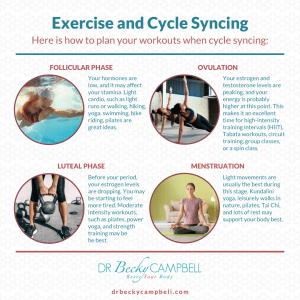
Nutrition and Cycle Syncing
Your nutrition is incredibly important for your health. But different foods may affect you differently through your cycle.
Most importantly, no matter what stage you are in during your cycle, avoid inflammatory foods. I am talking about refined sugar, refined oils, additives, artificial ingredients, junk food, processed food, caffeine, and alcohol. Avoid these foods and focus on whole foods nutrition instead. Eat regularly, every 3 to 4 hours (unless you do better otherwise), to help balance your blood sugar levels and avoid cortisol spikes or mood swings.
Follow these nutrition tips throughout the month while cycle syncing:
- Follicular phase: Add foods that support estrogen metabolization like cruciferous veggies (broccoli, etc.) , such as anti-inflammatory and antioxidant-rich foods, including hemp seeds, chia seeds, kale, sugar snap peas, carrots, artichokes, sprouts, strawberries, blueberries, and apples will help to build energy.
- Ovulation: Support your liver and load up on anti-inflammatory foods, such as beets, carrots, apples, and cruciferous vegetables. These foods offer anti-aging benefits and protection from environmental toxins. Hydrating and fiber-rich fruits and vegetables, such as grapefruit, berries, peaches, plums, grapes, cucumber, radishes, bell pepper, and greens can support your energy levels during this phase.
- Luteal phase: Add foods that help to produce serotonin and support your mood, like leafy greens. Prepare for menstruation with iron-rich foods, such as dark leafy greens, red meat, and seafood. Load up on magnesium-rich foods, including pumpkin seed, almonds, sunflower seeds, spinach, and in limited amounts, dark chocolate (if tolerated) to reduce fatigue and improve libido. At this time, I recommend that you also increase your magnesium supplement dose. Avoid alcohol, added salt, artificial sweeteners, carbonated drinks, and dairy.
- Menstruation: Since you are losing blood, restoring your iron levels with iron-rich foods, such as dark leafy greens, red meat, and seafood is critical. Anti-inflammatory herbs, such as turmeric, ginger, cinnamon, garlic, parsley, and rosemary, and omega-3-rich anti-inflammatory foods, such as fish, seafood, hemp seeds, chia seeds, and flax seeds may help to reduce cramps.

Remember, everyone’s body and nutritional needs are different. For example, if you have histamine intolerance, you need to follow a low-histamine diet and avoid high-histamine foods even while cycle syncing. Working with a functional health medicine practitioner (hint: my team and I!) can help you make the right nutritional decision based on your individual needs and health issues.
Improve Your Libido and Sex Life
From emotional stress to hormones, a lot can affect your libido and sex life. Estrogen dominance and high testosterone, both of which are very common for PCOS, can decrease your libido significantly. Too much cortisol, your main stress hormone, can also reduce your sex hormone and rob your libido.
Here is how cycle syncing can help:
- Follicular phase: During this stage, most women experience a lower sex drive. Creative foreplay, touching, and massaging may be preferred.
- Ovulation: Your estrogen and testosterone levels are at their peak. This is also the time when your body is ready to conceive. Whether ‘baby making’ is your goal or not, chances are, this is when you are the most interested in sex. This is a perfect time for spontaneity, trying new things, and keeping things exciting.
- Luteal phase: During this time, you may need a bit more stimulation to reach an orgasm. Trying out new positions or even some sex toys may be fun.
- Menstruation: While orgasms may help relieve your cramps, having sex during your period is a personal choice. Some women prefer to stay away from sex and prefer cuddles or resting instead. Listen to your body and support it with good nutrition.

Remember, good nutrition that supports your hormonal health is critical. Eating a healthy diet, reducing stress, leading a healthy lifestyle, and following these cycle syncing sexy suggestions can help you get your libido back and to have a creative sex life.
Fertility and Cycle Syncing
Cycle syncing may help your fertility. A 2007 study at Harvard University has found that diet and exercise habits may help to improve fertility. They followed 17,544 women and looked at factors of ovulatory infertility. They found that women who ate a diet rich in fiber, iron, plant protein, and high-fat dairy had better fertility scores than others. They were also more likely to take multivitamins and had a lower BMI than those with lower fertility scores (2).
Focusing on good nutrition and a healthy lifestyle according to your menstrual cycle may improve your hormonal health and fertility. I recommend a diet rich in greens, vegetables, low-glycemic fruits, herbs, healthy fats, and clean protein to support your hormones and improve your fertility.
How to Start Cycle Syncing?
Everyone’s body and everyone’s cycle is different. It is important that you track your cycle and understand your symptoms throughout the month. There are some great apps available that can help if you are not into pen and paper. It can take up to 3 months to really figure out the length of each phase of your cycle.
It’s important that you understand any health issue that may also be affecting your cycle, moods, energy levels, and other symptoms. Working with a functional medicine practitioner can help you uncover any health issues you may be dealing with.
Understanding your cycle and health challenges will help you to start your cycle syncing journey. Follow the recommendations in this article. Listen to your body and make modifications if needed as you go.
Check Out the Health Babes’ Guide to Balancing Your Hormones
To learn more about your hormones and learn how to improve your hormonal health naturally, I recommend our book (co-authored by Dr. Krystal Hohn and myself) The Health Babes’ Guide to Balancing Your Hormones: A Detailed Plan with Recipes to Support Mood, Energy Levels, Libido, and More. This book is not only full of information but with an easy-to-follow plan and easy-to-make, delicious hormone-friendly recipes.
Final Thoughts
Cycle syncing is a practice that helps you tune in with your hormonal fluctuation throughout the month. Navigating these changes and planning your workouts, nutrition, and other activities according to your cycle can help you feel your best every day of the month. I recommend that you give cycle syncing a try to optimize your health and well-being.
If you are dealing with symptoms of estrogen dominance or hormonal imbalance, I invite you to schedule a consultation with us. We can help to identify the root cause of your condition and recommend a personalized treatment plan to repair your body and regain your health and well-being. Schedule your consultation here.

Sources
- Farage MA, Osborn TW, MacLean AB. Cognitive, sensory, and emotional changes associated with the menstrual cycle: a review. Arch Gynecol Obstet. 2008 Oct;278(4):299-307. doi: 10.1007/s00404-008-0708-2. Epub 2008 Jul 1. PMID: 18592262
- Changes to Diet and Lifestyle May Help Prevent Infertility from Ovulatory Disorders. Harvard. Link Here

Histamine Intolerance and Your Gut
My patients with gut health issues, such as leaky gut syndrome, Candida overgrowth, SIBO, other gut infections, Crohn’s disease, and ulcerative colitis, often experience symptoms of histamine intolerance as well. This is not surprising.
Your gut is connected to everything in your body. Gut health issues, including leaky gut syndrome, gut infections, and inflammatory bowel disease can trigger histamine intolerance. If you have symptoms of both gut health problems and histamine intolerance, it is critical that we address both so you can recover your health and reclaim your life.
In this article, you will learn everything about leaky gut syndrome, gut infections, and inflammatory bowel disease. You will understand what they are, what their symptoms are, and what causes them. I will discuss the connection between your gut, gut health issues, and histamine intolerance. Lastly, I will offer my best natural solutions for gut health and histamine intolerance.
What Is Leaky Gut Syndrome
Leaky gut is a condition in which the barrier of your intestines becomes ‘leaky’. A healthy gut lining has tiny holes that allow nutrients to pass through but block toxins and invaders. However, in people with leaky gut syndrome, these holes become too large and allow undigested food, bacteria, and toxins to pass through.
When these harmful and foreign substances pass through your intestinal barrier, it can increase inflammation, trigger an autoimmune reaction, and cause a variety of symptoms and complaints from fatigue to digestive discomfort. Leaky gut syndrome can make it difficult to absorb nutrients and lead to mineral and vitamin deficiencies. Leaky gut syndrome can also cause low DAO enzyme production. DAO is responsible for breaking down excess histamine in your body. Not having enough increases your risk of histamine intolerance.

Symptoms of Leaky Gut Syndrome
Symptoms of leaky gut syndrome may include:
- Various food sensitivities
- Fatigue
- Headaches
- Bloating
- Weight gain
- Skin problems
- Joint pain
- Thyroid issues
- Anxiety & depression
Causes of Leaky Gut Syndrome
The causes of leaky gut syndrome include:
- Dietary: Alcohol, gluten, sugar, processed food, casein, lectin
- Infections: Bacterial overgrowth, yeast overgrowth, parasites, and H. pylori
- Medications: Antibiotics, antacids, corticosteroids
- Stress: Increased cortisol
- Hormonal: Decreased thyroid hormones and sex hormones such as estradiol, progesterone, and testosterone
- Autoimmune disease & inflammation: Autoimmune disease and intestinal inflammation are also known contributors
- Bacterial imbalances: Gut dysbiosis, an imbalance between the healthy as well as the pathogenic bacteria in the gut

What Are Gut Infections
Microbial and fungal infections are one of the top potential underlying causes of histamine intolerance. Helicobacter Pylori infection, small intestinal bacterial overgrowth (SIBO), Candida, small intestinal fungal overgrowth (SIFO), and parasites are some of the top gut infections that you need to be aware of.
Helicobacter Pylori
Helicobacter pylori or H. pylori is a common strain of bacteria that nearly half of our population carries, often without knowing about it. H. pylori can infect your stomach lining and lead to ulcers and other gastrointestinal issues. H. pylori can also decrease your stomach acid levels. It has been linked to autoimmunity, fatigue, mineral deficiencies, and liver problems. H. pylori infection can trigger increased histamine release that your body won’t be able to keep up which may cause histamine intolerance.
Symptoms of H. Pylori
Symptoms of H. pylori infection may include:
- Nausea
- Frequent burping
- Bloating
- Unexplained weight loss
- Loss of appetite
- Abdominal pain
- Aching or burning sensation in your abdomen
Causes of H. Pylori
Causes of H. pylori infection may include:
- Contaminated food and water
- Person to person contact (saliva, vomit, and fecal matter)

SIBO
Small intestinal bacterial overgrowth (SIBO) refers to bacterial overgrowth in the small intestines. Under healthy circumstances, your small intestines have relatively few bacteria, but if you have SIBO, there is an overgrowth. SIBO can lead to stomach acid issues, improper digestion, and digestion symptoms. Certain bacteria, including the one connected to SIBO, can also produce histamine leading to histamine release and too much histamine that your body won’t be able to keep up with setting you up for histamine intolerance.
Symptoms of SIBO
Symptoms of SIBO may include:
- Nausea
- Vomiting
- Diarrhea
- Bloating
- Malnutrition
- Weight loss
- Joint pain
- Fatigue
- Skin conditions such as acne, eczema, and rashes
- Asthma
- Depression

Causes of SIBO
Causes of SIBO may include:
- Aging
- Chronic pancreatitis
- Diabetes
- Diverticulosis
- A structural defect in the small intestine
- Injury
- Fistula
- Intestinal lymphoma
- Scleroderma
- Recent abdominal surgeries
- Immune system disorders
- Celiac disease: Can be a major trigger as it leads to poor small intestinal functioning
- The use of certain medications: Immunosuppressants, PPI’s

Candida and SIFO
Candida and other fungal overgrowth is another top underlying cause of histamine intolerance. Candida is a fungus that in small amounts is beneficial for your health. It helps nutrient absorption and digestion. However, in excess, it can break down your intestinal lining, cause leaky gut syndrome, lead to toxin release, increase inflammation, and cause a variety of symptoms. Candida and fungal overgrowth can occur anywhere in your gut. Small intestinal fungal overgrowth (SIFO) refers to a specific overgrowth that occurs in your small intestines. Candida and fungal overgrowth may trigger histamine release. If the DAO enzyme is unable to keep up with excess histamine, it can lead to histamine intolerance and a list of health issues.
Symptoms of Candida and Fungal Overgrowth
Symptoms of Candida and fungal overgrowth may include:
- Exhaustion and fatigue
- Brain fog
- Anxiety, depression, and mood swings
- Oral thrush
- Chronic sinus infection
- Vaginal and urinary tract infections
- Digestive issues
- Skin problems
- Hormonal imbalances
- Headaches and migraines

Causes of Candida and Fungal Overgrowth
Causes of Candida and fungal overgrowth may include:
- Unhealthy pH balance
- Weakened immune system
- Antibiotic use and certain medications
- Inflammatory and high sugar diets
- Blood sugar imbalance or diabetes
- Autoimmune disease
Parasites
Parasites include worms and protozoa that can trigger digestive issues, histamine release, and a variety of health issues. Worms are parasites that you may acquire from contaminated unwashed fruits and vegetables or uncooked or undercooked meat. Worms include roundworms, pinworms, tapeworms, and hookworms. When you ingest their eggs, they end up hatching inside you. Their fecal matter can get absorbed in your bloodstream leading to an array of issues, including malnutrition and organ damage. Protozoa parasitic infections come from contaminated water and can lead to digestive issues and dehydration. If you have a parasitic infection, your mast cells will release histamine to fight the infection. Too much histamine, however, can lead to histamine intolerance.
Symptoms of Parasites
Symptoms of parasites may include:
- Digestive health issues (nausea, diarrhea, gas, constipation, yeast infection, etc)
- Chronic allergies
- Skin issues
- Anxiety, depression, confusion
- Fatigue
- Weight loss
- Appetite changes
- Anemia
- Rectal itching
- Circles under the eyes
- Bad breath
Causes of Parasitic Infections
Causes of parasitic infections may include:
- Contaminated water
- Unwashed fruits and vegetables
- Uncooked and undercooked meat

What Are Inflammatory Bowel and Digestive Diseases
Inflammatory bowel diseases (IBD) are chronic inflammatory conditions that affect the digestive tract. Crohn’s disease and ulcerative colitis are the two common IBDs that people suffer from. Crohn’s disease can affect any of all areas of your gut and most commonly affects your colon and small bowel, whereas ulcerative colitis affects your colon or large intestine only. IBDs are closely linked to low DAO enzymes due to increased inflammation in the body. IBDs can also increase histamine release as a part of your body’s defense mechanism. No wonder that IBDs can increase your risk of histamine intolerance.
Symptoms of Crohn’s Disease
Symptoms of Crohn’s disease may include:
- Urgent need to move the bowels
- Constipation
- Diarrhea
- Abdominal cramping
- Abdominal pain
- Rectal bleeding
- Weight loss
- Loss of appetite
- Fatigue
- Fever
Symptoms of Ulcerative Colitis
Symptoms of ulcerative colitis may include:
- Weight loss
- Fatigue
- Diarrhea
- Abdominal pain
- Abdominal cramping
- Inability to have bowel movements despite the urge
- Rectal bleeding and pain
Causes of IBDs
Causes of IBDs may include:
- Poor inflammatory diet
- Unhealthy and inflammatory lifestyle choices
- Chronic stress
- Poor microbiome health
- Food sensitivities
- Genetics and family history
Histamine Intolerance and Your Gut: The Connection
I’ve mentioned throughout this article that all these gut health issues can trigger histamine release and cause histamine intolerance. To help you understand this further, I want to dig deeper a little bit.
Increase in Food Sensitivities and Histamine Intolerance
SIBO, gut dysbiosis, and gut health issues can increase food sensitivities. As your body’s defense to food sensitivities, it may increase histamine release and cause histamine intolerance. Food sensitivities can also increase your risk of leaky gut syndrome and inflammation, which can further trigger an inflammatory response and related histamine intolerance.
Dysbiosis, SIBO, and Histamine Intolerance
Your gut is full of histamine receptors. The problem is that if you are dealing with gut health issues and gastrointestinal diseases, the expression of these histamine receptors can be altered (1).
According to a 2018 study published in the Journal of Physiological Pharmacology, both leaky gut syndrome and gut inflammation can lead to a gut bacterial imbalance that may contribute to histamine intolerance. In fact, a 2016 study published in the Canadian Journal of Gastroenterology and Hepatology has found that about 30 to 55 percent of people with digestive issues also have histamine intolerance due to the overgrowth of histamine producing bacteria (3, 4).
According to a 2010 study published in the Archives of Pathology & Laboratory Medicine, SIBO, which is a specific type of gut dysbiosis can lead to a lower or loss of tolerance to dietary histamine. A 2010 review published in the World Journal of Gastroenterology notes that the symptoms of histamines and SIBO often overlap indicating that at least some people have both conditions (4, 5).
Histamine Producing Bacteria, SIBO, and Histamine Intolerance
While SIBO can certainly trigger histamine intolerance, not everyone with SIBO has histamine intolerance. A build-up in histamine-producing bacteria in the small intestine can increase the likelihood of histamine intolerance. Certain bacteria, including L. bulgaricus and L. casei have been specifically linked to increased histamine production. Taking probiotics with lactic acid-based bacterial strains can add fuel to the fire if you have SIBO and histamine intolerance. If you have SIBO, opting for soil-based probiotics is a safer idea without feeding symptoms of SIBO (6).
Low Levels of DAO Enzyme and Histamine Intolerance
Intestinal inflammation and gut infections can contribute to decreased DAO enzymes. Since it’s responsible for breaking down histamine, the DAO enzymes are very important for preventing histamine intolerance and its symptoms. Past studies have found that low DAO enzyme levels and histamine intolerance may be associated with IBDs and leaky gut syndromes.
According to a 1990 study published in Agent Actions, low DAO enzyme levels are linked to Crohn’s disease, while a 1995 study published in the International Archives of Allergy and Immunology has linked low DAO enzyme levels to ulcerative colitis. According to a 2018 study published in the Journal of Physiology and Pharmacology, histamine intolerance may be associated with leaky gut syndrome (7, 8, 9).
High-Histamine Foods and Histamine Intolerance
If your diet is high in high-histamine foods, histamine-liberating foods, and DAO-enzyme-blocking goods, you may overstep your body’s boundaries and exceed your body’s ability to break down excess histamine. This histamine build-up that can cause histamine intolerance can contribute to increased inflammation and gut health symptoms that may further feed and trigger that cycle of gut health issues and histamine intolerance (10).
Stress, Mast Cell Stimulation, and Histamine Intolerance
Chronic stress can contribute to both histamine intolerance and gut health issues. Prolonged emotional stress can increase symptoms of SIBO, cause digestive discomfort, negatively affect your gut microbiome, and stimulate mast cell production. Mast cells are white blood cells that serve regulations of your immune system. They can be found throughout your body’s connective tissues and your gastrointestinal tract.
Your mast cells are responsible for the secretion of histamine and the release of other cytokines. As chronic stress stimulates mast cell production, it can also stimulate increased histamine release, especially in the gut. This can specifically contribute to the ongoing cycle of histamine intolerance, inflammation, gut infections, and gut health symptoms.
What Is Histamine Intolerance?
Histamine is a chemical that is responsible for a number of functions in your body, including removing allergens as part of your immune response, communicating with your brain, and triggering stomach acid release to aid digestion. Histamine intolerance means that you have too much histamine which can lead to various health issues.
In a healthy body, as a natural part of your immune response, your body releases DAO enzymes to break down the build-up of histamine. If you have too much histamine, your body won’t be able to keep up and won’t be able to break down all the histamine build-up properly. Histamine intolerance affects your entire body, including your gut, brain, lungs, cardiovascular system, and hormonal health and can cause a variety of issues, including digestive problems, headaches, skin problems, hormonal issues, sleep disturbances, bladder problems, anxiety, and more.
Natural Solutions for Gut Health Issues and Histamine Intolerance
Are you dealing with leaky gut syndrome, SIBO, gut infections, parasites, Crohn’s disease, ulcerative colitis, or other gut health issues and symptoms of histamine intolerance? Here is what I recommend to improve your health naturally:
Eat a Low-Histamine, Gut-Friendly Diet
To improve histamine intolerance and gut health issues, I recommend that you eat an anti-inflammatory, nutrient-dense, and low-histamine diet. Start by eliminating all high-histamine foods for one month, then slowly re-introduce them one by one following The 4-Phase Histamine Reset Plan.
The 4-Phase Histamine Reset Plan is a plan that I developed to help people like you who are dealing with histamine intolerance and related health issues. It is a simple yet refined system and it is important that you understand and follow each step properly.
To understand each step and guide your recovery, I recommend that you read my book, The 4-Phase Histamine Reset Plan: Getting to the Root of Migraines, Eczema, Vertigo, Allergies and More where I explain everything about histamine intolerance and each phase of the plan in detail and share delicious low-histamine recipes to nourish your body and support your health. Pick up a copy, today to learn more about the plan and my recommendations.
For extra recipes to support a low histamine diet using an air fryer, try out my book Fifty-one Low Histamine Air Fryer Recipes.
Reduce Stress and Improve Your Lifestyle
Since chronic stress and poor lifestyle choices can trigger histamine intolerance and increase gut health issues, I recommend that you follow a healthy and anti-inflammatory lifestyle that doesn’t cause increased histamine. Get plenty of sleep. Exercise regularly. Reduce your stress levels through meditation, breathwork, journaling, yoga, time in nature, quality me-time, and uplifting activities with friends and family. Along with dietary changes, it’s important that you eliminate toxic personal care and cleaning products as well and instead use organic, natural, or homemade products.
For very sensitive people that seem to have trouble tolerating a lot of foods and/or supplements, I highly recommend this The Gupta Course, for brain retraining. Here is Ashok Gupta on our Health Babes podcast explaining his method. Take a listen!
Try Supplements for Histamine Intolerance
I recommend HistoRelief. It is a synergistic blend of nutrients that provides natural support to balance your immune response. This blend features Tinofend®, a patented and clinically researched extract derived from the plant Tinospora cordifolia, which has a powerful ability to support immune regulation and immune response. As a result, it boosts your body’s ability to fight histamine-related symptoms. It includes quercetin, nettle leaf, vitamin C, and bicarbonate salt to help inhibit histamine release, support normal histamine metabolism, and improve immune health.
Final Thoughts
Having both gut health issues and histamine intolerance is common. I see it in my practice all the time. Gut health issues, including leaky gut syndrome, gut infections, and inflammatory bowel disease can trigger histamine intolerance. If you have symptoms of both gut health problems and histamine intolerance, it is critical that we address both so you can recover your health, regain your vitality, and reclaim your life.
If you are dealing with gut health issues and histamine intolerance, I invite you to schedule a consultation with us. We can help to identify the root cause of your condition and recommend a personalized treatment plan to repair your body and regain your health and well-being. Schedule your consultation here.
Sources:
1. Sander LE, Lorentz A, Sellge G, Coëffier M, Neipp M, Veres T, Frieling T, Meier PN, Manns MP, Bischoff SC. Selective expression of histamine receptors H1R, H2R, and H4R, but not H3R, in the human intestinal tract. Gut. 2006 Apr;55(4):498-504. doi: 10.1136/gut.2004.061762. Epub 2005 Nov 18. PMID: 16299042
2. Schink M, Konturek PC, Tietz E, Dieterich W, Pinzer TC, Wirtz S, Neurath MF, Zopf Y. Microbial patterns in patients with histamine intolerance. J Physiol Pharmacol. 2018 Aug;69(4). doi: 10.26402/jpp.2018.4.09. Epub 2018 Dec 9. PMID: 30552302.
3. Enko D, Meinitzer A, Mangge H, Kriegshäuser G, Halwachs-Baumann G, Reininghaus EZ, Bengesser SA, Schnedl WJ. Concomitant Prevalence of Low Serum Diamine Oxidase Activity and Carbohydrate Malabsorption. Can J Gastroenterol Hepatol. 2016;2016:4893501. doi: 10.1155/2016/4893501. Epub 2016 Nov 30. PMID: 28042564
4. Lappinga PJ, Abraham SC, Murray JA, Vetter EA, Patel R, Wu TT. Small intestinal bacterial overgrowth: histopathologic features and clinical correlates in an underrecognized entity. Arch Pathol Lab Med. 2010 Feb;134(2):264-70. doi: 10.1043/1543-2165-134.2.264. PMID: 20121616
5. Bures J, Cyrany J, Kohoutova D, Förstl M, Rejchrt S, Kvetina J, Vorisek V, Kopacova M. Small intestinal bacterial overgrowth syndrome. World J Gastroenterol. 2010 Jun 28;16(24):2978-90. doi: 10.3748/wjg.v16.i24.2978. PMID: 20572300
6. Parker EC, Gossard CM, Dolan KE, Finley HJ, Burns CM, Gasta MG, Pizano JM, Williamson CB, Lipski EA. Probiotics and Disease: A Comprehensive Summary-Part 2, Commercially Produced Cultured and Fermented Foods Commonly Available in the United States. Integr Med (Encinitas). 2016 Dec;15(6):22-30. PMID: 28223894
7. Schmidt WU, Sattler J, Hesterberg R, Röher HD, Zoedler T, Sitter H, Lorenz W. Human intestinal diamine oxidase (DAO) activity in Crohn's disease: a new marker for disease assessment? Agents Actions. 1990 Apr;30(1-2):267-70. doi: 10.1007/BF01969057. PMID: 2115243
8. Raithel M, Matek M, Baenkler HW, Jorde W, Hahn EG. Mucosal histamine content and histamine secretion in Crohn's disease, ulcerative colitis and allergic enteropathy. Int Arch Allergy Immunol. 1995 Oct;108(2):127-33. doi: 10.1159/000237129. PMID: 7549499
9. Schink M, Konturek PC, Tietz E, Dieterich W, Pinzer TC, Wirtz S, Neurath MF, Zopf Y. Microbial patterns in patients with histamine intolerance. J Physiol Pharmacol. 2018 Aug;69(4). doi: 10.26402/jpp.2018.4.09. Epub 2018 Dec 9. PMID: 30552302
10. Maintz L, Novak N. Histamine and histamine intolerance. Am J Clin Nutr. 2007 May;85(5):1185-96. doi: 10.1093/ajcn/85.5.1185. PMID: 17490952
11. Weinstock, Leonard B. MD, FACG1; Brook, Jill MA2; Kaleem, Zahid MD3; Afrin, Lawrence MD4; Molderings, Gerhart MD5 1194 Small Intestinal Bacterial Overgrowth Is Common in Mast Cell Activation Syndrome, The American Journal of Gastroenterology: October 2019. Link Here

Histamine Intolerance and Pregnancy
Morning sickness… Do I need to say more? You are overjoyed that you’re pregnant...only if you could skip the discomfort of having morning sickness. I hear you. I had hyperemesis gravidarum during my pregnancies. It’s morning sickness on steroids. I felt nauseous and was vomiting all the time during my entire pregnancy. I didn’t know back then that it was all because of histamine intolerance.
Addressing histamine intolerance and MCAS during pregnancy is particularly important. Histamine intolerance can make your morning sickness worse and cause hyperemesis. It can also increase your risk of pre-eclampsia, spontaneous miscarriage, intrauterine growth retardation (IUGR), and preterm labor. Reducing your histamine levels naturally can greatly improve your pregnancy and reduce your risk of discomfort and complications.
In this article, you will learn about the role of histamine in fertility and pregnancy. You will understand histamine’s role before conception and during pregnancy. You will learn about histamine-related pregnancy issues and complications that may occur if you have histamine intolerance or mast cell activation syndrome (MCAS). You will learn how to reduce histamine in your body naturally to ensure a healthy pregnancy and birth.
The Role of Histamine in Fertility and Pregnancy
Proper histamine balance and function is absolutely critical for sexual functions, fertility, and pregnancy. You may not know this, but the embryonic and placental cells use histamine to communicate with each other. The placenta is high in histidine decarboxylase (HDC) and diamine oxidase (DAO) enzymes. It’s no wonder that histamine intolerance may affect your pregnancy.
Histamine’s Role Before Conception
Histamine plays an important role in your cycle and successful pregnancy. It triggers estrogen production in your ovaries and histamine release from your mast cells in your uterus. Progesterone, on the other hand, inhibits the release of histamine. Your endometrial cells use histamine as a messenger to communicate as they prepare for implantation, which causes normal fluctuation of histamine during your menstrual cycle (1, 2).
While histamine is much necessary for your cycle and conception, too much estrogen can become a problem. Excess histamine can lead to increased estrogen and hormonal imbalance, which can lead to a variety of issues. Histamine intolerance can stimulate pain receptors, cause uterine contractions, contribute to menstrual cramps, cause menstrual migraines, and lead to digestive issues. Women with endometriosis may have an increased risk of histamine intolerance or abnormal histamine metabolism, while histamine intolerance or mast cell activation syndrome (MCAS) may increase your risk of endometriosis (3, 4, 5, 6).
Histamine During Pregnancy
Histamine is incredibly important for your healthy menstrual cycle, implantation, and healthy pregnancy. According to a 2-14 study published Pharmaepidemiology Drug Safety, using antihistamine may inhibit implantation and increase the risk of spontaneous abortion (7).
After implantation, your histamine levels increase. Your total blood histamine levels are the highest during the first trimester and gradually decline during the second and third trimester. The reason for this lies in your uterus. The uterine lining, uterine muscles, and placenta are all high in masts cells and HDC enzymes that during this stage increase histamine production in these areas. Histamine also helps the release of the human chorionic gonadotropin (HCG) and other hormones during pregnancy.

Breaking down all this extra histamine is absolutely critical for your health. This is when the DAO enzyme comes in to play an important role. According to a scientific paper published in Agents Action, researchers have found that DAO enzyme levels increase 500 to 1000 times by the first 20 weeks of pregnancy to tackle excess histamine and decrease blood histamine levels. You know those pregnancy food cravings and food aversions?! All the excess histamine may explain your strange new sensitivities, aversions, and cravings. While your histamine levels are the highest during the first trimester, the increase of DAO enzymes only starts to really kick in by the second trimester which may also explain your symptoms going away. (8)
These changes can become even more problematic if you are dealing with histamine intolerance or MCAS already. If you have histamine intolerance or consume too many high-histamine foods, your body won’t be able to keep up with the extra histamine released during pregnancy even with increased DAO enzyme activity. Some women’s bodies may also have an issue with producing enough DAO enzymes, especially if they have histamine intolerance already. Consuming too many DAO-enzyme-blocking foods, such as black tea, energy drinks, mate tea, green tea (green tea extract is ok!), or alcohol, can also interfere with your body’s ability to break down excess histamine.
According to a 2008 review published in Human Reproduction Update, histamine intolerance or an inability to keep histamine in the areas that it is needed can lead to poor pregnancy outcomes. Animal models have found that injecting histamine into pregnant animals leads to a variety of problems, including uterine contraction, spontaneous miscarriage, and fetal malformations (9).
Histamine Intolerance and MCAS During Pregnancy
If you were already dealing with histamine intolerance or MCAS before pregnancy, you may end up with more pregnancy discomfort or complications than those without histamine intolerance or MCAS. You may also develop histamine intolerance during pregnancy. Addressing histamine intolerance and/or MCAS is absolutely critical, not only for your health but your baby’s health as well. Increase histamine levels and the inability to increase placental DAO is associated with an array of health issues, including morning sickness and hyperemesis, pre-eclampsia, increase risk of spontaneous miscarriage, intrauterine growth retardation, and preterm labor.
Morning Sickness and Hyperemesis
Morning sickness is an experience that most pregnant women are familiar with. It is nausea and vomiting that happens during pregnancy, especially during the first semester. Even though it’s called morning sickness, it can happen at any time during the day or at night, or throughout the day. Some women get through this experience with mild discomfort, for others, it can be a debilitating experience. If you’re like me, you develop hyperemesis gravidarum.
Hyperemesis gravidarum is like morning sickness but a thousand times worse. While morning sickness is mild or moderate nausea that goes away after the first trimester, hyperemesis is extreme, persistent nausea and vomiting that usually lasts through the entire pregnancy and can lead to dehydration, electrolyte imbalance, and weight loss. While it’s believed to be caused by the rapid rise of the HCG hormone, it may be triggered and increased by histamine intolerance or MCAS. According to a 2006 study published in the Journal of Reproductive Immunology, high blood histamine or hyper-histamine can increase the risk or contribute to the discomfort of hyperemesis gravidarum. A 2008 review published in Human Reproduction Update has also found that increased histamine during pregnancy can increase the risk of hyperemesis gravidarum (10, 9).
Pre-eclampsia
Pre-eclampsia is a pregnancy complication characterized by high blood pressure. This dangerously high blood pressure tends to develop after week 20 in women who didn’t previously have blood pressure problems. According to a 1984 study published in Human Nutrition, Clinical Nutrition has found that the total blood histamine level during pregnancy is correlated with the risk of and severity of pre-eclampsia. A 2008 review published in Human Reproduction Update has also found that increased histamine during pregnancy can increase the risk of pre-eclampsia (11, 9).
Spontaneous Miscarriage
Spontaneous miscarriage is a loss of a pregnancy that happens before the first 20 weeks of pregnancy without outside intervention. It is the most common during the first 12 weeks. According to a 1982 study published in the British Journal of Obstetrics & Gynaecologist, measuring DAO enzyme levels in 681 pregnancies with successful delivery and 102 pregnancies resulting in fetal death has shown that low DAO enzyme levels were more common among low birth weight deliveries and pregnancy losses than in healthy pregnancies and births. Low DAO level enzymes were associated with a 16.6 times higher risk of miscarriage at or before 12 weeks. A 2008 review published in Human Reproduction Update has also found that increased histamine during pregnancy can increase the risk of spontaneous miscarriage (12, 9).
Intrauterine Growth Retardation
Intrauterine growth retardation (IUGR) means that your baby is growing slowly and doesn’t weigh as much as most unborn babies at that stage would. IUGR is diagnosed during an ultrasound and is most commonly found during the 6th, 7th, or 8th months of your pregnancy. IUGR refers to slow growth and the size of the baby, it does not refer to mental abilities or mental slowness. Most small babies with IUGR grow up to be healthy children and adults, however, when IUGR is detected, it’s important to rule out any problems and develop strategies to support the baby’s growth. According to a 1999 study published in Inflammation Research, mast cells and histamine during pregnancy can increase the risk of IUGR (13).
Preterm Labor
Preterm labor refers to labor that happens before 37 weeks of pregnancy. While many premature babies grow up to be healthy children and adults, babies born preterm can have a variety of health issues, including serious, lifelong, or even life-threatening health problems. According to a 2006 study published in the Journal of Reproductive Immunology, material histamine levels can increase the risk of pregnancy complications that may lead to preterm labor (10).

Improve Your Pregnancy with The 4-Phase Histamine Reset Plan
If you have histamine intolerance or MCAS, pregnant, or want to conceive in the future, you don’t have to deal with pregnancy complications. You can reduce your risk of histamine-related debilitating morning sickness, hyperemesis gravidarum, pre-eclampsia, spontaneous miscarriage, IUGR, and preterm labor naturally by following a low-histamine diet and lifestyle. You can feel healthier, more energetic, and vibrant throughout your pregnancy and protect your baby’s health by protecting yours.

To improve histamine intolerance and MCAS and lower your risk of debilitating morning sickness, hyperemesis gravidarum, and other histamine-related pregnancy complications, I recommend that you eat an anti-inflammatory, nutrient-dense, and low-histamine diet. Start by eliminating all histamine foods for one to three months, then slowly re-introduce them one by one following The 4-Phase Histamine Reset Plan.
Along with dietary changes, it’s important that you eliminate toxic personal care and cleaning products as well and instead use organic, natural, or homemade products. Additionally, I recommend that you follow a healthy and anti-inflammatory lifestyle that doesn’t trigger increased histamine. Get plenty of sleep. Exercise regularly. Reduce your stress levels through meditation, breathwork, journaling, yoga, time in nature, quality me-time, and uplifting activities with friends and family.
The 4-Phase Histamine Reset Plan is a plan that I developed to help people like you who are dealing with histamine intolerance and related health issues, including morning sickness or hyperemesis. It is a simple yet refined system, so it is critical that you understand and follow each step properly.
To understand each step and guide your recovery, I recommend that you read my book, The 4-Phase Histamine Reset Plan: Getting to the Root of Migraines, Eczema, Vertigo, Allergies and More where I explain everything about histamine intolerance and each phase of the plan in detail and share delicious low-histamine recipes to nourish your body and support your health. Pick up a copy, today to learn more about the plan and my recommendations.
Check Out the Health Babes’ Guide to Balancing Your Hormones
To learn more about your hormones and learn how to improve your hormonal health naturally, I recommend our book (co-authored by Dr. Krystal Hohn and myself) The Health Babes’ Guide to Balancing Your Hormones: A Detailed Plan with Recipes to Support Mood, Energy Levels, Libido, and More. This book is not only full of information but with an easy-to-follow plan and easy-to-make, delicious hormone-friendly recipes.
Final Thoughts
I felt sick all through time throughout my pregnancy because of hyperemesis gravidarum. I wish I'd known back then that histamine intolerance was the culprit all along. But now I know and I can help your pregnancy to be a better experience than mine. It’s possible to reduce your risk of histamine-related morning sickness, hyperemesis, pre-eclampsia, spontaneous miscarriage, intrauterine growth retardation (IUGR), and preterm labor naturally by following a low-histamine diet and lifestyle. Follow my tips to reduce histamine in your body naturally to ensure a healthy pregnancy and birth.
If you are dealing with histamine intolerance, MCAS, morning sickness, or hyperemesis during your pregnancy, I invite you to schedule a consultation with us. We can help to identify the root cause of your condition and recommend a personalized treatment plan to repair your body and regain your health and well-being. Schedule your consultation here.
Sources:
1. Bódis J, Tinneberg HR, Schwarz H, Papenfuss F, Török A, Hanf V. The effect of histamine on progesterone and estradiol secretion of human granulosa cells in serum-free culture. Gynecol Endocrinol. 1993;7: 235–239. Link Here
2. Vasiadi M, Kempuraj D, Boucher W, Kalogeromitros D, Theoharides TC. Progesterone inhibits mast cell secretion. Int J Immunopathol Pharmacol. 2006;19: 787–794. Link Here
3. Szelag A, Merwid-Lad A, Trocha M. [Histamine receptors in the female reproductive system. Part II. The role of histamine in the placenta, histamine receptors and the uterus contractility]. Ginekol Pol. 2002;73: 636–644. Link Here
4. Rosa AC, Fantozzi R. The role of histamine in neurogenic inflammation. Br J Pharmacol. 2013;170: 38–45. Link Here
5. Maintz L, Benfadal S, Allam J-P, Hagemann T, Fimmers R, Novak N. Evidence for a reduced histamine degradation capacity in a subgroup of patients with atopic eczema. J Allergy Clin Immunol. 2006;117: 1106–1112. Link Here
6. Orazov MR, Radzinskiy VY, Khamoshina MB, Nosenko EN, Tokaeva ES, Barsegyan LK, et al. [Histamine metabolism disorder in pathogenesis of chronic pelvic pain in patients with external genital endometriosis]. Patol Fiziol Eksp Ter. 2017;61: 56–60. Link Here
7. Aldridge TD, Hartmann KE, Michels KA, Velez Edwards DR. First-trimester antihistamine exposure and risk of spontaneous abortion or preterm birth. Pharmacoepidemiol Drug Saf. 2014;23: 1043–1050. Link Here
8. Dubois AM, Santais MC, Foussard C, Dubois F, Ruff F, Taurelle R, et al. Blood histamine and plasma histaminase level during human pregnancy [proceedings]. Agents Actions. 1977;7: 112. Link Here
9. Maintz L, Schwarzer V, Bieber T, van der Ven K, Novak N. Effects of histamine and diamine oxidase activities on pregnancy: a critical review. Hum Reprod Update. 2008;14: 485–495. Link Here
10. Brew O, Sullivan MHF. The links between maternal histamine levels and complications of human pregnancy. J Reprod Immunol. 2006;72: 94–107. Link Here
11. Sharma SC, Sabra A, Molloy A, Bonnar J. Comparison of blood levels of histamine and total ascorbic acid in pre-eclampsia with normal pregnancy. Hum Nutr Clin Nutr. 1984;38: 3–9. Link Here
12. Gahl WA, Raubertas RF, Vale AM, Golubjatnikov R. Maternal serum diamine oxidase in fetal death and low-birth-weight infants. Br J Obstet Gynaecol. 1982;89: 202–207. Link Here
13. Szukiewicz D, Szukiewicz A, Maslinska D, Poppe P, Gujski M, Olszewski M. Mast cells and histamine in intrauterine growth retardation–relation to the development of placental microvessels. Inflamm Res. 1999;48 Suppl 1: S41–2. Link Here

SIBO, Histamine Intolerance, POTS, and Dysautonomias: The Gut Connection
If you are one of the 70 million people worldwide with postural orthostatic tachycardia syndrome (POTS), chances are, you are always on the lookout for new solutions to improve your symptoms. I am happy to share that new research has found a connection between your gut health, histamine intolerance, and dysautonomias, including POTS. Dysautonomia or autonomic dysfunction is a condition in which the autonomic nervous system (ANS) does not work properly. This may affect the functioning of the heart, bladder, intestines, sweat glands, pupils, and blood vessels. This means that improving your gut health may also improve your POTS symptoms and increase your overall well-being.

In this article, you will learn how dysautonomias and your gut are connected. You will understand what POTS is and its connection to small intestinal bacterial overgrowth (SIBO) and histamine intolerance. Finally, I will offer some natural solutions for histamine intolerance, SIBO, and POTS to help you regain your health and happiness.
Dysautonomia and Your Gut
Dysautonomia is an umbrella term used for various medical conditions that are related to your autonomic nervous system (ANS). Your ANS is responsible for your body’s automatic functions. These functions include your breathing, heart rate, blood pressure, digestion, dilation, temperature regulation, and anything else that you don’t have to consciously think about.

You may wonder how your ANS is related to your gut. Your gut is part of your enteric nervous system (ENS). It is also called your second brain because it affects your entire body, including your immune system, digestion, metabolism, nutrition, physiology, brain, and mental health. Gut bacteria balance is critical for healthy gut function and overall health (1).

Your gut is in constant communication with your central nervous system (CNS) through the vagus nerve and ANS. This phone line between your gut and your CNS is a two-way system. This means that your gut affects your nervous system, while your nervous system influences your gut health. The two are connected and mutually affect each other (2).

Understanding the connection between your gut and your nervous system, you can understand how an unhealthy gut may contribute to neurodegenerative disorders and brain health issues. Different parts of your nervous system are connected through nerves as well. If your enteric nervous system inside your gut experiences imbalance, it affects your autonomic nervous system as well and can lead to chaos all over your body (3).
What Is POTS?
Postural orthostatic tachycardia syndrome (POTS) is a common autoimmune disease that affects 70 million worldwide.
Symptoms of POTS include:
- Increased heart rate (30 beats/minute resting heart rates, increase to 120 or over when standing)
- Fainting
- Dizziness
- Fatigue
- Weakness
- Shaking
- Sweating
- Bloating, cramping, diarrhea, and other gastrointestinal issues
- Sleep difficulties
- Shortness of breath

Causes of POTS
The exact cause of dysautonomias is not yet completely understood. While in some cases, they may be inherited, in other cases, they may be the result of a degenerative disease, prolonged inflammatory reactions, injury, or another disease. A recent case report has linked gut health to dysautonomia. The patient with POTS experienced a near full reduction of symptoms after successful treatment for small intestinal bacterial overgrowth (SIBO) (4, 5).
Does this mean that SIBO is connected to dysautonomias and POTS? As you already know, your gut health is strongly connected to your autonomic nervous system. It is only logical to think that SIBO or other gut imbalances can, in fact, contribute to dysautonomia. By treating the gut, you may be able to reduce or eliminate your symptoms of POTS or other types of dysautonomia as well (6).
The SIBO and Dysautonomia Connection
SIBO is an overgrowth of bacteria in your small intestine. Research has connected SIBO to various autoimmune and neurological disorders, including Parkinson’s disease, Alzheimer’s, and fibromyalgia. Stress on your immune system can also lead to an increase of norepinephrine from your sympathetic nervous system resulting in a flight-or-fight reaction. However, your gut microbiome balance is also closely connected to your nervous system. Gut bacteria imbalance is stress on the body and can result in the release of norepinephrine. As a result, SIBO can lead to your dysautonomia symptoms (7, 8, 9).
It is important to note that, one study has found that 27 out of 35 patients with POTS also had SIBO. This is 69% of POTS patients with SIBO. Connecting the dots between these research findings, it is critical that POTS patients get tested for SIBO and receive treatment for it if they have it (10).

Histamine Intolerance and POTS
POTS is a complex health issue, so it is important to cover everything and treat the root cause of your problems. This is why we have to look at histamine intolerance and mast cell activation syndrome (MCAS), especially because research has found a connection between MCAS and POTS due to the prolonged inflammatory reactions caused by MCAS (11).
Histamine is a chemical that is responsible for a variety of functions in your body, including getting rid of allergens as part of your immune response, communicating with your brain, and triggering stomach acid release for optimal digestion. Normally, histamine release is beneficial and your body releases enzymes to break down histamine build-up. However, if you have MCAS, your body cannot turn off the release of histamine leading to histamine intolerance (12, 13).
Histamine intolerance means that you have too much histamine which can lead to various health issues. Symptoms of histamine intolerance include fatigue, headaches, irregular heartbeat, acid reflux, digestive problems, cramps, itching, sleep troubles, and anxiety. You may notice that some of these symptoms are very similar to symptoms of dysautonomias and POTS, while others correspond with the symptoms of SIBO. This is not surprising, considering your entire body is connected.
SIBO can often lead to leaky gut syndrome, which can also result in histamine intolerance and food intolerances. As you can see, SIBO, histamine intolerance, and POTS or dysautonomias can become a vicious cycle, unless you address the root cause of your issues.
Natural Solutions for Histamine Intolerance, SIBO, and POTS
If you suspect that you have histamine intolerance or SIBO and it’s contributing to your POTS symptoms I have some simple natural solutions for you. This is what I recommend to my patients with histamine intolerance and SIBO:
Follow an Anti-Inflammatory and Low-Histamine Diet
Following an anti-inflammatory, antioxidant-rich, and nutrient-dense diet is important for your health. Reducing inflammation itself may help to reduce your symptoms. Reducing histamine may help to decrease histamine-related symptoms.
Remove inflammatory foods, including refined sugar, refined oils, canned and processed meat, artificial ingredients, junk food, and highly processed foods. Avoid high-histamine foods, such as fermented food (e.g., sauerkraut, kimchi, fermented vegetables, kombucha, etc.), aged food (e.g., aged cheese, processed meat, canned fish, etc.), over-ripe fruits and vegetables, leftovers, and foods that are naturally high in histamine (e.g., avocadoes, eggplant, spinach, dried fruits, etc.). Avoid foods that may trigger histamine releases, such as tomatoes, most citrus, bananas, most nuts, and dairy. Avoid foods that may block the DAO enzyme, including black tea, green tea, alcohol, and energy drinks.
Eat a nutrient-dense, anti-inflammatory, and low-histamine diet rich in greens, vegetables, herbs, spices, fruits, healthy fats, and organic meat. Low-histamine foods include most fresh leafy greens and vegetables, non-citrus fruits, such as apples, pear, papaya, and grapes, fresh grass-fed meat, pasture-raised poultry and eggs, and wild-caught fish, olives, extra-virgin olive oil, ghee, coconut oil, leafy herbs, and herbal tea. My book, The 4-Phase Histamine Reset Plan includes an extensive list of foods that you can eat and should avoid on a low-histamine diet.
If you are new to a low-histamine diet, remember to have fun experimenting with new foods and recipes. I promise low-histamine meals can be delicious. I recommend all the low-histamine recipes in The 4-Phase Histamine Reset Plan and my new recipe book, Fifty One Low Histamine Air Fryer Recipes. They are all simple, easy to make, low-histamine, gluten-free, Paleo-friendly, and super healthy. Not to mention how delicious they are — your family will love them too.
Support Your Gut
Your gut health affects your entire body. Gut flora imbalance can trigger both histamine intolerance and related symptoms. Supporting your gut health is critical for your recovery. Along with a gut-friendly, low-histamine, anti-inflammatory diet, I recommend that you take a high-quality probiotics supplement, to support your gut microbiome balance.
Try Some Supplements
I recommend HistoRelief. It is a synergistic blend of nutrients that provides natural support to balance your immune response. This blend features Tinofend®, a patented and clinically researched extract derived from the plant Tinospora cordifolia, which has a powerful ability to support immune regulation and immune response. As a result, it boosts your body’s ability to fight interstitial cystitis symptoms. It includes quercetin, nettle leaf, vitamin C, and bicarbonate salt to help inhibit histamine release, support normal histamine metabolism, and improve immune health.
If you are dealing with both histamine intolerance and gut health issues, I recommend working with a functional medicine practitioner (like me) to test your gut and see if opportunistic bacteria, yeast overgrowth, parasites, H. pylori and/or leaky gut can be what is driving your histamine issue.
Reduce Your Histamine Bucket
If you are dealing with symptoms of histamine intolerance, reducing high-histamine foods is not enough. High stress, poor sleep, not moving your body, and high toxin exposure may add to your histamine load. Improving these areas of your lifestyle may help to reduce your histamine bucket and lower the risk of histamine-related issues.
Reduce your stress levels:
- I recommend practicing breathwork, meditation, positive affirmation, journaling, yoga, grounding, and time in nature for stress and anxiety reduction.
- Taking an Epsom salt bath is another great way to relax your muscles, calm your mind, and detoxify your body.
Improve your sleep:
- Your goal should be to sleep at least 7 to 9 hours a night.
- Lower your stress levels throughout the day but especially in the evening time to support sleep. Take a bath, read a good book, listen to some music, journal, try coloring, and spend time with your family. Avoid sugar, alcohol, and heavy food in the evening.
- Sleep on a supportive mattress with comfortable and supportive pillows and blankets, and quality, organic cotton sheets.
Move your body:
- Move your body throughout the day and stretch regularly.
- Exercise at least 20 to 30 minutes five days a week and move your body regularly. I recommend getting 10 to 15K steps in a day if you can. Add resistance and strength training to your routine.
Reduce your exposure to environmental toxins:
- Choose purified water over tap water. Use a high-quality air filtration system for better indoor air.
- Choose natural, organic, and homemade cleaning, personal hygiene, and beauty products instead of conventional brands loaded with chemicals.
- Choose glass, bamboo, wood, organic cotton, silicon, and other natural alternatives instead of plastic.
- Avoid BPA plastic completely.
- Choose organic food whenever possible and avoid overly processed packaged foods. If you must buy non-organic produce, follow the Dirty Dozen, Clean 15 list, and always wash and peel non-organic vegetables and fruits.
Final Thoughts
Your gut health is connected to your entire health. It is not surprising that new research has found an interesting connection between your gut and dysautonomias. To improve your overall gut health, repair SIBO, and histamine intolerance, and improve your POTS symptoms, I recommend that you follow the natural solutions I outlined in this article.
If you are dealing with symptoms of histamine intolerance and interstitial cystitis, I invite you to schedule a consultation with us. We can help identify the root cause of your condition and recommend a personalized treatment plan to repair your body and regain your health and well-being. Schedule your consultation here. I also recommend that you check out my Histamine Online Program.
Sources:
1. Qin J, Li R, Raes J, Arumugam M, Burgdorf KS, Manichanh C, Nielsen T, Pons N, Levenez F, Yamada T, Mende DR, Li J, Xu J, Li S, Li D, Cao J, Wang B, Liang H, Zheng H, Xie Y, Tap J, Lepage P, Bertalan M, Batto JM, Hansen T, Le Paslier D, Linneberg A, Nielsen HB, Pelletier E, Renault P, Sicheritz-Ponten T, Turner K, Zhu H, Yu C, Li S, Jian M, Zhou Y, Li Y, Zhang X, Li S, Qin N, Yang H, Wang J, Brunak S, Doré J, Guarner F, Kristiansen K, Pedersen O, Parkhill J, Weissenbach J; MetaHIT Consortium, Bork P, Ehrlich SD, Wang J. A human gut microbial gene catalogue established by metagenomic sequencing. Nature. 2010 Mar 4;464(7285):59-65. doi: 10.1038/nature08821. PMID: 20203603
2. Bonaz B, Bazin T, Pellissier S. The Vagus Nerve at the Interface of the Microbiota-Gut-Brain Axis. Front Neurosci. 2018 Feb 7;12:49. doi: 10.3389/fnins.2018.00049. PMID: 29467611
3. Cenit MC, Sanz Y, Codoñer-Franch P. Influence of gut microbiota on neuropsychiatric disorders. World J Gastroenterol. 2017;23(30):5486‐5498. Link Here
4. What is dysautonomia? Dysautonomia International. Link Here
5. Blitshteyn S. Autoimmune markers and autoimmune disorders in patients with postural tachycardia syndrome (POTS). Lupus. 2015;24(13):1364‐1369. Link Here
6. Weinstock LB, Brook JB, Myers TL, Goodman B. Successful treatment of postural orthostatic tachycardia and mast cell activation syndromes using naltrexone, immunoglobulin and antibiotic treatment. BMJ Case Rep. 2018 Jan 11;2018:bcr2017221405. doi: 10.1136/bcr-2017-221405. PMID: 29326369
7. Bures J, Cyrany J, Kohoutova D, Förstl M, Rejchrt S, Kvetina J, Vorisek V, Kopacova M. Small intestinal bacterial overgrowth syndrome. World J Gastroenterol. 2010 Jun 28;16(24):2978-90. doi: 10.3748/wjg.v16.i24.2978. PMID: 20572300
Agarwal AK, Garg R, Ritch A, Sarkar P. Postural orthostatic tachycardia syndrome. Postgrad Med J. 2007 Jul;83(981):478-80. doi: 10.1136/pgmj.2006.055046. PMID: 17621618
8. Goldstein DS, Eldadah B, Holmes C, Pechnik S, Moak J, Sharabi Y. Neurocirculatory abnormalities in chronic orthostatic intolerance. Circulation. 2005;111(7):839‐845. Link Here
9. Bested AC, Logan AC, Selhub EM. Intestinal microbiota, probiotics and mental health: from Metchnikoff to modern advances: Part II - contemporary contextual research. Gut Pathog. 2013 Mar 14;5(1):3. doi: 10.1186/1757-4749-5-3. PMID: 23497633
10. SIBO, Restless Leg Syndrome and More with Dr Lenny Weinstock. Link Here
11. Shibao C, Arzubiaga C, Roberts LJ 2nd, et al. Hyperadrenergic postural tachycardia syndrome in mast cell activation disorders. Hypertension. 2005;45(3):385‐390. Link Here
12. Kovacova-Hanuskova E, Buday T, Gavliakova S, Plevkova J. Histamine, histamine intoxication and intolerance. Allergol Immunopathol (Madr). 2015 Sept; 43(5):498-506. PMID: 26242570
13. Maintz L, Novak N. Histamine and histamine intolerance. Am J Clin Nutr. 2007; 85(5):1185-96. PMID: 17490952

Histamine Intolerance, Mast Cells, and COVID-19
I don’t need to introduce you to COVID-19. We’ve been living in a state of uncertainty since March during this pandemic. There is not a minute passing that you are not reminded of this virus. Perhaps you know people who have been infected or you have gotten sick yourself.
If you have histamine intolerance or mast cell activation syndrome (MCAS), you may be wondering if this increases your risk factor for COVID-19 symptoms and complications. While this is a novel virus and we don’t have enough knowledge or evidence, there has been some new scientific discussion on the role of histamine intolerance and mast cells in COVID-19. An increasing number of functional and natural medicine doctors are suggesting a low-histamine diet. Today, I want to bring you the latest scientific information and discuss what we know.
In this article, you will learn about the potential connection between histamine intolerance, mast cells, and COVID-19. I will discuss what current evidence suggests regarding histamine and COVID-19. I will offer some tips on how to support your body if you have histamine intolerance and mast cell activation syndrome.

Histamine Intolerance, Mast Cells, and COVID-19
COVID-19 is a virus. Just like with any other viral infection, it is very important to look at your immune system’s health when it comes to both prevention and recovery.
If you are dealing with histamine intolerance, there are a number of things that it’s important to look at when it comes to COVID-19. You need to understand the branches of your immune system. You also need to understand your current immune health and immune responses in relation to histamine intolerance and mast cell activation syndrome (MCAS). You need to be aware that both histamine intolerance and COVID-19 may release inflammatory cytokines that may worsen your symptoms. We also need to touch on whether or not COVID-19 can worsen or lead to histamine intolerance symptoms.
Branches of Your Immune System
Your immune system has two branches: Th1 is the immune system that you are born with and Th2 is the adaptive immune system you acquire throughout your life from exposure to foreign invaders from your environment. They are both very important. Your adaptive immune system plays an important role in infectious diseases. If you’ve already had chickenpox, your adaptive immune system has built up mechanisms to protect you from it in the future. While life-long immunity may not happen in all cases, exposure to viruses and bacterial infections helps to build up your adaptive immune system and create resistance to help to prevent future infections or aid recovery in the future.
Histamine and Your Immune System
Histamine gets a bad rap because we usually hear about them in the context of anti-histamine creams and medication. But histamine is actually essential for your health and plays an important role in your immune system. Your cells, including your T-cells, have histamine receptors and are able to release histamine. This is key when it comes to COVID-19 and may help us to understand how serious symptoms can develop (1).
COVID-19 is a new coronavirus and its behavior and effects, including its effects on your T-cells and another key immune mechanism, are still being investigated. However, we can also gain some insights from research done on two similar coronaviruses, SARS and MERS, both of which have caused a serious outbreak in the past decades. From what we understand, the severity of your infection depends on how much the virus is able to suppress the immune and T-cell response.
You are probably aware that COVID-19, in most cases, is far more dangerous for older people and those with a compromised immune system. It is also riskier for adults than teenagers and children. While children are able to carry the virus, in most cases, they only develop mild symptoms or no symptoms at all.
Researchers suspect that this happens because children have a higher T-cell immune response. Their bodies are still learning and adapting to their environments. While they may pick up the virus, their bodies seem to be able to contain it better than adult bodies. Adult bodies have more inactive T-cells due to aging hence their immune systems are unable to respond as quickly and as well leaving a greater risk of symptoms (2, 3).
When the activation of either branch of your immune system is delayed, the environment within your body may also become more favorable for replication. Viral replication can also lead to hyperinflammatory conditions, which can increase the severity of the disease. In some cases, these hyperinflammatory conditions may also be connected to increased histamine release or histamine intolerance (4, 5).
Furthermore, histamine intolerance and MCAS can also seriously affect your immune system and inflammatory responses. If you have histamine intolerance or MCAS, especially when left untreated, your immune system is already highly active and alert characterized by an array of active mast cells.
You mast cells are a major source of histamine in your body. When triggered they release histamine, which in large amounts that can lead to too much histamine and related symptoms in your body. When triggered, mast cells can also release other chemicals along with histamine. One of these chemicals is cytokines, which is very important to talk about when it comes to COVID-19 (6).
Cytokines, Histamine Intolerance, Mast Cells, and COVID19
Histamines are inflammatory regulators. This is important and beneficial when it comes to an allergic reaction, however, it can become a problem in the case of histamine intolerance and COVID-19. Histamine intolerance means that you have too much histamine in your body, which can lead to a long list of symptoms and health issues. Beyond histamine intolerance, mast cell activation syndrome (MCAS) can also lead to increased histamines and related symptoms.
Your mast cells are white blood cells found in tissues throughout your body and sometimes in your blood as well due to certain infections and diseases that they may attempt to repair once the health danger is gone. Your mast cells play an important role in your immune system as they store inflammatory mediators, including histamine inside granules. When you experience an allergic reaction or other triggers, such as mold, viruses, chemicals, heavy metals, or toxins, your mast cells will cause a response that will trigger the release of histamine and other chemicals. This can become a serious health problem when this happens often and your body is unable to take care of the excess histamine.
When histamine pathways are stimulated, it can increase inflammatory reactions and the release of cytokines. Cytokines are signaling proteins that act as humoral regulators that regulate a variety of processes in your body and play an important role in your immune response. However, releasing too many cytokines can result in a serious problem. A cytokine storm is a strong immune reaction characterized by too many cytokines being released into the blood. Moreover, this histamine and cytokine release happens in areas of your body where histamines are most commonly found - one of these areas is tissues in your lungs, which may also be affected by COVID-19 (7, 8, 9).

Furthermore, current information suggests that COVID-19 can also trigger cytokine release. In fact, you might’ve heard of the cytokine storm in relation to more serious COVID-19 cases. Cytokine release seems to be one of the biggest issues that can lead to lung tissue damage in COVID-19.
If your body is already releasing cytokines because of histamine intolerance or MCAS and now releasing them because of a COVID-19 infection as well, it can possibly amplify your symptoms. Histamine intolerance or MCAS may also result in respiratory or lung-related symptoms, including asthma, serious allergies, and chronic respiratory symptoms, which may put you at a higher risk of more serious COVID-19 symptoms.
While there is no clear research or information saying that histamine intolerance or MCAS will put you in a higher risk category, one scientific article published in the Journal of Allergy and Clinical Immunology has discussed the risk and management of patients with MCAS and mastocytosis during the COVID-19 pandemic. Their recommendations included increased preventative measures, video visits with doctors, and avoiding immunosuppressants. While we need more research and evidence, there seems to be a valid concern for those with histamine intolerance and MCAS because both increase cytokine release and possible breathing-related and respiratory symptoms (10).
Antihistamine and the Cytokine Storm
New research studies also support the notion that histamines may play a role in the development of a cytokine storm in COVID-19 and exploring anti-histamines as part of the treatment protocol. One article by a group of scientists published in Travel Medicine and Infectious Diseases has discussed that the histamine, as the main mediator released by the immune system, may initiate an abnormal immune response that may result in a cytokine storm or even multi-organ failure. They suggested that the use of anti-histamine medication should be explored to potentially aid the treatment of cytokine storms in COVID-19 (11).
An article published in The Centre for Evidence-Based Medicine discussed the potential use of leukotriene antagonists (used for severe asthma), anti-histamine, and mast cell stabilizers in COVID-19. There is also a clinical trial currently on its way to look at the histamine antagonist, Fomatidine as a potential option for COVID-19. Again, we don’t have enough evidence yet, but the potential that these leukotriene antagonists, anti-histamines, and mast cell stabilizers may benefit some COVID-19 patients, further support the role of histamines in COVID-19. I suspect that there will be a lot more research coming out on this in the future (12, 13, 14).
Long-Term Implications
When thinking about COVID-19, it is not enough to discuss the course of the illness, we must touch upon potential long-term consequences. Many recovered patients of COVID-19 are dealing with long-term effects of the infections. Many patients seek help for chronic fatigue and other chronic symptoms, including migraines, sinusitis, or shortness of breaths months after being ill. While we don’t have evidence that this is because of histamine, Dr. Tina Peers, a doctor who treats women with histamine intolerance and MCAS has recently explained in a BBC report that elevated histamine levels from the infection may lead to these on-going symptoms post-COVID-19 recovery (15).
Again, at this point, we don’t know whether COVID-19 can lead to histamine intolerance and related symptoms in the long-run. However, considering the nature of some of the long-term symptoms, this should be investigated. I believe that we will learn more about this as research on the long-term implication of COVID-19 unfolds and we gain a better understanding of the disease.
What You Can Do
When it comes to COVID-19, prevention is very important. Wash your hands regularly and maintain proper hygiene. Follow current guidelines. If you suspect COVID-19 infection, get tested. If you have COVID-19, make sure to tell your doctor if you have histamine intolerance, MCAS, or any other inflammatory, chronic, or other health conditions so they can take it under consideration during your treatment.
If you have histamine intolerance or MCAS, it is important that you follow a low-histamine nutrition plan and support your body with a healthy lifestyle. Disclaimer: It is important that I mention that none of these tips are proven to prevent or cure COVID-19 or related health issues. My recommendations are simply designed to support your health and wellness if you have histamine intolerance or MCAS. That being said, here is what I recommend for histamine intolerance and MCAS:
Support Your Immune System
Support your immune system and reduce inflammation through a healthy diet, lifestyle and supportive supplements HistoRelief to support mast cells and histamine levels in the body. Eat a nutrient-dense, anti-inflammatory, low-histamine whole food diet rich in greens, vegetables, fruits, healthy fats, and clean protein. Exercise regularly and spend plenty of time in nature. Drink plenty of water. Sleep at least 7 to 9 hours every night. Reduce stress. And don’t forget to laugh.
Try The 4-Phase Histamine Reset Plan
If you have histamine intolerance or MCAS, I recommend that you follow a low-histamine diet high in nutrients from whole foods, including greens, vegetables, fruits, healthy fats, and clear protein. Remove all histamine foods for one to three months. After the initial elimination phase, slowly re-introduce them one by one following The 4-Phase Histamine Reset Plan while tracking your body’s reactions.
To understand each step of this simple yet refined system, I recommend that you read my book, The 4-Phase Histamine Reset Plan: Getting to the Root of Migraines, Eczema, Vertigo, Allergies and More where I explain everything about histamine intolerance and MCAS and each phase of the plan in detail and offer my favorite low-histamine recipes to nourish your body. For further tips and the latest information on a low-histamine lifestyle and delicious low-histamine recipes, follow my blog and social media. You are not alone. I am here to support you along the way.
Final Thoughts
COVID-19 is a novel coronavirus. We don’t fully understand how it works and at this point, there is no cure. New studies and scientific discussions are coming out daily to help us gain a better understanding of the disease. There has been some new scientific discussion on the role of histamine intolerance and mast cells in COVID-19. At this point, we don’t know what role a low-histamine diet may play in this disease and more research is needed on this topic. However, supporting your health is important regardless of this current pandemic. If you are dealing with histamine intolerance or MCAS, it is absolutely critical that you take steps and support your body with a low-histamine diet and healthy lifestyle strategies.
If you are dealing with symptoms of histamine intolerance or mast cell activation syndrome, I invite you to schedule a consultation with us. I can help to identify the root cause of your problems and recommend a personalized treatment plan to repair your body and regain your health and well-being. Schedule your consultation here.
Sources:
1. Ferstl, R., et al. Histamine regulation of innate and adaptive immunity. Front Biosci (Landmark Ed). 2012 Jan 1;17:40-53. Link Here
2. Liu, W., et al. Detection of Covid-19 in Children in Early January 2020 in Wuhan, China. The New England Journal of Medicine. 2020. Link Here
3. Zhao, J., et al. T Cell Responses Are Required for Protection from Clinical Disease and for Virus Clearance in Severe Acute Respiratory Syndrome Coronavirus-Infected Mice. Journal of Virology. 2010. 8(4): 9318–9325 Link Here
4. Prompetchara, E., et al. Immune responses in COVID-19 and potential vaccines: Lessons learned from SARS and MERS epidemic. Asian Pac J Allergy Immunol DOI 10.12932/AP-200220-0772 Link Here
5. Prompetchara, E., et al. Immune responses in COVID-19 and potential vaccines: Lessons learned from SARS and MERS epidemic. Asian Pac J Allergy Immunol DOI 10.12932/AP-200220-0772 Link Here
6. Branco, A., et al. Role of Histamine in Modulating the Immune Response and Inflammation. Interplay between Hormones, the Immune System, and Metabolic Disorders. 2018. 9524075 Link Here
7. Dunford, P., et al. The histamine H4 receptor mediates allergic airway inflammation by regulating the activation of CD4+ T cells The Journal of Immunology, vol. 176, no. 11, pp. 7062–7070, 2006. Link Here
8. Thangam, E., et al. The Role of Histamine and Histamine Receptors in Mast Cell-Mediated Allergy and Inflammation: The Hunt for New Therapeutic Targets. Front. Immunol., 13 August 2018. Link Here
9. Kritas, S. K., Ronconi, G., Caraffa, A., Gallenga, C. E., Ross, R., & Conti, P. (2020). Mast cells contribute to coronavirus-induced inflammation: new anti-inflammatory strategy. Journal of biological regulators and homeostatic agents, 34(1), 10.23812/20-Editorial-Kritas. Link Here
10. Valent P. Risk and management of patients with mastocytosis and MCAS in the SARS-CoV-2 (COVID-19) pandemic: Expert opinions. Journal of Allergy and Clinical Immunology. Volume 146, Issue 2, August 2020, Pages 300-306. Link Here
11. Eldanasory OA, Eljaaly K, Memish ZA, Al-Tawfiq JA. Histamine release theory and roles of antihistamine in the treatment of cytokines storm of COVID-19. Travel Med Infect Dis. 2020 Sep-Oct;37:101874. doi: 10.1016/j.tmaid.2020.101874. Epub 2020 Sep 3. PMID: 32891724; PMCID: PMC7470786. Link Here
12. Raymond M. Mast cell stabilizers, leukotriene antagonists and antihistamines: a Rapid review of effectiveness in COVID-19. The Centre for Evidence-Based Medicine. Link Here
13. Lowe D. Famotidine, Histamine, and the Coronavirus. Link here
14. Mutisite Adaptive Trials fo COVID-19. Clinical Trials. Link Here
15. Haseler N. Long Covid: 'I don’t have a life, I currently have an existence'. BBC. Link Here